
Kotor, Montenegro: Old Town, Walls & Bay Guide
Kotor travel guide: the UNESCO Old Town, the city walls and San Giovanni fortress, St Tryphon Cathedral, day trips to Perast and how to get there.
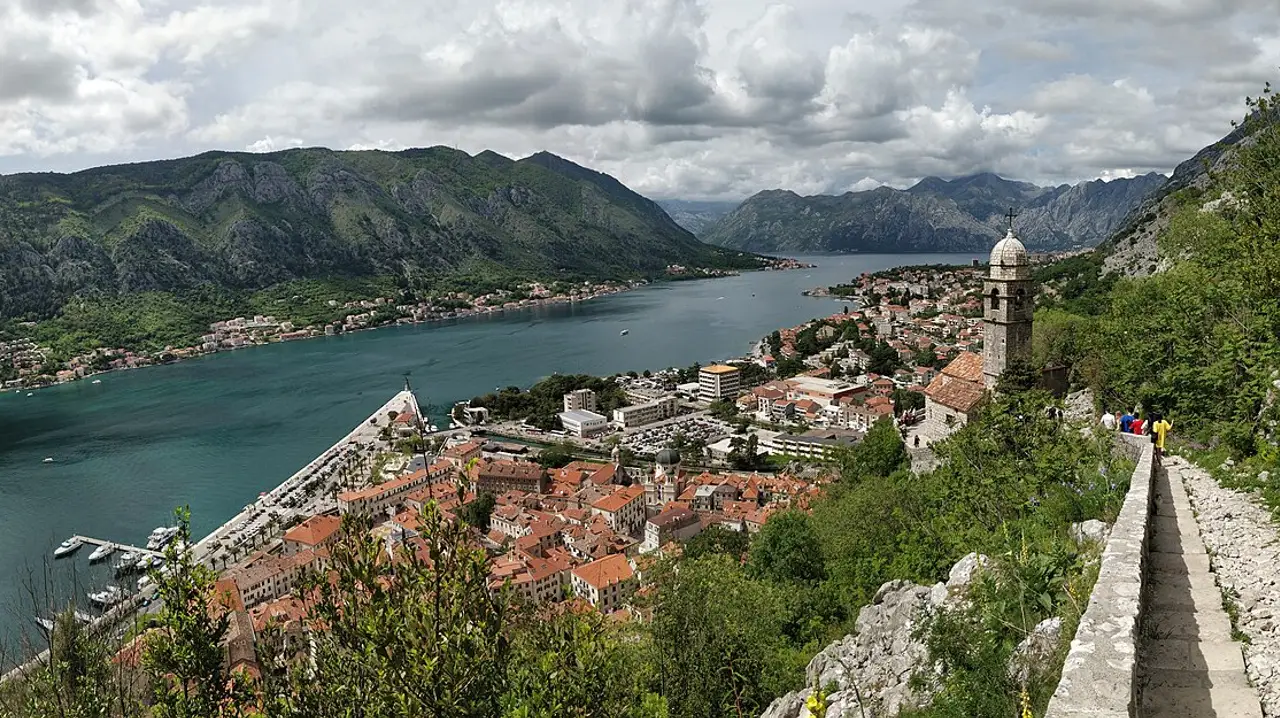
Kotor is the showpiece of the Montenegrin coast: a walled medieval town of Venetian stone tucked at the head of the Bay of Kotor, with mountains rising almost vertically behind it. Its Old Town - a maze of marble lanes, squares and churches enclosed by 4.5 km of fortifications - is a UNESCO World Heritage Site, and the climb up the walls to the San Giovanni fortress gives one of the best views in the Adriatic. Most people visit on a day trip from the coast or a cruise ship, but Kotor rewards an overnight stay, when the lanes empty and the town is at its most atmospheric.
Is Kotor worth visiting?
Yes - for many travellers it’s the single most memorable stop in Montenegro. That’s the draw: the bay (the Boka Kotorska) cuts deep inland between steep grey limestone walls, and Kotor sits right at its furthest point, where the water is calmest and the cliffs loomiest. The Old Town itself is small and entirely car-free, so you explore it on foot, getting pleasantly lost between churches, cafés and shuttered stone houses.
The trade-off is crowds. Kotor is a major cruise port, and on summer days when several ships are in, the main squares can be shoulder-to-shoulder by mid-morning. The two ways around this are simple: come early or late in the day, and stay the night so you’ve got the town to yourself after the day-trippers leave. Spring and autumn are quieter and cooler than the July-August peak. For a fuller, honest breakdown of the cruise-day crowds, the best hours and who Kotor really suits, see our dedicated take on whether Kotor is worth visiting. Arriving on a ship yourself? Our Kotor cruise port guide has an hour-by-hour plan for a day in port.
What to see in Kotor
The Old Town is compact - you can cross it in ten minutes - but it packs in centuries of Venetian, Byzantine and local history. These are the highlights.
The Old Town (UNESCO)
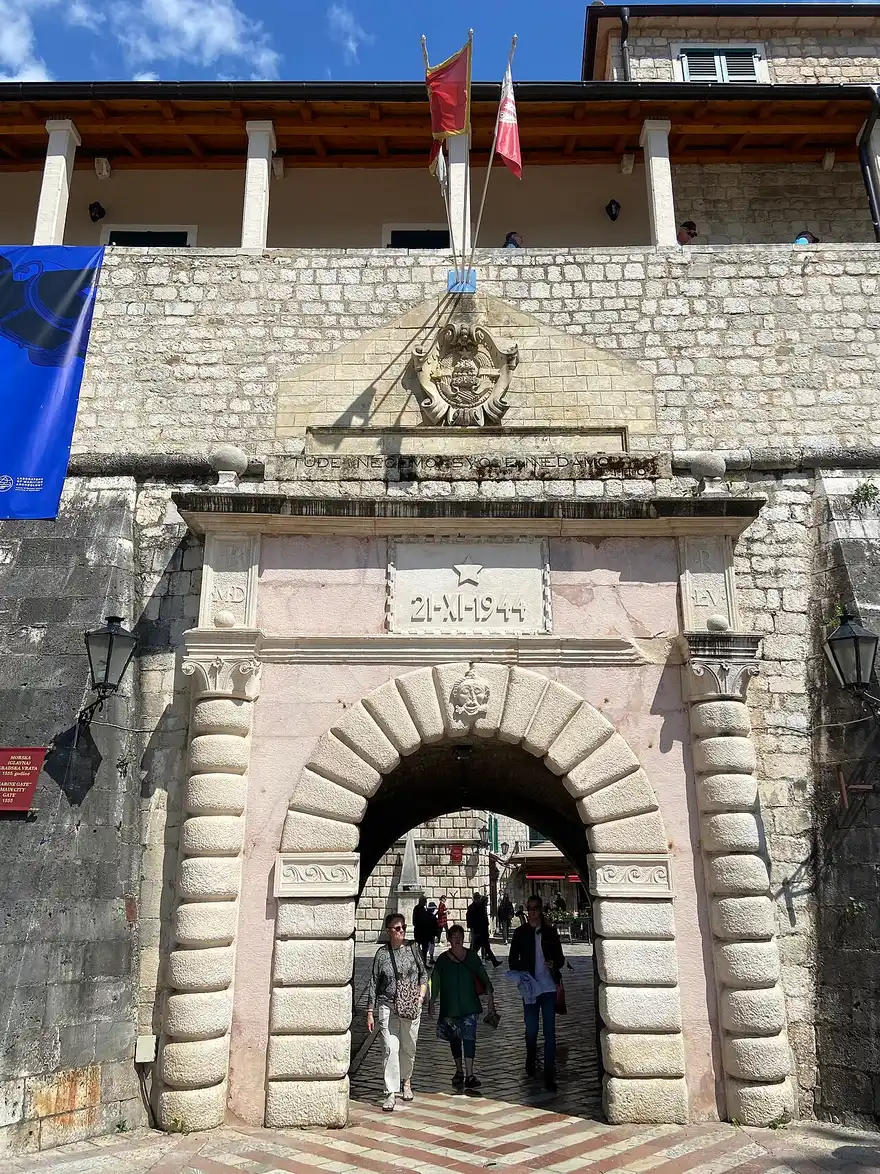
Enter through the Sea Gate (Vrata od mora), the main western entrance facing the waterfront, and you step straight onto the Square of Arms (Trg od oružja), the town’s largest open space, ringed by cafés and watched over by the old clock tower. From here a web of lanes and small squares spreads out, each with its own church or palazzo. You’ll find no street names to speak of and no logic to the layout - that was deliberate, to confuse invaders - so don’t overthink it - wander. The whole walled town and the wider Bay of Kotor have been on the UNESCO World Heritage list since 1979.
City walls and the Fortress of San Giovanni
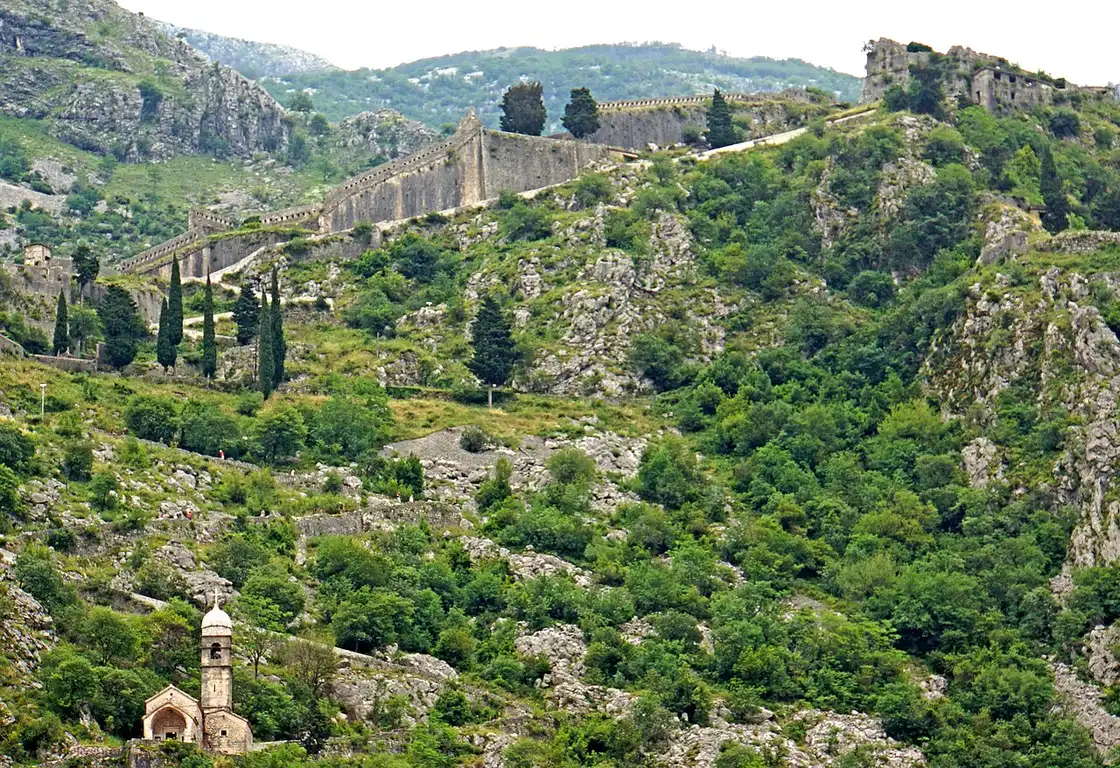
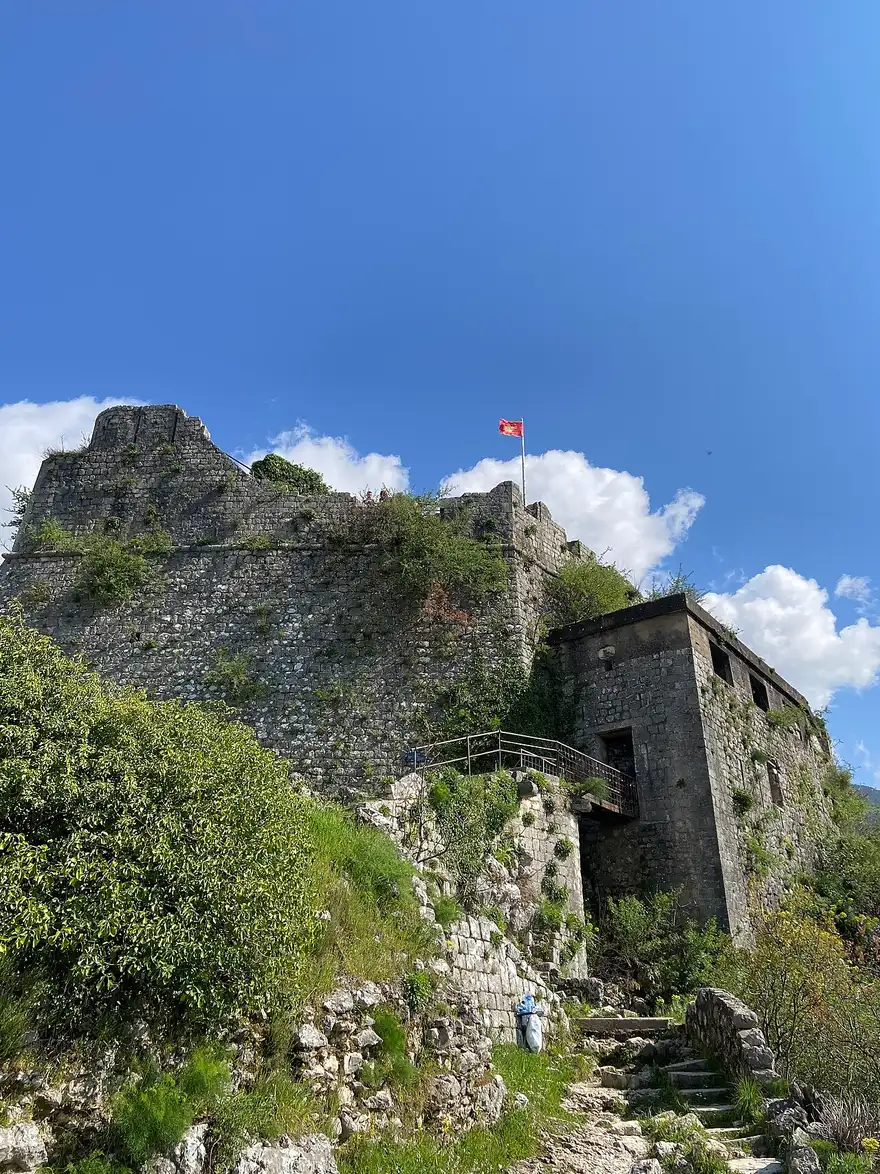
Kotor’s defining experience is the hike up the city walls to the Fortress of San Giovanni (Sveti Ivan), perched on the ridge roughly 260 m above the town. The fortifications run for about 4.5 km and the stepped path to the top is often quoted at around 1,350 steps - a steep but straightforward climb that takes most people 45 minutes to over an hour each way. The reward is a sweeping view down over the terracotta rooftops, the bay and the cliffs opposite. You’ll want early morning or near sunset to avoid both the heat and the crowds, take water and proper shoes, and note that a fee is usually charged in season at the official entrances (check current prices locally). The lower Church of Our Lady of Remedy (Gospa od Zdravlja) makes a good halfway turnaround if you don’t fancy the full climb. Our full guide to the Kotor city walls and Fortress of San Giovanni has the 2026 ticket and hours, the 1,350-step climb and the best time to go.
Cathedral of Saint Tryphon
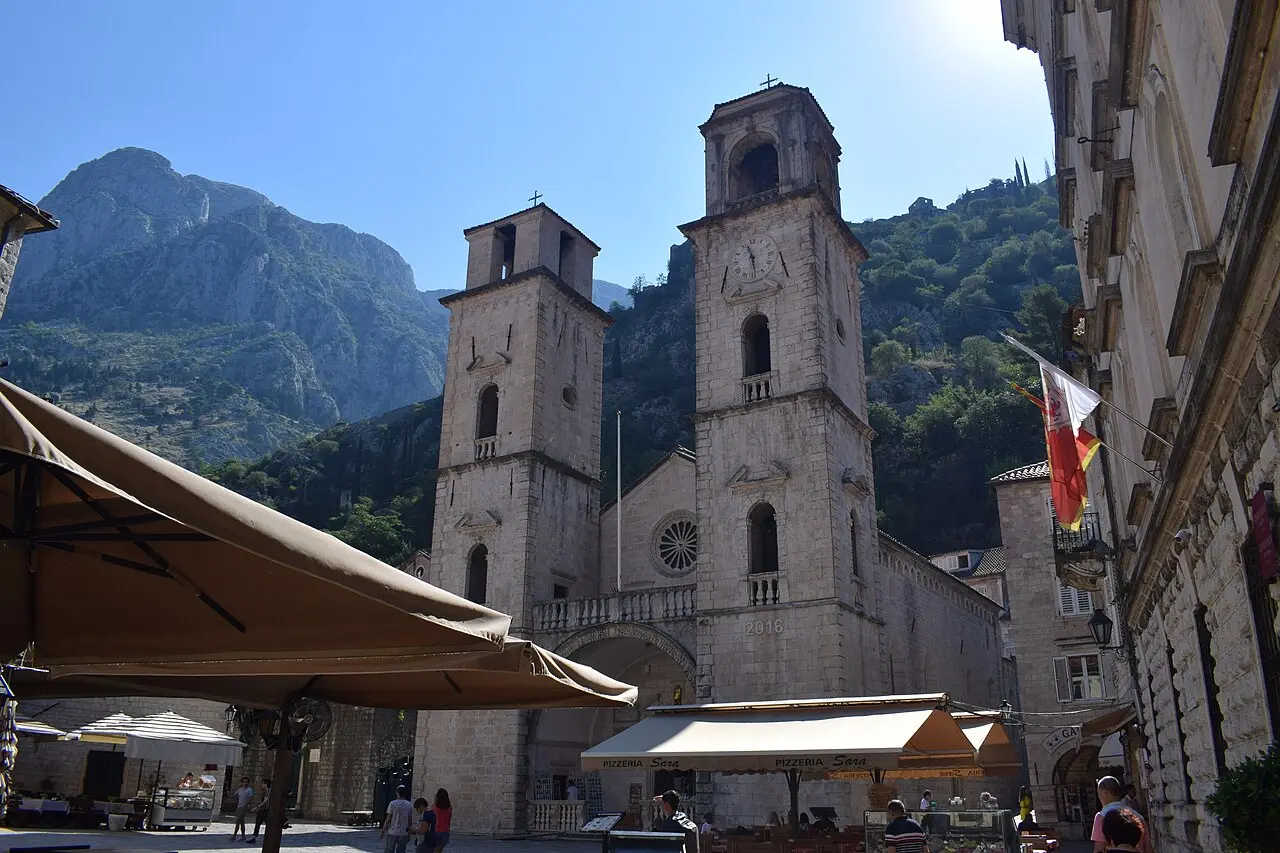
The Cathedral of Saint Tryphon (Katedrala Svetog Tripuna) is the Old Town’s most important building - a Romanesque Catholic cathedral consecrated in 1166 and dedicated to the city’s patron saint. Its two stone bell towers, rebuilt after earthquake damage, give it an asymmetric, slightly mismatched profile that has become one of Kotor’s signature images. Inside are a Gothic-Romanesque ciborium over the altar and a reliquary chapel; the cathedral square in front, with its open cafés, is one of the prettiest corners of the town. Time a visit for 3 February and you’ll catch the Boka Navy’s Tripundan procession here in full ceremonial dress - one of several dates covered in our Montenegro events calendar.
The Bay of Kotor (Boka)
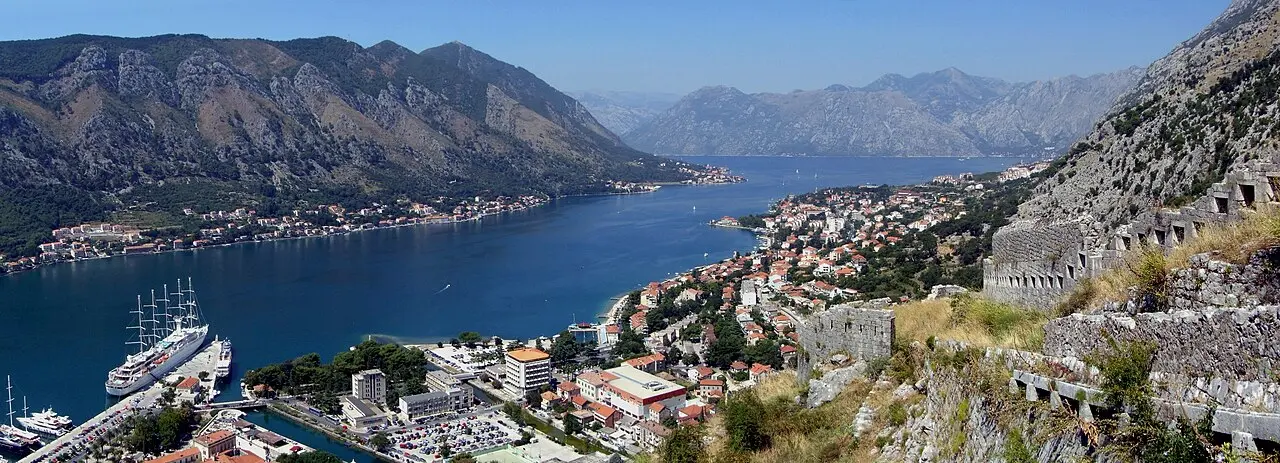
Beyond the walls, the Bay of Kotor itself is the headline attraction. Often described as the southernmost fjord in Europe - geologically it’s a drowned river canyon (a ria), not a true fjord - it winds inland in a series of basins linked by narrow straits, lined with old maritime villages, churches and waterside promenades. The easiest way to take it in is a boat tour, which typically loops out toward Perast and the island churches; you can also drive the shore road around the bay, or simply walk the seafront in Kotor and the neighbouring village of Dobrota. For where people swim - pontoons, ladders and quiet shores - see swimming in the Bay of Kotor. Families and small groups who prefer their own stops often rent a private boat on the bay instead of a fixed group seat.
Day trips: Perast and Our Lady of the Rocks
The classic excursion from Kotor is to Perast, a tiny, beautifully preserved Baroque town about 12 km up the bay. Built on the wealth of its sea captains, it strings a line of stone palazzi and seventeen churches along the water beneath Vrmac mountain, with almost no modern building to spoil it. From its waterfront, short boats shuttle out to two islets in the bay.
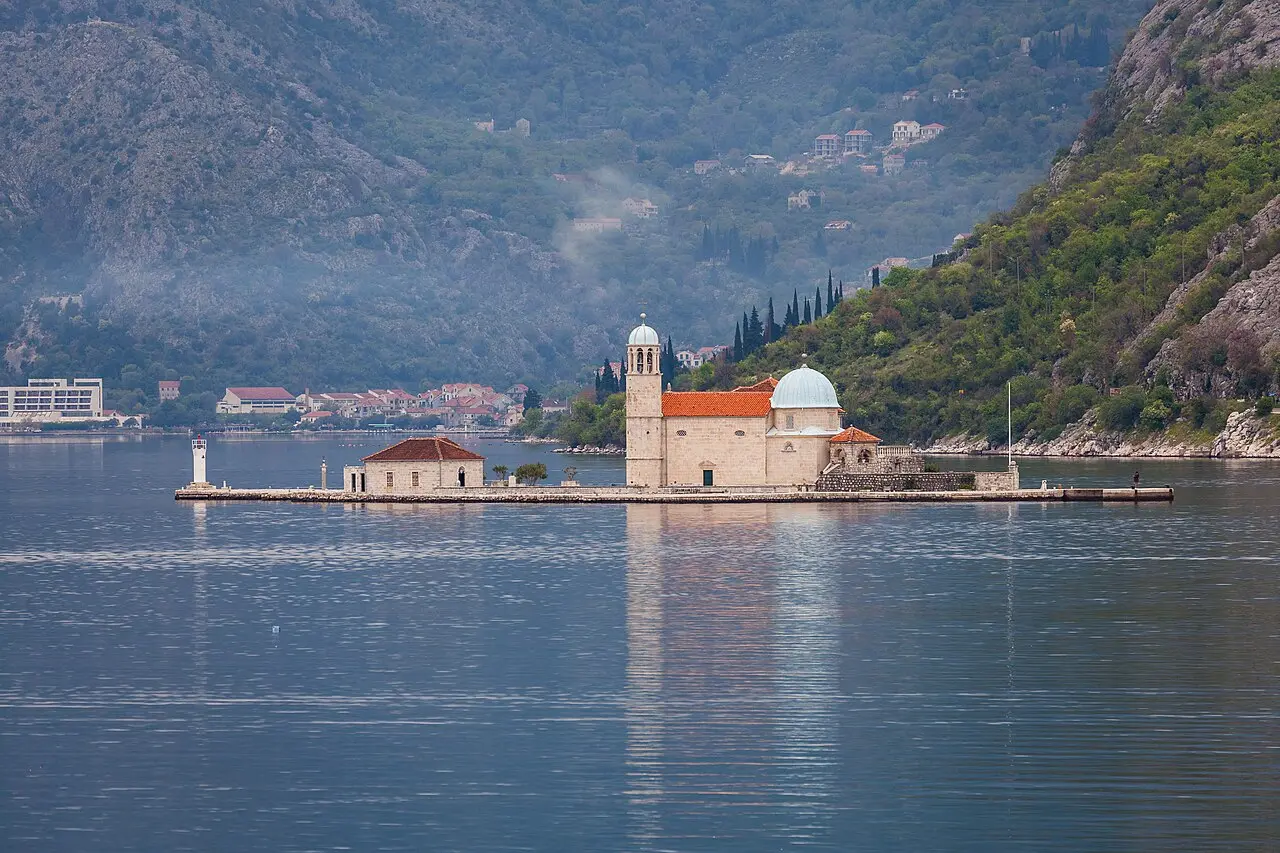
The famous one is Our Lady of the Rocks (Gospa od Škrpjela), an artificial island created over centuries as local sailors dropped rocks and scuttled old ships on a reef, and topped by a blue-domed church and a small museum. Beside it lies the natural islet of St George, with a Benedictine monastery and cypresses, closed to visitors. You’ll reach Our Lady of the Rocks on a short boat ride from Perast for a look around the church and its votive collection - a half-day trip from Kotor that pairs naturally with a Bay of Kotor boat tour, which also reaches the Blue Cave and the islands you can’t get to on foot.
For a change from the water, the other classic excursion is inland and uphill: the old serpentine road climbs the mountain behind Kotor toward Lovćen and the old royal capital of Cetinje, with its monastery, palaces and museums - a rewarding full-day trip, especially combined with the Njegoš Mausoleum on Lovćen. Skip the driving and take the Kotor cable car instead if the view is the point rather than the mausoleum itself.
For the full spread of day trips from Kotor - these two plus Budva and Sveti Stefan, Cetinje, Lake Skadar and a long cross-border run to Dubrovnik - see our best day trips from Kotor roundup, with how to reach each and which to pick.
| Day trip from Kotor | Approx. distance | How to go |
|---|---|---|
| Perast | ~12 km | Bus, taxi, car or bay boat tour |
| Our Lady of the Rocks | from Perast | Short shuttle boat from Perast waterfront |
| Tivat / Porto Montenegro | ~9 km | Bus, taxi or car around the bay |
Where to stay
For atmosphere, stay inside or just outside the Old Town: small guesthouses and boutique hotels occupy restored stone buildings within the walls, and you wake up to the town before the day-trippers arrive. The trade-off is summer noise from the bars, and the cruise crowds on your doorstep by day. For a quieter base with bay views, the neighbouring seafront village of Dobrota, just north along the water, has apartments and hotels within walking or short-drive distance of the Old Town. Many visitors also base themselves in Tivat or Budva and visit Kotor as a day trip; if you’re choosing between the bay and the Riviera, Kotor or Budva compares the two as bases on beaches, nightlife, prices and day trips. For the same bay but the other end, Kotor or Herceg Novi weighs crowds, swimming and Dubrovnik access. Rooms in and around Kotor fill up and rise in price in July and August, so book well ahead for peak summer. For a full breakdown of the Old Town versus Dobrota, Muo, Prčanj and Perast - who each suits and what they cost - see our guide to where to stay in Kotor.
How to get to Kotor
Kotor sits at the back of the bay, and getting there means picking between the coast road and one of three regional airports.
- By air. The nearest airport is Tivat (TIV), only about 8-9 km away - close enough to feel like a suburb - and it picks up seasonal European routes each summer that make it the obvious first choice. Podgorica Airport (TGD), the country’s main year-round airport, is around 90 km away (roughly 1.5 hours by car). Dubrovnik Airport (DBV) in Croatia is also widely used; it’s closer than it looks but involves a border crossing.
- From Dubrovnik (Croatia). Kotor is a popular day trip and transfer from Dubrovnik, about 90 km away. Allow extra time for the border crossing, which can be slow in high season; buses, organised tours and private transfers all run this route. To drive it yourself as a slow scenic day with stops along the Boka, see our Kotor to Dubrovnik road trip.
- From Podgorica. The capital and its airport are about 1.5 hours away by car or bus; see our Podgorica travel guide for the connections.
- Along the coast. Frequent buses run all day between Kotor and the Budva Riviera, the two anchors of the central coast, in about 40-50 minutes; for times, fares and the driving routes see our Kotor to Budva bus guide.
- By car. Driving gives the most flexibility for the bay and beyond. The shore road loops the whole Bay of Kotor; the Verige strait between Kamenari and Lepetane has a frequent car ferry that cuts the drive from the Herceg Novi side. Note that the Old Town is pedestrian-only and parking just outside fills quickly in season - see our guide to renting a car in Montenegro.
Where to eat
Like every town on this coast, Kotor eats off the same Adriatic-Montenegrin script: seafood and risotto carrying centuries of Venetian influence, grilled meats, and Njeguški prosciutto and cheese carried down from the mountains ringing the bay, washed down with local Vranac red or Krstač white. The restaurants right on the main squares are the most touristy and priciest; you generally eat better and cheaper a few lanes back, or out in Dobrota and the bay villages. We don’t list fixed prices we can’t verify, so check the latest menus locally - but expect Old Town prices to sit at the higher end for Montenegro in peak season. For what to order across the country, from buzara and black risotto to the mountain ham, see our guide to Montenegrin food and wine.
For a full rundown of the best restaurants and konobas by area and price - Old Town, Dobrota and the mill restaurants up the bay - see our where to eat in Kotor guide. For specific addresses, browse the whole food section.
Practical tips for visiting Kotor
A few things worth knowing before you go:
- Currency. Montenegro uses the euro (€), even though it’s not in the EU. Cards are widely taken in town; carry some cash for small cafés, the boat shuttles and parking.
- When to go. July and August are hot, busy and the cruise season’s peak; late spring and early autumn are far more comfortable for the walls climb and the lanes. See our best time to visit Montenegro guide for the seasonal picture.
- The walls climb. Go early or late, take water and sun protection, and wear shoes with grip - the steps are uneven and can be slippery.
- How long to stay. A day sees the Old Town and the walls; an overnight adds Perast, a boat tour and the town at its quiet best.
Zoom out and Kotor is one stop on a bigger map: our Montenegro travel guide breaks the country down region by region, with the full list of towns in the cities guide. Push on inland from here and Durmitor National Park is the natural next stop.
Nearby / read also
Photos
On the map
The map loads on click - to keep the page lightweight.
The map didn’t load. Check your connection and refresh the page.
Read also

Cities · 9 min read
Bečići, Montenegro: Beach Resort Guide
Updated · August 28, 2026Bečići resort guide: 2 km beach, hotels from Splendid to Iberostar, the promenade walk to Budva, season tips and how to get there from Tivat.

Cities · 13 min read
Petrovac, Montenegro: Guide to the Quiet Beach Town
Updated · July 31, 2026Petrovac travel guide: 600 m of red sand, the Kastio fort, the chapel islet, buses from Budva in half an hour, and whether to base here or in Budva.

Cities · 12 min read
Herceg Novi, Montenegro: Old Town, Forts & Riviera
Updated · July 12, 2026Herceg Novi travel guide: the sunny stepped Old Town, the Forte Mare, Kanli Kula and Spanjola forts, the Igalo spa and how to get there from the border.

Cities · 12 min read
Žabljak: Where to Stay in Montenegro's Mountain North
Updated · September 3, 2026Žabljak travel guide: the base town for Durmitor - where to stay (centre, Black Lake road or a cabin), the Savin Kuk ski area, prices and how to get there.