
Petrovac, Montenegro: Guide to the Quiet Beach Town
Petrovac travel guide: 600 m of red sand, the Kastio fort, the chapel islet, buses from Budva in half an hour, and whether to base here or in Budva.
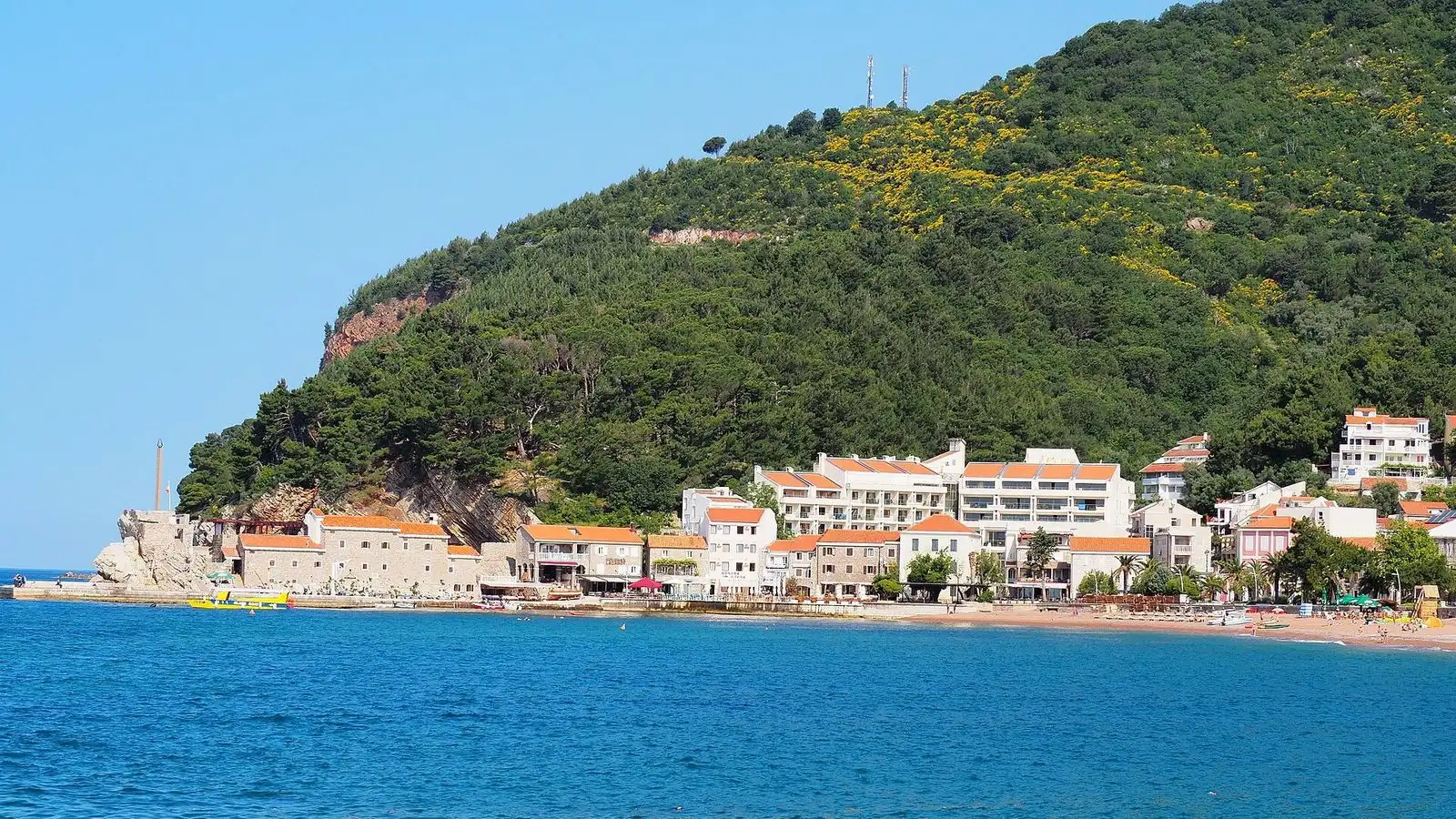
Petrovac is the Budva Riviera’s quiet option: about 600 m of reddish sand, a 16th-century Venetian fort on the rocks at one end, two islets parked offshore, and roughly 1,450 residents (2023 census). It sits 17-18 km south of Budva, half an hour on a coastal bus, and it suits people who want to swim, eat and walk rather than queue for a club. If you’re choosing between here and Budva, that sentence is most of the decision.
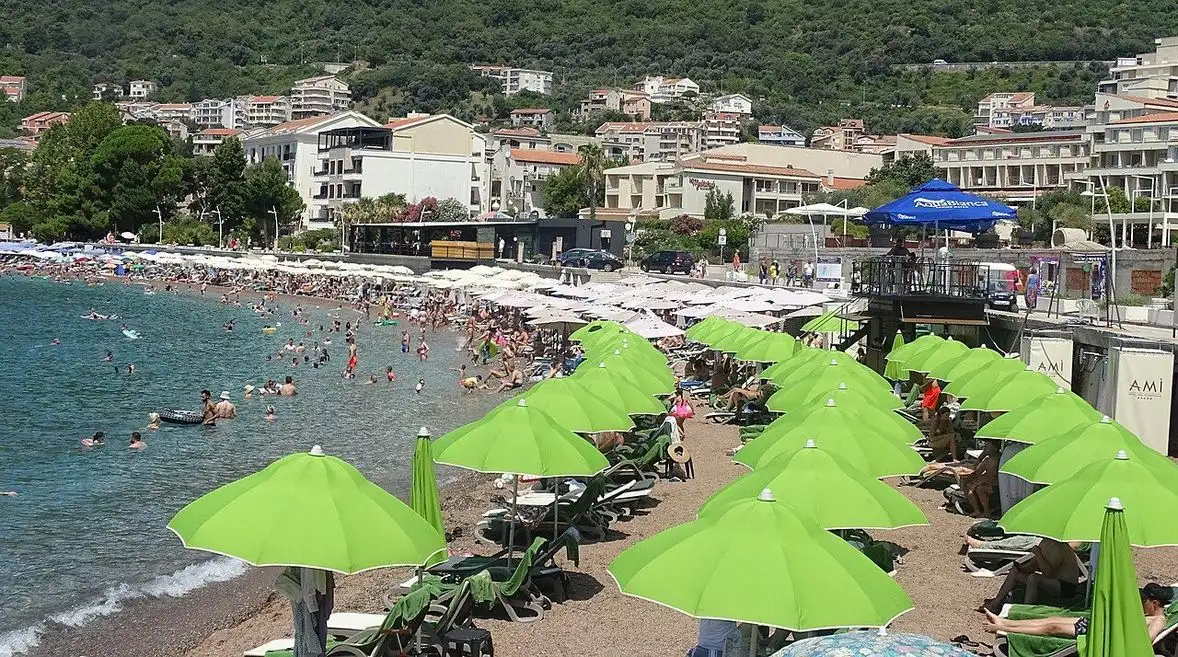
The catch is the size of the beach. Six hundred metres sounds generous until the first week of August, when the loungers are spoken for by mid-morning and the water in front of the promenade turns into a crowd scene. What rescues Petrovac is that two better beaches sit within a walk or a five-minute drive, and most people staying up in Budva never come down for them.
Who Petrovac suits, and who should skip it
Book here if your ideal day is a swim before breakfast, a walk along the cliff path, a long lunch and an early evening on the promenade with the fort lit up across the bay. Families do well: the sand shelves gently, the seafront is flat and traffic-free, and everything you need is inside a ten-minute walk. It’s where people who found Budva too loud tend to wash up.
Skip it if you want nightlife with choice, a big spread of restaurants, or a base you can work outwards from every day without a car. The whole settlement is smaller than a single Budva neighbourhood, and outside roughly June to September a fair share of the places on the front are shut. It’s also not the cheap option people assume: beds are limited, so August prices behave like August prices everywhere on this coast - the wider numbers are in our Montenegro trip cost breakdown.
The town beach, and the two better ones next door
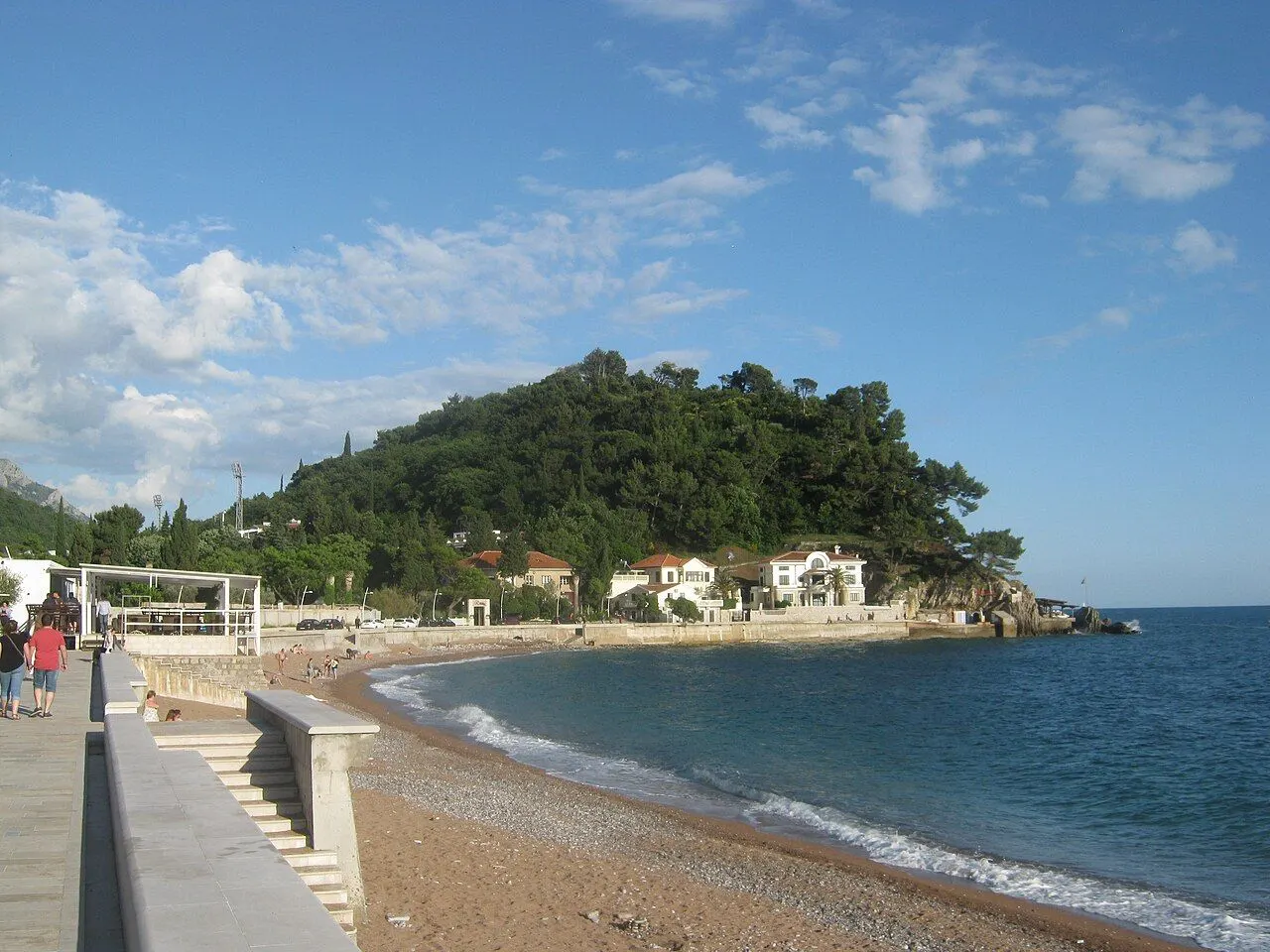
The town beach is the postcard: roughly 600 m of sand with a genuinely red-brown tint, a promenade of cafes behind it, and calm shallow water because the bay is closed at both ends. It’s also the busiest thing in Petrovac in August.
Lučice is the one to walk to: a cove of about 220-250 m tucked into pines just south of town, around 15 minutes away on the coast path, with parking above it if you drive. It’s beautiful and it’s tiny, so it fills fast - go before ten or after four.
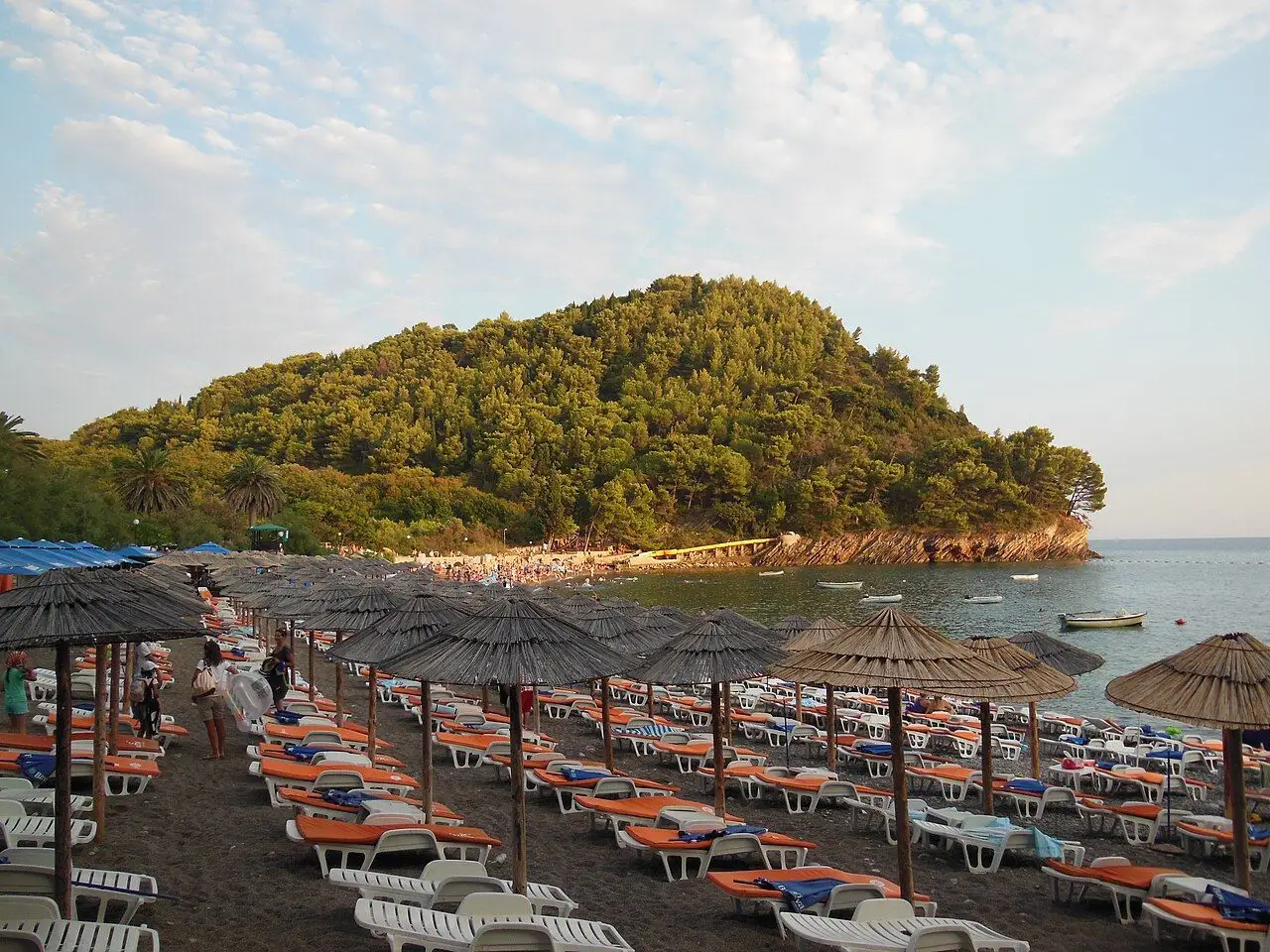
Buljarica, immediately south, is the opposite: about 2,250 m of sand and fine shingle, the longest beach on the Budva Riviera - all three are scored side by side in our Montenegro beaches ranked list - and still largely undeveloped behind a strip of scrub and farmland. Few facilities, plenty of room, easy parking. If your August problem is other people, this is the answer, and it’s five minutes away by car.
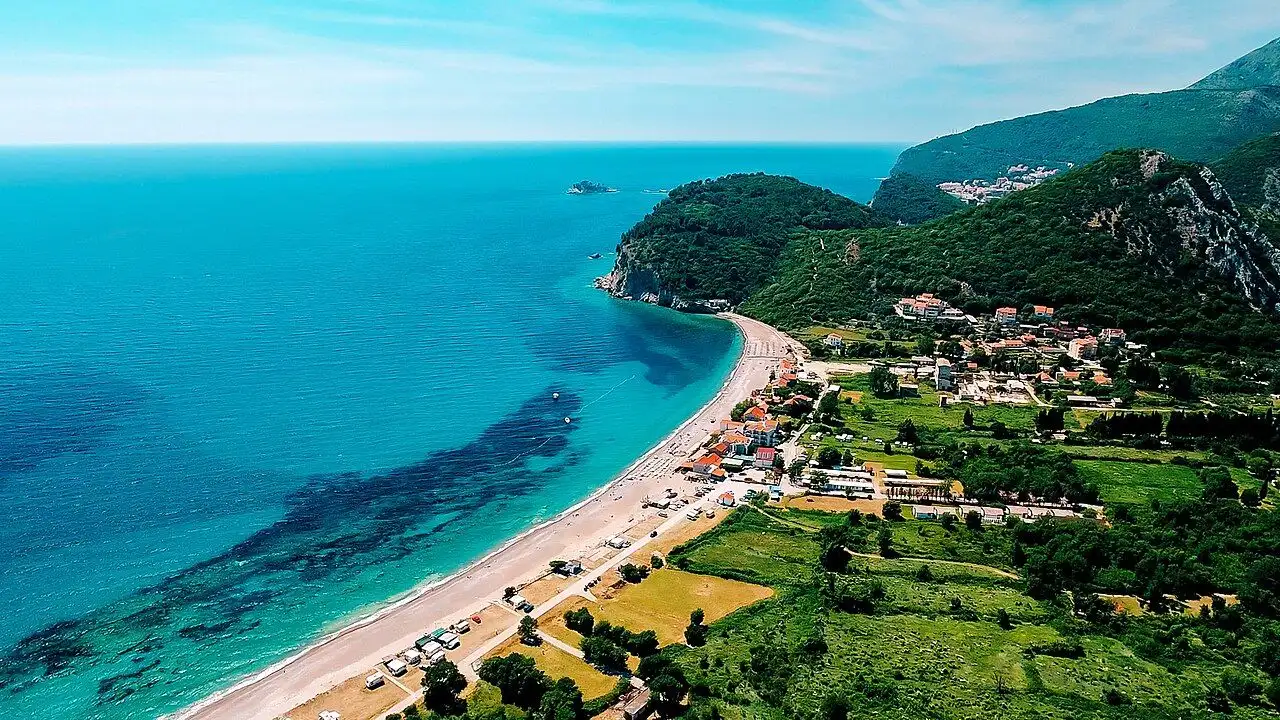
On loungers, read the board before you sit down. Prices are set by whoever holds the beach concession, not by the town, so they vary along the same strip of sand: at 2026 rates (checked July 2026) that means around €10 a set on undeveloped beaches like Buljarica, €18-20 for an umbrella and two loungers on a busy town beach like this one, and €25-50 in the premium zones further up the coast. And there’s a rule older guidebooks get wrong. Under the 2026 maritime-property contracts, concession holders must hand over loungers and umbrellas free after 17:00 - but this season that applies only to citizens of Montenegro who show an ID, where in previous years it covered everyone on the beach. As a visitor, budget for the full day.
Katič and Sveta Nedjelja: the islets you can swim to
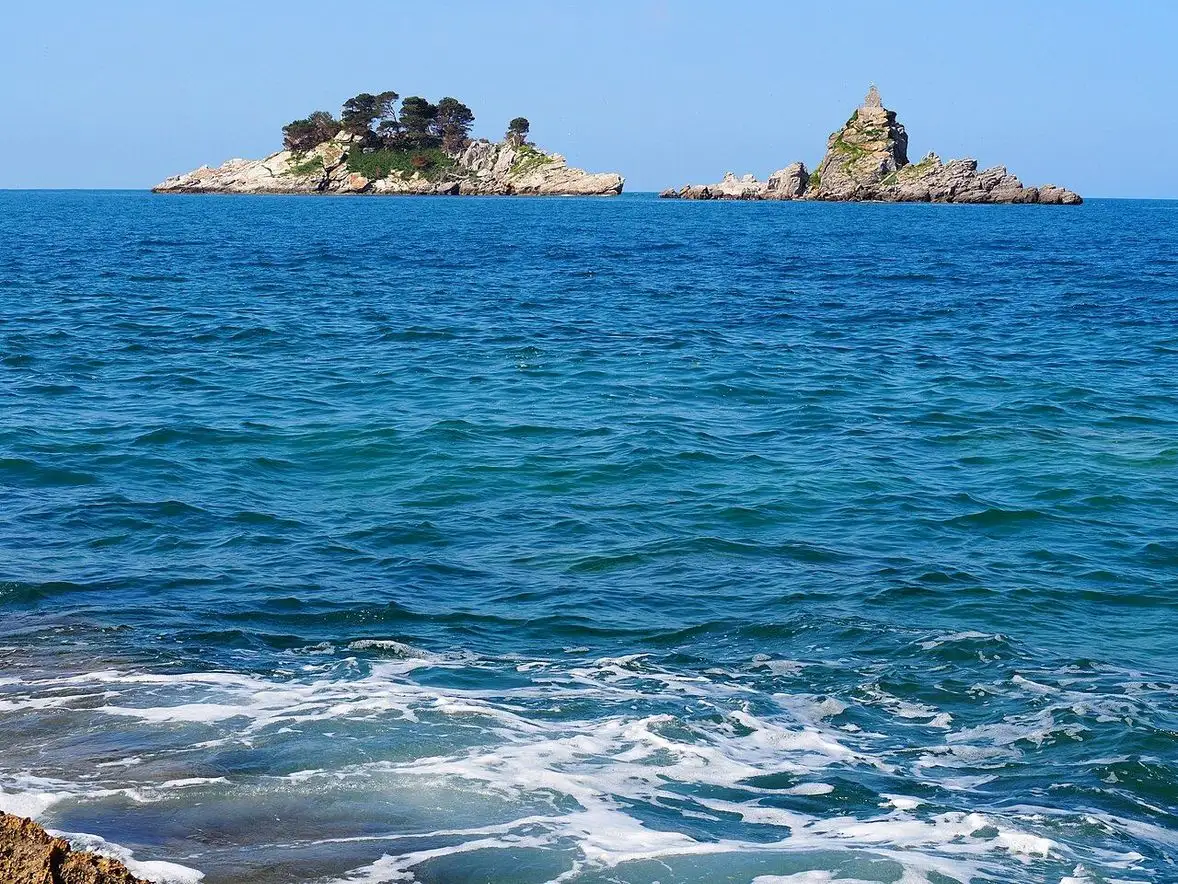
Two rocks sit 0.7-0.9 km off the beach: Katič, the green one and the further out of the pair, and Sveta Nedjelja, which carries a small chapel. Local legend says a shipwrecked sailor built it in thanks after washing up alive, and the tradition is to reach the islet, ring the bell and swim back. Strong swimmers do exactly that, towing a brightly coloured float so the boats can see them; everyone else takes a kayak from the beach or a boat from the harbour.
Two honest warnings. That’s open water with boat traffic on it, and the crossing looks far shorter from a lounger than it feels halfway out. And boat and kayak prices change by season and operator, so agree the figure before you get in.
Kastio: the fort that named the town
At the northern end of the beach, on the rocks above the little harbour, stands Kastio - a fortress the Venetians put up in the 16th century to make pirate raids expensive. The place took its old name from it: Kaštel Lastva, which locals shortened to Kastio. Petrovac only became Petrovac after the First World War, when the settlement was renamed in honour of King Petar I Karađorđević.
The walls are the best five minutes in town: you climb up off the promenade, the flag snaps overhead, and the bay, both islets and the whole beach land in one view. A seasonal cafe-bar usually operates inside the enclosure - worth timing for late afternoon rather than midday, when the stone throws the heat back at you.
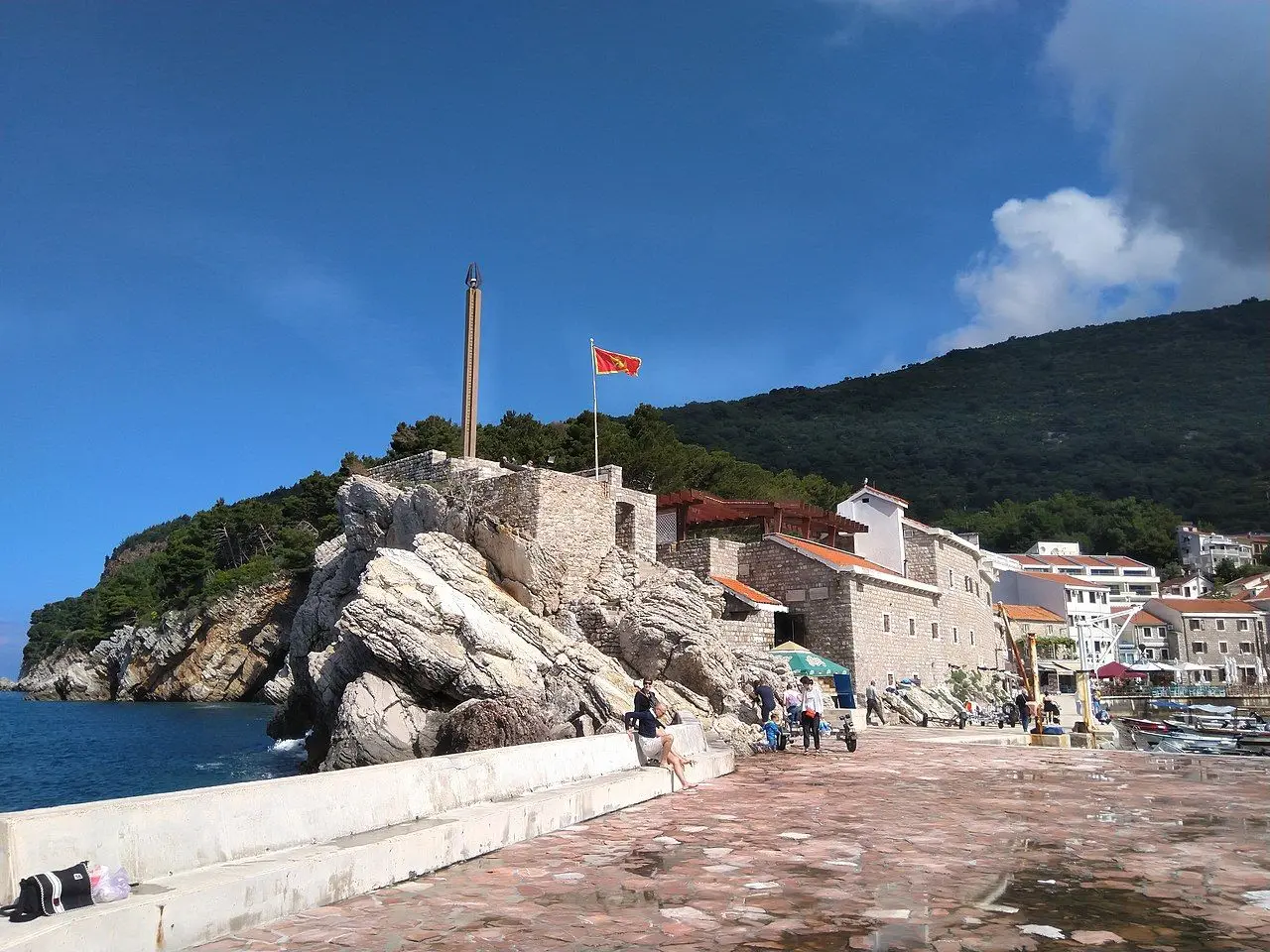
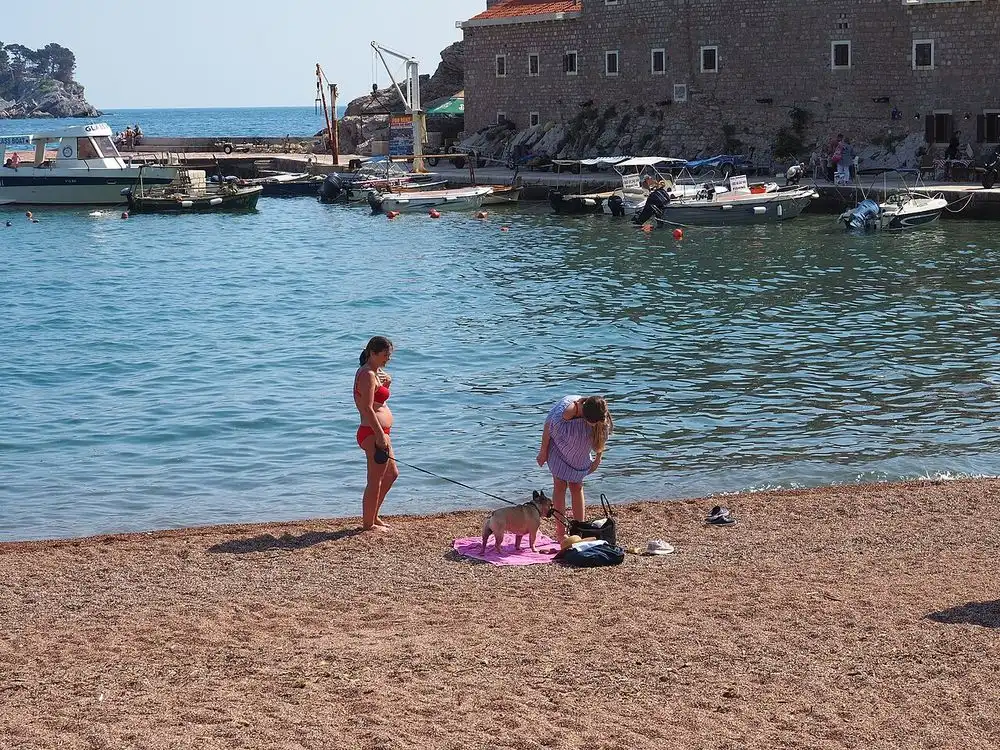
Below it the harbour is a working one in miniature: a couple of dozen small boats, fishermen sorting lines on the quay, and a slip of sand where children swim while the skippers tout the afternoon runs.
The Roman mosaic - and the famous one it is not
Petrovac has a Roman floor mosaic. It came out of the ground at the Mirišta site in 1902, a second was found later, and together they’re the floors of a Roman building, most probably 3rd to 4th century, according to the Budva tourist board and the town’s museum service. It’s a small, quiet thing, signposted rather than staged for visitors, and no official hours or ticket price are published - ask at the Spomen dom on the seafront.
Now the correction, because plenty of guides get this wrong: the celebrated mosaic of Hypnos, the god of sleep, is not in Petrovac. That one is in Risan in the Bay of Kotor, in a 2nd-century Roman villa, and it’s a stop on our Bay of Kotor day trip route. Turning up here expecting Hypnos is a wasted morning.
The 403-day Red Commune
Here’s the piece of local history nobody puts in the brochure. In 1920 the communists won the municipal election in Petrovac and took over the commune. It ran from 3 September 1920 to 10 October 1921 - 403 days - and is remembered as the first communist-run municipality on this coast, until the state pushed through a public-security law and dissolved it with gendarmes and troops on the ground.
The name stuck to the building rather than the politics: the town’s cultural centre is still the Spomen dom “Crvena komuna” (Red Commune Memorial House) on the seafront, with an art gallery named for the local painter Marko K. Gregović and a library founded at the end of the 19th century holding over 15,000 books.
And for a town this size: OFK Petrovac plays in Montenegro’s First League, finished third in 2025-26 and spent July 2026 in the UEFA Conference League first qualifying round, going out to Žalgiris of Lithuania (1-3, 1-2). A town of under 1,500 people fields a European-qualifying club, and the ground is a short walk from the beach.
What is within reach
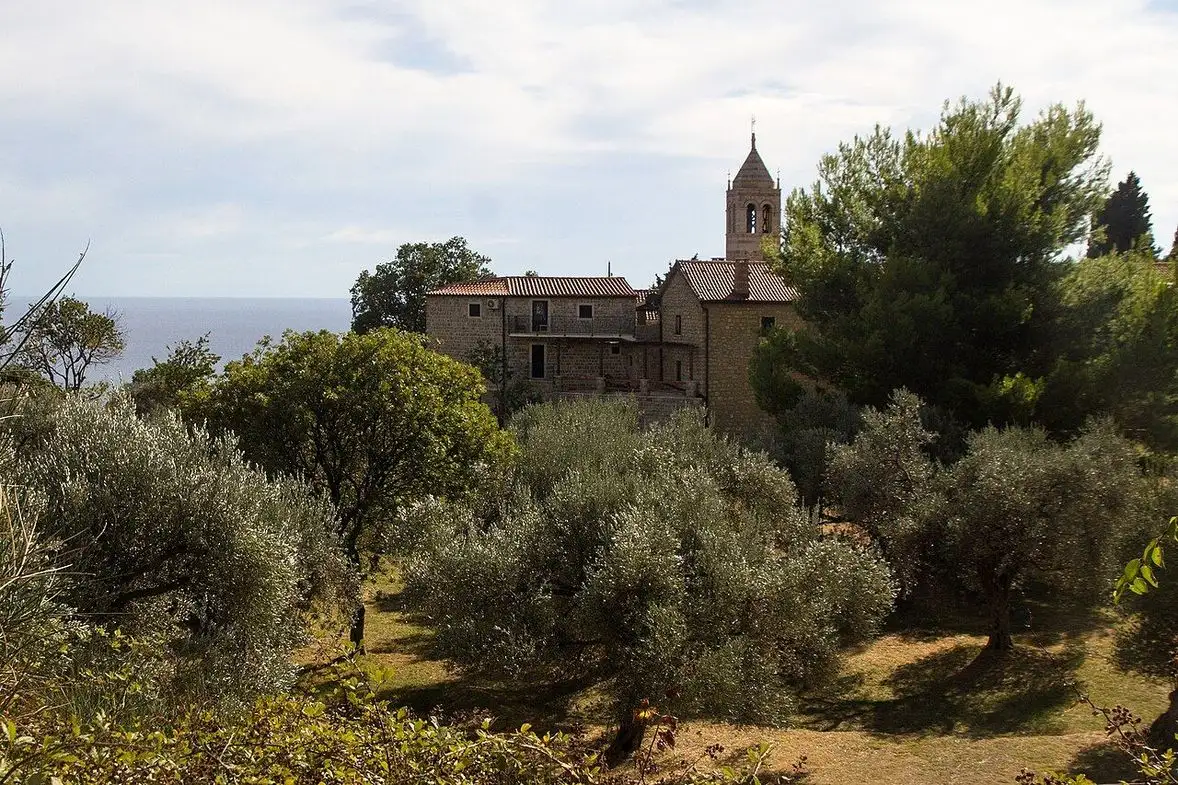
Reževići Monastery sits on the coast road between Budva and Petrovac and takes twenty minutes of your day. Two churches share the terrace: the Church of the Dormition, which local tradition credits to Stefan the First-Crowned in the 1220s, and the Church of St Stephen, built in 1351 under Emperor Dušan. It’s the stone column by the road that people remember, the one kept filled with wine for passing travellers - a custom the villagers kept up until the mid-19th century. This was also where the Paštrovići clan met to choose their chiefs.
Gradište Monastery, above Buljarica, has three churches, frescoes in the Church of St Nicholas painted in 1619-1620, and a paper trail going back to a document from the time of King Milutin in 1307.
Distances along the coast are short. Sveti Stefan is about 8 km north and is a viewpoint stop rather than a place you can walk into; Budva is 17-18 km, with the old town and the bus hub; Bar is roughly 20-22 km south, with ruined Stari Bar and the 2,000-year-old olive tree. Inland, Virpazar and Lake Skadar are an easy morning by car, and the sands around Ulcinj are under an hour - our day trips from Budva guide times most of these, and the numbers hold from here too.
How to get to Petrovac
By bus. Coastal services along the Adriatic highway stop here all day. Timetables collated from the carriers show a first departure from Budva around 06:30 and a last one around 22:30, the run averaging about 29 minutes, with more than a dozen operators on the route. Fares are a few euros, bought at the counter or from the driver - and note that many Montenegrin bus stations charge a €1 platform token on top of the ticket. The station in Petrovac sits up on the main road at the top of town, a few minutes’ walk down to the front. Getting around Montenegro has the full bus picture.
By car. It’s 17-18 km from Budva on the coastal road, and the thing your map app won’t tell you is that the road twists, so allow more than the distance suggests. Coming from the interior you’ll use the Sozina tunnel, which costs €2.50. Parking is the real issue in July and August - street space is limited and monitored, so use the paid municipal lots, reported at around €1 an hour in summer. Check the signs; rates change season to season.
By air. Tivat (TIV) is the closest airport, roughly 37-40 km and around 50 minutes away. Podgorica (TGD) is about an hour via the Sozina tunnel. There’s no airport bus to Petrovac, so it’s a taxi, a pre-booked transfer, or a bus into Budva or Bar and a change. Our airport transfers guide compares the options and the typical fares.
By train. There isn’t one. The Belgrade-Bar railway runs inland of the coast, and the nearest station is Sutomore, about 15 km away, and from there it’s a bus or a taxi over the hill.
When to come, and where to stay
The sea does the scheduling here. On our Montenegro sea temperature figures the water is 21-23°C in June, 25-26°C at the August peak and still 23-24°C in September - so the best trade in Petrovac is early June or September, when the beach is usable, the coast path is pleasant to walk and the town isn’t rammed. July and August are hot, full and priced accordingly; from late October the front largely shuts down. Best time to visit Montenegro sets this against the rest of the country.
Beds are mostly apartments and small family-run hotels, with a couple of larger seafront blocks and newer places on the slope above the bay. There’s no big all-inclusive machine here, which is part of the appeal and also why August books out early. Staying in Buljarica instead buys space and quiet at the cost of walking to anything. How it stacks up against the other bases is in where to stay in Montenegro; the whole-trip frame is our Montenegro travel guide.
Nearby / read also
- Budva travel guide - the riviera’s main town, 17-18 km north.
- Sveti Stefan - the island resort 8 km up the coast.
- Best beaches in Montenegro - the coast-wide pick, bay to Ulcinj.
- Bar travel guide - Stari Bar and the old olive tree, 20-22 km south.
- Getting around Montenegro - buses, ferry and car.
- All cities in Montenegro
Photos
On the map
The map loads on click - to keep the page lightweight.
The map didn’t load. Check your connection and refresh the page.
Read also

Cities · 9 min read
Bečići, Montenegro: Beach Resort Guide
Updated · August 28, 2026Bečići resort guide: 2 km beach, hotels from Splendid to Iberostar, the promenade walk to Budva, season tips and how to get there from Tivat.

Cities · 12 min read
Herceg Novi, Montenegro: Old Town, Forts & Riviera
Updated · July 12, 2026Herceg Novi travel guide: the sunny stepped Old Town, the Forte Mare, Kanli Kula and Spanjola forts, the Igalo spa and how to get there from the border.

Cities · 12 min read
Žabljak: Where to Stay in Montenegro's Mountain North
Updated · September 3, 2026Žabljak travel guide: the base town for Durmitor - where to stay (centre, Black Lake road or a cabin), the Savin Kuk ski area, prices and how to get there.

Cities · 13 min read
Bar, Montenegro: Port, Stari Bar & the Old Olive
Updated · August 1, 2026Bar travel guide: the ferry port from Italy, ruined Stari Bar, the 2,000-year-old olive tree, King Nikola's Palace and the scenic railway inland.