
Kotor Cruise Port: What to Do on a Day in Port
Kotor cruise port guide: where ships dock, the walk to the Old Town, an hour-by-hour plan for a day in port, taxi prices and what will not fit.
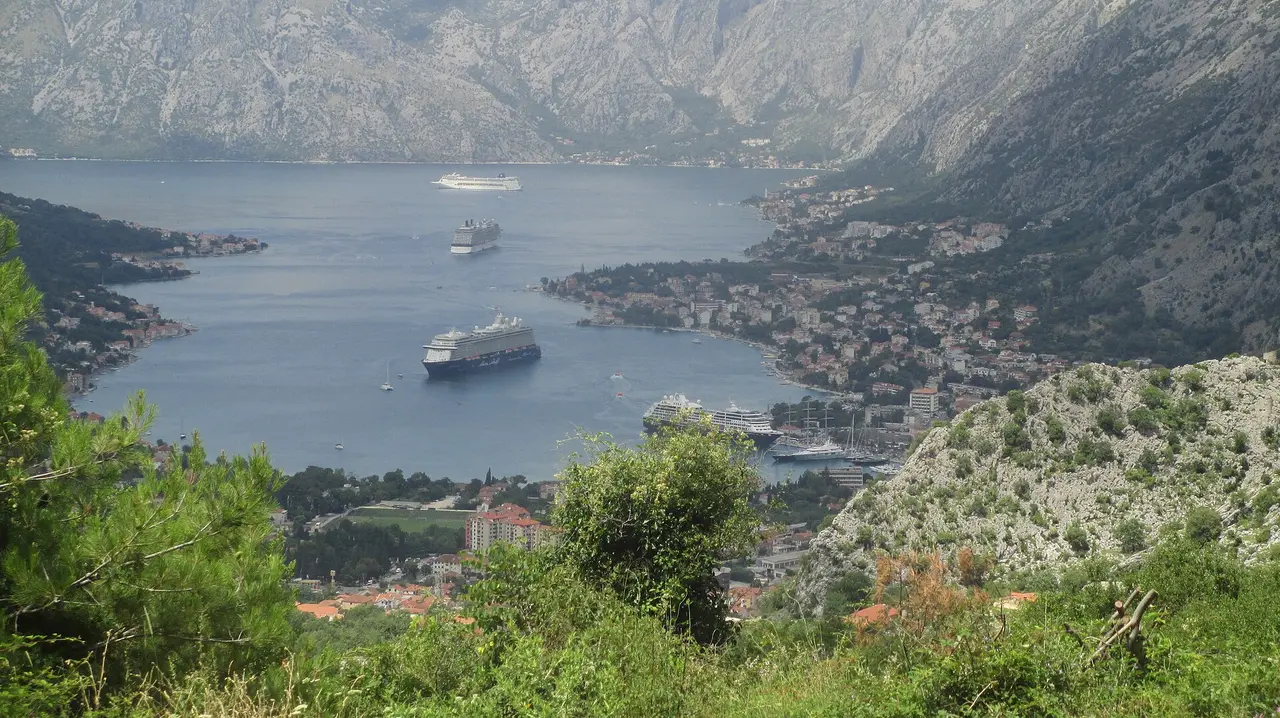
Kotor is one of the easiest cruise calls in the Mediterranean: the pier sits about 200 metres from the Sea Gate, an underground passage takes you under the coast road, and you’re inside a walled medieval town three to five minutes after the gangway. A typical 2026 call arrives around 07:00 or 08:00 and sails again anywhere between 16:00 and 19:00, which is enough for the city walls, a bay excursion and lunch - if you get the order right.
Getting the order right is the whole game. By local operators’ reckoning, something like 2,000 people move through that gate in the first hour or two after the ships open, the lanes are at their tightest between about 09:00 and 16:00, and the one attraction everybody wants is a 1,350-step climb that turns brutal in the afternoon sun. Do the hard thing first and the day is a pleasure; do it in the wrong order and you spend your call queuing.
Where your ship actually ties up
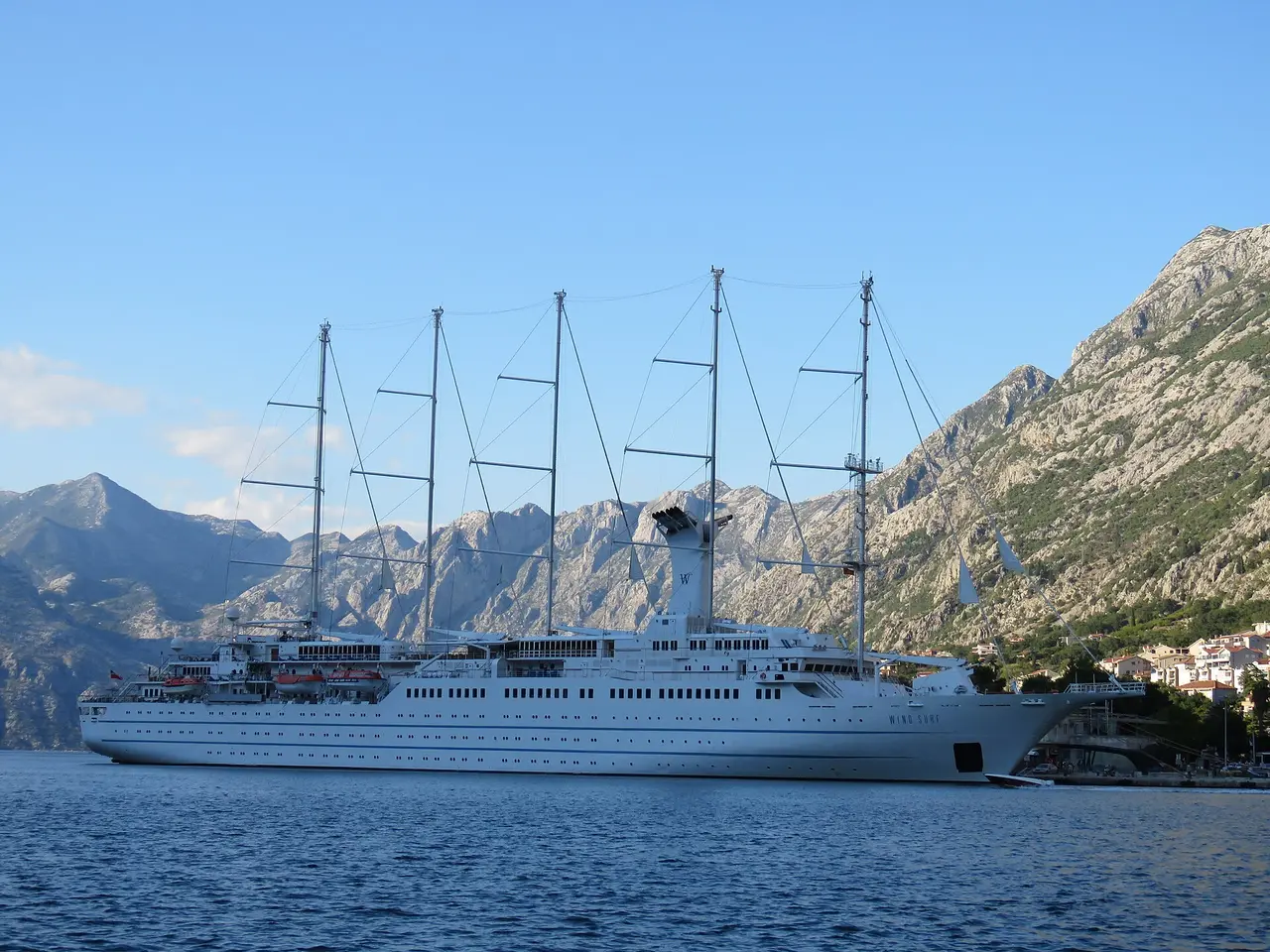
There’s one cruise pier, right beside the Old Town. Small and mid-size ships go alongside it. When two or more ships call on the same day - normal in high season, with three or four on the busiest days - the extras anchor out in the bay and tender in, with a ride of five to twenty minutes depending on where the ship drops the hook. Tenders land at the same pier, so the walk into town is identical either way.
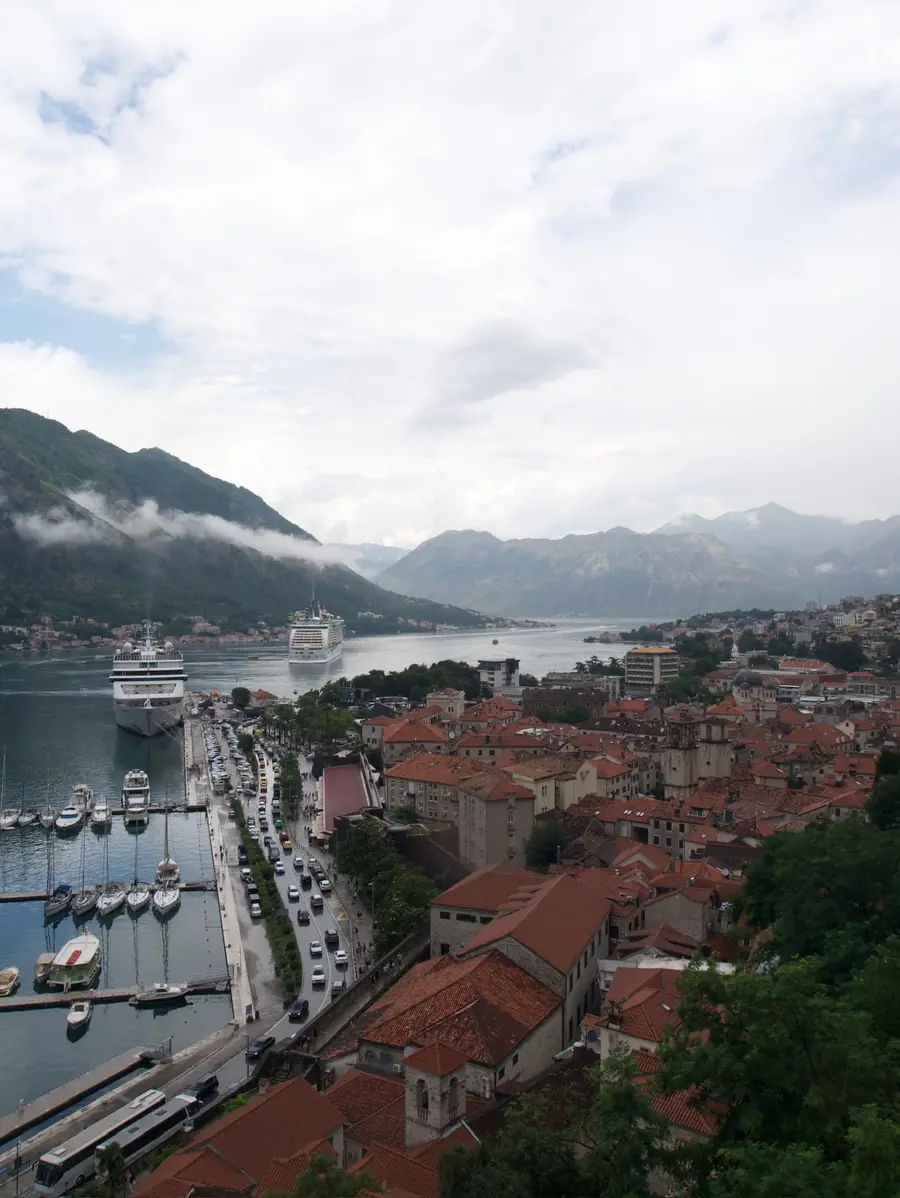
Two practical consequences. If you’re tendering, your day is shorter than the itinerary suggests - budget half an hour at each end for the boat and the queue, more at the end when everyone returns at once. And if your ship is alongside, you can pop back aboard mid-day for lunch or a swim without losing much, which is a genuinely useful option on a hot August call.
Be on deck for the sail-in
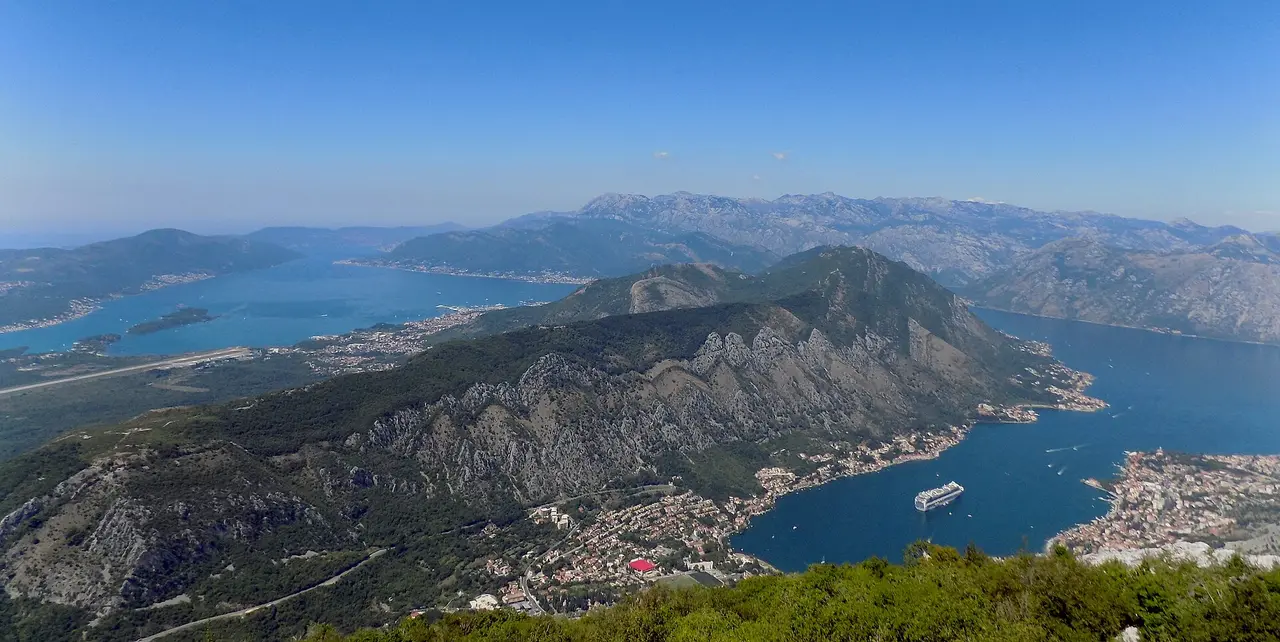
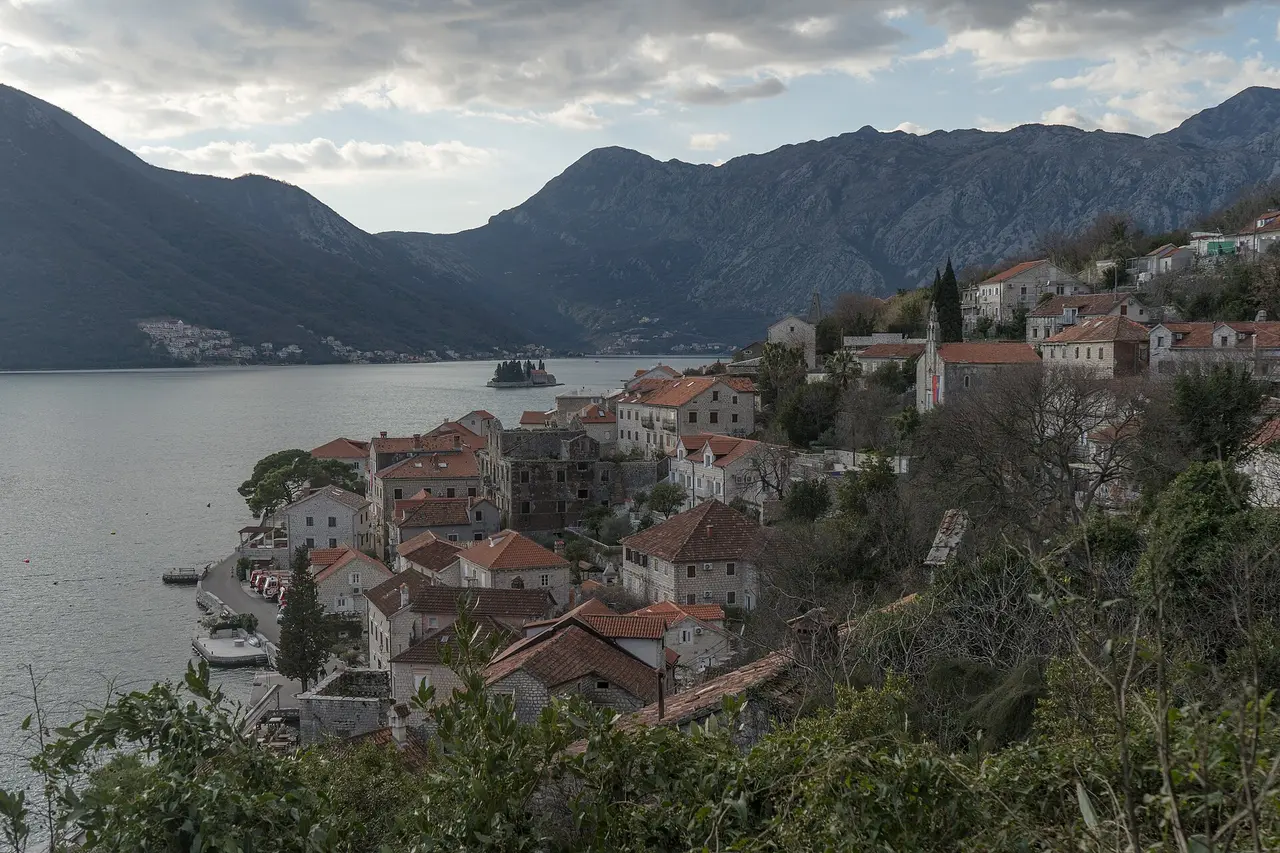
The approach is the finest hour of the whole cruise, and it’s free. From the open Adriatic the vessel turns into a narrowing fjord-like bay, squeezes through the Verige narrows, passes Perast and its two islets, and creeps to the head of the bay with mountains rising almost vertically on both sides. Inbound this usually happens around dawn. Set an alarm, take coffee up to the top deck, and skip the buffet queue.
The walk in: gate, tunnel, escalators
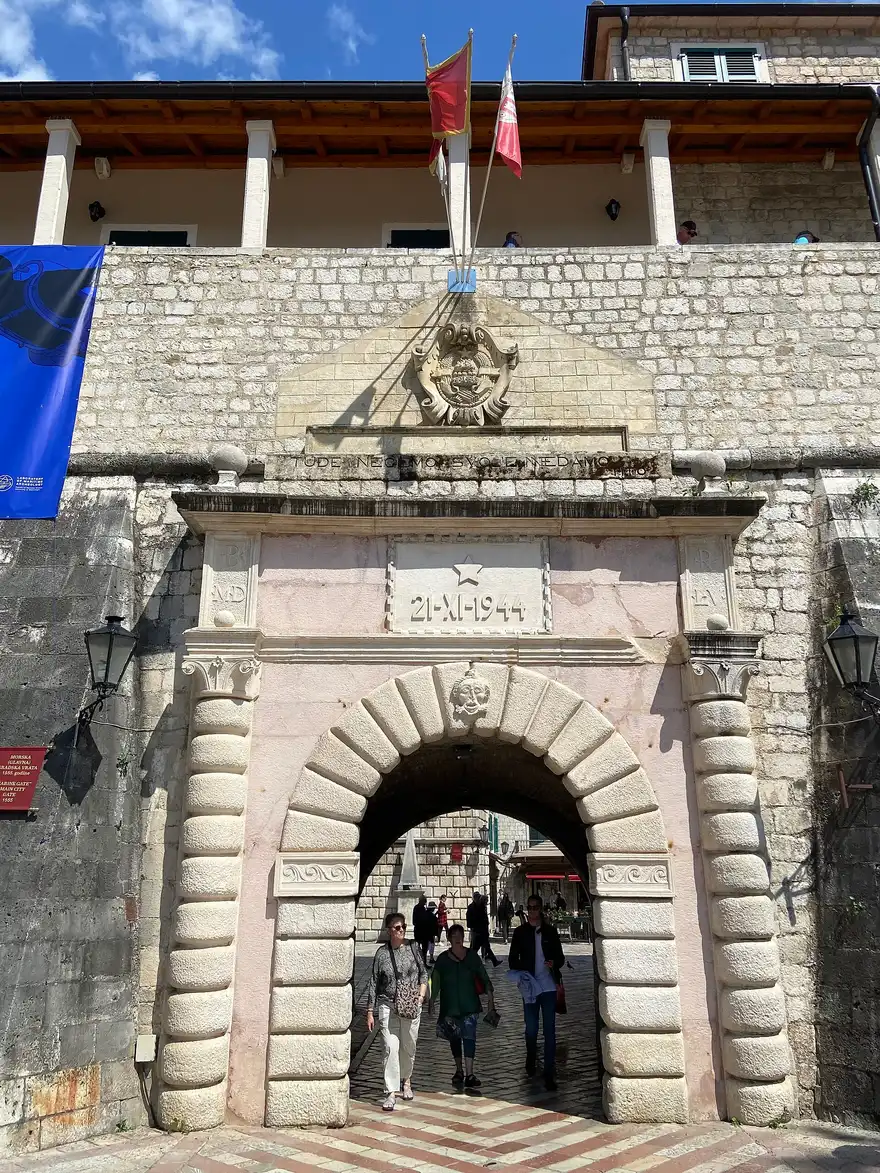
From the pier you cross the terminal apron, drop into the pedestrian underpass - there’s an escalator - and come up facing the Sea Gate, the main entrance in the Venetian walls. Straight through the arch and you’re in the town’s main square. There’s a tourist info kiosk with free maps by the gate, and a rank of taxis and tour touts outside the port gates.
Bring euros in small notes. Montenegro uses the euro, cards work in restaurants and bigger shops, but taxi boats, the island church, market stalls and small cafes are happier with cash.
An hour-by-hour plan for a 07:00-18:00 call
This is the version that works for most people who want the classic Kotor day without a coach tour.
| Time | Plan |
|---|---|
| 07:30 | Ashore early, straight to the walls ticket booth |
| 07:45-09:30 | Climb to the San Giovanni fortress, come down before the heat |
| 09:45-10:30 | Old Town lanes, St Tryphon’s Cathedral, coffee on a square |
| 10:45 | Bus or taxi to Perast (12 km) |
| 11:15-13:00 | Perast waterfront and the boat to Our Lady of the Rocks |
| 13:30-15:00 | Back in Kotor, long lunch off the main square |
| 15:00-16:30 | Buy pršut and rakija, swim off the Dobrota shore, or the cable car |
| 17:00 | Back on board |
The city walls are the anchor of that plan. Tickets are €15 per person (children under 12 free), the booths are staffed from about 07:00 to 20:00 in season, and the climb is roughly 1,350 steps taking most people 45 minutes to an hour each way. Doing it first means shade on the way up, an empty path, and the classic photo down onto your own ship. Doing it at noon in July means a queue, full sun and a very slow descent on polished limestone. Full detail is in our Kotor city walls guide, and if the climb isn’t for you, the Kotor-Lovćen cable car is a different thing altogether: an 11-minute ride up onto the Lovćen massif to a top station near Ivanova Korita at around 1,350 m, roughly five times higher than the fortress you would otherwise climb to, for €25 return (€7 for a child) - the ride and the mountain it climbs to are covered in our Lovćen National Park guide.
Perast and Our Lady of the Rocks: the one excursion worth leaving town for
If you only take one trip out of Kotor, take this one. Perast is 12 km around the bay: one baroque street on the water, no traffic in the middle, and small boats running out to Our Lady of the Rocks, the man-made islet with a blue-domed church. The taxi boat is about €5 per person return (some report up to €10), the church and its museum charge around €2, and half an hour on the island is plenty. It is a working Catholic church, so cover shoulders and knees rather than turning up in beachwear.
Getting there: local buses leave from stops near the port and cost about €1, which is the cheap and cheerful option if you’re relaxed about timetables. A taxi runs roughly €15-20 one way or €50-60 return with waiting time according to local operators - split between four people that is fair value, and it removes the timing risk. Agree the fare before you get in, because meters (about €0.80 per km plus a €0.50 start) are the exception rather than the rule with cruise traffic, and prices climb in July and August. A boat tour from Kotor that takes in the islets and the bay starts at around €30 per person; our Bay of Kotor boat tour guide compares the operators and routes, and the Perast and Our Lady of the Rocks guide has the island detail.
Check how many ships share your date
This is the trick that separates a good Kotor day from a crowded one, and it takes two minutes before you sail. Public port schedules list every call with arrival and departure times, so you can see whether you’re the only ship in the bay or one of four. Kotor is one of the Adriatic’s busiest cruise calls, and on a peak-season day three or four ships can share the bay - the difference between a single mid-size ship and four big ones is the difference between an atmospheric old town and a shuffling queue on the walls.
If your date is crowded, three adjustments help: be first off the ship rather than waiting for the rush, put the walls at 07:30 instead of mid-morning, and move lunch to 13:30 when the tour groups are being fed at fixed sittings. If your date is quiet, you can relax the whole plan and simply wander.
One more note on suitability. The Old Town itself is flat, small and paved with worn marble, so it works for almost everyone, but the walls are a serious stair climb with no lift and no shortcut. Anyone unsteady on uneven stone is far better served by the cable car or a bay boat trip.
What does not fit in a day in port
Being honest about this saves more trips than any list of highlights.
Budva is 22 km and 35-40 minutes each way in light traffic, and in August the coast road isn’t light traffic. You can do it, but you’ll spend three hours travelling for a beach and an old town smaller than the one at your feet.
The Blue Cave is at the far, open-sea end of the bay. Trips are much better run from Herceg Novi or Luštica; from Kotor you burn the whole day on the transit.
Durmitor, Ostrog and Lake Skadar appear on excursion lists and are genuinely long drives inland. Only take them if the ship sells them and accepts responsibility for getting you back.
A late lie-in. The town is at its most beautiful between 07:00 and 09:00 and again after 17:00, when the day visitors have gone. If you sleep in, you meet Kotor at its worst hour.
Rules that keep you on the ship’s manifest
The port is easy, but it is still a port. Ships don’t wait for independent travellers, so plan to be back at the pier 60 minutes before all-aboard if you’re tendering and 30 minutes if you’re docked. If you take a private taxi to Perast, keep the driver’s number and set an alarm rather than trusting the museum queue. Weather can also intervene: strong wind in the bay occasionally disrupts tender operations, which is the one scenario in which an independent trip up the coast becomes a genuine problem.
For what Kotor is like beyond the ship day - where to eat, the quieter corners, and whether it deserves an overnight rather than a call - see our Kotor guide and our verdict on whether Kotor is worth visiting when the ships are in. And if the port call is a taster for a longer trip, our things to do in Montenegro shortlist maps out the rest of the country.
Admission and opening hours
- Admission price
- City walls €15 · Lovćen cable car €25 return (€7 child) · Perast taxi boat ~€5 · group bay tour from ~€30
A rough guide only - prices move with the season, sharply in July and August. Agree taxi and boat fares before you set off, and confirm current tickets on the spot.
Details checked: July 23, 2026
Read also

What to see · 10 min read
Hiking Bobotov Kuk: Durmitor Highest Peak
Verified · September 4, 2026Bobotov Kuk hike at 2,523 m: Sedlo (~10 km RT) vs Lokvice from Black Lake, €5 park fee, cables, season and early-start tips.

What to see · 10 min read
Swimming in the Bay of Kotor: Beaches & Lidos
Updated · August 31, 2026Can you swim in Kotor? Yes - on Dobrota pontoons, Morinj and small Boka shores. Water quality, season and what to expect.

What to see · 11 min read
Rent a Boat in Kotor Bay: No Licence Needed
Updated · September 5, 2026Private boat rental in Kotor Bay 2026: skippered hire from €90/h, bareboat prices, licence rules, speed limits and where boats leave from.

What to see · 9 min read
Piva Lake & Canyon: Montenegro's Emerald North
Updated · August 27, 2026Piva Lake guide: the 45 km emerald reservoir, Mratinje Dam, boat trips from Plužine, the relocated Piva Monastery and how to pair it with Durmitor.