
Kotor to Dubrovnik Road Trip: Scenic Coastal Drive
Drive Kotor to Dubrovnik as a road trip: Perast, the Kamenari car ferry, Herceg Novi, Boka viewpoints and the Debeli Brijeg border.
Kotor to Dubrovnik is only about 90 km, and you could drive it in two hours flat - but that would waste one of the prettiest stretches of the Adriatic. Treated as a road trip it fills an easy day: the Baroque waterfront at Perast, a 5-minute car ferry across the narrows of the bay, the old fortresses of Herceg Novi, and a run of viewpoints over the Boka before the Debeli Brijeg border drops you onto the coast road into Croatia. The one thing that decides how the day goes isn’t the driving - it’s the border queue, so the trick is to time it and to sort the car’s paperwork before you set off.
This page is the drive itself. If you just want the cheapest way across, buses and private transfers are covered in Kotor to Dubrovnik by bus and transfer; if you’re based in Dubrovnik and want a there-and-back day into Montenegro, see the Dubrovnik to Montenegro day trip.
The route at a glance
The classic scenic line runs Kotor to Perast to the Kamenari narrows to Herceg Novi to Debeli Brijeg to Dubrovnik, roughly 90 km and about two hours of pure driving before you add stops and the border. It’s a two-lane coastal road the whole way, paved but narrow in places, with the water on one side and limestone cliffs on the other. Done properly it’s a full day; add a night in Herceg Novi and you can slow the first half right down.
Because the road hugs the shore, the mileage is modest and the time goes on the views, the swims and the coffee stops. The budget from EUR 40 on the card is a rough per-person floor for a shared day - a share of car and fuel, the ferry, one fortress ticket and lunch - not a fixed price. High-summer hire cars and Dubrovnik parking push it well up.
Kotor: leave before the coast wakes up
Start in Kotor, at the very back of the bay under the steepest cliffs. The walled old town is a UNESCO site and car-free, so leave the car at one of the pay lots outside the walls. If you have the legs for it, climb the city walls to the Fortress of San Giovanni - about 1,350 steps and a big view down onto the red roofs and the fjord-like bay - but do it early, before the sun and the cruise crowds land. If not, just get lost in the stone lanes and say hello to Kotor’s legendary cats, which have their own little museum. Full detail is in the Kotor guide.
The reason to move early is simple: this is a border day, and the queue at Debeli Brijeg builds through the morning. Aim to be rolling out of Kotor by mid-morning at the latest.
Perast and Our Lady of the Rocks
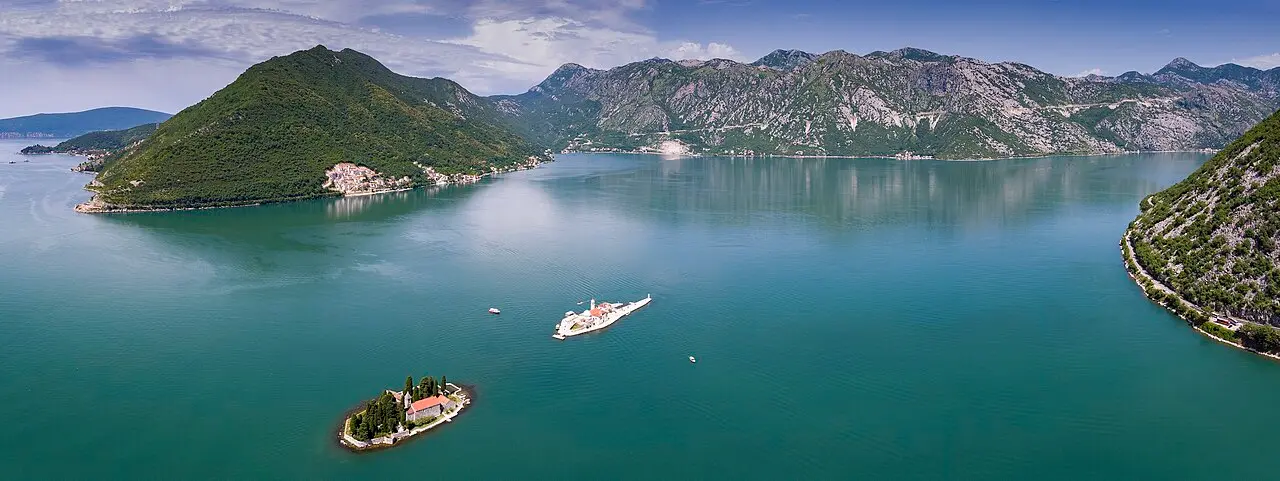
A short hop up the shore brings you to Perast, a single street of Baroque stone palazzi strung along the water with no cars in the centre. Pull into the pay parking on the main road above and walk down. The thing to do here’s the boat: a five-minute shuttle out to Our Lady of the Rocks (Gospa od Skrpjela), the man-made islet built up over centuries on a reef where sailors dropped stones, now carrying a blue-domed church and a small museum. The return boat runs a few euros; half an hour on the island is plenty.
The narrows: drive round or take the ferry?
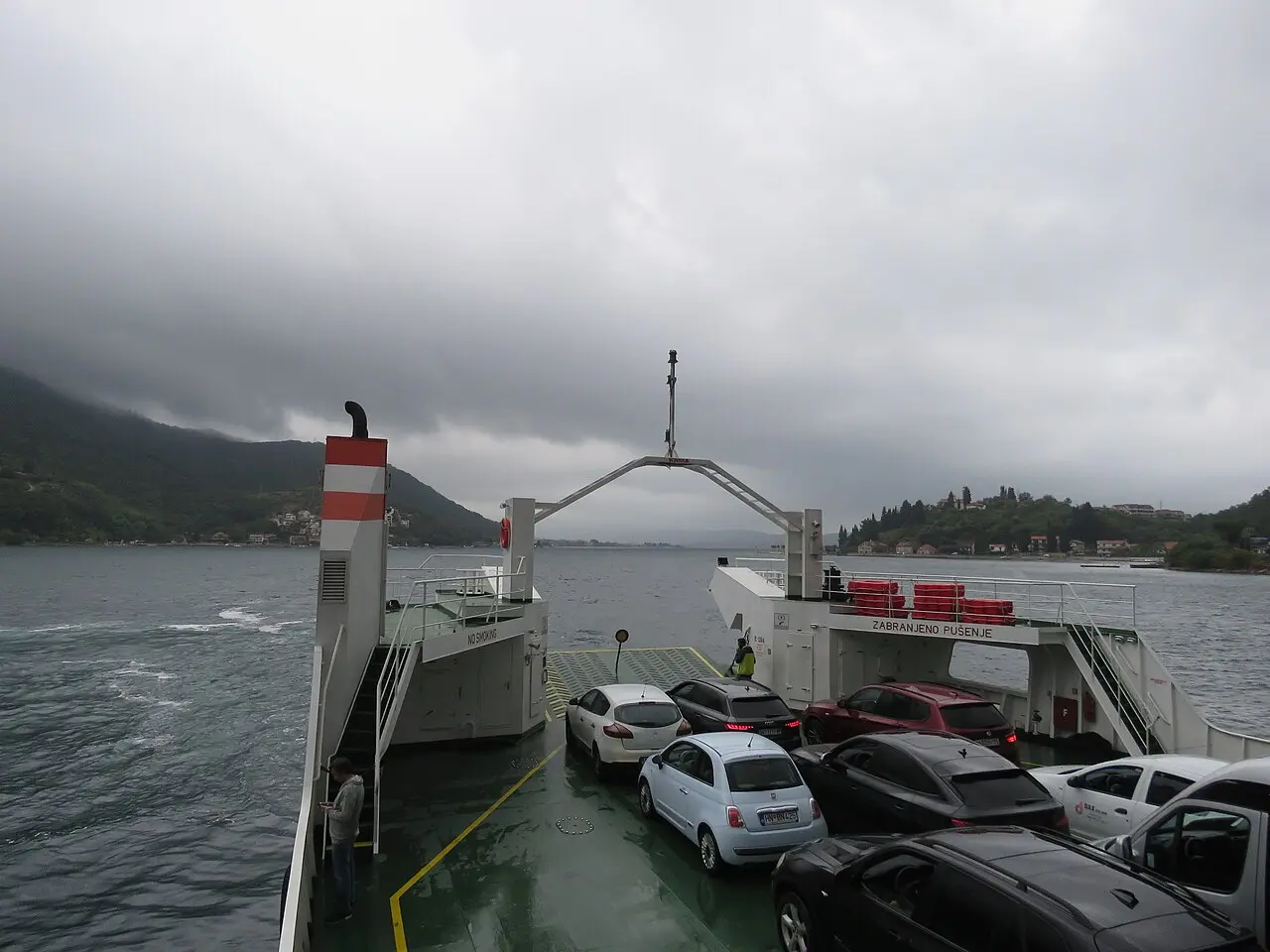
Just past Perast the bay chokes down to the Verige narrows, a few hundred metres of water between Kamenari and Lepetane, and here you get a real choice.
Carry on by road and you loop around the inner shore past Risan - more coast, more villages, the full scenic version. Or cut the corner on the Kamenari-Lepetane car ferry: a flat-decked boat that crosses in about five minutes and runs roughly every 15 to 20 minutes in summer. It costs EUR 5 for a standard car (a single unified fare since 2025; foot passengers go free) and saves 28 km of driving around the head of the bay. For a Kotor-to-Herceg-Novi run you would take it Lepetane to Kamenari.
My steer: on the way out, drive round via Perast for the scenery, because that’s the point of the trip; keep the ferry in your pocket for the return or for a day you’re short on time. One honest caveat - in July and August the ferry ramp has its own queue, and at the morning and evening rush it can add 30 to 45 minutes, which quietly eats the time you’d hoped to save.
Herceg Novi: the last Montenegrin stop
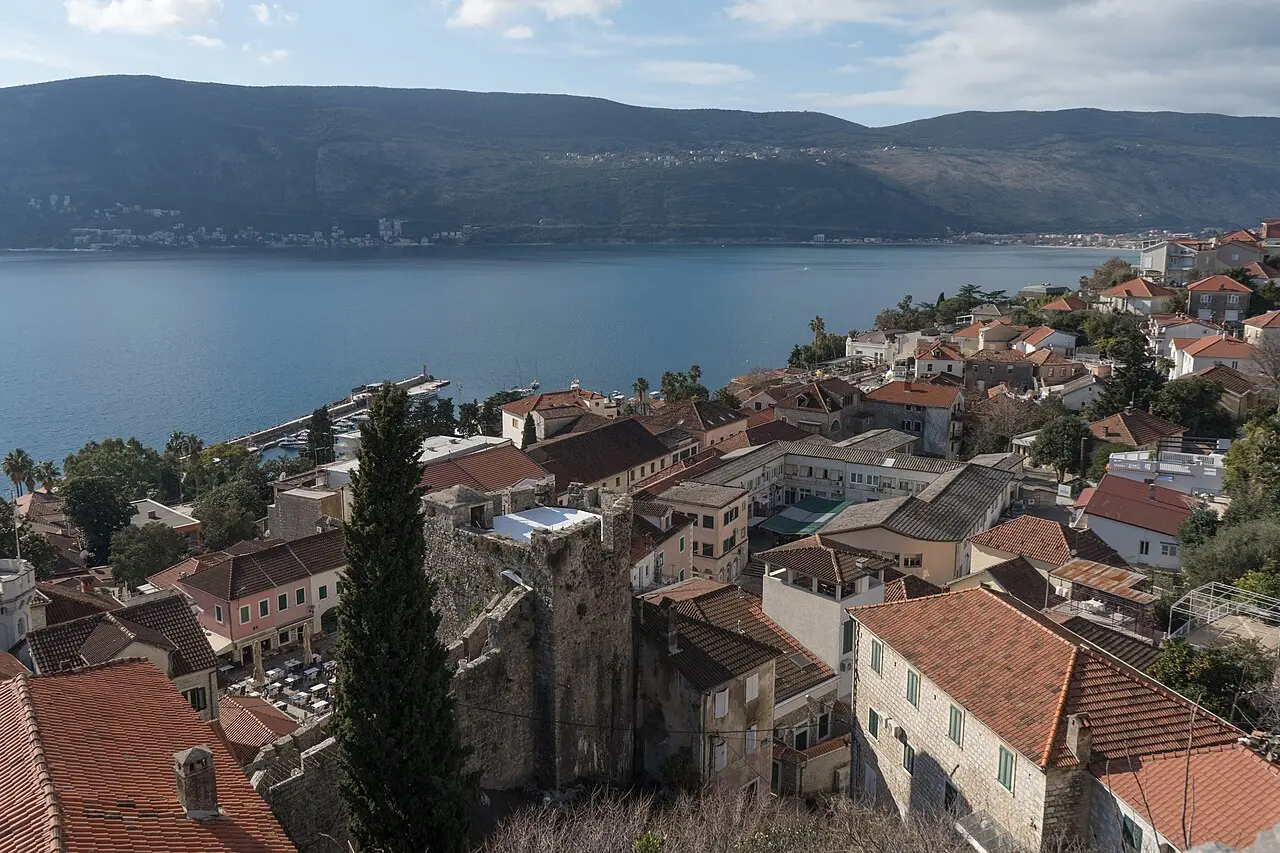
Herceg Novi is the final town before the border, and you’ll want a proper stop. Built up the hillside in stairs and terraces at the mouth of the bay, its old town is a knot of steps, small squares and fortresses. The Clock Tower of 1667 is the gate into the Stari Grad; below it the streets open onto cafe terraces looking out to sea.
Don’t skip Kanli Kula - the one climb worth making, the sprawling fortress above town - an old Ottoman prison that now doubles as an open-air theatre, with the best panorama over the roofs and the bay mouth. Entry is around EUR 4 (reconfirm on the day). Down by the water, Forte Mare guards the seafront for about EUR 5, and the Savina Monastery just east of town, with its three churches in Mediterranean gardens, is free to wander. If you’d rather stretch your legs on the flat, the Pet Danica promenade runs some 6 km along the shore on an old Austro-Hungarian rail bed. More is in the Herceg Novi guide.
The border: Debeli Brijeg from the driver’s seat
About 12 km past Herceg Novi the road reaches Debeli Brijeg on the Montenegrin side, Karasovici on the Croatian - the busiest of the crossings and the one every coastal driver uses. Croatia has been in the Schengen Area since 2023, so this is a real external frontier with passport checks both ways, not a wave-through. The crossing itself is free.
You’ll want a few things straight before you get there:
- Carry your passport, not just an EU ID card - Montenegro is outside the EU. Everyone in the car needs their own.
- The EU Entry/Exit System (EES) has been live since April 2026. On your first crossing, non-EU travellers give fingerprints and a facial photo, which adds a few minutes per person; later crossings are quicker once your record exists (checked July 2026 - reconfirm).
- ETIAS isn’t required yet at the time of writing and you can’t buy one - it’s expected to phase in from late 2026 into 2027, so ignore any site trying to sell you one now and check the current rule before you travel.
- Timing beats everything. Out of season the queue is often 15-30 minutes; in July and August, and especially on weekend mornings, an hour or more is normal. Cross before about 8am or in the evening, and never book a tight connection on the far side.
For fares, timetables and the same border done by public bus rather than your own car, see Kotor to Dubrovnik by bus and transfer.
Into Dubrovnik
Once you’re through, it’s about 40 km up the coast into Dubrovnik, with the walls of the old city coming into view from the high road above. Don’t try to drive into the old town - it’s pedestrian-only. Aim for a car park outside the walls (Ilijina Glavica and the Gruz area are the usual options) and walk in through one of the gates. The set-piece is the loop of the city walls above the roofs and the sea; go late in the day when the light softens and the cruise crowds thin. For where to stay, the best day trips and the walls themselves, our sister site’s Dubrovnik travel guide picks up where this drive ends.
The car, and doing it in reverse
Two practical points make or break a self-drive across this border.
First, the paperwork. If you’re in a hire car, the single most important check is cross-border permission: many Montenegrin rental contracts allow Croatia but need advance notice and a Green Card for the insurance, and a few exclude it outright. Sort that when you book, not at the barrier, and budget for a cross-border fee - commonly EUR 10 to 50 depending on the company. Our guide to renting a car in Montenegro covers the green card, pickup points and how to keep the cost down.
Second, it works just as well the other way. From Dubrovnik you would drive south to the same Debeli Brijeg crossing, take the ferry or the Perast loop into the bay, and finish in Kotor - the same stops in reverse, with the EES exit from Croatia recorded at the border. Many people run it as a day trip from a Dubrovnik base; if that’s you, the Dubrovnik to Montenegro day trip lays out realistic timings and what you can actually see.
Montenegro and Croatia both use the euro, so you don’t need to change money, but keep some coins for parking machines and the ferry. For the wider picture of getting around - buses, taxis and the bay ferry - see getting around Montenegro, and browse more Montenegro routes for other drives.
Nearby / read also
- Kotor to Dubrovnik by bus and transfer - fares, timetables and the border without a car.
- Dubrovnik to Montenegro day trip - the same route as a there-and-back day.
- Renting a car in Montenegro - green card, pickup points and costs.
- Kotor guide · Herceg Novi guide · Getting around Montenegro
- All routes in Montenegro - more driving ideas.
Route day by day
- Days on the road
- 1
- Distance
- ≈90 km
- Budget from
- 40 EUR
- Best season
- May, June, July, August, September, October
The route at a glance
-
Kotor
Route startstop ≈150 min
Start early in the walled UNESCO old town at the head of the bay. Climb the walls to San Giovanni for the view, or just wander the lanes and meet the famous cats, then get on the road before the coast fills up.

Photo: Alexkom000 / Wikimedia Commons, CC BY 4.0 ( source) -
Perast
12 km from the startstop ≈90 min
A one-street Baroque town on the bay. Take the five-minute boat out to Our Lady of the Rocks, the man-made islet with the blue-domed church, then push on around the water toward the narrows.
Photo: Chensiyuan / Wikimedia Commons, CC BY-SA 4.0 ( source) -
Kamenari ferry (Verige narrows)
26 km from the startstop ≈20 min
The bay pinches to a few hundred metres here. A car ferry shuttles across in 5 minutes for EUR 5, saving about 30 km of driving around the inner shore - or carry on by road if you want the full loop.
Photo: Calistemon / Wikimedia Commons, CC BY-SA 4.0 ( source) -
Herceg Novi
43 km from the startstop ≈120 min
The last Montenegrin town before Croatia, stacked up the hillside in stairs and terraces. Climb to the Kanli Kula fortress for the panorama over the mouth of the bay, then it is a short run to the border.
Photo: Alexkom000 / Wikimedia Commons, CC BY 4.0 ( source) -
Dubrovnik
90 km from the startstop ≈240 min
Over the Debeli Brijeg border and up the Croatian coast to the walled city. Park outside the old town, walk the city walls, and you have crossed from one Adriatic set-piece to another in a single day.
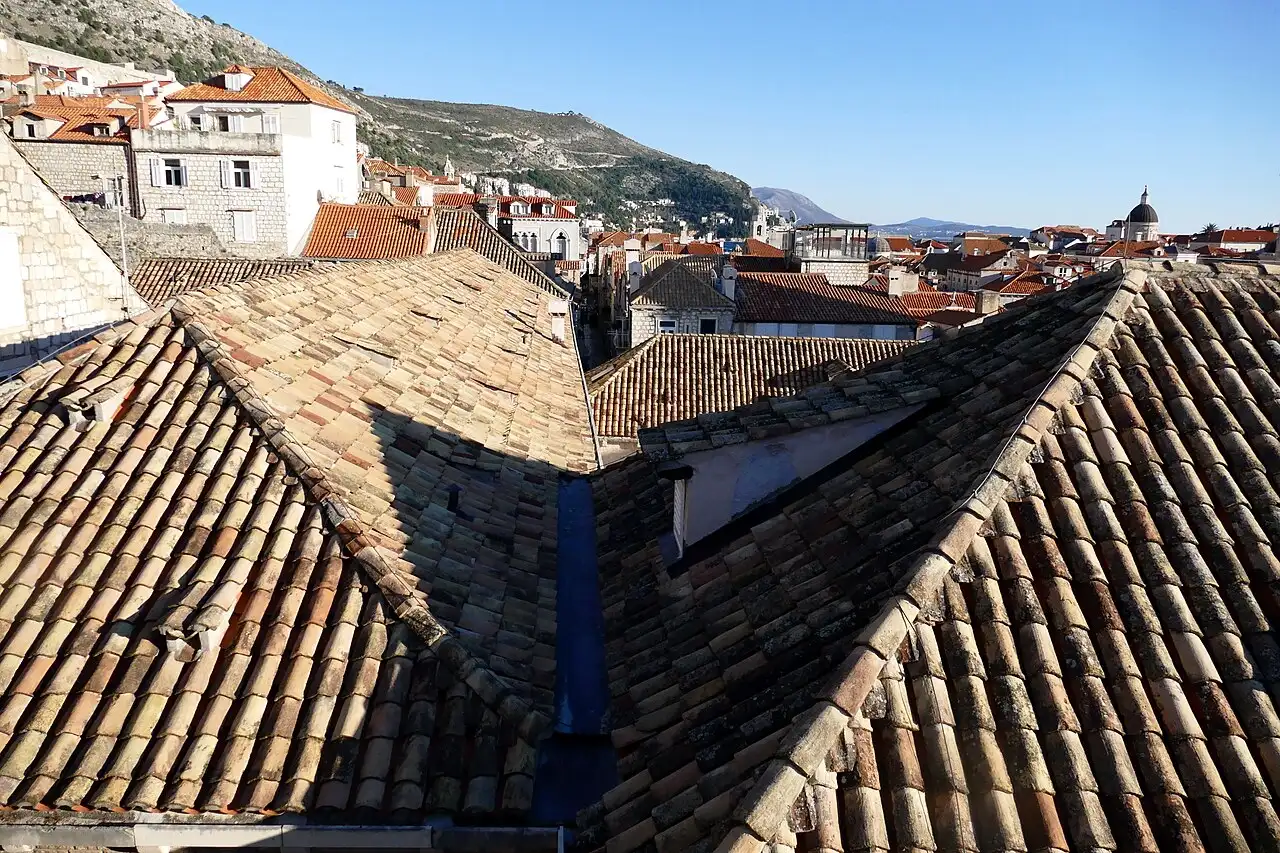
Photo: donald judge / Wikimedia Commons, CC BY 2.0 ( source)
Route map
The map with stops loads on click - to keep the page lightweight.
The map didn’t load. Check your connection and refresh the page.