
Herceg Novi, Montenegro: Old Town, Forts & Riviera
Herceg Novi travel guide: the sunny stepped Old Town, the Forte Mare, Kanli Kula and Spanjola forts, the Igalo spa and how to get there from the border.
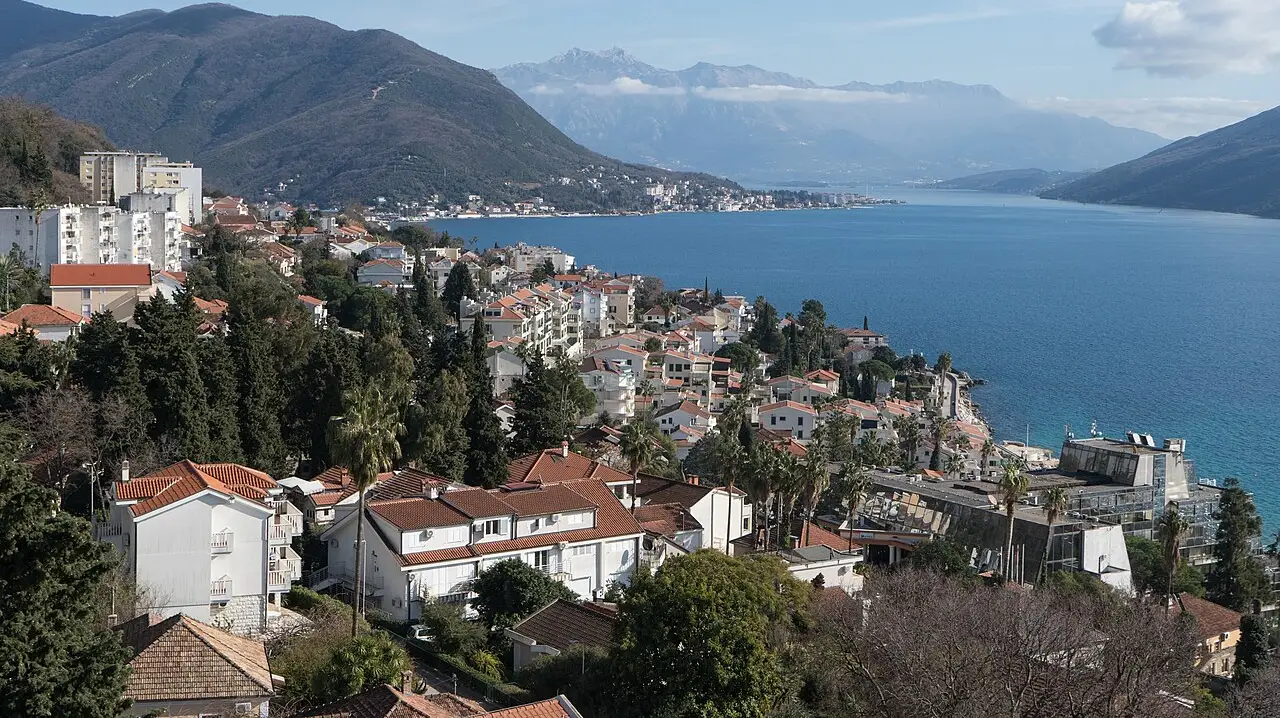
Herceg Novi sits right where Montenegro begins, the first town you reach after the Croatian border, guarding the mouth of the Bay of Kotor. It’s a town built on stairs: the Old Town climbs the hillside in tiers of stone lanes and squares, stitched together by so many steps that locals half-jokingly call it the town of a thousand of them. It gets more sun than almost anywhere else on the coast, its seafront is lined with palms and mimosa that sea captains carried home from their voyages, and three old fortresses stack up the slope above the water. Most people pass through on the way to Kotor or Dubrovnik; the ones who stop find the least polished and, for many, the most likeable old town on the Boka.
Is Herceg Novi worth visiting?
Yes, if you want a working Adriatic town rather than a museum-piece. Herceg Novi isn’t as instantly perfect as Kotor, and that’s the point: people actually live in the Old Town, the cafés fill with regulars rather than cruise groups, and prices sit a notch below the headline resorts. The reward for the stairs is a compact historic core of Venetian, Ottoman and Austrian layers, wrapped around fortresses you can climb, with the whole bay opening up beneath you.
The honest trade-off is the terrain. This is a steep town, and the Old Town is genuinely hard work for anyone with weak knees, a pushchair or heavy bags, since almost everything involves steps and there’s no way around them. It also has less sand than Budva and a shorter “sights” list than Kotor, so it suits travellers who like wandering, swimming off the promenade and using the town as a relaxed base more than those ticking off big-name attractions. If that sounds like you, it’s one of the coast’s easy pleasures.
The Old Town and its stairs
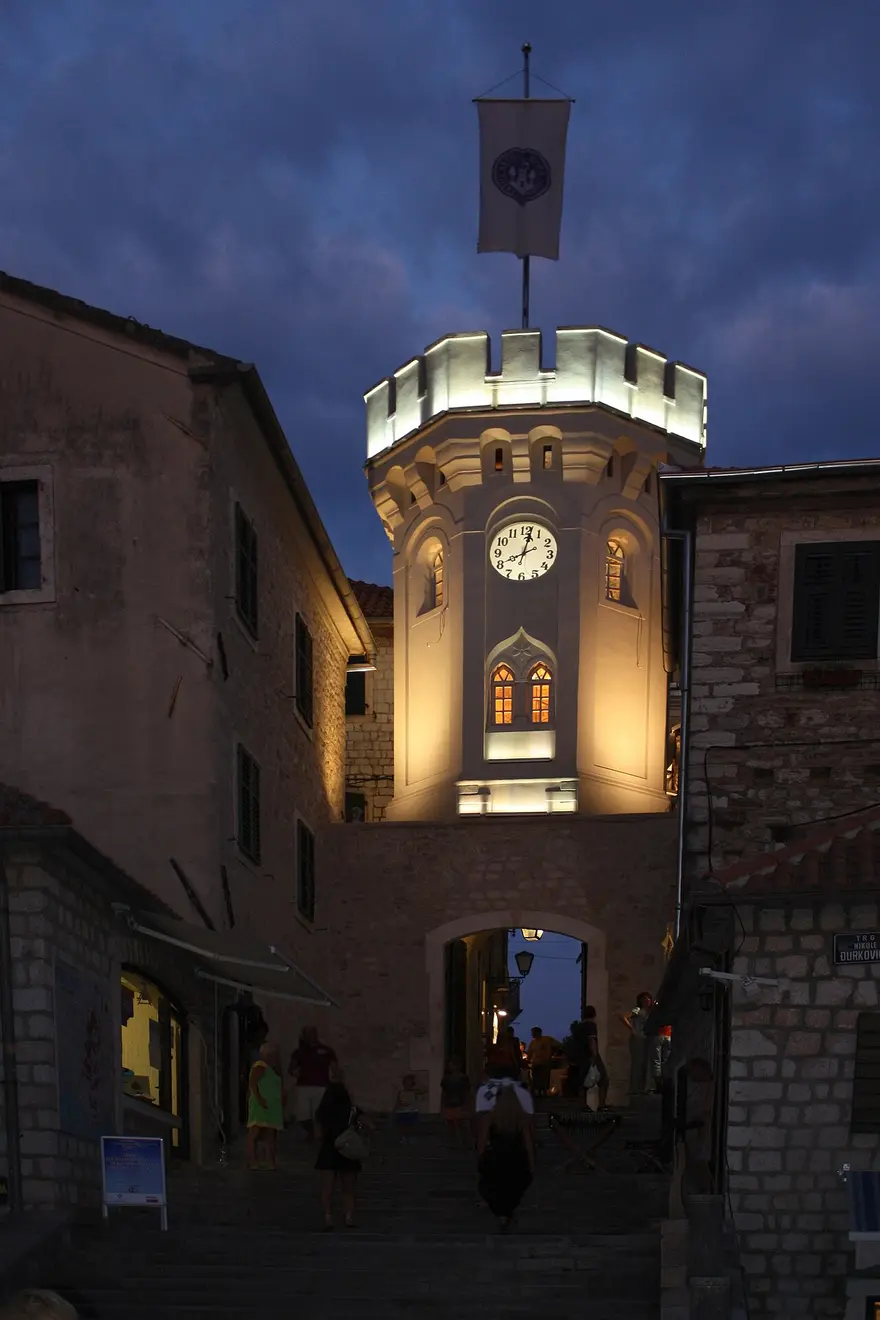
Start at the Sahat Kula, the Ottoman-era clock tower that stands over an arched gate at the top of a stairway from the waterfront. Pass through it and you’re in the Old Town proper, a knot of narrow lanes and small squares that steps its way down toward the sea. The heart of it’s Belavista Square (Trg Herceg Stjepana), an open, café-ringed terrace paved in pale stone, with the domed Orthodox Church of the Archangel Michael (built 1883-1911) at its centre. It’s the kind of square where you order a coffee, watch the town go about its day, and stay far longer than you planned.
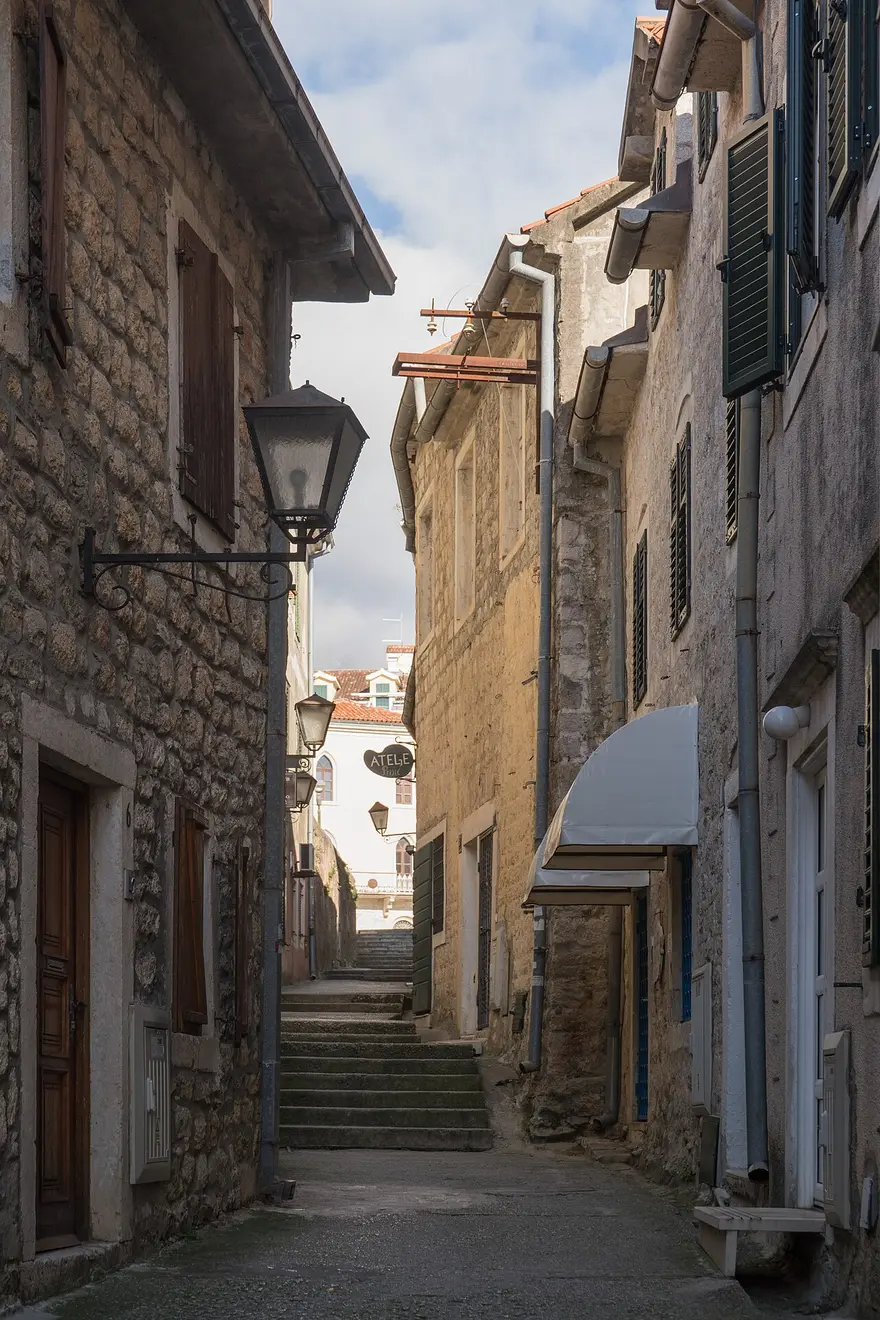
From there the lanes fan out and, inevitably, up and down. There are no grand avenues; the pleasure is in the detail, the shuttered stone houses, the tangle of bougainvillea, the sudden gaps that frame a slice of blue bay. Wear proper shoes rather than sandals, because the steps are uneven and polished smooth in places, and give yourself time simply to get lost. It’s small enough that you can’t go far wrong.
The three fortresses
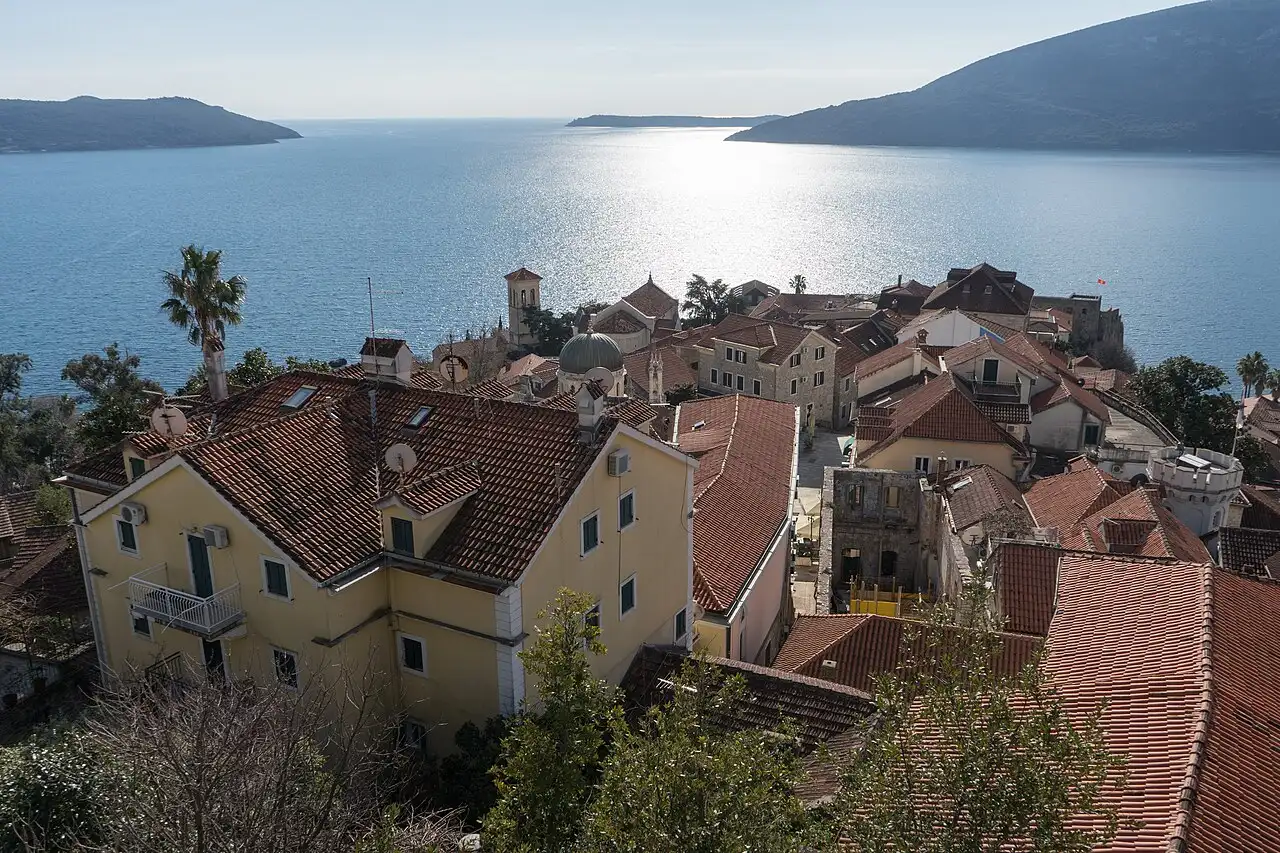
Herceg Novi wears its history as a run of forts up the hillside, each left by a different ruler. The town was founded in 1382 by the Bosnian king Tvrtko I, then passed through Ottoman (from 1481), Venetian (from 1687) and Austrian (from the late 1790s) hands, and each of them built.
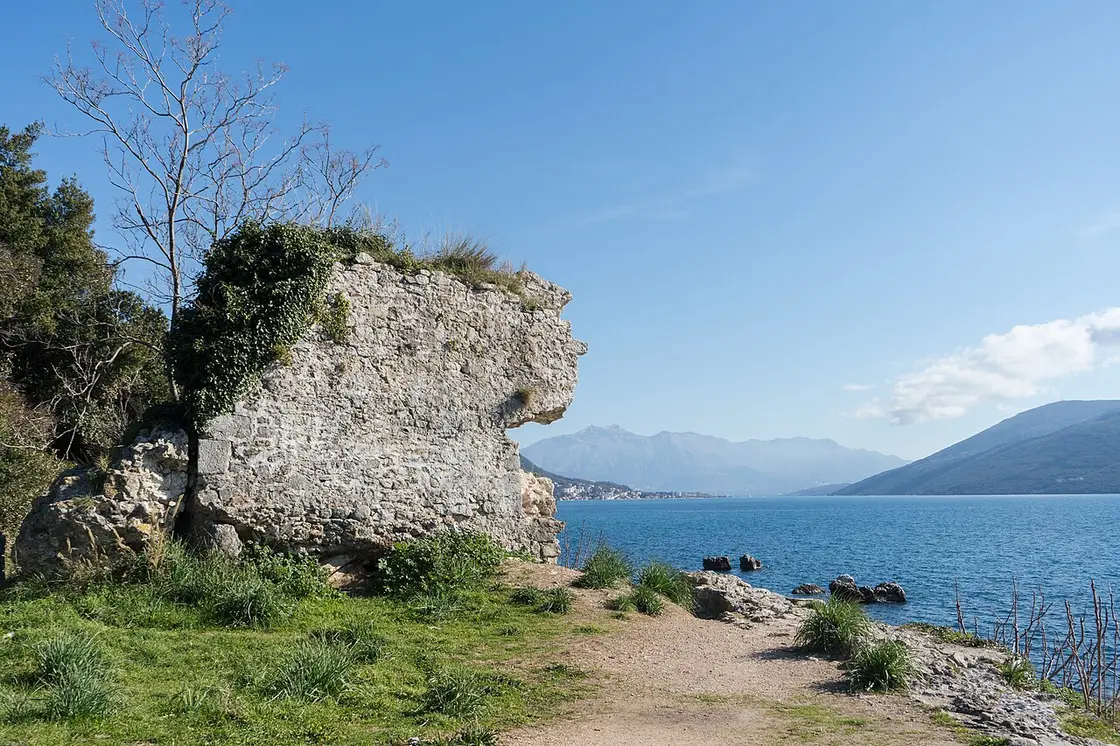
Forte Mare, the “sea fort”, stands at the waterline on the edge of the Old Town. Its origins go back to Tvrtko’s original fortress, rebuilt and reshaped by the powers that followed, and today you can walk its ramparts - you’ll want the view straight out over the water; in summer the courtyard doubles as an open-air cinema and stage. Just below it, near the shore, are the eroded remains of the Venetian citadel, knocked about by the great 1979 earthquake that damaged much of this coast.
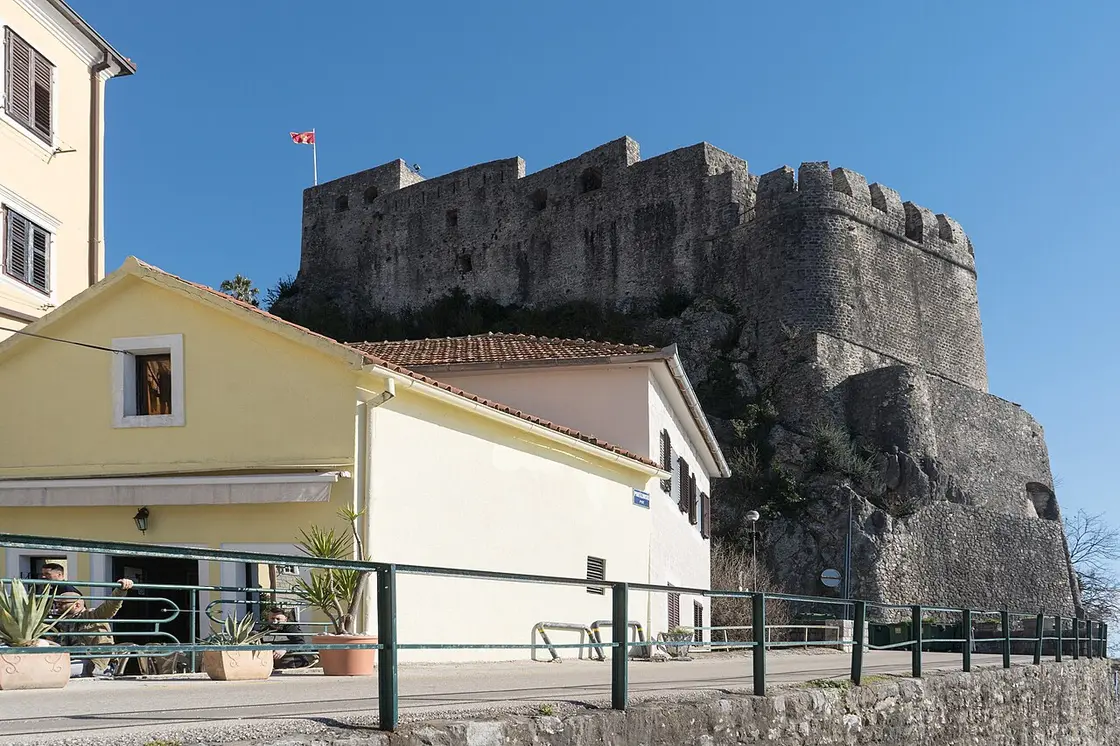
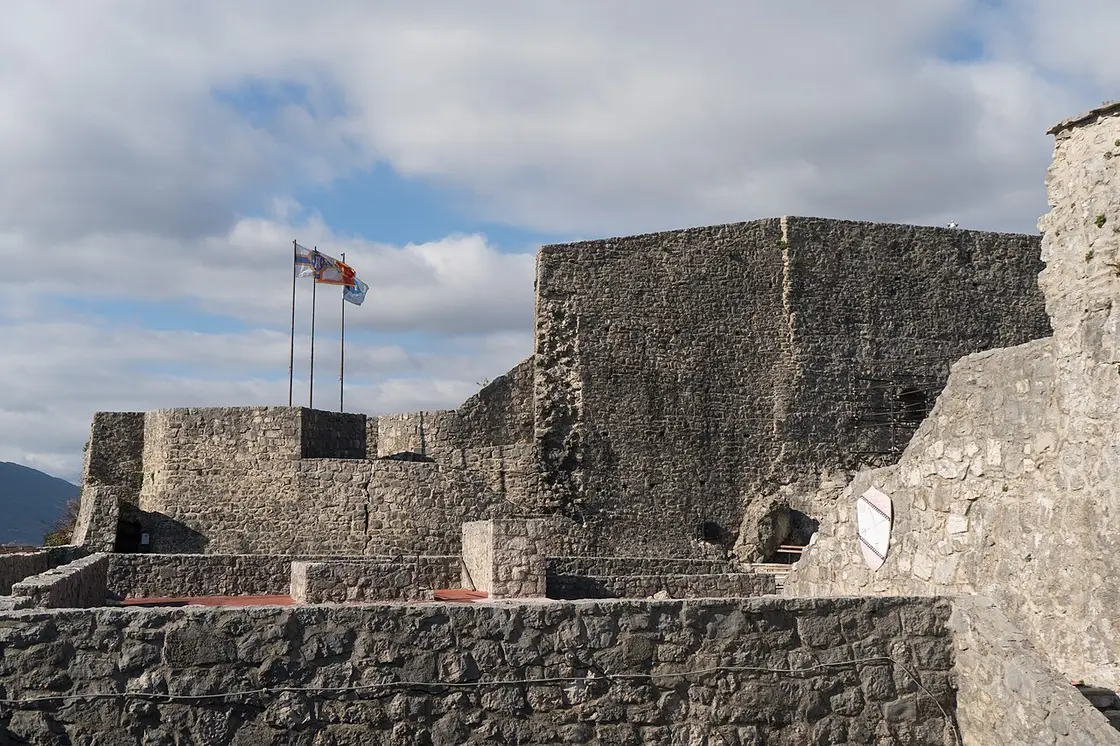
Higher up sits Kanli Kula, the “Bloody Tower”, the town’s largest fort. The Ottomans built it above the Old Town, roughly 85 m over the sea, and its dungeons earned the grim name; you’ll still find messages and ship drawings scratched into the walls by prisoners. Reconstructed in the 1960s, it now works as a spectacular open-air amphitheatre - you’ll get the widest view over the town and bay from its ramparts. In summer (broadly May to September) it usually opens around 09:00 to 19:00 for a small fee, often quoted at about 4 euros, with children under 12 free; don’t treat those as fixed - check at the gate, since hours and prices drift year to year.
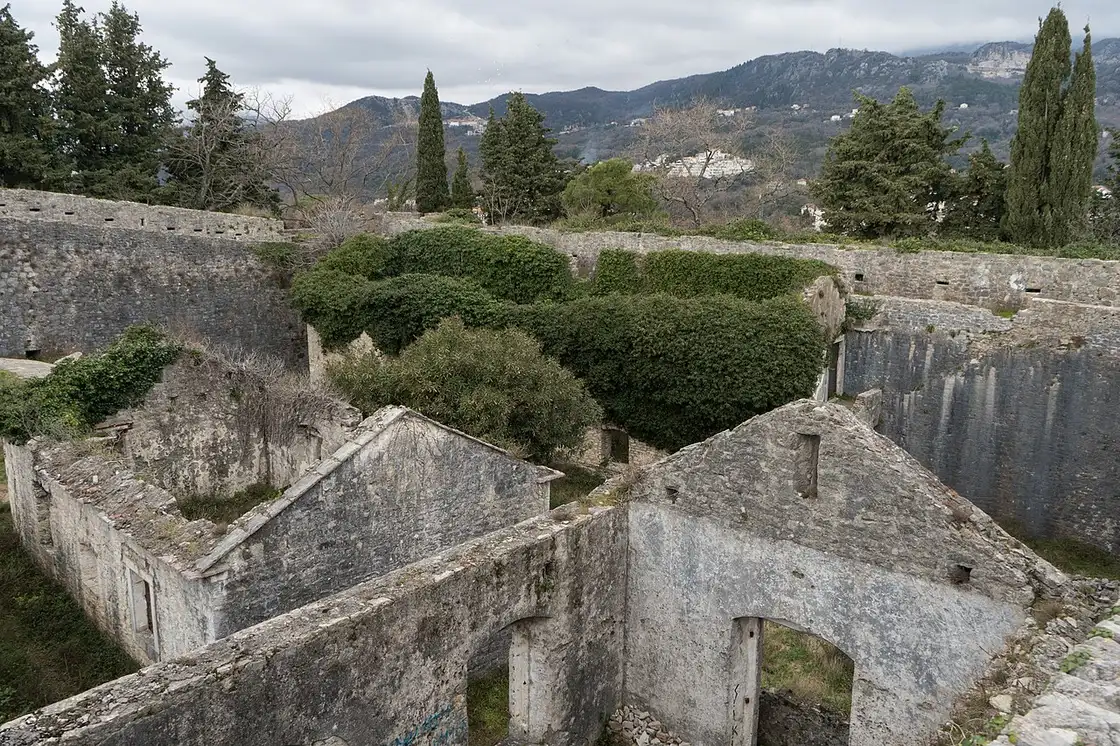
The third, Španjola, crowns the hill above everything else. It was begun during a brief Spanish occupation in 1538 and later enlarged by the Ottomans, and today it’s a roofless, overgrown ruin, the least visited of the three because it means a stiff walk of roughly a kilometre uphill from the centre. Go anyway if you have the legs: the fort is free to wander and the panorama over the whole bay from the top is the best of the lot. Take water and grippy shoes, and don’t expect railings or signs.
The seafront, the beaches and the boat trips
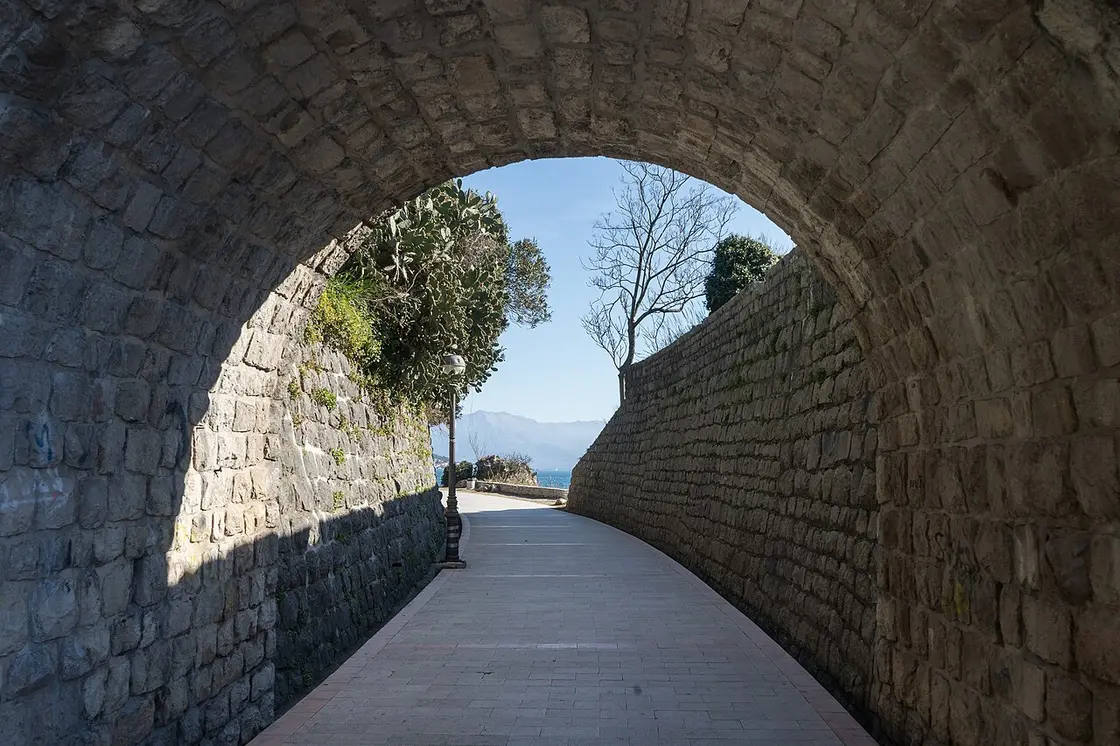
Below the Old Town runs the Pet Danica promenade, a long paved seafront path (often cited at around 7 km) that threads east along the water past cafés, bathing platforms and small pebble beaches. It’s where the town swims and strolls, and walking it’s the nicest way to feel the place: subtropical planting, the harbour full of yachts, tunnels and steps cutting between one cove and the next. The beaches here are mostly pebble or concrete rather than sand, and several fly the Blue Flag for water quality, but this is calm-water bathing off the promenade rather than a wide sandy resort.
Herceg Novi’s real edge is its position at the bay’s mouth, which makes it the shortest jumping-off point for the open-sea sights on the Luštica side. Boats leave the town and neighbouring Igalo waterfronts for the Blue Cave, the glowing sea grotto that’s the coast’s classic swim stop, along with Žanjice beach, the fishing hamlet of Rose and the fortress island of Mamula. This is closer from here than from Kotor or Budva, so if the cave is on your list, base a morning around it; our Bay of Kotor boat tour guide covers what you actually see and what it costs, and the Luštica peninsula guide has the quiet bays beyond. For sand, the best beaches in Montenegro are a drive south around Budva and Ulcinj.
Igalo: the spa suburb
A couple of kilometres west, toward the border, Herceg Novi runs into Igalo, a spa town with an unusual claim: the dark mineral mud on its shore, igaljsko blato, is used to treat aches, rheumatism and skin conditions. The big Institute “Dr Simo Milošević” built a whole thalassotherapy resort around the mud and the local mineral springs, and people come from across the region for courses of treatment as much as for a beach holiday. The Yugoslav president Tito kept a summer villa here, the Villa Galeb, which tells you how the place was once regarded. Even if you skip the treatments, it is worth knowing that “Herceg Novi” as a base quietly includes this health-resort strip next door.
Savina Monastery and the Mimosa Festival
On a cypress-covered rise above Igalo stands Savina Monastery, an Orthodox complex of churches in a peaceful garden looking out over the water; its Great Church dates from the late 18th century, and the setting alone justifies the short trip. The other thing Herceg Novi is known for is flowers. Because it’s so sheltered and sunny, the mimosa blooms here in the depths of winter, and the town throws a Mimosa Festival to celebrate: it has run since 1969, filling February and early March with parades, brass bands, boat processions and a great deal of yellow blossom and mandarins. The exact dates shift each year, so check the town tourism board (hercegnovi.travel) or the Herceg Fest programme before planning a winter visit around it.
How to get to Herceg Novi
Herceg Novi is the westernmost town on the Montenegrin coast, which shapes every route in.
- From Croatia / Dubrovnik. The town is the first stop after the border, about 9 km from the Debeli Brijeg crossing and about 40 km from Dubrovnik. It’s a very popular day trip and transfer from Dubrovnik, but budget extra time for the border crossing, which can crawl in July and August. Buses, tours and private transfers all run it. Driving the coast yourself, Herceg Novi is the last Montenegrin stop on our Kotor to Dubrovnik road trip.
- By air. The nearest airport is Tivat (TIV) - about 24 km using the Kamenari-Lepetane ferry, or roughly 50 km driving the long way around the bay - with seasonal European flights. Podgorica (TGD), the main year-round airport, is farther, well over 100 km. Both are covered in our guide to Montenegro airport transfers.
- The Kamenari ferry. For Tivat, its airport and the Luštica side you can either drive the long way around the head of the bay or take the frequent Kamenari to Lepetane car ferry across the narrows - €5 a car, five minutes on the water, and about 20 minutes saved on the airport run. For Kotor it’s no shortcut at all: the town sits at the head of the bay on the road you would be driving anyway.
- By car or bus. Coastal buses connect Herceg Novi with Kotor, Budva and beyond, but a car gives you the freedom to reach the beaches and the Luštica bays. See getting around Montenegro for the connections and renting a car in Montenegro for the practicalities of driving the coast road and its tunnels.
Where to stay and practical tips
The short version: stay in the Old Town for atmosphere and accept the stairs, or base in Igalo for flatter ground and easy beach access - our full where to stay in Herceg Novi guide breaks those two down plus the riviera chain east toward Kumbor and Bijela, area by area. Many travellers also visit Herceg Novi as a day trip from Kotor, Tivat or Dubrovnik instead, which sidesteps the stairs question entirely; if you’re picking between Kotor and Herceg Novi as a base, Kotor or Herceg Novi lays out the trade-offs. A few things worth knowing:
- Currency. Montenegro uses the euro, though it’s not in the EU. Cards are common in town; carry some cash for small cafés, the boat trips and parking.
- When to go. The town is at its sunniest and busiest in July and August; late spring and September are warmer underfoot for the stairs and the fort climbs and far calmer. Our best time to visit Montenegro guide has the seasonal picture, and the Mimosa Festival makes February a quirky off-season option.
- The stairs, again. This can’t be overstated for anyone with mobility issues: the Old Town is built on steps, so plan around them.
Herceg Novi pairs naturally with the rest of the bay, so read it alongside things to do in Montenegro for the wider list of sights, and the Bay of Kotor and coast road trip itinerary, which starts on this shore and runs the whole Boka to Kotor, Perast and the Riviera beyond.
Nearby / read also
Photos
On the map
The map loads on click - to keep the page lightweight.
The map didn’t load. Check your connection and refresh the page.
Read also

Cities · 9 min read
Bečići, Montenegro: Beach Resort Guide
Updated · August 28, 2026Bečići resort guide: 2 km beach, hotels from Splendid to Iberostar, the promenade walk to Budva, season tips and how to get there from Tivat.

Cities · 13 min read
Petrovac, Montenegro: Guide to the Quiet Beach Town
Updated · July 31, 2026Petrovac travel guide: 600 m of red sand, the Kastio fort, the chapel islet, buses from Budva in half an hour, and whether to base here or in Budva.

Cities · 12 min read
Žabljak: Where to Stay in Montenegro's Mountain North
Updated · September 3, 2026Žabljak travel guide: the base town for Durmitor - where to stay (centre, Black Lake road or a cabin), the Savin Kuk ski area, prices and how to get there.

Cities · 13 min read
Bar, Montenegro: Port, Stari Bar & the Old Olive
Updated · August 1, 2026Bar travel guide: the ferry port from Italy, ruined Stari Bar, the 2,000-year-old olive tree, King Nikola's Palace and the scenic railway inland.