
Podgorica, Capital of Montenegro: 2026 Travel Guide
Podgorica is the capital of Montenegro - and Cetinje is the Old Royal Capital. What to see in a day, the TGD airport boom, day trips and where to stay.
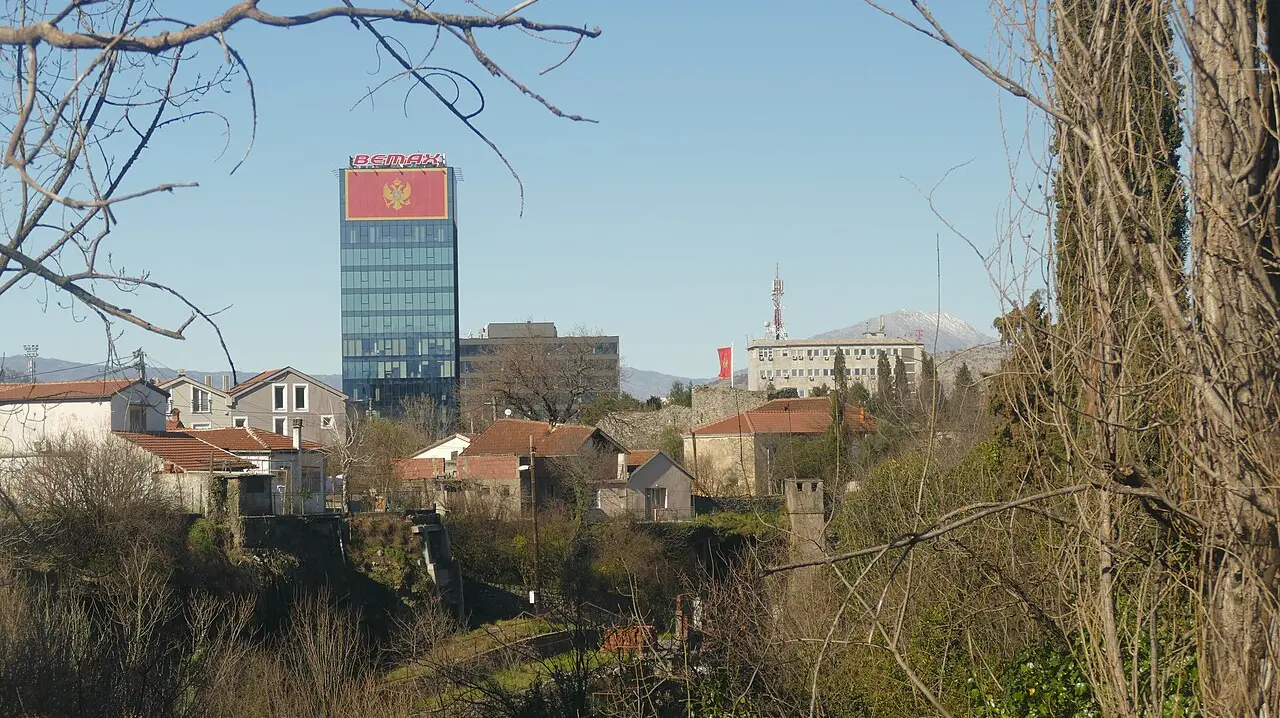
Podgorica is the capital of Montenegro and its largest city: the seat of parliament and government, the country’s main road and rail junction, and home to its biggest airport (Podgorica Airport, code TGD). The 2023 census counted 179,505 people here - 28.78% of the country, more than a quarter of Montenegro’s 623,633 residents. It sits inland on the plain where the Ribnica meets the Morača, ringed by mountains, an hour and a half from the sea.
There’s a constitutional wrinkle worth knowing, because it confuses almost everyone: Montenegro effectively has two capitals. Podgorica is the capital, while Cetinje, the old royal town up in the karst, keeps the separate title of Old Royal Capital (prijestonica) and is where the president’s official residence, the Blue Palace, has stood since 2010. So Podgorica is the capital in every working sense of the word, and Cetinje is the reason the question keeps coming up.
Why Podgorica became the capital
Podgorica has only been the capital since 13 July 1946, when the town was renamed Titograd after Josip Broz Tito and made the capital of the new People’s Republic of Montenegro in place of Cetinje. The logic was practical rather than sentimental: Cetinje sits in a high karst bowl with no room to grow, while Podgorica lies on a flat, well-watered plain at the junction of the routes to the coast, to Serbia and to Albania. In 1992 the historic name came back; the capital status didn’t move.
That history explains the look of the place. The town was bombed heavily in the Second World War and rebuilt as a socialist administrative city, so the centre mixes mid-century blocks, newer glass builds and a few surviving Ottoman corners rather than presenting a walled old town. If you came looking for Kotor, you’ll be disappointed. If you came to see how the country actually lives and works, you’re in the right place.
Is Podgorica worth visiting?
Be honest with yourself about what Podgorica is. It doesn’t try to compete with the Adriatic resorts on looks, and that’s fine - its appeal is everyday Montenegro rather than a polished tourist set piece. You get real cafés full of locals, easy walks along the Morača, green parks, fair prices and the country’s best transport connections.
For most itineraries Podgorica works best as a gateway and a base, not a destination in its own right. You’ll likely arrive here by plane, pick up a hire car or a bus, and use the city as a hinge between the coast, Lake Skadar to the south and the northern mountains. Give it an afternoon and an evening, enjoy a relaxed dinner, and you’ll have seen the best of it without feeling you missed anything.
It’s also the cheapest place in the country to be a traveller: a coffee costs what locals pay rather than what a cruise passenger pays, and because this is a working city rather than a beach resort, nothing shuts down in October.
What to see in Podgorica
The sights are spread across the two halves of the city - the modern centre west of the Morača and the older quarters to the east - but everything is walkable or a short taxi ride apart.
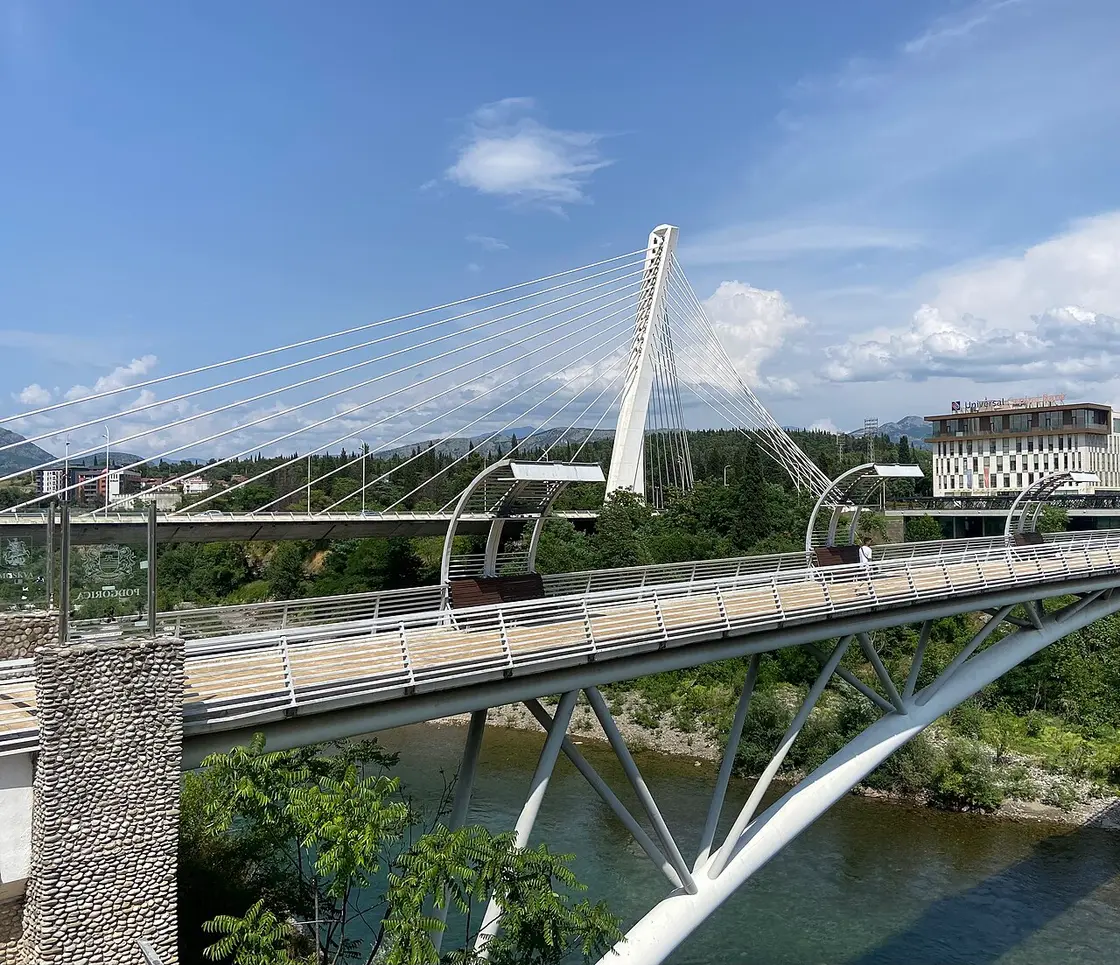
- Millennium Bridge (Most Milenijum). Podgorica’s signature image: a white cable-stayed bridge over the Morača, opened in 2005, with a single inclined pylon and fanned cables. It’s the city’s most photographed structure and the easiest landmark to find your bearings by.
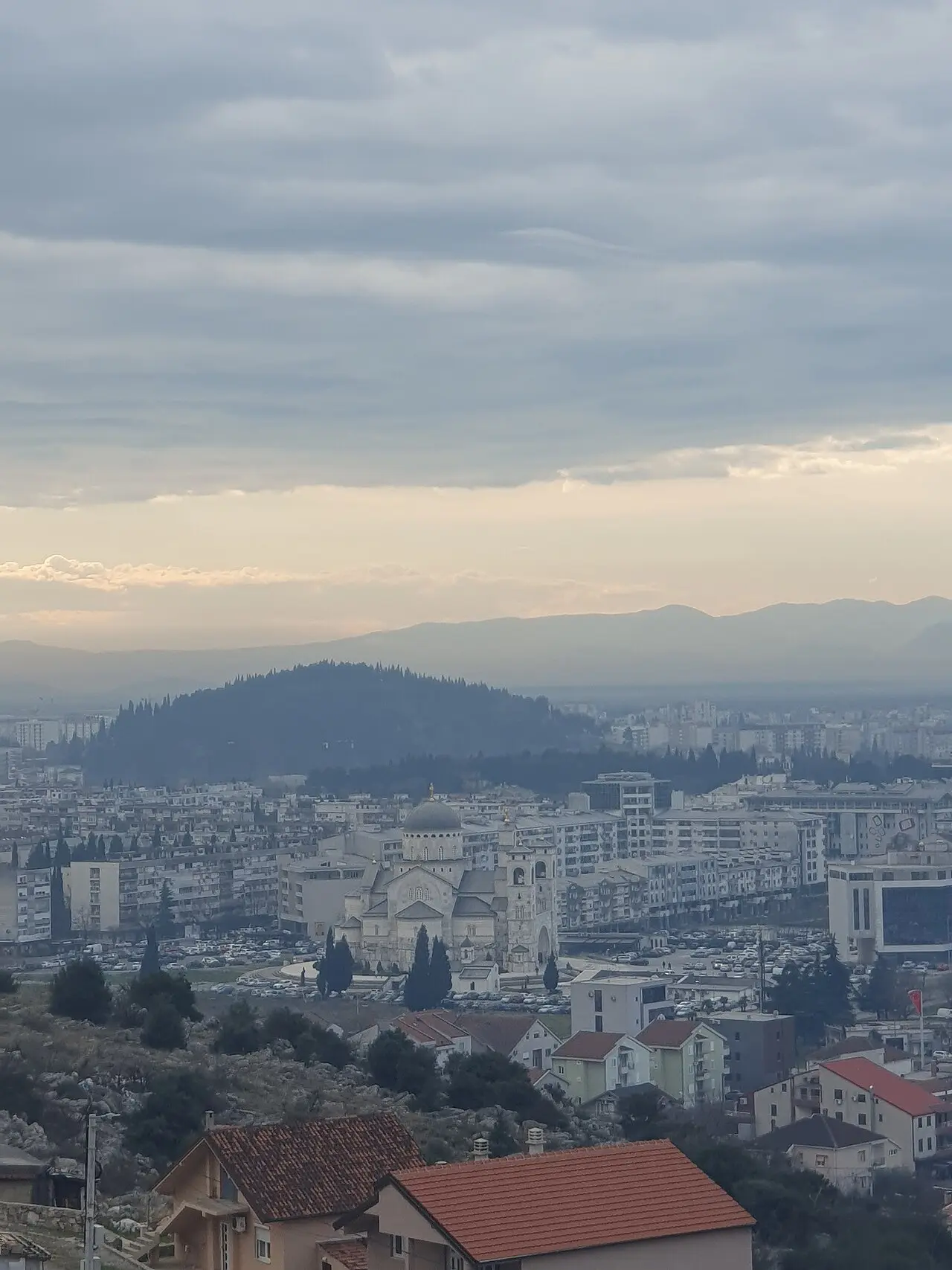
- Cathedral of the Resurrection of Christ (Saborni hram Hristovog Vaskrsenja). A large Serbian Orthodox cathedral in white stone with twin bell towers and gilded domes, consecrated in 2013. Its scale and the gold interiors make it the standout modern building in town.
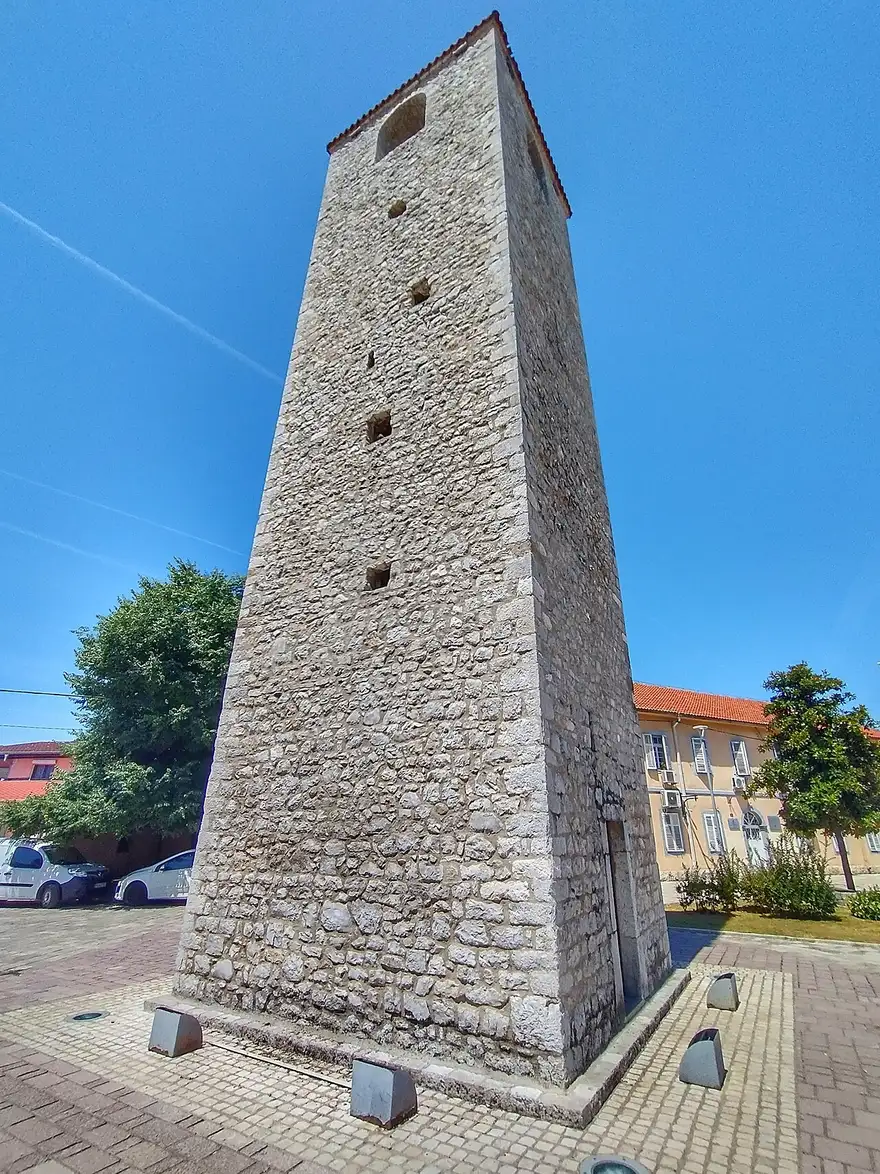
- Clock Tower (Sahat Kula). The best-preserved relic of Ottoman Podgorica, an 18th-century stone tower on Bećir-bega Osmanagića Square in the old quarter - a reminder that this was a Turkish-administered town for centuries.
- Stara Varoš and Ribnica fortress. The old Ottoman neighbourhood of narrow lanes and low houses, plus the ruined Ribnica (Nemanjića) fortress on the spit where the Ribnica meets the Morača - quiet, atmospheric and free to wander.
- Petrović Palace (Dvorac Petrovića). A 19th-century royal residence set in Kruševac park, now housing a contemporary art centre - one of the city’s prettier green corners.
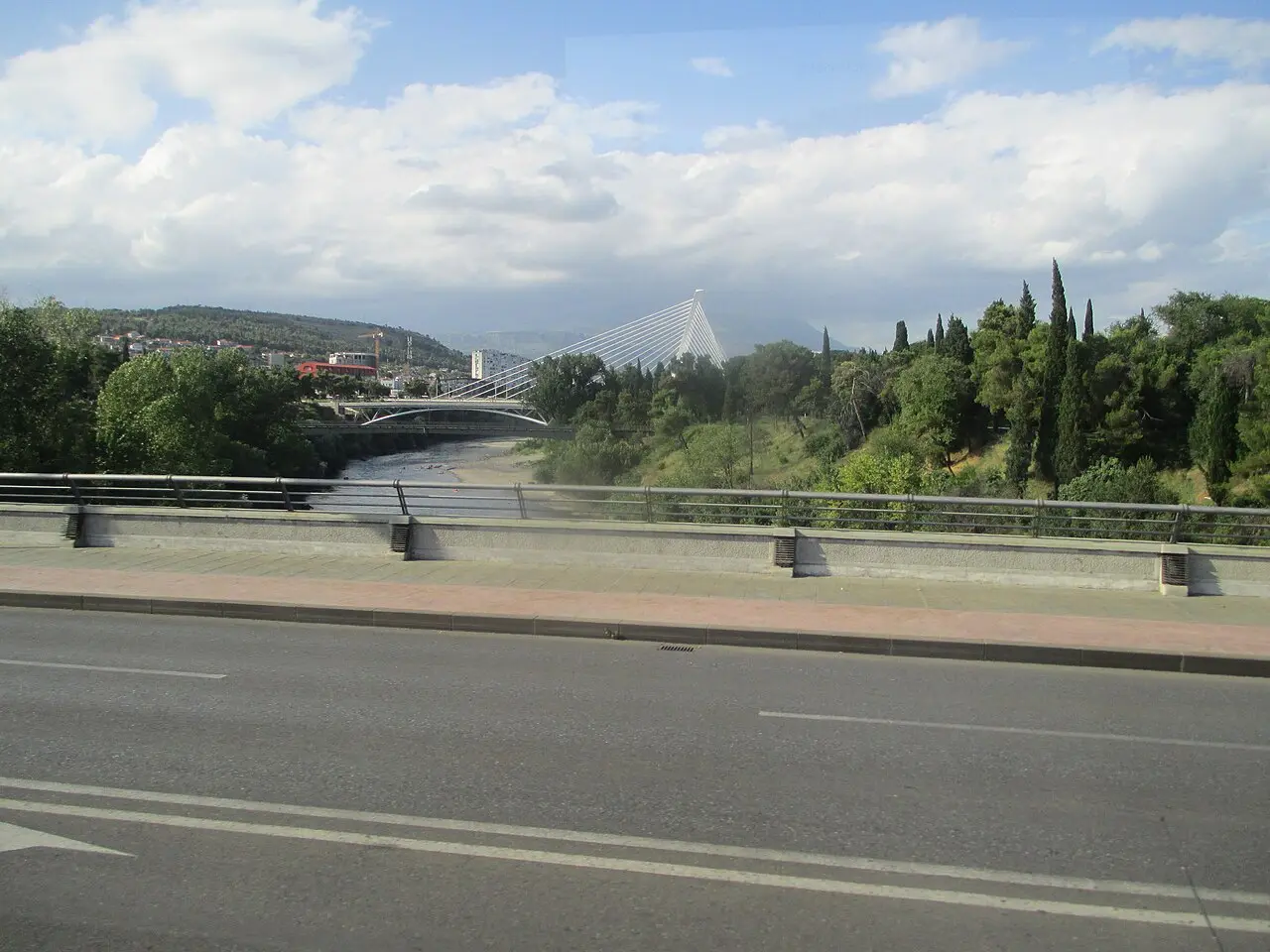
The two rivers are part of the appeal. Locals come down to the Morača and Ribnica banks in summer to swim and sunbathe on the rocky shore right in the middle of the city, and the green belt around the water makes for an easy stroll. For a sense of how the city sits in its landscape, the surrounding hills give long views over the rooftops to the mountains beyond.
Neighbourhoods and where to stay
Podgorica is compact, and for a short stay you want to be in or near the centre so you can walk to dinner and the riverside. Nova Varoš, the modern centre, is the convenient default and holds most of the hotels; Stara Varoš, the old Ottoman quarter, is quieter and a little older-feeling; and the area around the bus and train stations works if you’re just passing through. Our full where to stay in Podgorica guide goes deeper on all three, plus how many nights the capital actually needs.
How to get to Podgorica: airport, buses and the coast
Podgorica is Montenegro’s transport hub, and that’s the single best reason to pass through it.
Podgorica Airport (TGD) is the country’s main international airport, about 12 km south of the centre. It handles year-round flights to European hubs and is the better choice for the capital, Lake Skadar and the north; Tivat Airport (TIV) on the coast is closer for Kotor and Budva but is more seasonal. From TGD you can take a taxi or a pre-booked transfer into the city; confirm current taxi fares and shuttle options on arrival, as they change (check locally).
The reason to look again at TGD in 2026 is the Wizz Air base. The airline stationed aircraft here from spring and rolled out 17 new routes over the summer season, and with 888,400 seats on the Montenegrin market this summer - some 579,000 more than last summer - it has become the largest carrier in the country by capacity, at about 29 percent. In practice you’ll often find flying into the capital and driving to the coast cheaper than flying to Tivat, which flips the usual advice if you’re travelling on a budget or outside July and August. Compare the two in our Tivat vs Podgorica airport guide before you book.
For onward travel, Podgorica has the country’s busiest bus station and its main railway station side by side just east of the centre. Useful connections:
| Route | Approx. distance | Approx. time by car |
|---|---|---|
| Podgorica → Kotor | ~72 km over Cetinje | ~1.5 h |
| Podgorica → Budva | ~64 km | ~1 h 20 |
| Podgorica → Cetinje | ~36 km | ~45 min |
| Podgorica → Žabljak (Durmitor) | ~125 km | ~2.5 h |
The Kotor line is the short mountain road over Cetinje and Njeguši. Buses and most transfers take the coastal highway instead - longer at roughly 87 km, and the detail is in Podgorica to Kotor.
The scenic railway to Bar on the coast runs south through the Sozina tunnel and is a cheap, pretty ride; trains also run north toward Kolašin and Bijelo Polje. For full flexibility, though - especially for the mountains and Lake Skadar - you’ll find a car far more useful than the bus, and Podgorica Airport is a convenient place to collect one. Our Podgorica Airport car rental guide covers the desks, the deposit and the drive to Albania from there; for the country-wide rules, see renting a car in Montenegro.
Where to eat and drink
You’ll eat well in Podgorica, in part because it’s a local city rather than a tourist trap. The cooking is hearty Montenegrin and Balkan - grilled meats (ćevapi, pljeskavica), fresh fish from Lake Skadar and the Adriatic, kajmak, lamb and the smoked ham and cheese of the Njeguši region. Menus and opening hours move with the season, so treat any price you’ve read online as a hint and look at the board outside before you sit down. For named rooms with addresses - Stara Varoš grills, central konobas and a lake-fish run - see our best restaurants in Podgorica guide.
The heart of the social scene is café culture. The pedestrian streets of the new centre fill up in the evening, and a slow coffee or a glass of Vranac (Montenegro’s signature red wine, covered in more depth in our wine guide) on a terrace is the most authentic Podgorica experience there is. For a quieter setting, the parks and the riverside cafés along the Morača are pleasant in warm weather.
The best day trips from Podgorica
Being the capital is mostly useful for what it puts within reach. Three trips stand out below, and all of them work as half or three-quarter days from a Podgorica base. The inland list - Duklja, Cijevna, Rijeka Crnojevića, the lake and Ostrog as separate days - is in day trips from Podgorica.
Cetinje, 36 km and about 45 minutes up the old road, is the counterweight to everything Podgorica is: the royal capital of the independent Montenegrin state, with the palaces, the monastery and the embassies of a country that had 200,000 people and a king. See the Cetinje guide.
Lake Skadar, 30 km south, is the biggest lake in the Balkans and a national park - a boat trip out of Virpazar, a wine tasting in the Crmnica hills, back in the city for dinner. Ostrog Monastery, roughly an hour north-west, is the country’s most visited pilgrimage site, a white church built into a cliff face; combine it with the drive on towards Nikšić if you want a full day out. If you want that as a driving loop with Nikšić rather than an out-and-back, see the Ostrog road trip.
For where Podgorica fits into a wider trip, our Montenegro travel guide maps the country region by region, and you can browse other destinations in our cities guide. If you’re heading north from here, the mountains of Durmitor National Park are about three hours away by car; heading for the coast, the Podgorica to Kotor guide covers bus, car and the fastest route.
Practical tips for visiting Podgorica
A few things worth knowing before you arrive:
- Currency. Montenegro uses the euro (€), even though it’s not in the EU. Cards are widely accepted in the capital; carry some cash for small cafés and markets.
- When to go. Podgorica sits in a basin and gets very hot in July and August - often the hottest place in the country. Spring and autumn are far more comfortable for sightseeing; see our best time to visit Montenegro guide for the seasonal picture.
- How long to stay. Half a day to a full day covers the sights comfortably. Many travellers treat Podgorica as a one-night stop on arrival or departure.
- Day trips. Everything worth leaving town for is close: see the three trips above, and reckon on about ninety minutes to the Adriatic coast.
Nearby / read also
- Cetinje - the Old Royal Capital, 45 minutes away.
- Day trips from Podgorica - five inland days from the capital, not the coast.
- Lake Skadar - boats, pelicans and wine, 30 km south.
- Podgorica to Kotor - getting from the capital to the bay.
- Montenegro travel guide - the whole country, region by region.
- Best time to visit Montenegro - and why the capital bakes in August.
- Renting a car in Montenegro - collect at TGD and drive out.
- All cities in Montenegro
Photos
On the map
The map loads on click - to keep the page lightweight.
The map didn’t load. Check your connection and refresh the page.
Read also

Cities · 9 min read
Bečići, Montenegro: Beach Resort Guide
Updated · August 28, 2026Bečići resort guide: 2 km beach, hotels from Splendid to Iberostar, the promenade walk to Budva, season tips and how to get there from Tivat.

Cities · 13 min read
Petrovac, Montenegro: Guide to the Quiet Beach Town
Updated · July 31, 2026Petrovac travel guide: 600 m of red sand, the Kastio fort, the chapel islet, buses from Budva in half an hour, and whether to base here or in Budva.

Cities · 12 min read
Herceg Novi, Montenegro: Old Town, Forts & Riviera
Updated · July 12, 2026Herceg Novi travel guide: the sunny stepped Old Town, the Forte Mare, Kanli Kula and Spanjola forts, the Igalo spa and how to get there from the border.

Cities · 12 min read
Žabljak: Where to Stay in Montenegro's Mountain North
Updated · September 3, 2026Žabljak travel guide: the base town for Durmitor - where to stay (centre, Black Lake road or a cabin), the Savin Kuk ski area, prices and how to get there.