
Where to Stay in Kotor: Old Town vs Bay Areas & Hotels
Where to stay in Kotor by area: the Old Town inside the walls, quieter Dobrota, Muo and Prčanj on the bay, or scenic Perast - who each suits and prices.
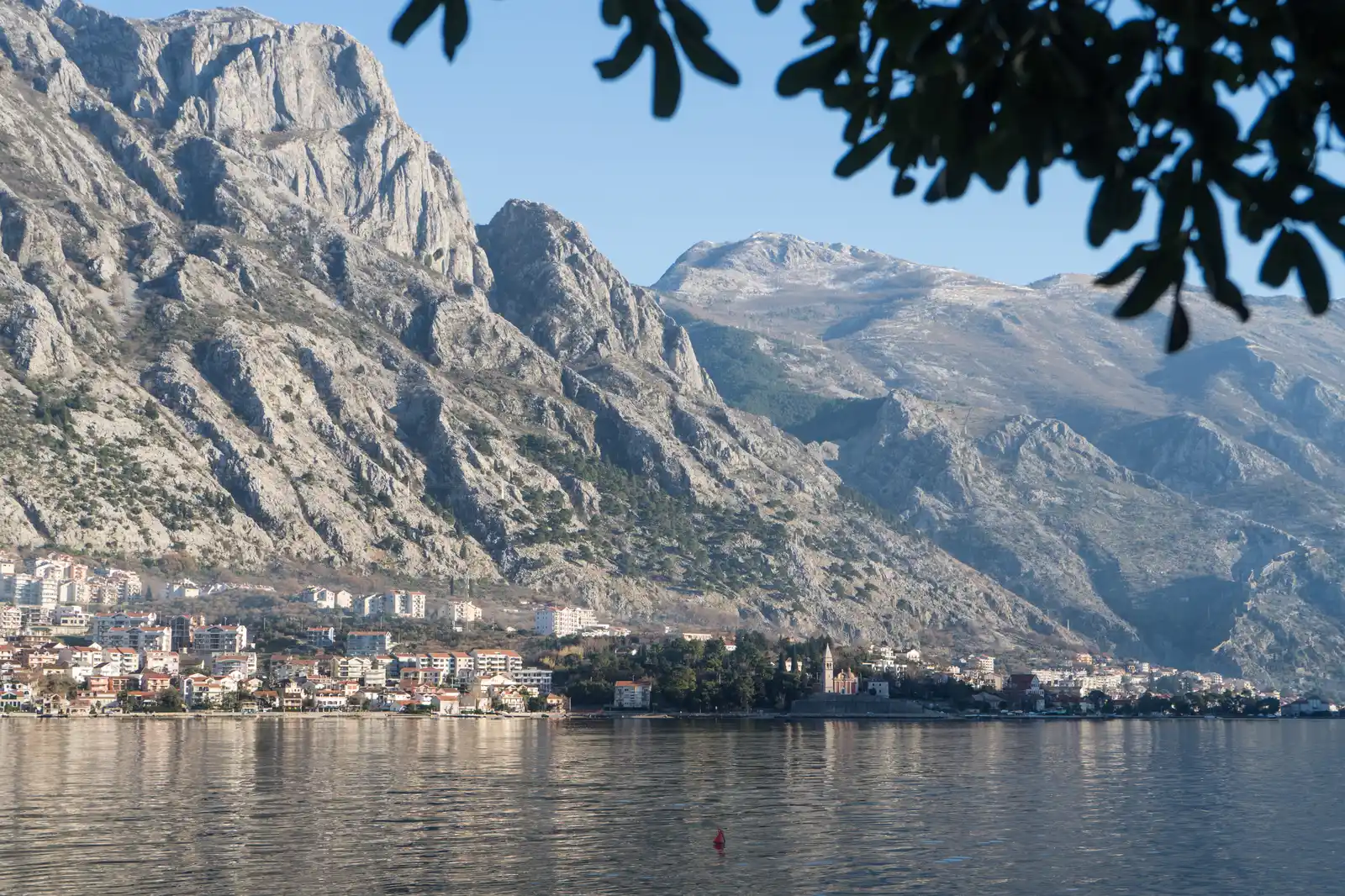
For a first trip, the honest answer for most people is: stay inside the Old Town for two or three nights if atmosphere and being in the thick of it matter more than sleep, or base in Dobrota just north if you want a quiet night, bay views and easy swimming, with the Old Town a fifteen-minute walk away. Beyond those two, Muo and Prčanj across the water are quieter and more traditional, and Perast up the bay is the scenic, slow-paced pick if you have a car. The choice really comes down to one trade-off - the Old Town’s atmosphere against its noise - so this guide runs through each area, who it suits, how far it is to walk in, and what to expect on price.
For the town itself - the walls, the Old Town, St Tryphon’s cathedral and how to get here - see the full Kotor travel guide. This page is only about where to base yourself in and around the bay. If you’re still choosing between Kotor and other parts of the country, start with where to stay in Montenegro.
The quick answer: match the area to your trip
| You want… | Stay in… |
|---|---|
| Atmosphere, inside the walls, a short stay | Old Town (accept the noise, no car access) |
| A quiet night, bay views, sea swims, still walk in | Dobrota (~15-min walk, cheaper) |
| Traditional and quiet, still near town on foot | Muo |
| Remote and calm, with a car or a short taxi | Prčanj |
| Scenic, slow, couple’s nights, car to hand | Perast |
Kotor sits at the very head of the Bay of Kotor, where the water is calmest and the mountains loom highest, and all these bases string along the same shore road within a few kilometres of each other. Buses and cheap taxis link them, and the coastal buses run on down the coast too - Kotor to Budva is several times an hour in summer for about €4-5 - so you can day-trip out easily from wherever you sleep.
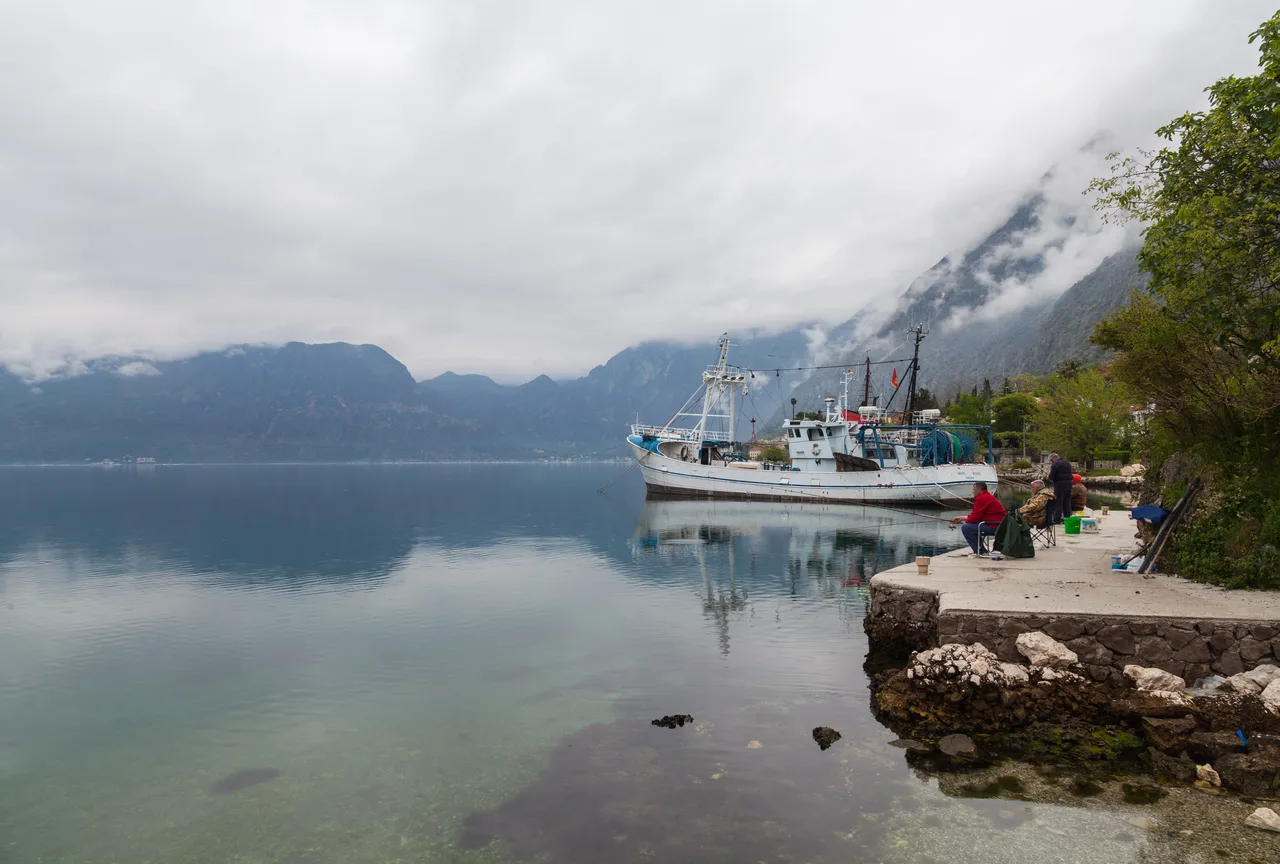
The Old Town: atmosphere inside the walls
Staying inside the medieval walls is the most atmospheric way to do Kotor. You’re a two-minute walk from the squares, the cafés, the restaurants and the start of the walls climb, and the town is at its magical best early and late - after the day-trippers and cruise passengers have gone, when the marble lanes empty out and the place feels like it’s yours. For a short stay of two or three nights, it’s a lovely, central base.
Two things to weigh, though, and neither is small. First, noise: the Old Town is a compact bowl of stone, so live music from the bars, chatter in the squares and echoing footsteps carry late into the night. Light sleepers should bring earplugs and look for a room away from the main squares. Second, cars can’t enter - the whole Old Town is pedestrian, so if you’re driving, you park outside (near the walls, where spaces are limited and pricey in season) and walk in. With heavy luggage, book a place that offers a golf-cart transfer from the Sea Gate or North Gate, or you’ll be wheeling bags over cobbles. If those don’t bother you, this is the base with the most character.
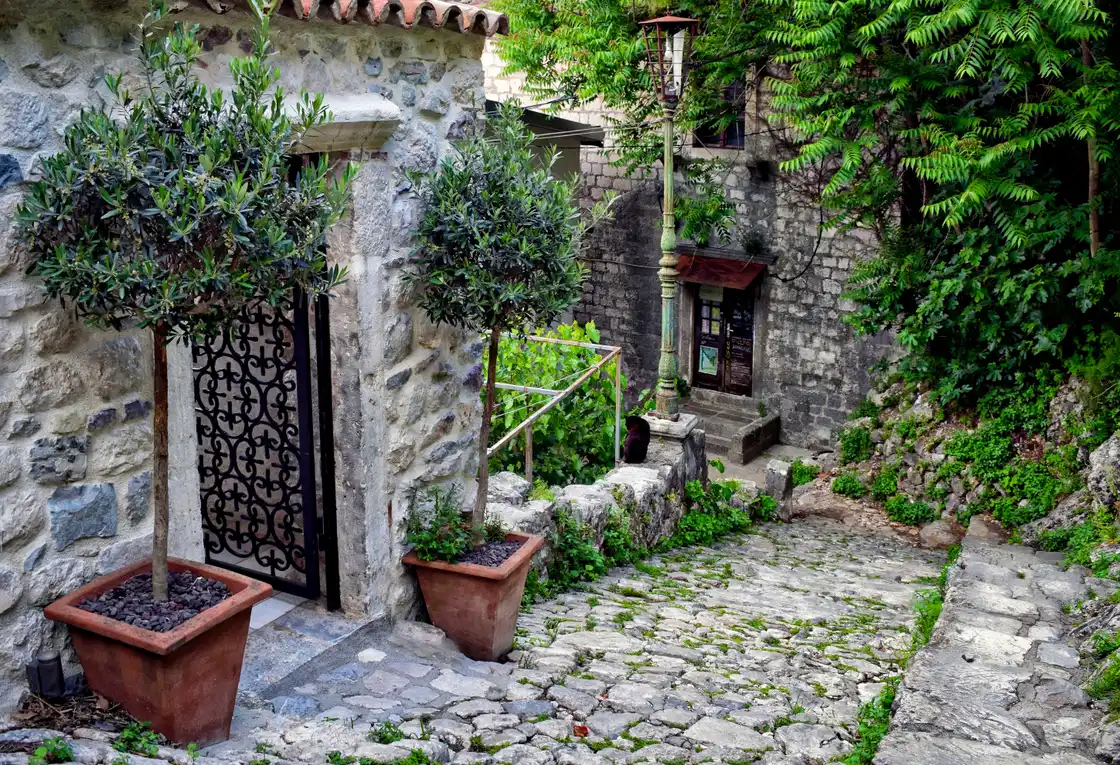
Dobrota: the quiet-sleep base, a short walk north
Dobrota is the long, low-key settlement that runs north from the Old Town along the water toward Ljuta, and for a lot of travellers it’s the smarter base. It’s noticeably quieter than inside the walls, with bigger hotels and apartments, balconies over the bay, calm evenings and easy sea swims off the rocks and small beaches - the full picture of pontoons and Boka swimming spots is in swimming in the Bay of Kotor. Crucially, it’s close enough to walk in - the Old Town is about a fifteen-minute stroll along the waterfront - so you keep the sightseeing and the restaurants without sleeping over the nightlife.
It also tends to be cheaper than the Old Town for a comparable room, and it’s the strongest pick if you’re travelling without a car: you can walk to town and back day or night, and the buses run along the shore road. The trade-off is simply that you’re not in the historic core - the walk in is pleasant but it’s still a walk - so if you want to fall out of bed into a medieval square, this isn’t it. For most people wanting a good night’s sleep and the bay on their doorstep, Dobrota wins.
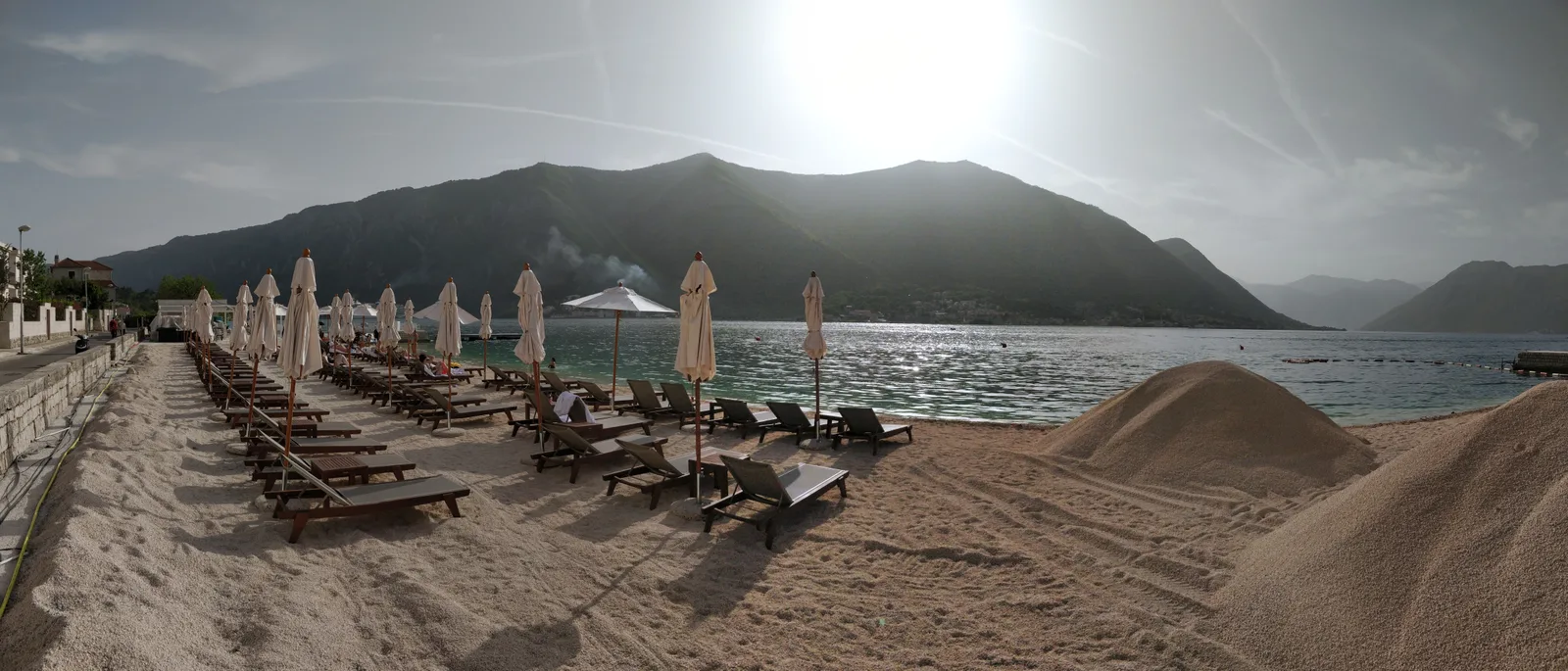
Muo and Prčanj: quieter, traditional, across the water
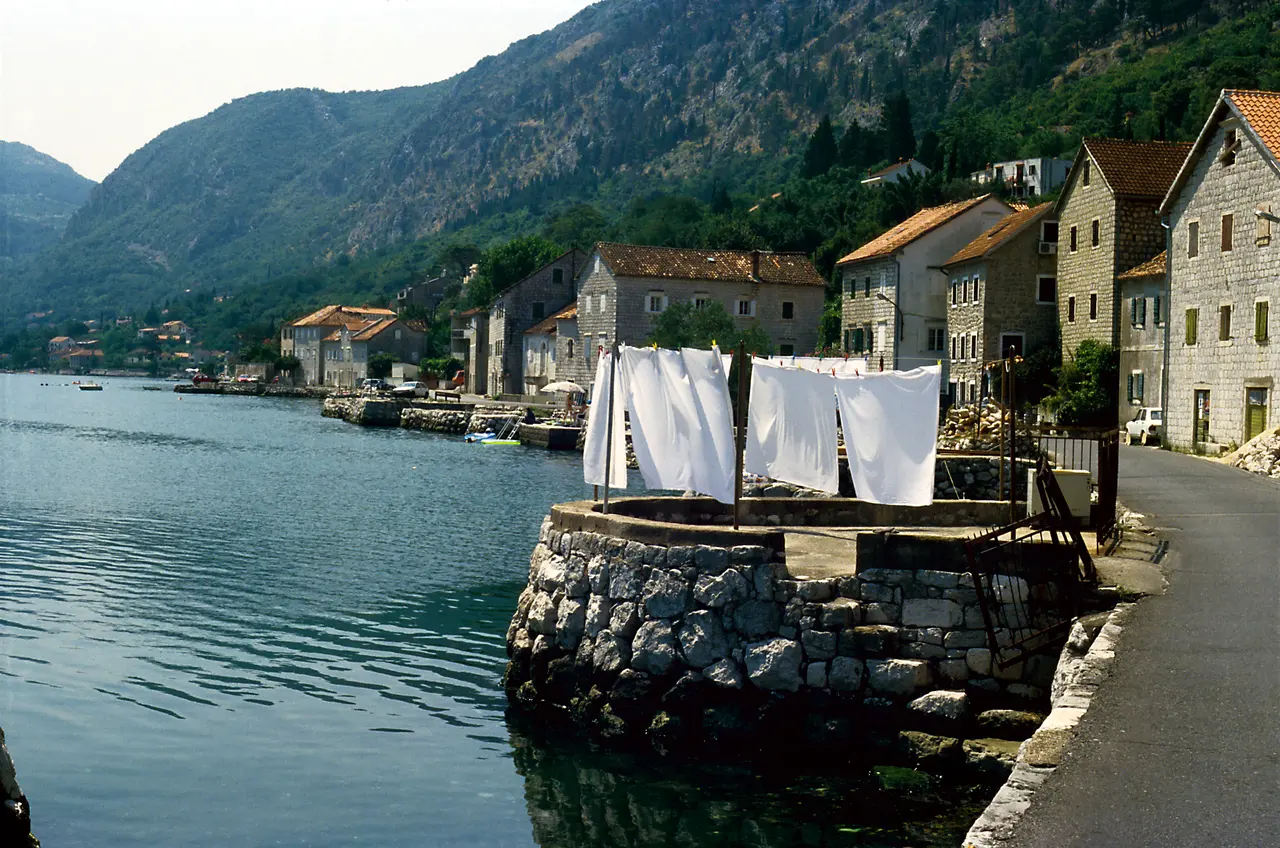
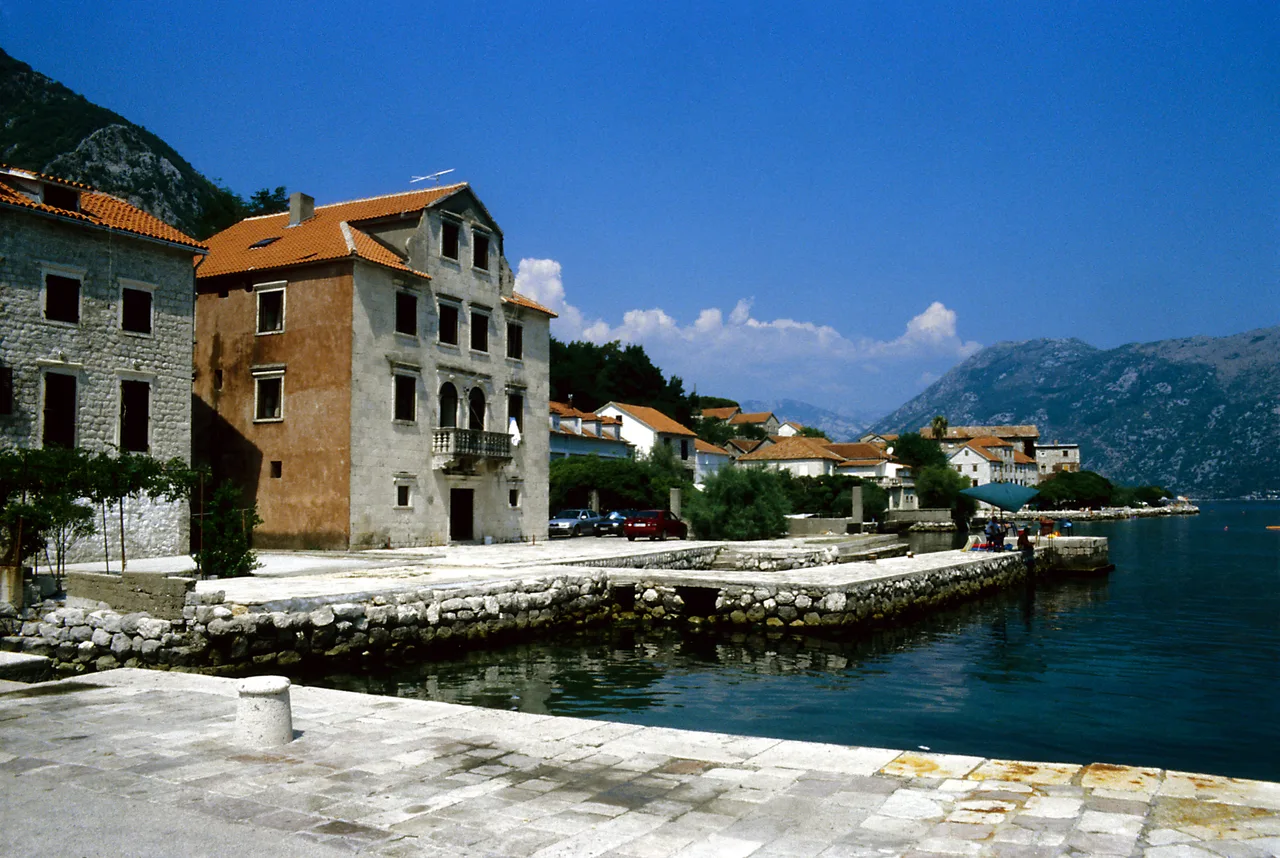
Directly across the bay from the Old Town, Muo is a quiet waterfront village of old stone houses with a more traditional, lived-in feel than Dobrota. It’s close enough that you can walk round the head of the bay to the Old Town, and it looks straight back at Kotor and its walls climbing the mountain - a fine view to wake up to. It suits people who want calm and a local feel while staying within reach of town on foot.
Further along, Prčanj is quieter still: a strung-out village of baroque captains’ houses and a big waterfront church, more remote and more residential. You’ll want a car or a short taxi into Kotor from here (it’s a few euros), but in exchange you get real peace and a slower pace. Both Muo and Prčanj are for travellers who value quiet and character over being in the middle of things - and both are a world away from the cruise-day bustle inside the walls.
Perast: scenic and slow, best with a car
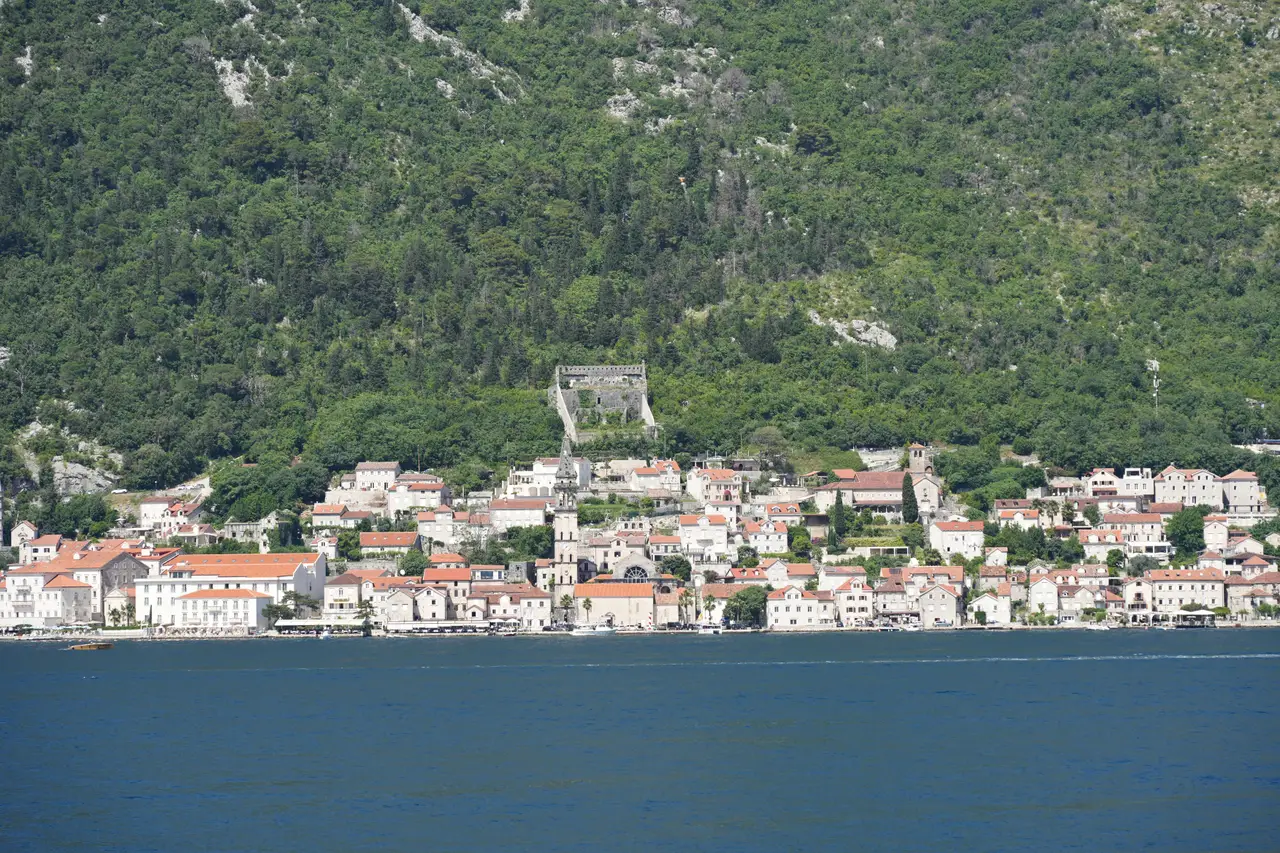
Fifteen minutes up the bay, Perast is the most photogenic spot in the whole Boka: a single row of baroque stone palazzi facing the two island churches, with no beach scene and barely any traffic. It’s a beautiful place to spend a couple of slow, scenic nights - but it’s tiny, restaurants are limited, and it’s a stop on every boat trip, so the waterfront gets busy in the middle of the day before emptying out again. Base here if you want calm and the postcard view and you don’t mind relying on a car or the bus for everything else; it’s more a romantic add-on than a practical base for touring. Boat trips to the island churches and the Blue Cave leave from here and from Kotor - see the Bay of Kotor boat tour for what’s on the water.
What it costs, and when to book
Kotor is one of the busiest spots on the coast, so rates rise sharply in July and August and rooms in the Old Town and Dobrota fill fast - book well ahead for peak summer. Area for area, the Old Town is usually the priciest central option, Dobrota comes in cheaper for a comparable room, and Muo, Prčanj and the villages sit lower again. We don’t quote fixed nightly rates that swing with the season and the platform, so check live prices when you book, but expect the whole bay to be at the higher end for Montenegro in peak season. Spring and September are quieter, cooler and cheaper than the August peak - and easier on the Old Town’s cruise-day crowds.
One more timing note that affects where you sleep: Kotor is a major cruise port, and on days when several ships are in, the Old Town fills to a crawl by mid-morning. Staying the night is how you beat it - you get the town early and late, when it’s calm - and it’s another quiet mark in Dobrota’s favour if you’d rather not be inside the walls when three ships dock.
On length of stay, two or three nights covers it - the Old Town, the climb up the walls to the St John (San Giovanni) fortress, and a day for a boat trip or Budva. And as everywhere in the country, budget in euros (€) even though Montenegro isn’t in the EU - cards are taken widely, but keep some cash for a taxi from the villages, parking by the walls and small cafés where cards can be hit-or-miss.
Getting there and around
- By air. The bay’s own airport is Tivat (TIV), a short hop away - about 20-30 minutes by road to Kotor; if you overnight by the runway instead of the walls, where to stay in Tivat covers Porto Montenegro and the Pine. Podgorica (TGD) is further (around 1.5 hours) but has more year-round flights, and Dubrovnik (DBV) in Croatia is used too, via a border crossing.
- Getting around the bay. The shore road links the Old Town, Dobrota, Muo, Prčanj and Perast, with buses and cheap taxis, so you can base in one and move between them without a car. For the full picture - buses, taxis, the water and car hire - see getting around Montenegro.
- Parking. If you drive, remember the Old Town is car-free and parking beside the walls is limited and dear in season; Dobrota and the villages are far easier for a car.
Nearby / read also
- Kotor travel guide - the walls, the Old Town, the cathedral and the full picture.
- Where to stay in Montenegro - the bay, the coast and the mountains compared.
- Bay of Kotor boat tour - Perast, the island churches and the Blue Cave.
- Getting around Montenegro - buses, taxis, the water and car hire.
Photos
Read also

What to see · 10 min read
Hiking Bobotov Kuk: Durmitor Highest Peak
Verified · September 4, 2026Bobotov Kuk hike at 2,523 m: Sedlo (~10 km RT) vs Lokvice from Black Lake, €5 park fee, cables, season and early-start tips.

What to see · 10 min read
Swimming in the Bay of Kotor: Beaches & Lidos
Updated · August 31, 2026Can you swim in Kotor? Yes - on Dobrota pontoons, Morinj and small Boka shores. Water quality, season and what to expect.

What to see · 11 min read
Rent a Boat in Kotor Bay: No Licence Needed
Updated · September 5, 2026Private boat rental in Kotor Bay 2026: skippered hire from €90/h, bareboat prices, licence rules, speed limits and where boats leave from.

What to see · 9 min read
Piva Lake & Canyon: Montenegro's Emerald North
Updated · August 27, 2026Piva Lake guide: the 45 km emerald reservoir, Mratinje Dam, boat trips from Plužine, the relocated Piva Monastery and how to pair it with Durmitor.