
Kotor City Walls & Fortress of San Giovanni
Kotor city walls guide: the 2026 ticket and hours, the 1,350 steps up to the Fortress of San Giovanni, the halfway church and the best time to climb.
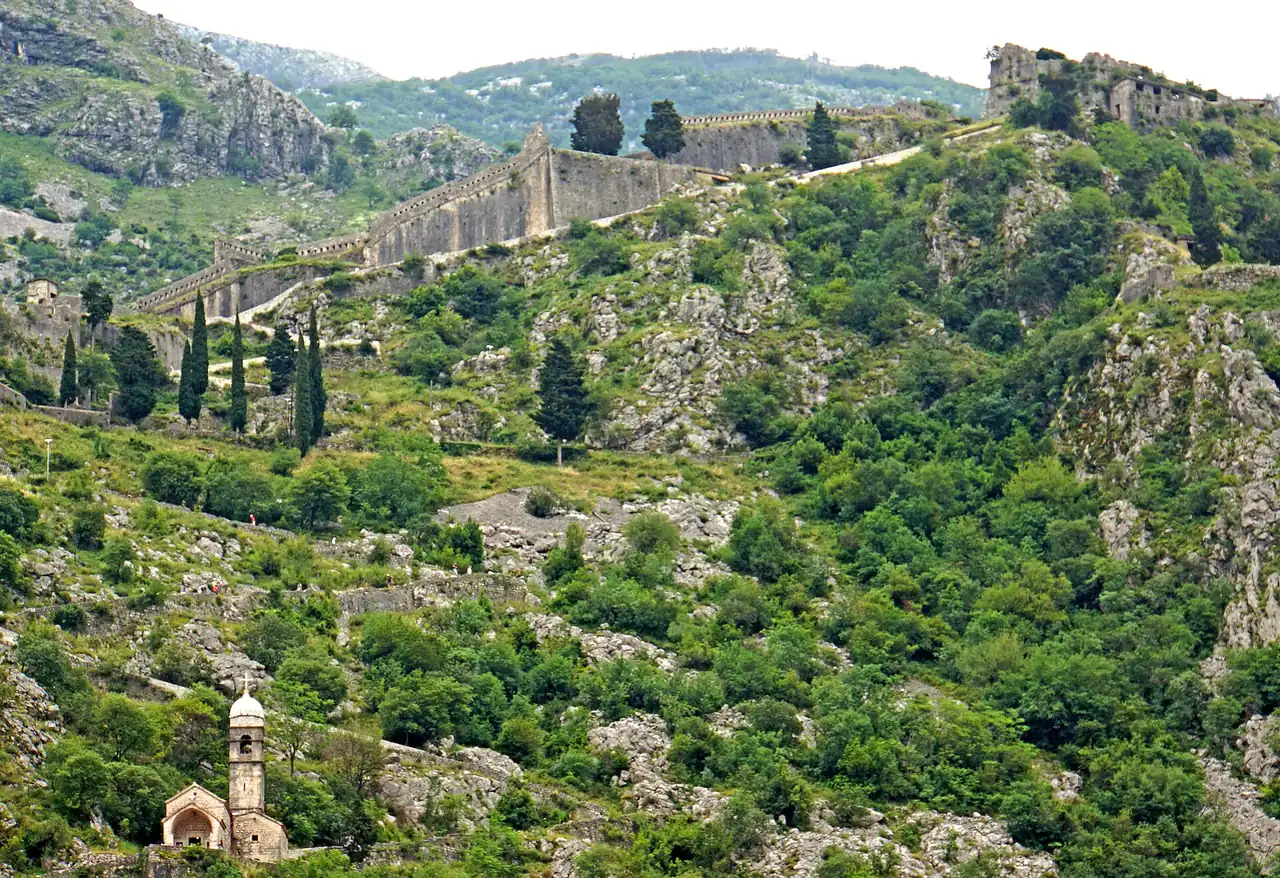
The climb up Kotor’s city walls to the Fortress of San Giovanni is the best thing to do in town, and it is simpler than it looks: about 1,350 stone steps, 45 minutes to an hour of steady effort, and a view over the red roofs and the bay that pays for every one of them. In the 2026 season the walls cost €15 per person (children under 12 free) and the ticket booths are staffed from 7:00 to 20:00 - but turn up before seven, and the gate is usually open and free. Here’s exactly how the climb works, when to go and what to expect at the top.
Is the Kotor walls climb worth it?
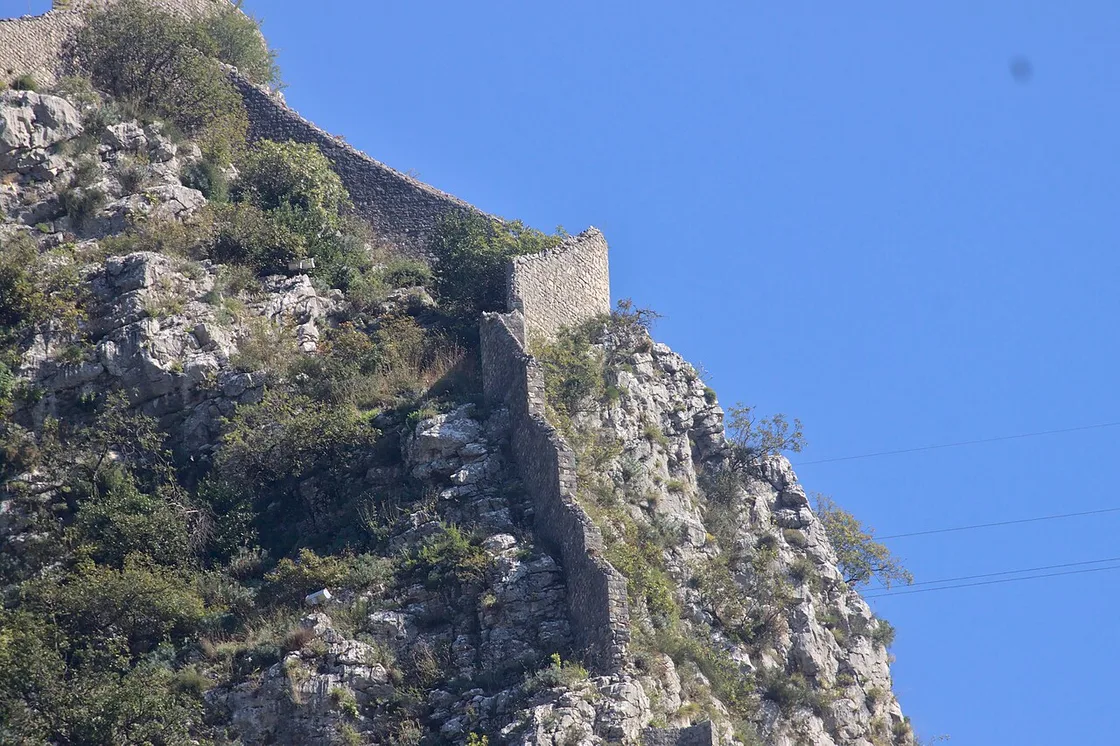
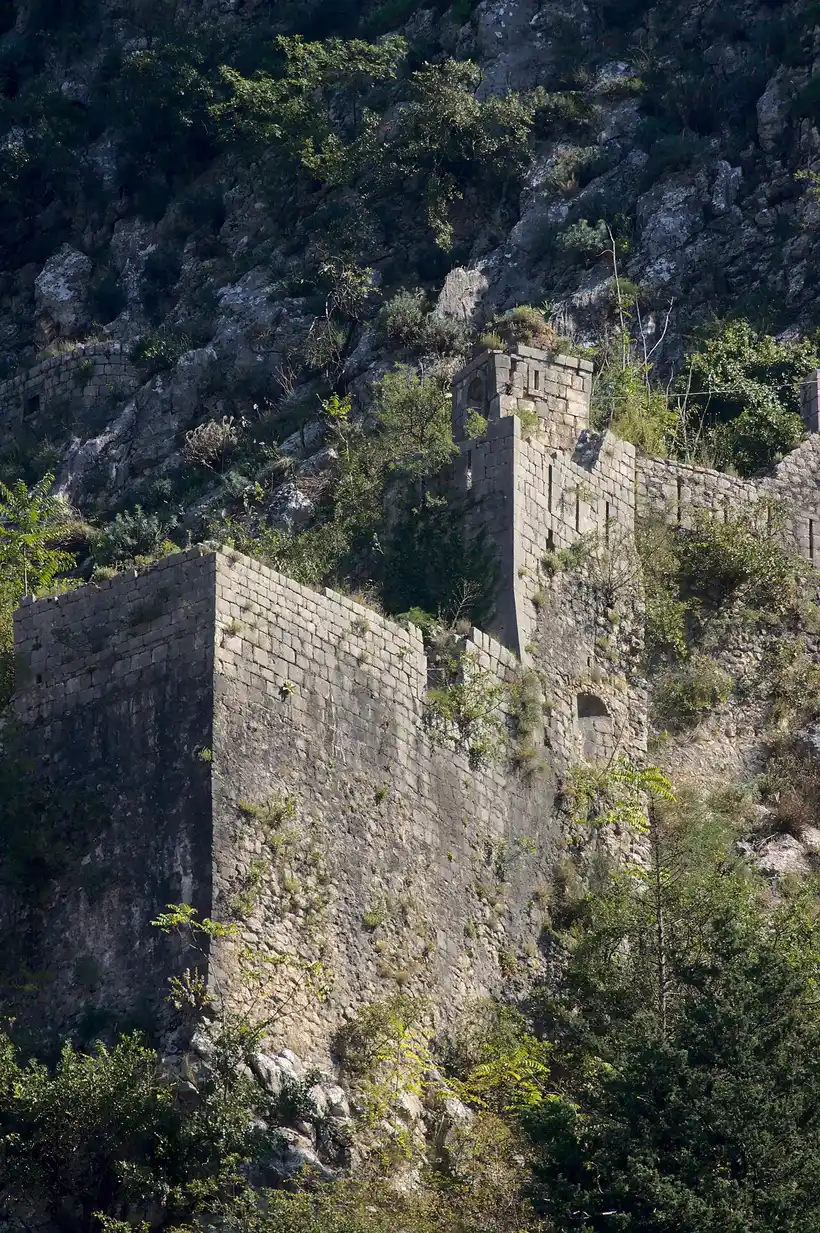
Yes, and it’s the one thing not to skip. Kotor’s Old Town is wrapped in 4.5 km of fortifications that don’t just ring the streets - they peel off and zig-zag straight up the mountain behind, climbing to a fortress on the ridge. From the water the walls look almost vertical, stitched into the grey limestone; from inside the town you barely notice them until you start up the steps and the rooftops begin to shrink below you.
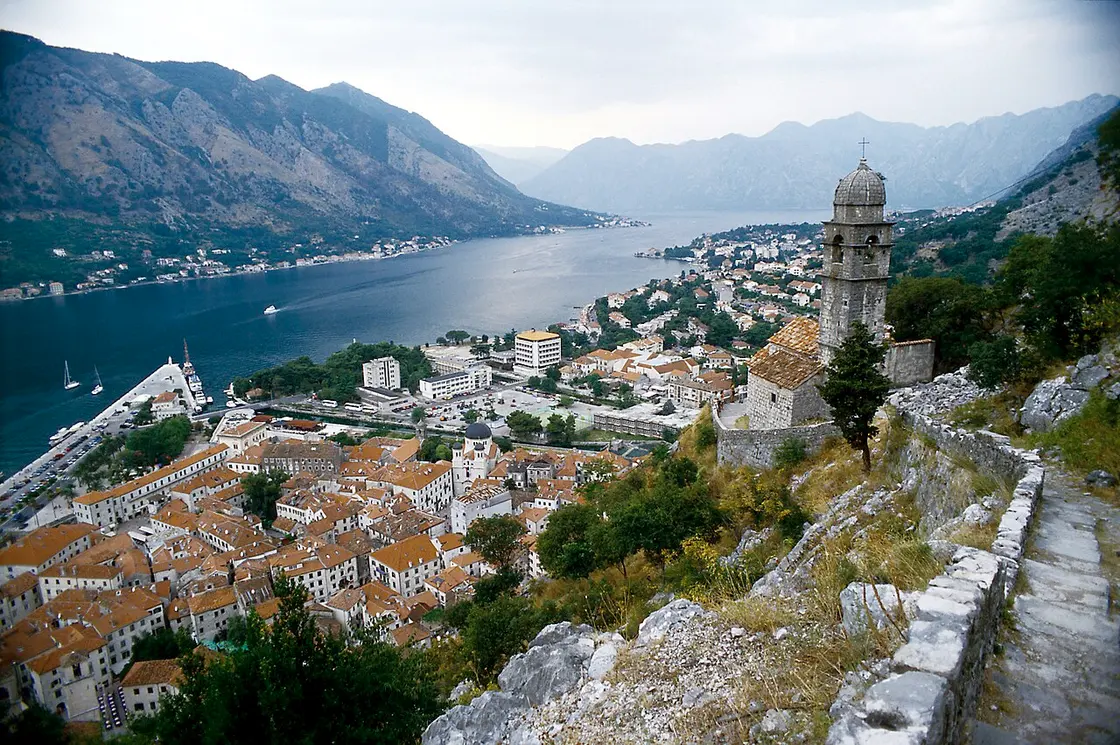
The reward is one of the great views of the Adriatic: the terracotta jumble of the Old Town, the deep blue of the Boka Kotorska curling inland, and the cliffs opposite falling straight into the water. It is a proper leg-burner rather than a gentle stroll, but it’s a walk, not a scramble - no ropes, no special skill, just stamina and decent shoes. For the town at the bottom of the climb, see our Kotor guide.
Tickets, hours and the free sunrise window
For the 2026 season the walls are a paid attraction: €15 per person, children under 12 free, payable by cash or card at the booths. The ticket is valid for the whole day, so you can climb, come down for lunch and go back up for sunset on the same paper if you like. In practice the booths are staffed from 7:00 to about 20:00 through the tourist season (roughly May to September).
The insider move is timing. Arrive before 7:00 and the booths are usually still unmanned and the gate open - which means an early climb is both free and empty, and you catch the softest light of the day before the heat and the cruise crowds arrive. Off-season, outside the staffed months, entry is generally free too. It is worth stressing that these figures drift: the fee was €8 not long ago and has climbed since, so treat €15 as the current rate and check on the spot.
There are two official entrances, both inside the Old Town. The main one is at the northern end near St Mary’s Collegiate Church (by the River Gate); the second is a small, easily-missed doorway in the lanes behind the Cathedral of St Tryphon. Either way you’re on the same stepped path within a couple of minutes.
The climb: 1,350 steps and the halfway church
The route is a single stepped path that switchbacks up the hillside, so you can’t really get lost - you just keep going up. It’s often counted at around 1,350 steps, and most people take 45 minutes to an hour to the top, longer with photo stops. The steps are old, uneven and polished smooth by centuries of feet, which matters more on the way down than up (more on that below).
About halfway up, near step 650, you reach the little 16th-century Church of Our Lady of Remedy (Gospa od Zdravlja), built as a votive chapel against the plague. It sits on a natural terrace with a superb view straight down onto the town, and it makes the perfect turnaround point if the full climb feels like too much in the heat - plenty of visitors go this far, take the photo and head back down happy. If you have the legs, though, keep going: the best is above.
The Fortress of San Giovanni (Sveti Ivan)
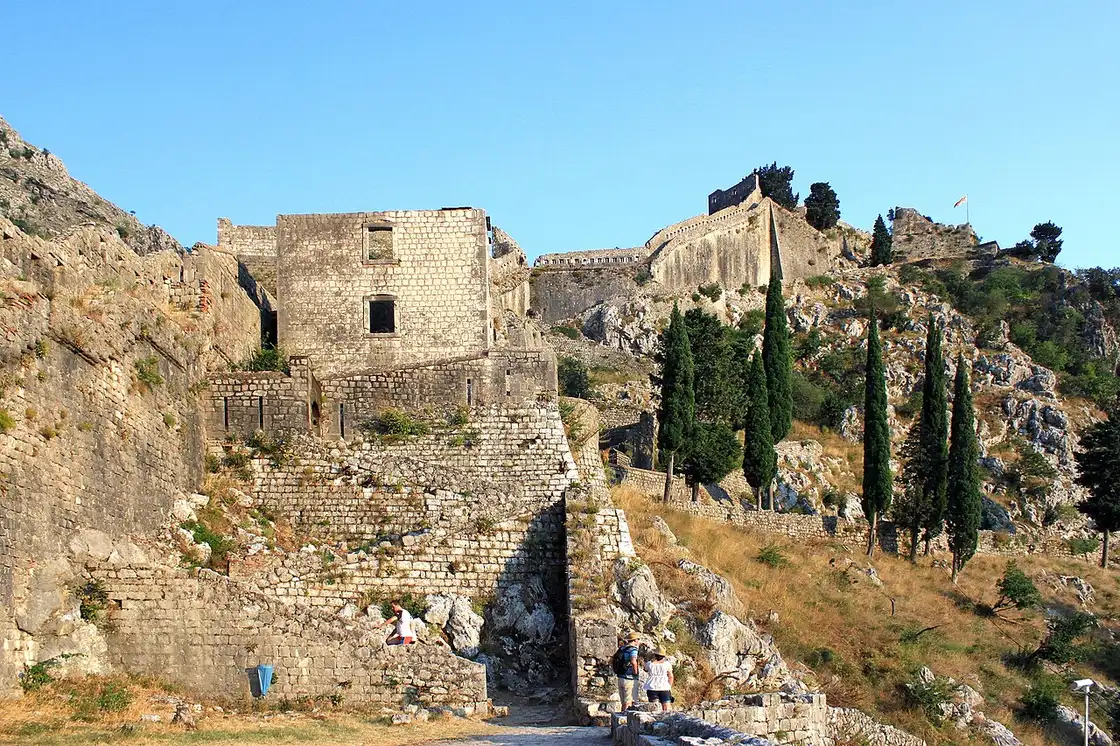
The path tops out at the Fortress of San Giovanni, also called St John’s or Sveti Ivan, which crowns the ridge roughly 260 m above the town. There has been a defensive point up here for well over a thousand years, but the walls you climb today are largely the work of Venice, which ruled Kotor from 1420 to 1797 and built the fortifications up into the layered system that survives - the whole town and bay have been a UNESCO World Heritage Site since 1979.
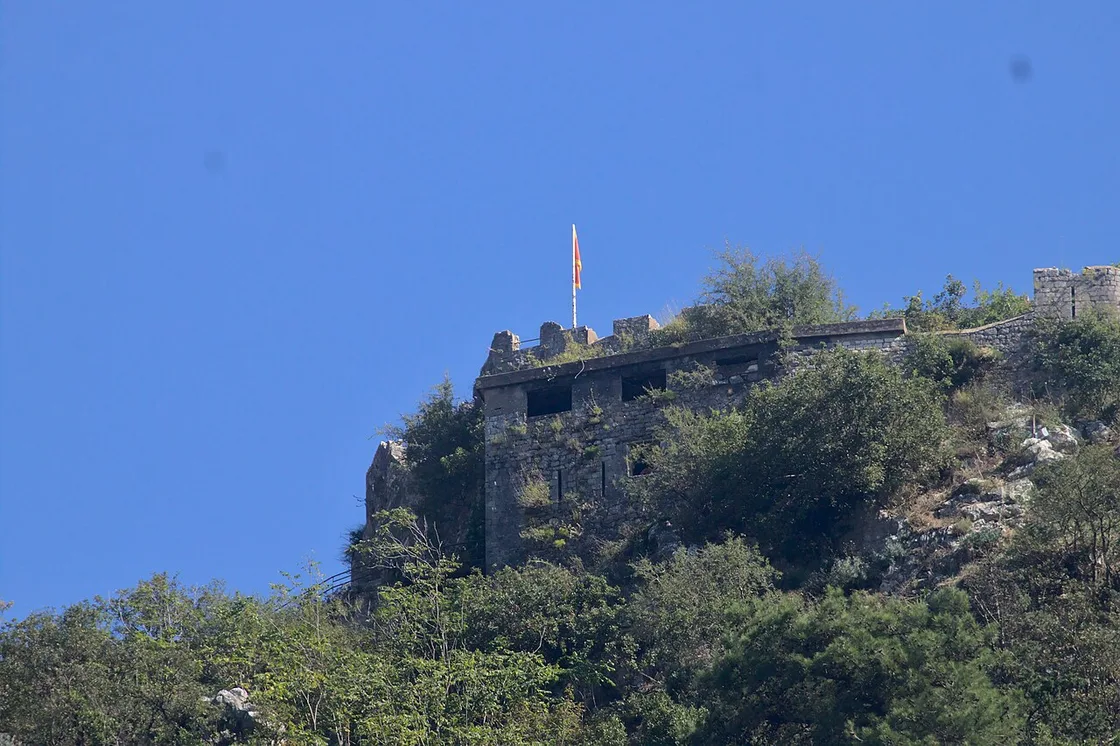
The fort itself is a romantic ruin rather than a restored museum: roofless stone chambers, arched gateways and ramparts you can wander freely, with the Montenegrin flag snapping at the highest point. There’s no cafe, no ticket desk, no railing between you and the drop - just the old stones and the view, which is exactly the appeal.
What you see from the top
This is why you climbed. The whole of Kotor lies directly below, a tight mosaic of red-tiled roofs and church towers inside the triangle of its walls, with the little Škurda river curling around the base. Beyond it the Bay of Kotor - often called Europe’s southernmost fjord, though it’s really a drowned river canyon - twists away between mountains that drop sheer into still, dark water. On a clear day you can trace the shore road, pick out Perast in the distance and watch cruise ships inch through the narrows far below.
If you would rather see the bay from the water than from above, a Bay of Kotor boat tour reaches the island church off Perast and the Blue Cave - the two together, walls in the morning and boat in the afternoon, make a strong single day.
Practical tips before you climb
A few things make the difference between a great climb and a miserable one:
- Go early or late. The path faces the morning sun and offers almost no shade, so midday in July and August is brutal. First light (before the booths open) or the hour before sunset gives you cooler air, softer light and thinner crowds.
- Shoes with grip, not sandals. The worn limestone is genuinely slippery, and the descent is where people turn ankles - take it slowly coming down.
- Carry water and sun protection. Bring at least 1.5 litres per person; there are no toilets and no reliable water on the trail, though in peak season a couple of informal stalls sell drinks partway up.
- Prefer to hike free? Many walkers take the old zig-zag mule trail known as the Ladder of Kotor, which climbs the mountain outside the walls and lets fit hikers reach the fortress area from above - longer and steeper, but scenic and free. It’s a proper hike, so only attempt it with good shoes, water and time in hand. One 2026 caveat: the trail itself and the views are free, but stepping into the ticketed fortress zone from the top now generally means paying the same €15 - the old gap in the wall that let hikers slip in for nothing is increasingly closed off and patrolled, so confirm on the spot.
Getting there and when to go
The walls start inside Kotor’s Old Town, which is car-free - park in the lots just outside the walls (they fill fast in summer) and walk in through the Sea Gate. Kotor is about 9 km (20 minutes) from Tivat and its airport, and 22 km (35-40 minutes) from Budva along the coast road.
Season matters as much as time of day. Late spring and early autumn are ideal for the climb - warm but not scorching, and quieter than the July-August peak when cruise arrivals pack the lanes by mid-morning. Our best time to visit Montenegro guide breaks the seasons down, and if you want to wake up under the walls and climb at dawn, our guide to where to stay in Kotor covers the Old Town and the quieter bay villages nearby.
Nearby / read also
- Kotor travel guide - the Old Town, cathedral and how to get there.
- Bay of Kotor boat tour - the bay from the water.
- Where to stay in Kotor
- Best time to visit Montenegro
- Things to do in Montenegro - where the walls fit in a first trip.
On the map
The map loads on click - to keep the page lightweight.
The map didn’t load. Check your connection and refresh the page.
Admission and opening hours
- Admission price
- €15 per person (children under 12 free)
- Opening hours
- 7:00-20:00 daily in season; usually free before 7:00 and off-season
Cash or card at the entrance booths; the ticket is valid all day. Confirm current prices on the spot.
Details checked: July 13, 2026
Distance
- Tivat ≈9 km · ≈20 min
- Budva ≈22 km · ≈35-40 min
Read also

What to see · 10 min read
Hiking Bobotov Kuk: Durmitor Highest Peak
Verified · September 4, 2026Bobotov Kuk hike at 2,523 m: Sedlo (~10 km RT) vs Lokvice from Black Lake, €5 park fee, cables, season and early-start tips.

What to see · 10 min read
Swimming in the Bay of Kotor: Beaches & Lidos
Updated · August 31, 2026Can you swim in Kotor? Yes - on Dobrota pontoons, Morinj and small Boka shores. Water quality, season and what to expect.

What to see · 11 min read
Rent a Boat in Kotor Bay: No Licence Needed
Updated · September 5, 2026Private boat rental in Kotor Bay 2026: skippered hire from €90/h, bareboat prices, licence rules, speed limits and where boats leave from.

What to see · 9 min read
Piva Lake & Canyon: Montenegro's Emerald North
Updated · August 27, 2026Piva Lake guide: the 45 km emerald reservoir, Mratinje Dam, boat trips from Plužine, the relocated Piva Monastery and how to pair it with Durmitor.