
What to Eat in Montenegro: A Food Guide
What to try in Montenegro: Njeguški pršut, buzara, black risotto, ćevapi, kačamak and priganice - the dishes to order and where to find them.
Montenegrin food splits neatly in two: light Adriatic seafood on the coast, and rich, smoky, cheese-and-cornmeal cooking up in the mountains. In a country you can drive across in a few hours, you can eat grilled squid by the sea for lunch and a plate of cured ham and polenta in a stone village by dinner. This guide runs through the dishes worth ordering, the local wines to drink with them, and how to find the good stuff instead of the tourist-menu version.
The one thing to understand before you order: which of the two Montenegros you’re eating in. It shapes everything on the table.
Two cuisines in one small country
The coast - Kotor, Budva, Bar, the whole Adriatic strip - eats like the rest of the eastern Mediterranean. Centuries of Venetian rule left their mark, so you get fresh fish, risotto, pasta, olive oil, and a lot of garlic. Portions are lighter, and seafood is the star.
Cross the mountains inland and the food changes completely. The old royal heartland around Cetinje and the northern highlands are cattle-and-sheep country, cut off by snow for part of the year, and the cooking reflects that: smoked and cured meat that keeps, cheeses, thick cornmeal dishes, cream, and honey. It’s heavier, warmer, and built for cold weather.
Neither is better - they’re two different meals, and a good trip includes both. Here is what to look for in each.
Njeguški pršut: the mountain ham
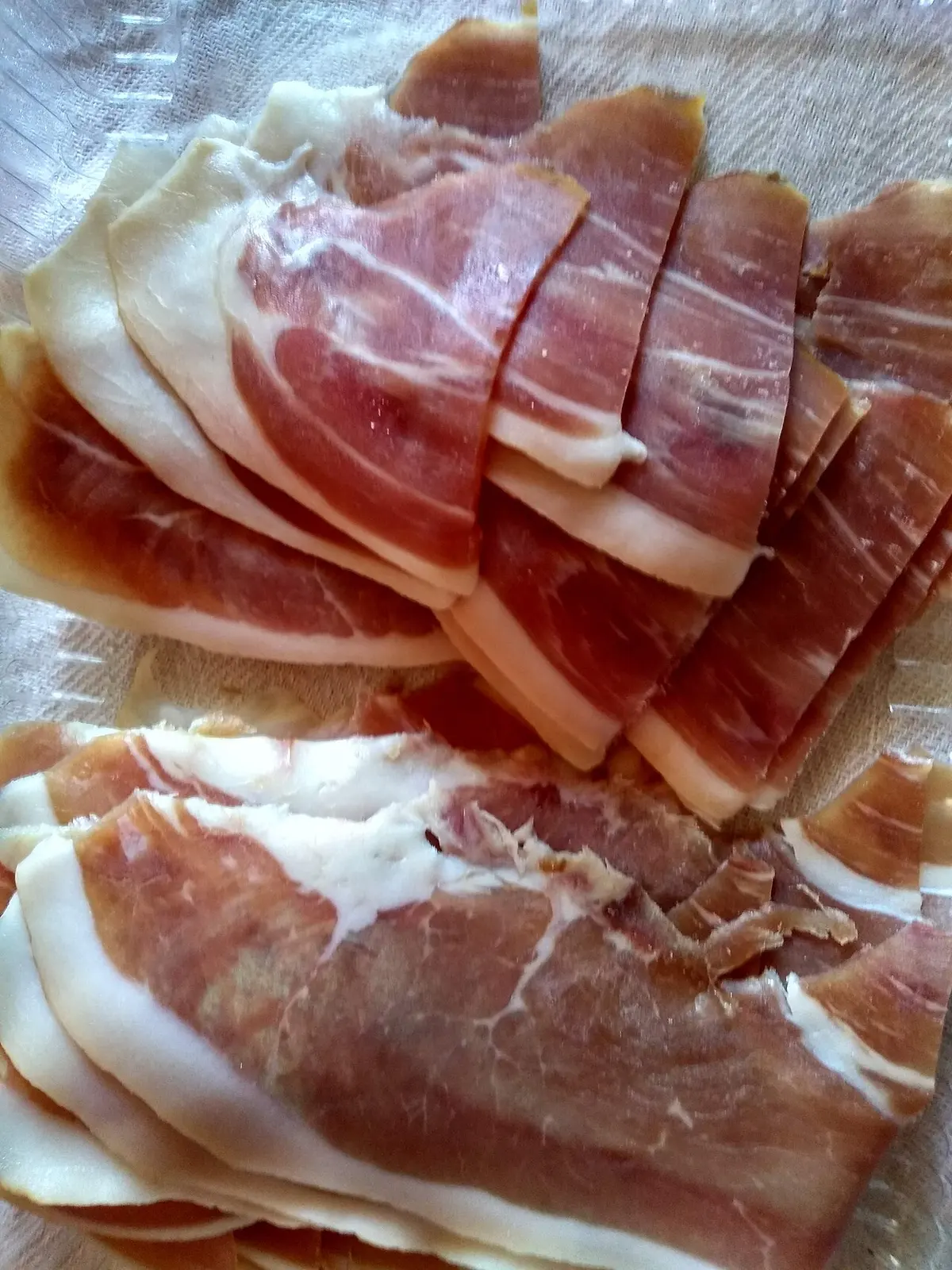
If you try one Montenegrin thing, make it Njeguški pršut - dry-cured ham, sliced thin and served uncooked, much like Italian prosciutto crudo. It’s named after Njeguši, a small village on the slopes of Mount Lovćen, just above Cetinje, and the location is the whole point.
The making of it takes about a year. The ham is salted with sea salt for roughly three weeks, pressed to force out the moisture for another three, then lightly smoked and dried over beech wood for around three months before a long maturing. Producers credit the flavour to the village’s particular air: the spot sits where cold, dry mountain wind meets the salt-laden breeze coming up off the Adriatic, and that constant exchange does the curing. You cannot really fake it anywhere else, which is why the village name is attached to the ham.
Order it as a starter, ideally with Njeguški sir, the local cheese from the same village (often kept in oil), and a plate of olives. That combination - ham, cheese, bread, a glass of red - is the standard Montenegrin welcome, and in Njeguši itself you can buy both straight from the smokehouses that line the road. It is worth the detour up from the coast if you’re driving over Lovćen anyway.
Kajmak, kačamak and cicvara: cornmeal and cream
The mountain kitchen leans hard on two things: dairy and cornmeal. Kajmak is the one you’ll meet first - fresh cream that’s salted and pressed until it thickens into something between clotted cream and a mild soft cheese. It goes on everything: bread, grilled meat, warm cornbread.
Then there’s the cornmeal trio. Kačamak is a thick cornmeal-and-potato mash beaten with kajmak, usually served with cold milk, buttermilk or yoghurt on the side to cut the richness. Cicvara is its close cousin - cornmeal stewed with plenty of kajmak until it turns glossy - and it is a breakfast dish, the kind of thing that keeps a shepherd going until afternoon. Neither is elegant, both are deeply comforting, and you’ll mostly find them in family-run places (konobas) inland rather than on the coast.
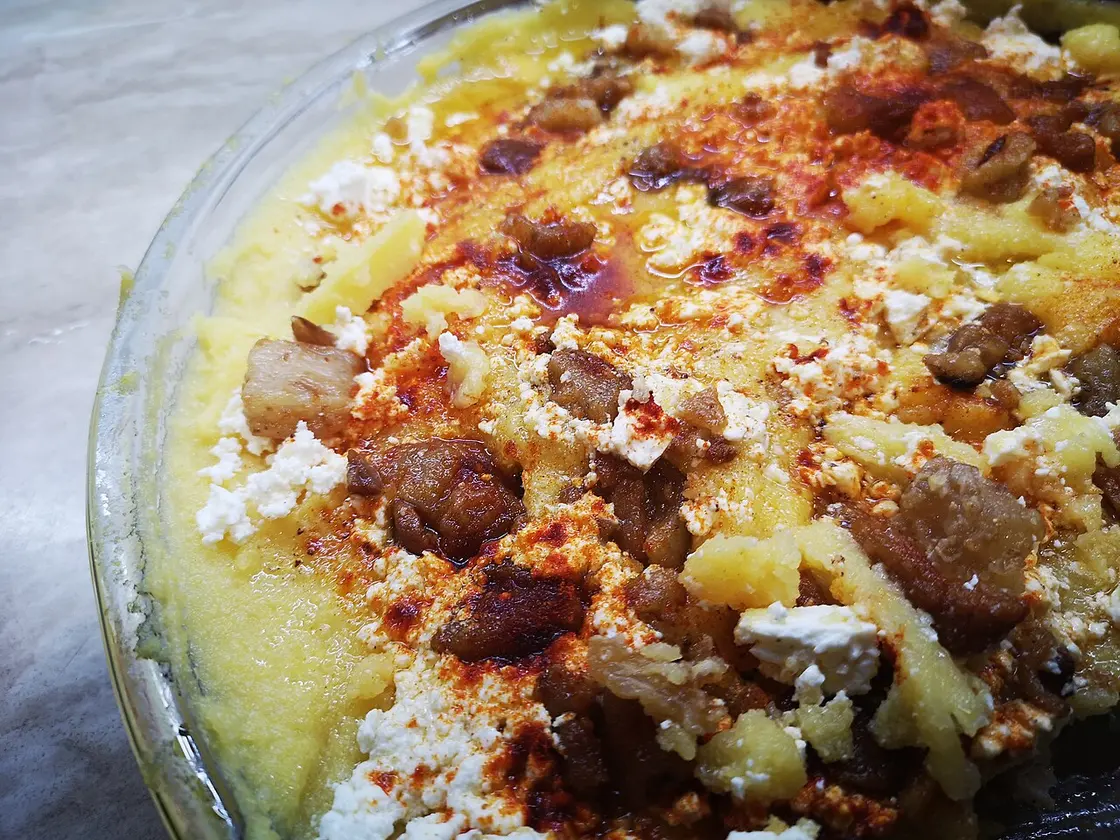
A tip most first-timers miss: these dishes are genuinely heavy, so treat a bowl of kačamak as a meal, not a side. Pair it with a light day - a walk in Durmitor rather than a big dinner to follow.
Seafood on the coast: buzara, black risotto and grilled fish
Down on the Adriatic, the menu flips to seafood, and two dishes stand out.
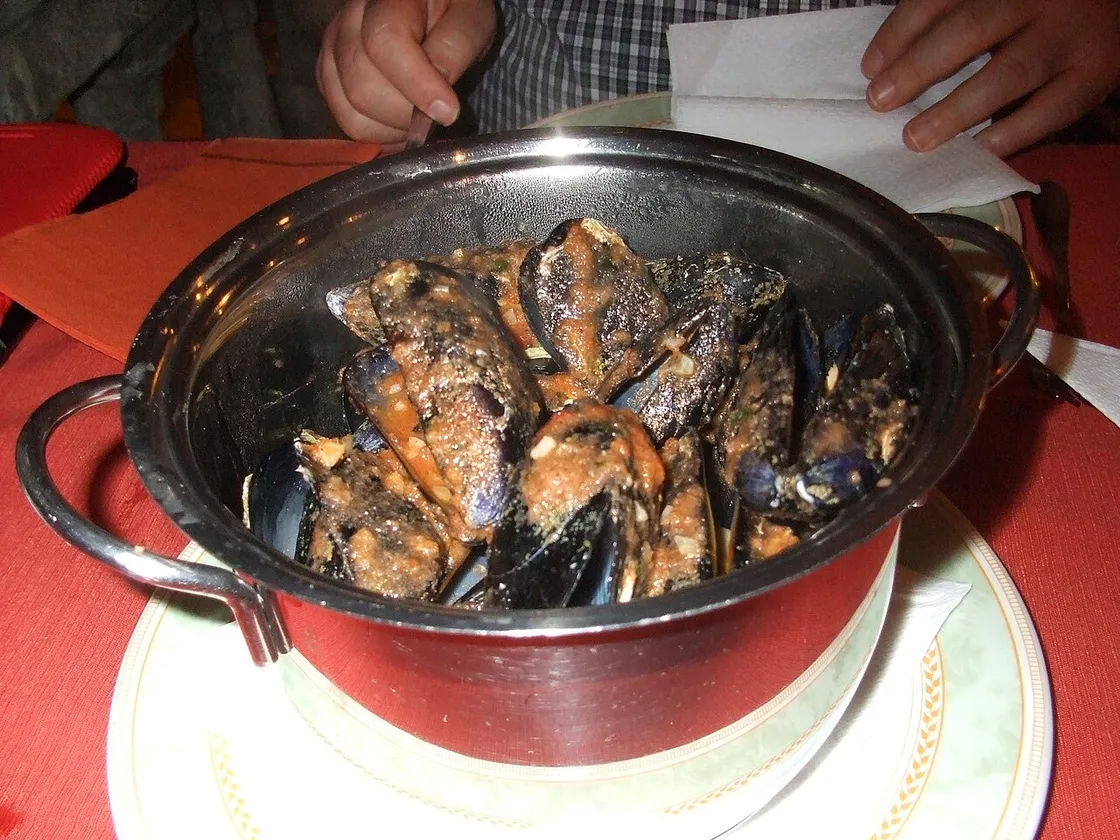
Buzara is both a method and a sauce: shellfish - mussels, prawns, clams or squid - simmered in white wine, garlic, olive oil, parsley and a little breadcrumb until the liquid reduces into a light broth you mop up with bread. There’s no onion in it, only garlic, and it comes two ways: bijela (white, no tomato) or crvena (red, with tomato). Mussel buzara is the everyday, affordable version; prawn buzara is the treat. As a rough guide, expect mussel buzara to sit around the lower end and prawn buzara noticeably higher, but prices swing with the season and the town, so always check the menu on the spot.
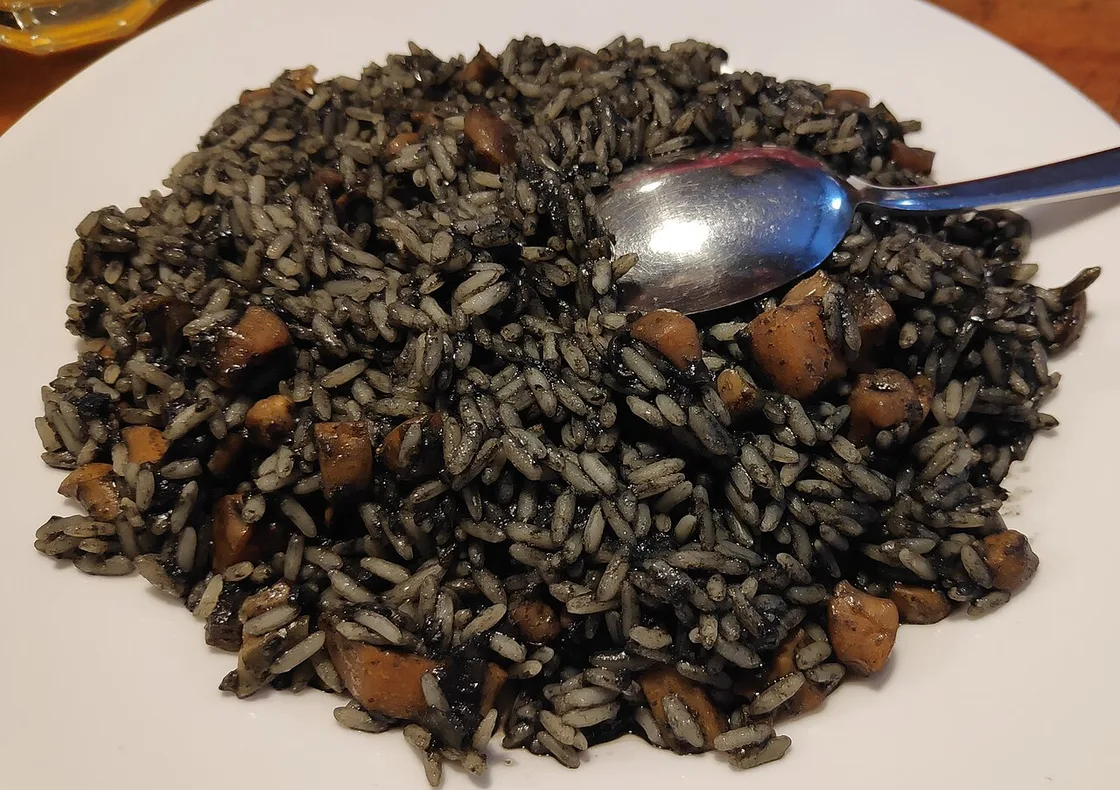
The other coastal signature is crni rižot, black risotto, coloured and flavoured with cuttlefish ink. It looks dramatic - jet black, glossy - and tastes gently of the sea. It stains your teeth and it’s completely worth it.
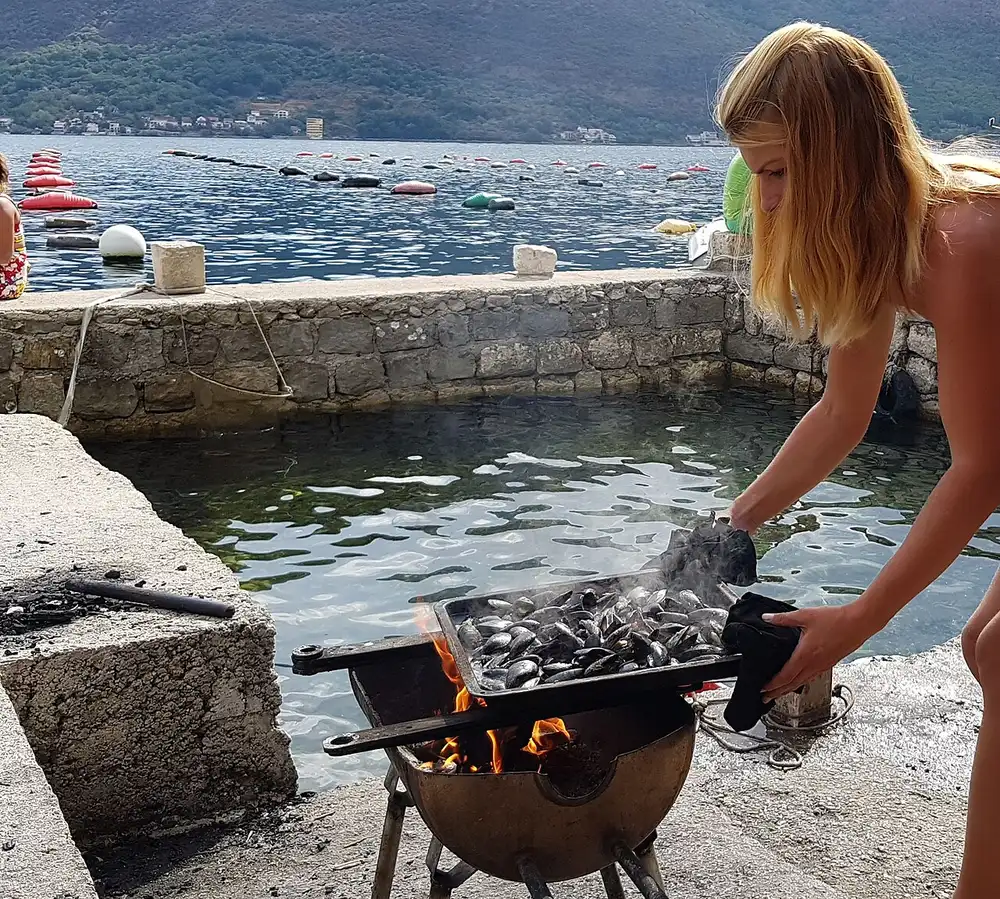
Beyond those, keep it simple: grilled squid (lignje), octopus salad, whole fresh fish sold by the kilo and grilled with olive oil and lemon, and mussels of every kind. Fish is priced by weight, so it’s normal for the waiter to bring the catch to the table and weigh your choice - agree the size before it’s cooked so the bill holds no surprises. The seafood towns of the Bay of Kotor are a fine place to start; our Kotor guide and Budva guide point you toward the old-town konobas and the quieter, better-value spots a few streets back. In the middle of the bay, where to eat in Tivat sorts Porto Montenegro tables from Kalimanj konobas. At the country’s southern tip, where to eat in Ulcinj covers the Bojana stilt fish houses and the Old Town tables above Mala Plaža.
Lake fish: the Skadar exception
There’s a third, quieter tradition worth knowing, and it belongs to neither sea nor mountains. Around Lake Skadar, the huge freshwater lake on the Albanian border, the catch is river fish - carp and freshwater trout, often smoked or grilled lakeside. Smoked carp in particular is a local speciality, and the fishing villages hold summer festivals built around it.
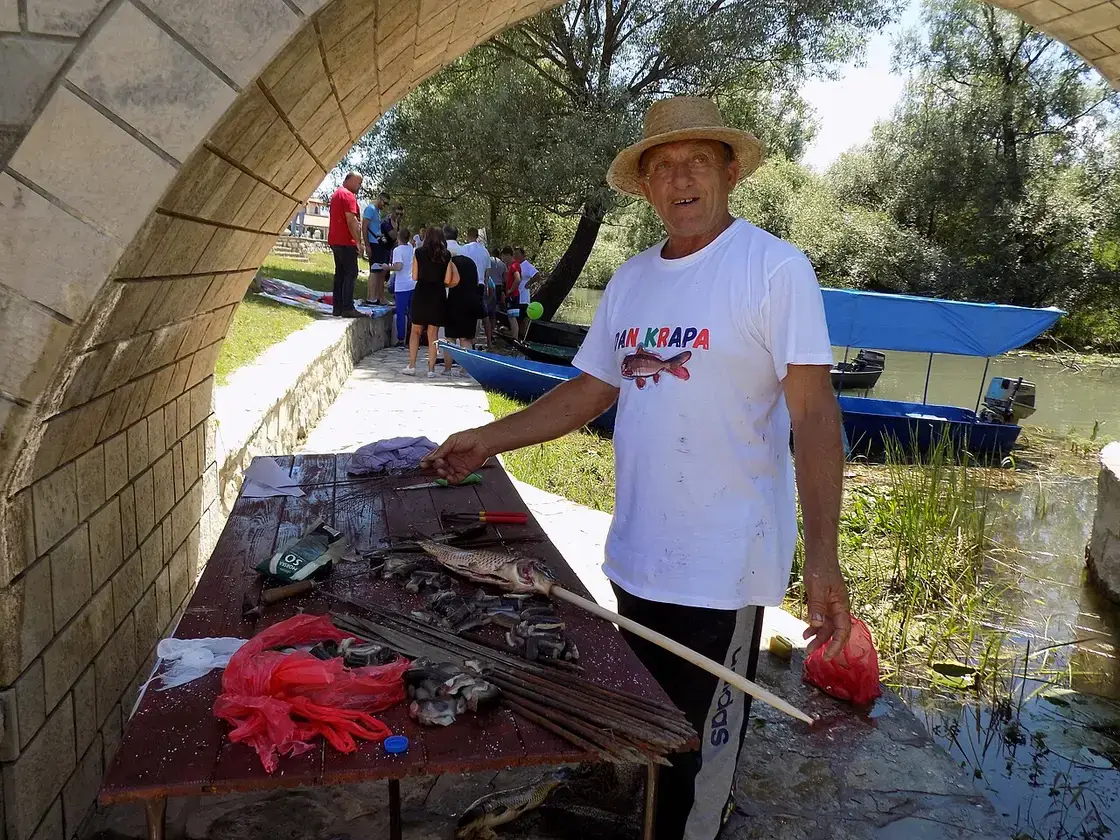
If you’re visiting the lake for the birdlife or a boat trip, eat where the fishermen land - the small konobas in villages like Virpazar do carp and trout better than anywhere on the coast. Our Lake Skadar guide covers getting there and what else to do around the water.
Grilled meat: ćevapi and the roštilj
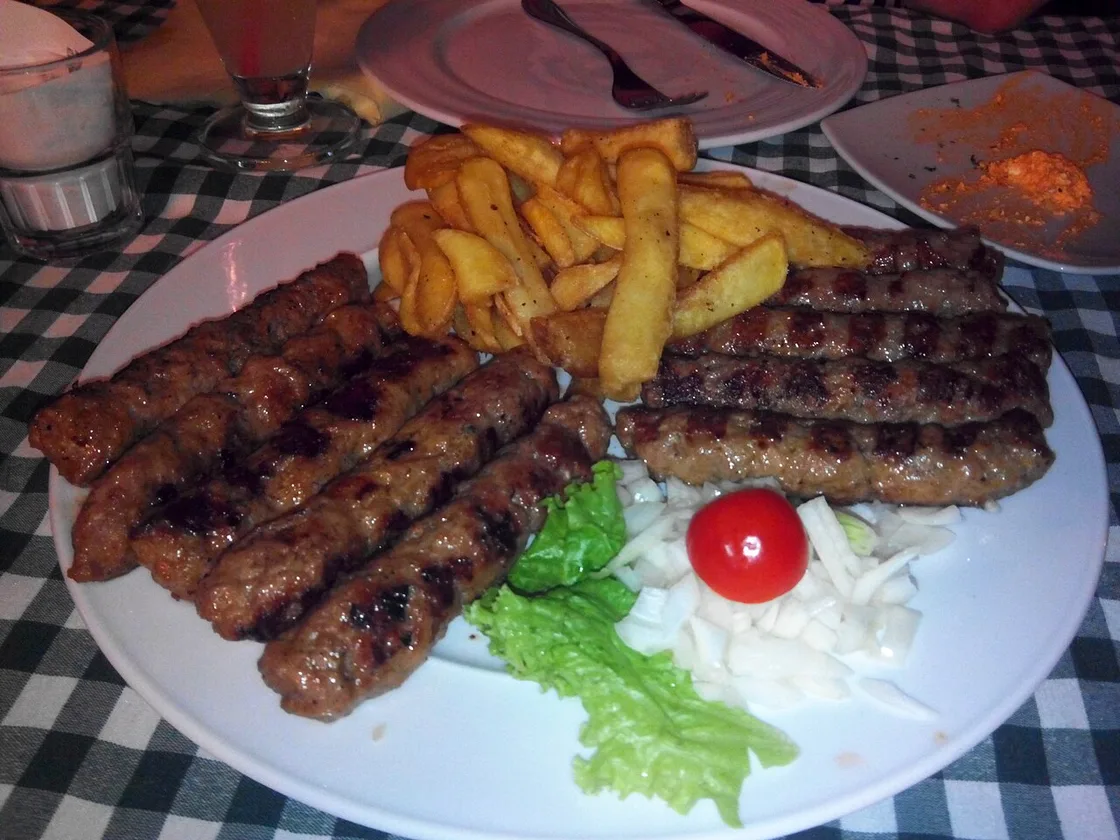
Wherever you are, inland or coast, the roštilj (grill) is the default cheap, filling meal, and the thing to order off it is ćevapi: small grilled rolls of minced meat, served in a flatbread or on a plate with raw onion, chopped ajvar (red pepper relish) and sometimes kajmak. A portion is usually five or ten pieces and it is hard to spend much on it. It’s not uniquely Montenegrin - the whole Balkans claims it - but it’s the everyday food people actually eat here, and a good grill house does it far better than any restaurant terrace.
Sweets: priganice and palačinke
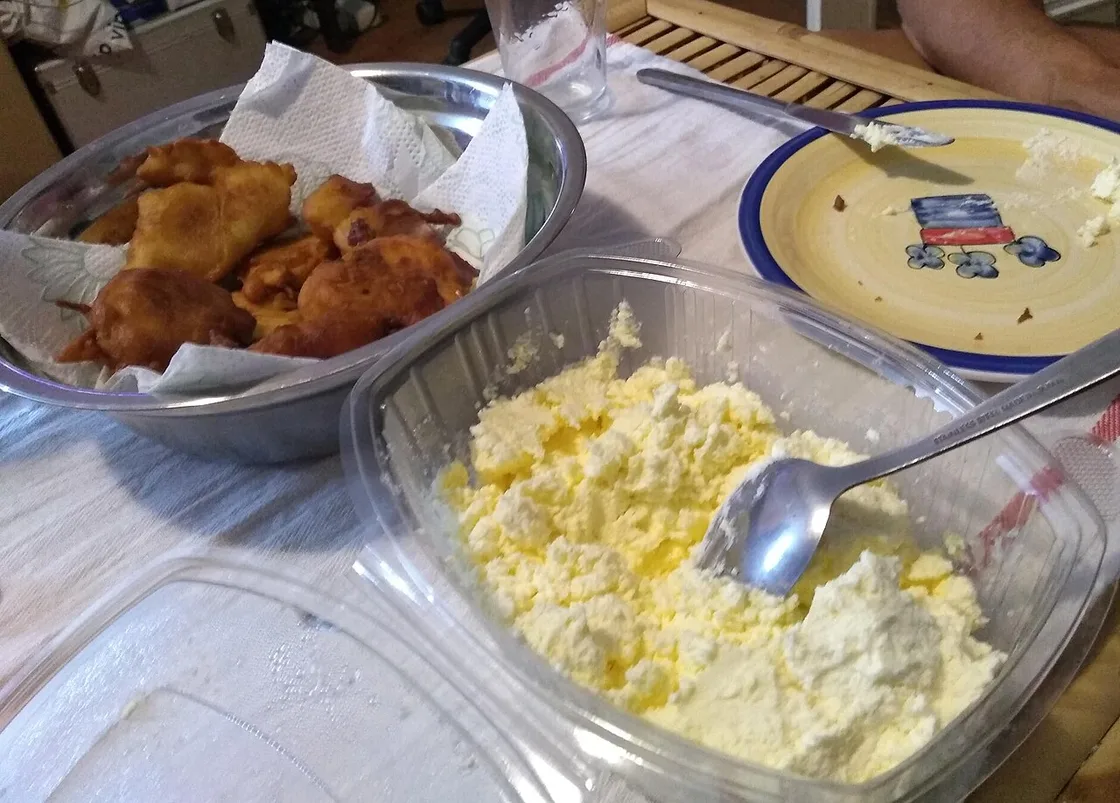
Montenegrin desserts are homely rather than fancy. Priganice are small fried dough puffs, crisp outside and soft inside, dusted or drizzled with honey, or served with cheese and jam - they double as breakfast and as pudding. Palačinke are thin crêpes, rolled around anything from jam to chocolate spread to walnuts, and sold everywhere as a cheap sweet snack. Neither will surprise you, but a plate of hot priganice with local honey is a genuinely good end to a mountain meal.
What to drink: Vranac, Krstač, rakija and beer
Montenegro makes its own wine, and it’s good value. The red to know is Vranac, a dark, full-bodied grape native to the country and its most planted variety - protected as a Montenegrin geographical indication since 1977. Young, it is bright and jammy with red-berry fruit; with a couple of years of age it deepens into something more serious, with notes of chocolate, spice and oak. It stands up well to grilled meat and to the cured ham. Our Montenegro wine guide goes deeper into Vranac, Krstač and where to taste them.
The white counterpart is Krstač, an indigenous grape that is Montenegro’s leading white - light gold, fruity, with peach and pear notes, and an easy match for seafood and buzara. It’s genuinely rare: the country’s giant producer, Plantaže (based in Podgorica, and by far the largest winery), claims to be the only one making it at any scale. Their vineyards on the Ćemovsko polje plain outside the capital are among the biggest single vineyards in Europe, so most Montenegrin wine you drink starts life there.
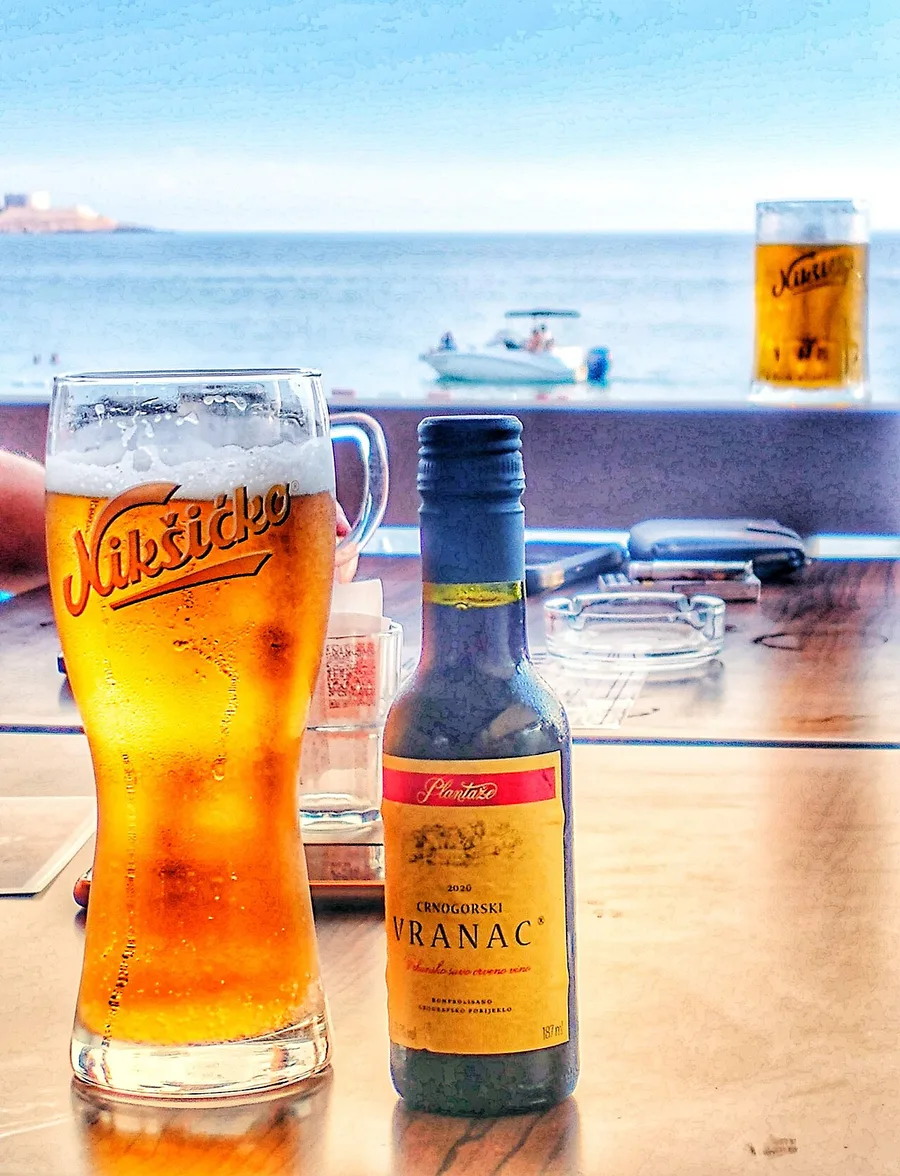
Stronger stuff means rakija, the Balkan fruit brandy, offered as a welcome or a digestif; the grape version is loza, and you’ll also see the bitter, herbal pelinkovac. Homemade rakija turns up in villages and it can be fierce - sip it. And for something long and cold, the national beer is Nikšićko, brewed in the town of Nikšić; it’s what most people drink with their ćevapi on a hot afternoon.
Where and how to eat it
The word to look for is konoba - a traditional tavern, usually family-run, and almost always where the real cooking is. On the coast the konobas a few streets back from the seafront, or out in the riviera villages, cook better and charge less than the terraces on the main square. Inland, the konoba is where you find kačamak, cicvara and the mountain dishes that never make it onto tourist menus.
A few practical notes. Montenegro uses the euro (€), and while cards are common in towns, markets and small village konobas often want cash. Green markets (pijaca) in Podgorica, Kotor and Bar are the place to buy pršut, cheese, honey, olives and figs to take away. And the golden rule with fish: it’s sold by weight, so always agree the price of your fish before it’s cooked.
For where to eat by city, browse our vetted picks in the food section, and see the Podgorica guide for the capital’s year-round rhythm away from the coast. Named capital tables - Pod Volat, Lanterna, Avlija and a lake fish run - are in our best restaurants in Podgorica guide. Hungry travellers heading inland can pair the food with our things to do in Montenegro round-up. In Budva, our best restaurants guide sorts the konobas, seafood and fine dining by price. For a dish-by-dish ordering list with the local names, see our 15 traditional Montenegrin dishes.
Photos
Read also

Food · 9 min read
Where to Eat in Tivat: Porto Montenegro & Konobas
Verified · September 5, 2026Where to eat in Tivat: Porto Montenegro marina tables, Kalimanj konobas, and Luštica Italian menus with prices from restaurant sources.

Food · 9 min read
Best Restaurants in Herceg Novi: Riviera Dining
Verified · September 3, 2026Where to eat in Herceg Novi: Old Town konobas, Pet Danica seafood, Meljine marina and Žanjice beach tables - our shortlist, checked Sep 2026.

Food · 8 min read
Where to Eat in Ulcinj: Seafood on the Bojana
Verified · August 25, 2026Where to eat in Ulcinj: Bojana stilt fish houses, Old Town konobas, what to order (eel, black risotto) and how prices work on the southern coast.

Food · 8 min read
Best Restaurants in Podgorica: Where Locals Eat
Verified · August 11, 2026Named Podgorica restaurants locals actually use: Stara Varoš grills, central konobas, Capital Plaza evenings and lake fish at Plavnica - with addresses.