
Bar, Montenegro: Port, Stari Bar & the Old Olive
Bar travel guide: the ferry port from Italy, ruined Stari Bar, the 2,000-year-old olive tree, King Nikola's Palace and the scenic railway inland.
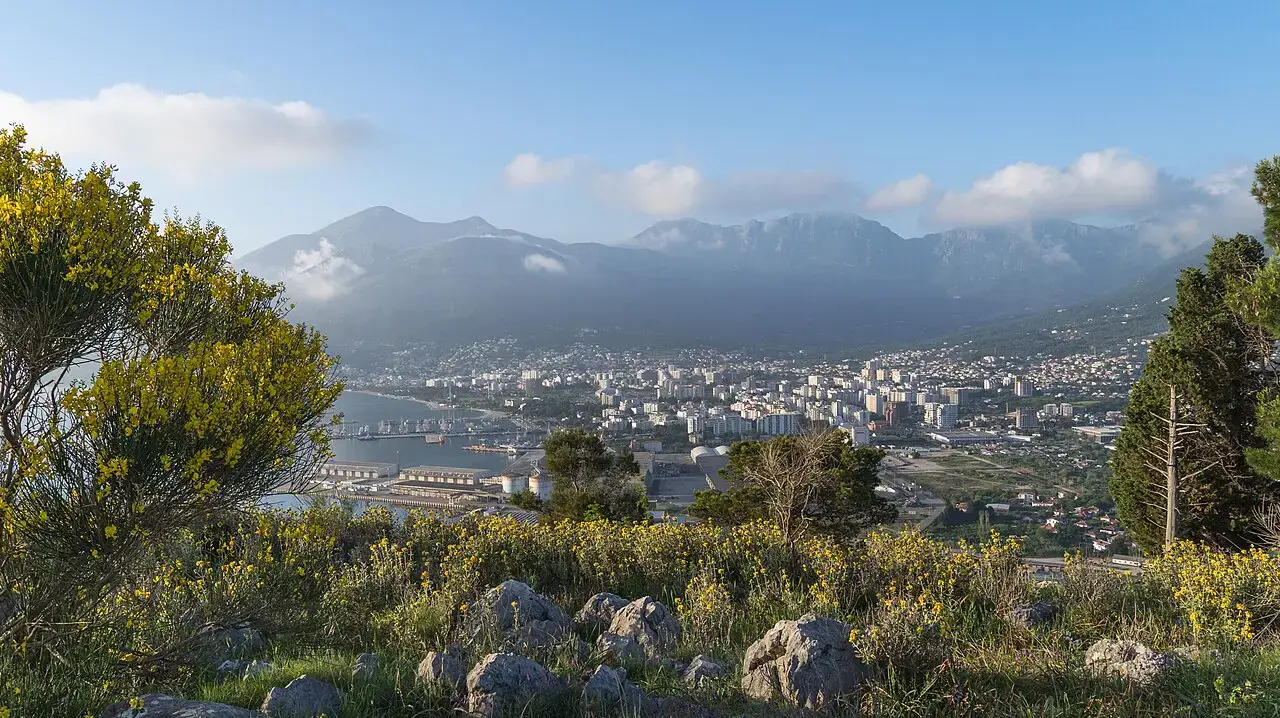
Bar is Montenegro’s main seaport and, for a lot of travellers, the country’s front door: the ferries from Italy dock here, and the scenic railway to Podgorica and Belgrade starts here. The modern town is a working port and transit hub rather than a resort, so it’s honest to say most people pass through rather than stay. But two things make it worth stopping for: Stari Bar (Old Bar), the ruined stone city on the hillside above, and the Old Olive Tree at Mirovica, which is over two thousand years old. Add King Nikola’s seafront palace and a train ride up into the mountains, and Bar earns a half-day even if you’re only changing transport.
Is Bar worth visiting?
Yes - as a half-day of sightseeing and a springboard, less so as a beach base. Be clear about what Bar is: the modern town (population around 16,000) spreads along the coast below Mount Rumija, built around the Port of Bar, the largest and busiest seaport in Montenegro. It’s functional rather than pretty, the town beaches are pebble and concrete rather than sand, and there’s no walled medieval old town on the waterfront the way there’s at Kotor or Budva.
The reason to come is uphill and inland. Stari Bar, about 3 km back from the coast, is a whole ruined city on a rock - fortress walls, church shells and Ottoman remains that you wander through as an open-air site. A few kilometres further, the Old Olive Tree is one of the oldest living trees in Europe. Those two, plus the palace-museum on the front and the railway, are a genuinely good day. If you want to stay on the south coast for beaches, though, most people carry on 25-30 km to Ulcinj and its long sands rather than sleeping in Bar.
What to see in Bar
The sights split into two clusters: the modern seafront (the palace, the port, the town beach) and, up the hill, Stari Bar with the aqueduct and the olive tree nearby. Give the old town the bulk of your time.
Stari Bar (Old Bar)
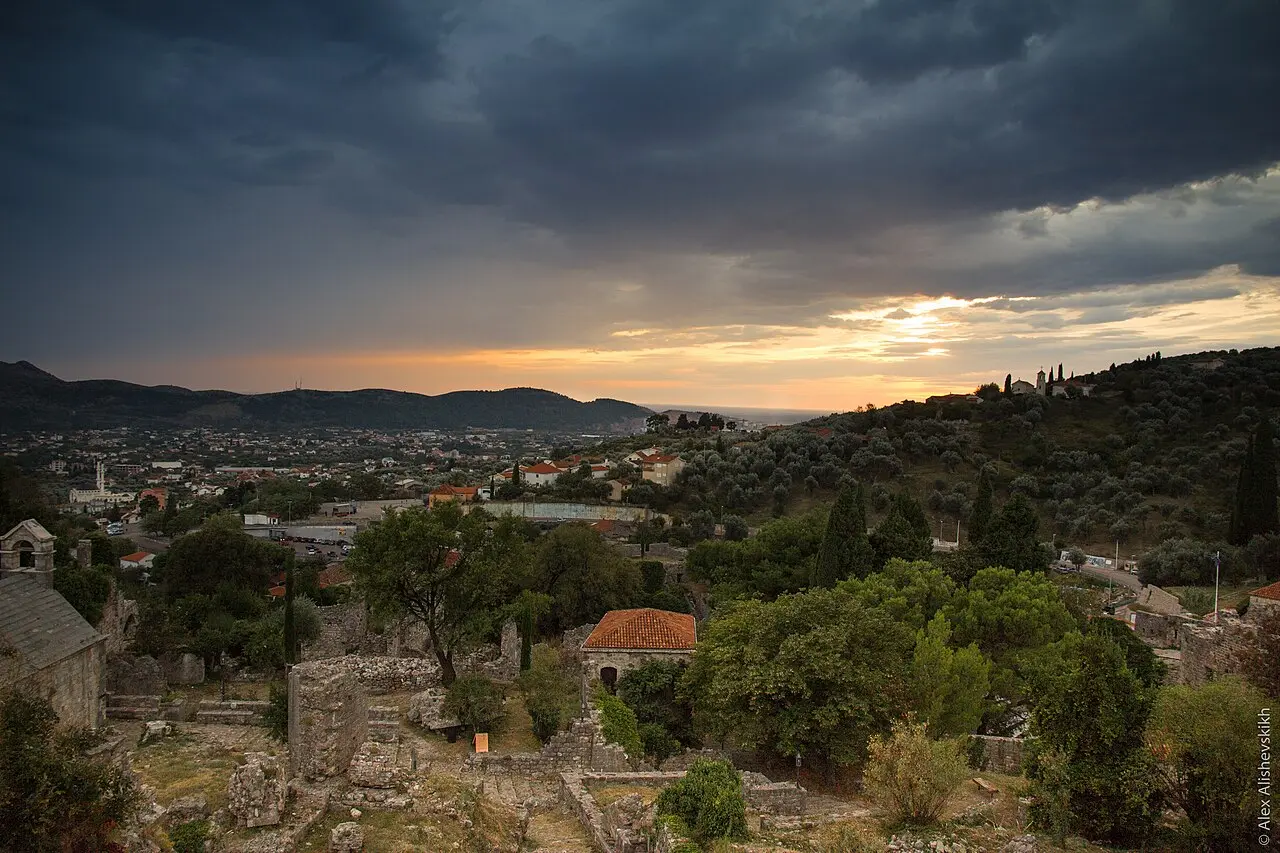
Stari Bar is the headline. It sits on a rocky hill about 3 km inland, at roughly 184 m, and it’s not a preserved old town you live in but a ruined one you explore - an archaeological site with an entry gate. People settled here for well over two thousand years; under Byzantium it was Antivari, and it passed in turn through Serbian, Venetian and Ottoman hands, each leaving a layer. Inside the walls are the shells of churches, cisterns, a hammam and a citadel, threaded by rough stone lanes.
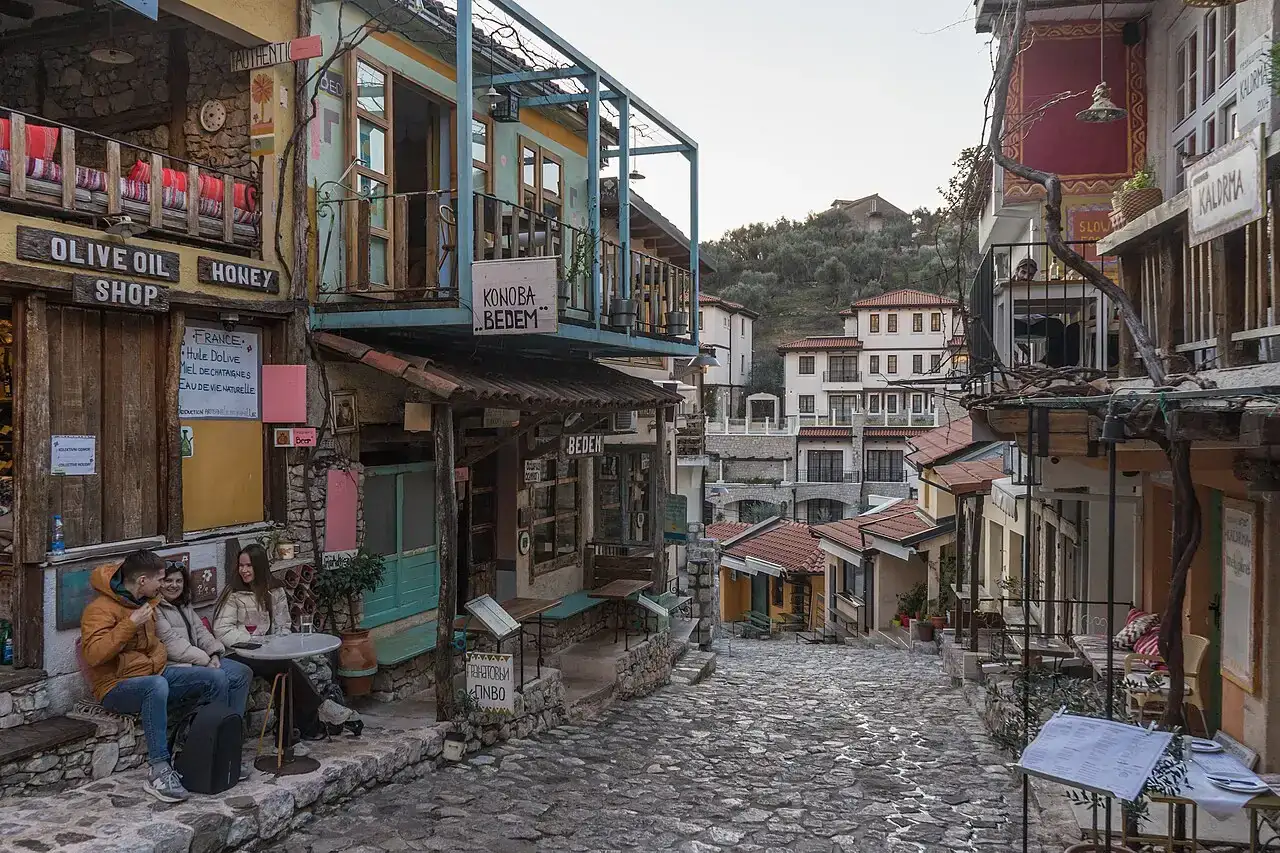
What ended it as a living city was war and then an earthquake. During the 1877-78 Montenegrin-Ottoman fighting the town was besieged and much of it wrecked - the water supply was cut when the aqueduct was blown up in January 1878 - and after further damage in the 1979 earthquake the old town was largely abandoned and the new Bar built down on the coast. The result today is a striking ruin-scape you can walk for an hour or two. There’s a small entry fee (check the current price at the gate). Just outside the walls, a lane of café-bars and craft shops has grown up, so you can climb the ramparts and then sit under a vine with a coffee.
The old aqueduct
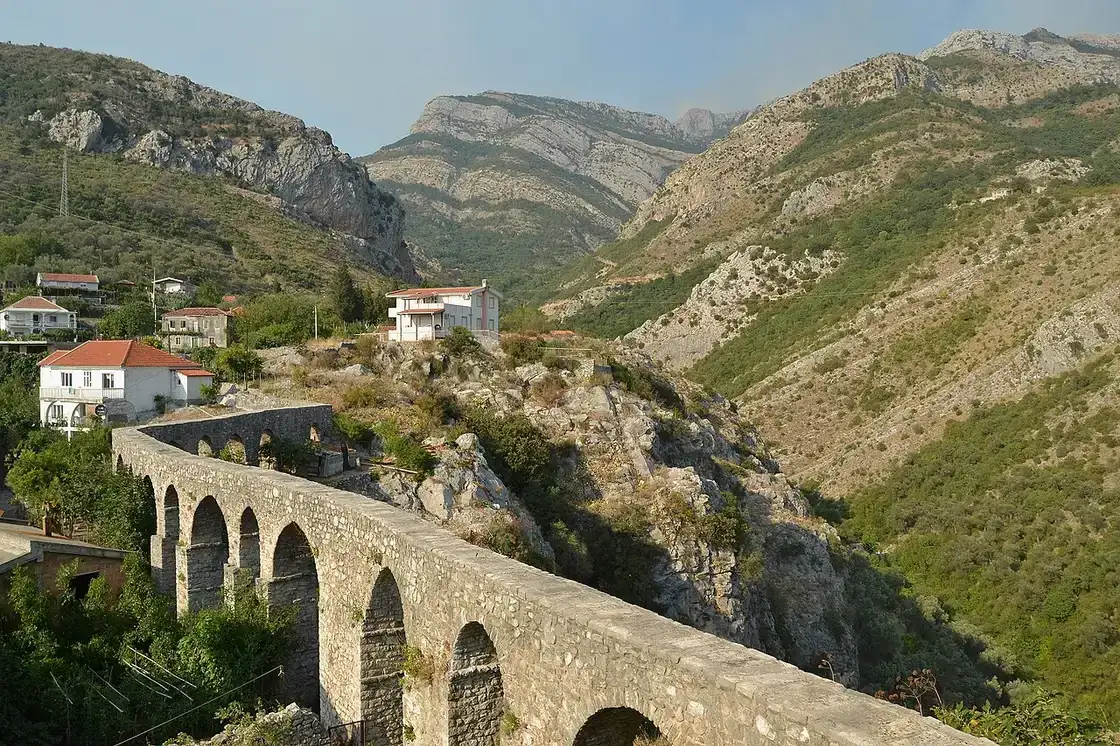
Just below the old town stands the aqueduct that once carried spring water down from the mountains into Stari Bar - an Ottoman-era structure, usually dated to around the 16th-17th century, and the only surviving aqueduct in Montenegro. Its stone arches march across the little valley on the approach road, and it was patched back together after the 1979 quake. It takes two minutes to see and it is right on the way in, so don’t drive past it.
The Old Olive Tree at Mirovica
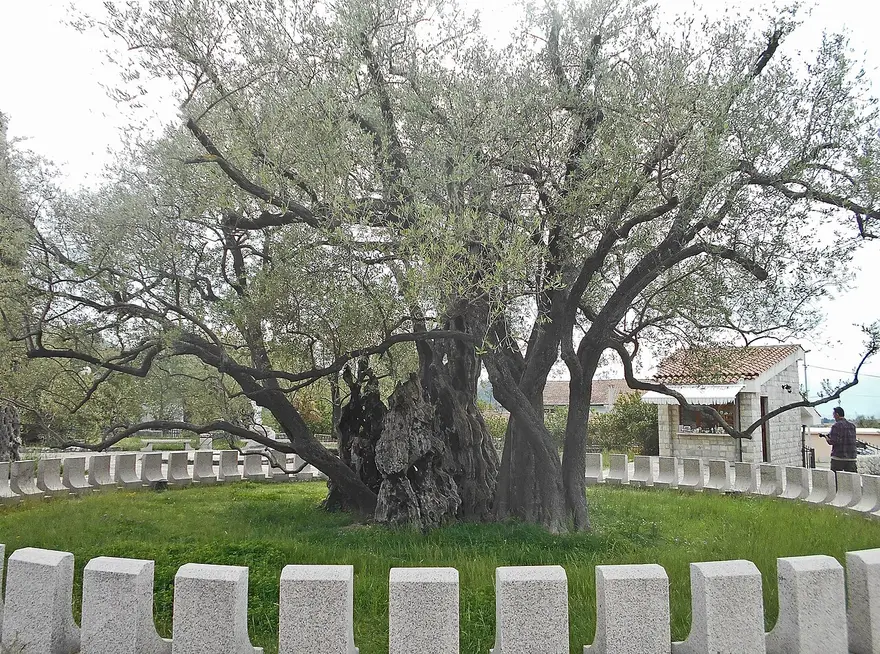
A short way from Stari Bar, at Mirovica (about 5 km from town on the road toward Ulcinj), grows the Stara Maslina - the Old Olive Tree, one of the oldest living trees in Europe. It’s often quoted as “over 2,000 years old,” and a 2015 analysis of the wood put its age at around 2,240 years. The trunk is a vast twisted knot roughly 10 m around, hollowed and split with age but still green - and it still produces olives. It has been a protected natural monument since 1963, fenced within a low stone enclosure, and there’s a small charge to go in. Local legend says feuding families would meet here to make peace under its branches. It’s a quiet, slightly odd little stop, but standing next to something that was already ancient when Rome ran this coast is worth the few minutes.
King Nikola’s Palace
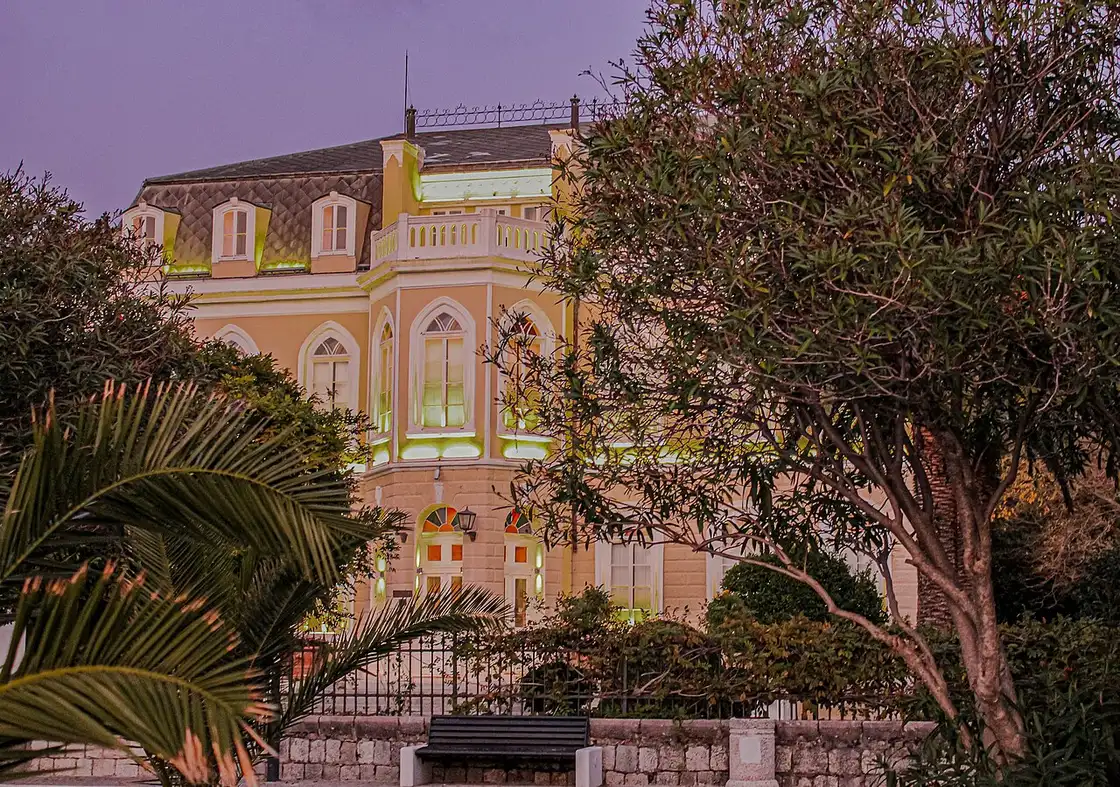
Down on the modern seafront, by the town beach, is King Nikola’s Palace (Dvorac kralja Nikole), built in 1885 as a summer residence for King Nikola I Petrović-Njegoš, Montenegro’s last monarch. It’s modest as royal palaces go - a low peach-coloured villa in a garden of palms and oleander rather than a grand pile - but the setting on the water is lovely, and it now houses Bar’s Homeland Museum, with archaeological, historical, ethnographic and art collections running from antiquity to the early twentieth century. Check the current opening hours locally. It’s an easy add before or after a swim.
The port and the town today
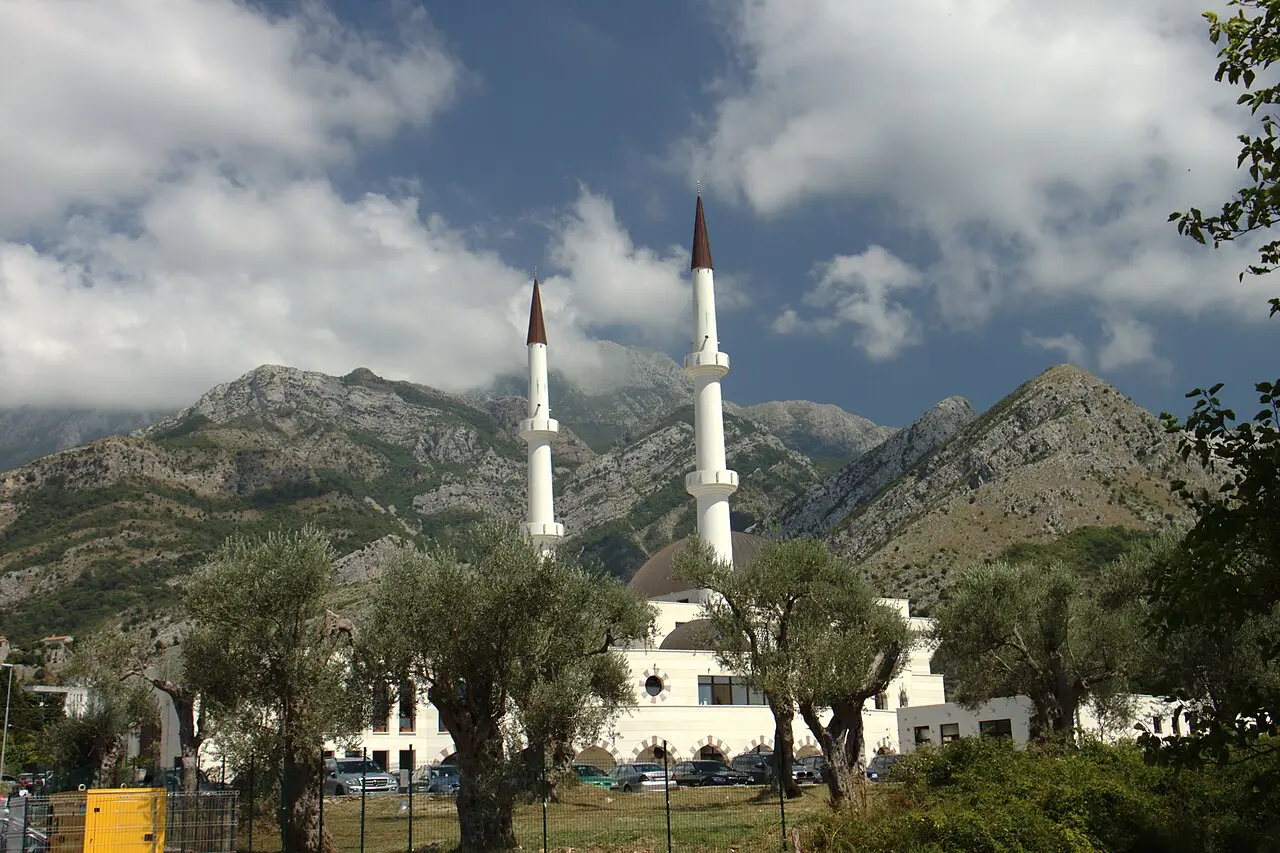
The Port of Bar is the town’s reason for being - a container and cargo port that’s also the ferry gateway to Italy, and it gives Bar a busy, workaday feel very different from the resorts up the coast. Bar also has one of the largest Muslim communities on the coast, and mosques sit among the churches under Mount Rumija, part of a mixed heritage that goes back to the Ottoman centuries. The seafront promenade and marina are pleasant enough for an evening walk while you wait for a boat or a train, but nobody comes to Bar for the town itself - they come for what’s on the hill and what leaves from the port.
Arriving by ferry from Italy
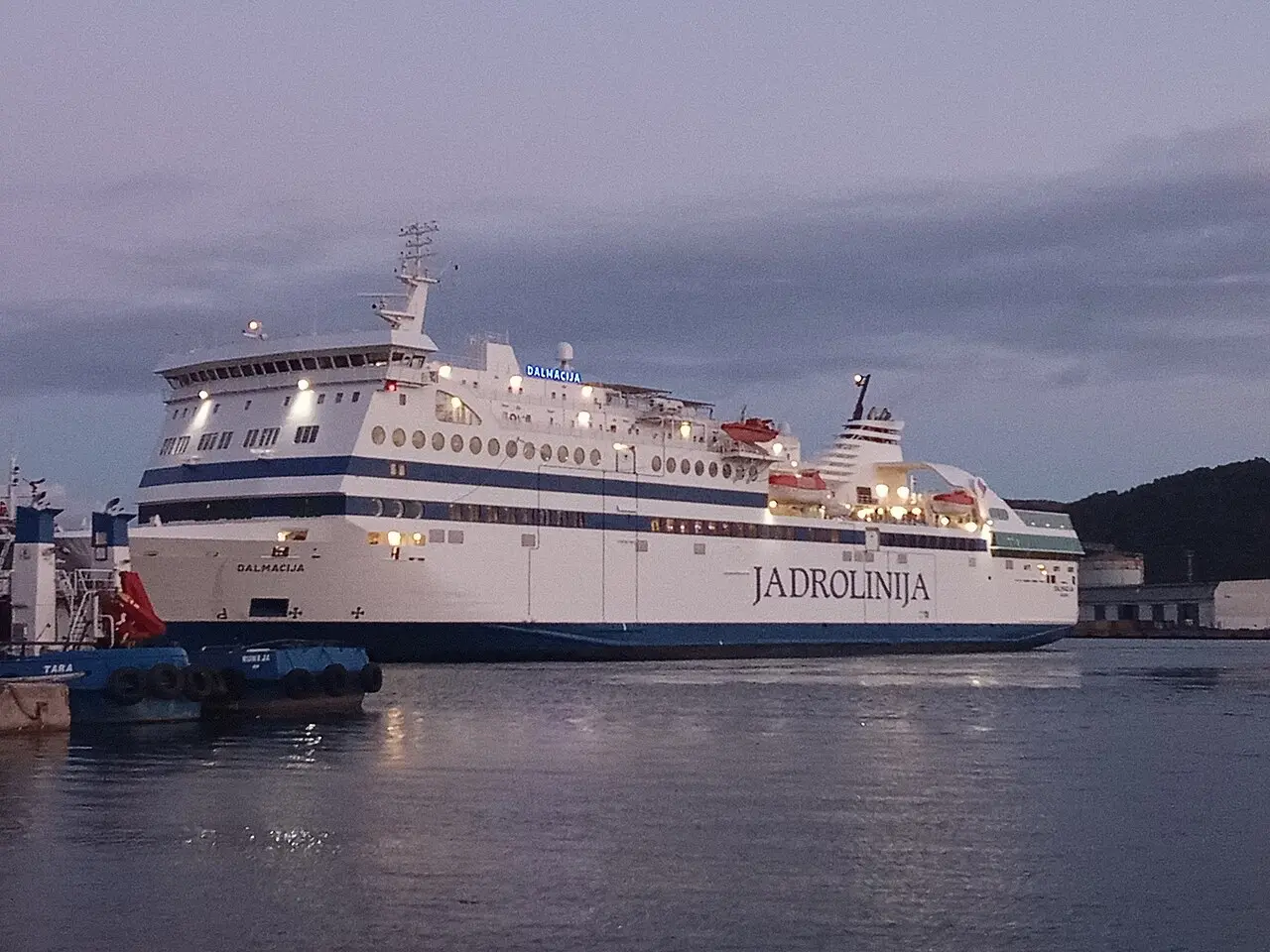
Bar is Montenegro’s main sea gateway, but neither of its usual Italy links has a confirmed 2026 season: the Bar-Bari line is not sailing this summer - the Montenegrin operator said in April that no ship was available for it - and Ancona-Bar isn’t bookable either, with Adria Ferries’ own booking engine no longer listing Bar as a destination. The realistic way to arrive by sea this year is the Bari-Durrës crossing in Albania followed by a 2.5-3 hour drive north - the Croatian Bari-Dubrovnik boat is suspended until 21 October 2026, which is where its season was due to end anyway - or flying and renting a car. If a direct sailing to Bar does resume, boats dock at the passenger terminal in the Port of Bar, about 1.5-2 km from the town centre, a 20-minute walk along the marina or a short taxi. For the full picture, fares if either line returns, and today’s real alternatives, see our guide to the ferry to Montenegro, or our deeper dive into why the Bar-Bari ferry stopped specifically.
The railway: Bar to Virpazar, Podgorica and Belgrade
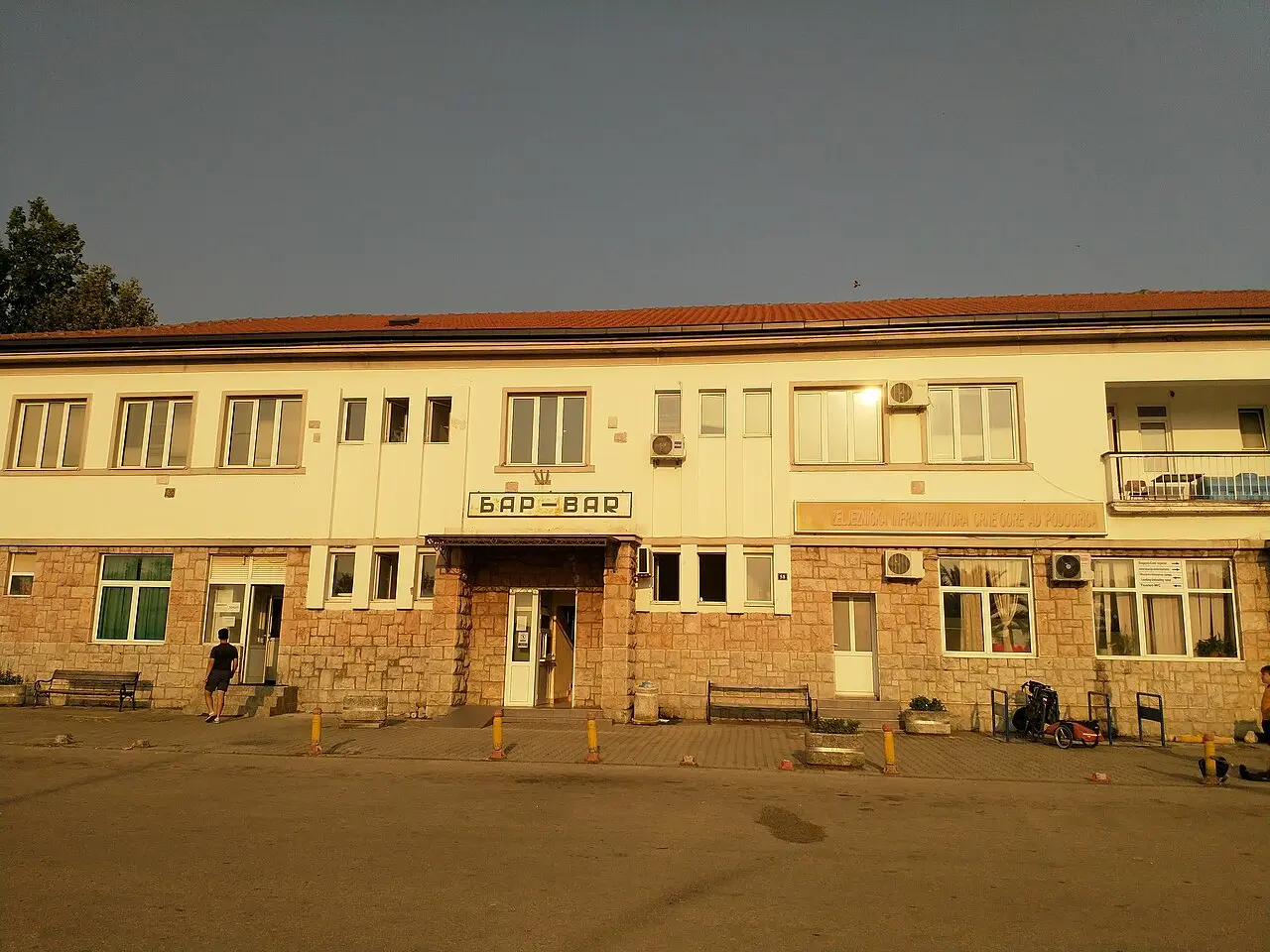
Bar is the coastal terminus of the Belgrade-Bar railway, one of the most scenic train lines in the Balkans. Opened in 1976 and running about 476 km, it climbs from sea level here up through the mountains - past Virpazar (the main gateway to Lake Skadar), Podgorica, Kolašin and Bijelo Polje - and on into Serbia to Belgrade. The engineering is the draw: around 250 tunnels and hundreds of bridges, including the Mala Rijeka viaduct, at about 198 m one of the highest railway viaducts in Europe. Tickets are cheap (Podgorica-Bar is only a couple of euros), and the ride up to Kolašin, or the long haul to Belgrade, is a proper scenic journey rather than a quick way to the sights - full 2026 times, fares and same-day feasibility are in our Belgrade to Bar train guide. There’s no railway along the coast itself, so for beach-hopping you’ll still want a bus or a car.
How to get to Bar
Bar is well connected by road, rail and sea - which is much of the point of the place.
- By car. Bar sits on the coastal road. It’s about 40 km to Budva and about 60 km to Kotor up the coast; inland, the Sozina tunnel on the Podgorica road costs about €2.50 and cuts out a long mountain detour, putting Podgorica around 50 km / under an hour away. See our guide to renting a car in Montenegro.
- By bus. Intercity buses run all along the coast - Budva, Kotor, Herceg Novi - and inland to Podgorica, cheaply and often in summer. Bar’s bus station is central. The full picture is in getting around Montenegro; if you’re travelling without a car, Montenegro without a car shows how far the buses and the train get you.
- By train. The scenic line up to Podgorica, Kolašin and Belgrade starts here (see above).
- By ferry. Not in 2026 - neither the Bari nor the Ancona line is running into the Port of Bar (see above).
- By air. There’s no airport at Bar. The nearest is Podgorica (TGD), around 50 km inland; Tivat (TIV) on the bay is the other coastal option. Both feed into our airport transfers guide.
Where to stay
Honestly, for most trips Bar is a place to pass through rather than base yourself. If you’re catching an early ferry or the morning train, a night near the port or the seafront makes sense, and there are hotels and apartments along the front and in the suburb of Šušanj just north. But if you’ve come south for beaches, the better base is Ulcinj, 25-30 km on, which fronts Velika Plaža - around 13 km of sand - and the river island of Ada Bojana; see our Ulcinj guide. For the bay and the medieval towns, most people stay up at Kotor or Budva instead; for a quiet beach base 20-22 km back up the coast, Petrovac is the closer option. In short: sleep in Bar for the logistics, elsewhere for the holiday. Our where to stay in Montenegro guide lays out the choices by trip type.
Where to eat
Bar’s cooking is coastal Montenegrin: fresh fish and seafood, grilled meats, olive oil pressed locally (this is olive country - the hills around town are full of groves), and the mountain staples of Njeguški prosciutto and cheese, washed down with local Vranac red and Krstač white. Some of the most atmospheric eating is up at Stari Bar, in the konobas along the lane below the old-town gate, where you sit under vines with the ruins above you. Down in the modern town, the seafront and marina have the usual mix of fish restaurants and cafés. We don’t quote fixed prices we can’t verify, so check current menus locally - but Bar is generally better value than the resort towns up the coast.
Practical tips for visiting Bar
A few things worth knowing before you go:
- Currency. Montenegro uses the euro (€), even though it’s not in the EU. Cards work in town; carry some cash for the Stari Bar and olive-tree entry, small konobas, buses and parking.
- Getting to the sights. Stari Bar and the olive tree are inland, not walkable from the port - take a local bus, a taxi or a car. They pair naturally into one trip (the olive tree is on the Ulcinj road just beyond the old town).
- When to go. July and August are hot and busy; late spring and September are more comfortable for clambering around Stari Bar in the sun. See our best time to visit Montenegro guide.
- How long to stay. Half a day covers Stari Bar, the aqueduct, the olive tree and the palace. Bar works best folded into a journey - off the ferry or train, or on the way south to Ulcinj - rather than as a destination in itself.
For where Bar fits into a wider trip, our Montenegro travel guide maps the country region by region, and you can browse more destinations in our cities guide. Heading inland by rail or road, Lake Skadar at Virpazar is the obvious next stop; carrying on south, Ulcinj has the sand.
Nearby / read also
- Ferry to Montenegro - what still sails from Italy in 2026, and why nothing docks at Bar.
- Ulcinj travel guide - the sandy far south, 25-30 km on.
- Petrovac travel guide - the quiet beach town 20-22 km back up the coast.
- Lake Skadar - reached from Bar via Virpazar on the railway.
- Getting around Montenegro - buses, trains, the bay ferry and car.
- Where to stay in Montenegro - pick your base by trip type.
- All cities in Montenegro
Photos
On the map
The map loads on click - to keep the page lightweight.
The map didn’t load. Check your connection and refresh the page.
Read also

Cities · 9 min read
Bečići, Montenegro: Beach Resort Guide
Updated · September 23, 2026Bečići resort guide: 2 km beach, hotels from Splendid to Iberostar, the promenade walk to Budva, season tips and how to get there from Tivat.

Cities · 13 min read
Petrovac, Montenegro: Guide to the Quiet Beach Town
Updated · September 25, 2026Petrovac travel guide: 600 m of red sand, the Kastio fort, the chapel islet, buses from Budva in half an hour, and whether to base here or in Budva.

Cities · 12 min read
Herceg Novi, Montenegro: Old Town, Forts & Riviera
Updated · September 25, 2026Herceg Novi travel guide: the sunny stepped Old Town, the Forte Mare, Kanli Kula and Spanjola forts, the Igalo spa and how to get there from the border.

Cities · 12 min read
Žabljak: Where to Stay in Montenegro's Mountain North
Updated · September 25, 2026Žabljak travel guide: the base town for Durmitor - where to stay (centre, Black Lake road or a cabin), the Savin Kuk ski area, prices and how to get there.