
Getting Around Montenegro: Buses, Taxis, Car & Ferries
How to get around Montenegro: intercity buses, taxis, hire cars, the Bay of Kotor ferry, trains and Italy ferries - with realistic 2026 fares and times.
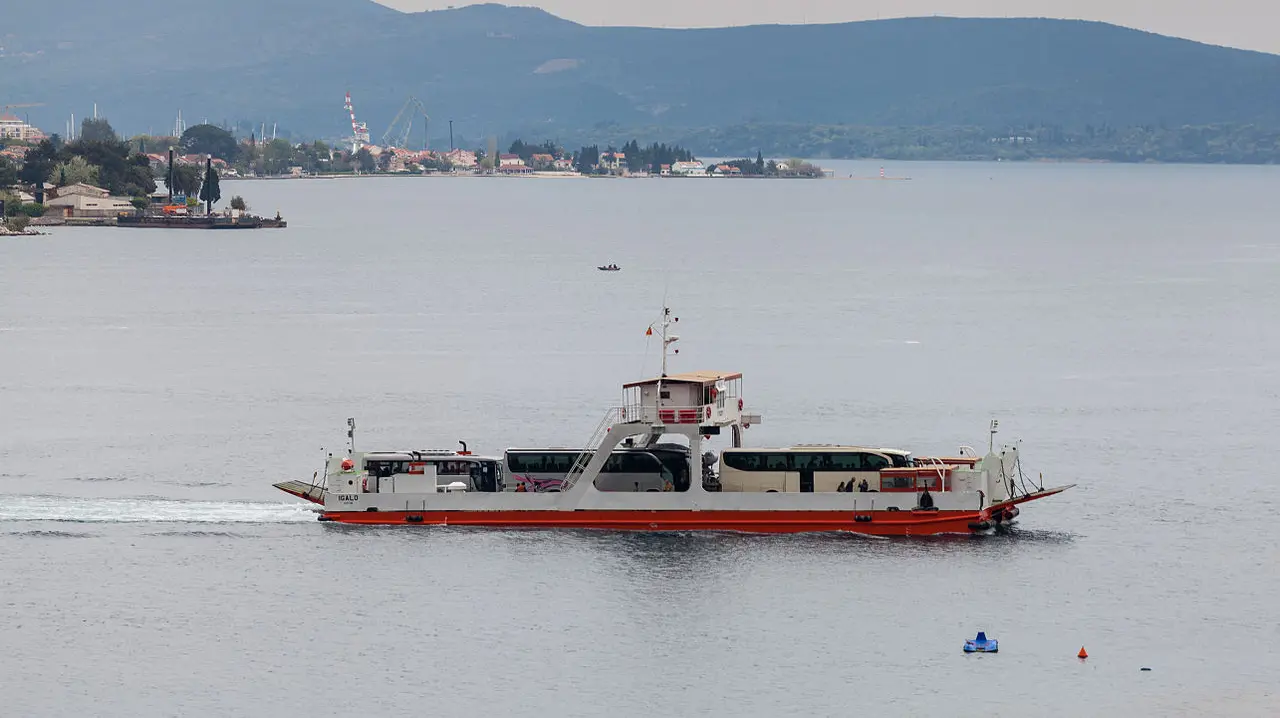
Montenegro runs on buses and cars. Intercity buses link every town worth visiting for a few euros, taxis are cheap by Western standards, and a hire car unlocks the mountains and national parks that buses barely reach. There are also two small train lines, a handy car ferry across the Bay of Kotor, and seasonal ferries from Italy. Here is how each option actually works, what it costs in 2026, and when to use which.
The quick version: which transport for which trip
If you are staying on the coast and hopping between Kotor, Budva and Bar, buses do the job and cost very little. If you want Durmitor, the Tara Canyon, Lake Skadar’s back roads or the quieter beaches, rent a car - public transport thins out fast once you leave the main coastal corridor. For the mountain run itself - Podgorica and coast bus boards, transfers and day tours - see getting to Durmitor and Žabljak. Taxis fill the short gaps; the Kamenari-Lepetane ferry saves time around the bay; and the train is a cheap, scenic novelty rather than a way to reach the sights.
| You want to… | Best option |
|---|---|
| Travel between coastal towns | Intercity bus |
| Reach Durmitor, Tara, Lake Skadar villages | Hire car |
| Short hop from the airport or a late ride home | Taxi / transfer |
| Cross the inner Bay of Kotor quickly | Kamenari-Lepetane ferry |
| A slow, scenic ride to Bar or Belgrade | Train |
Intercity buses: cheap and frequent
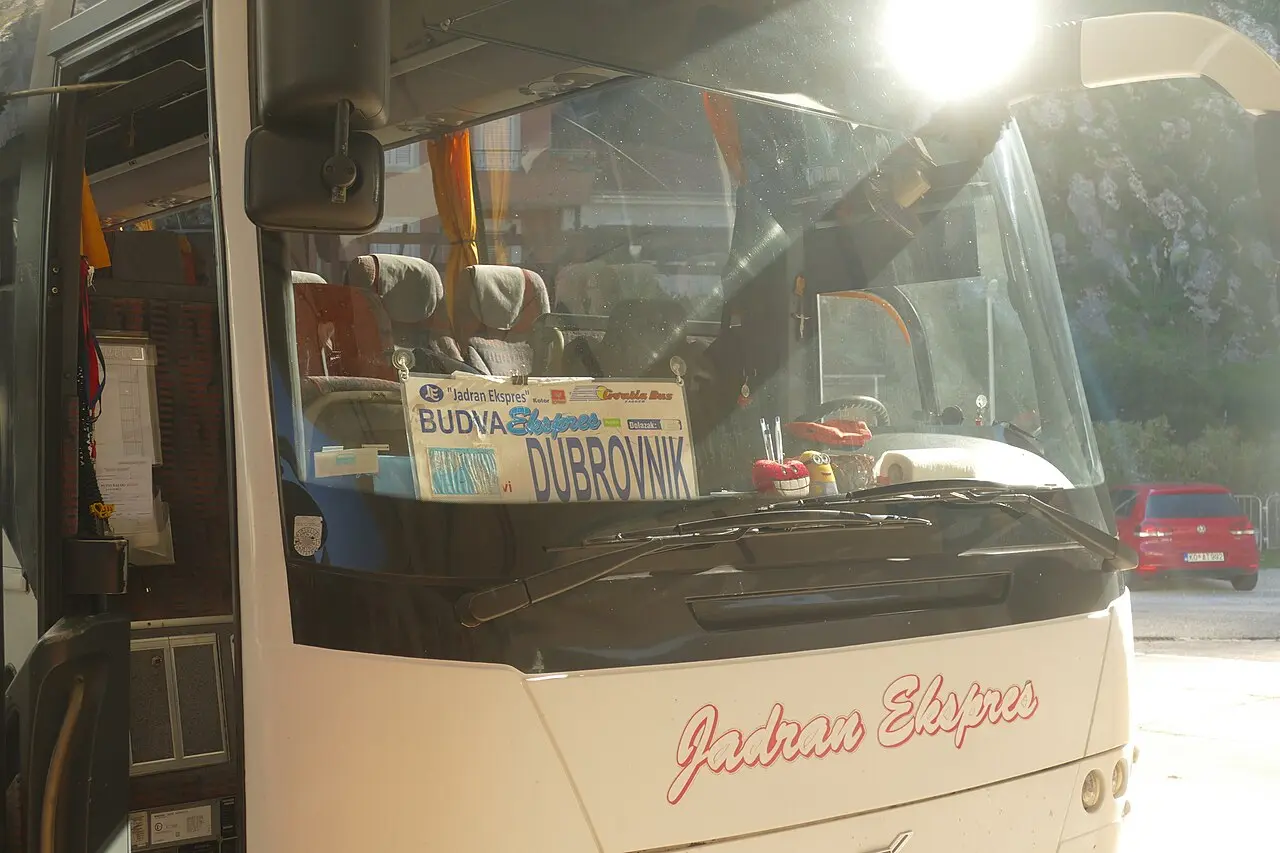
Buses are the backbone of public transport here, and on the coast they are genuinely frequent in summer. Almost every route you’ll want runs several times a day, and the main coastal corridor - Herceg Novi, Kotor, Budva, Bar - has departures throughout the day in season. You buy tickets at the bus-station counter, online, or sometimes from the driver at smaller stops. The national timetable and booking site BusTicket4.me is the easiest place to check times; aggregators like GetByBus and Balkan Viator also list most carriers.
Fares are low. As a rough guide for 2026 (one-way, check current prices for your dates):
- Kotor-Budva: €3.50-6, plus Kotor’s €1.30 station fee, roughly 35-50 minutes.
- Budva-Podgorica: around €6-10, about 1.5-2 hours.
- Podgorica-Kotor: around €6.50-10, about 2 hours.
Two quirks catch first-timers. First, stowing a bag in the luggage hold costs an extra €1-2 in cash, paid to the driver and separate from your ticket - keep coins handy. Second, summer traffic on the coast road can stretch journey times well beyond the timetable, especially the Kotor-Budva stretch, so don’t plan a tight connection in July or August.
Taxis: cheap, but agree the fare
Taxis are inexpensive compared with Western Europe, and for a short hop - the airport to your hotel, a late ride back from dinner - they’re the obvious choice. A legal taxi has a taximeter, a “TAXI” roof sign, and city-coded plates ending in “TX” (KO TX for Kotor, TV TX for Tivat). Stick to marked cars, and either confirm the meter is running or agree a price before you set off; unofficial drivers around the airports and Old Town gates are known to overcharge in season.
There’s no Uber or Bolt in Montenegro. A few local apps exist instead - TeslaGo in Podgorica, MonteGO along the coast and in inland towns from Herceg Novi to Kolašin, and Terrae around Budva - but coverage is patchy and changes from season to season, so don’t count on one. For the common coastal hops, go by the prices operators publish (checked 24 September 2026). From Tivat Airport, Red Taxi, a Kotor dispatch firm serving Kotor and Tivat, lists a flat €30 to Kotor Old Town and €45 to Budva, a regional transfer firm lists €40 for a sedan to Budva, and MonteGO riders paid €35-45 and €65-75 on the same two runs in 2026, the arrivals pickup and luggage included. Between Budva and Kotor, the legal meter tops out at €1 to start and €1.80 a kilometre under both towns’ taxi decisions, about €41 for the 22 km, while MonteGO riders paid €65-75. Treat these as ballpark and confirm the fare before you ride. For the legal fare bands city by city, airport surcharges and how to spot the “meter’s broken” scam, see our full guide to taxis in Montenegro.
Hire car: the way to see the country
A car is the difference between seeing one resort and seeing Montenegro. The coast is doable by bus, but the north - Durmitor, Žabljak, the Tara Canyon - and Lake Skadar with its wineries and viewpoints really need your own wheels. You pick up at Tivat (TIV) or Podgorica (TGD) airport, or in Dubrovnik just across the Croatian border, and you drive on the right. If you arrive over a land border, check the documents you need first in our Montenegro entry requirements guide.
The roads are spectacular and demanding in equal measure. Outside a few fast stretches, expect two-lane mountain roads that climb, twist and narrow without much warning - the old Kotor-Lovćen serpentine screws up the mountainside in roughly 25 hairpin bends. Take a small car, drive in daylight on the tightest sections, and you’ll be rewarded with some of the best driving in the Mediterranean. Our full guide to renting a car in Montenegro covers pickup points, parking, the green card for border trips and how to keep costs down.
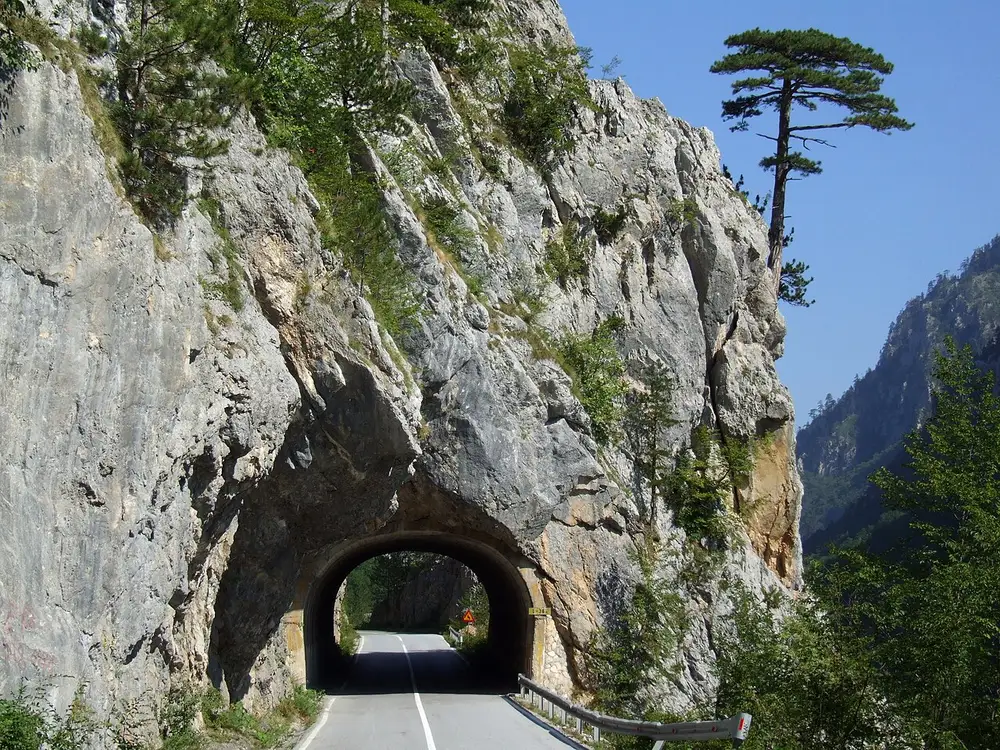
There are a couple of tolls worth knowing. The Sozina tunnel on the Podgorica-Bar road costs about €2.50 for a car and saves a long mountain detour. The newer Bar-Boljare motorway section through the centre of the country also carries a toll. Otherwise the roads are toll-free; carry a few euro coins for parking machines, which don’t all take cards.
The Bay of Kotor ferry: a genuine shortcut
The Bay of Kotor folds back on itself, so driving from the Herceg Novi side round to Tivat or Budva means a long loop past Risan and Perast. The Kamenari-Lepetane car ferry cuts straight across the narrows of the bay instead, and it’s one of the most useful moves on the coast.
The crossing takes about five minutes, ferries run every 15-20 minutes day and night through the summer season (every 20 minutes by day in winter), and a car costs €5 - the operator’s own sheet still lists €4 off-season, but that document predates the 2025 fare change, so budget €5 (motorbikes €2.50, foot passengers free, larger vehicles more). Ramp to ramp it saves close to an hour of driving round the bay. The one catch is high summer: queues at the ramp can reach 30-45 minutes at peak times, so weigh the wait against the drive when it’s busy. Coming from Croatia and heading for Tivat or its airport, the ferry is the obvious move; for Budva it buys about 35 minutes and for Kotor about 20, so the length of the queue decides it. Full fares by vehicle, the winter timetable and how the queue really behaves are in our guide to the Kamenari-Lepetane ferry.
Trains: cheap, scenic, limited
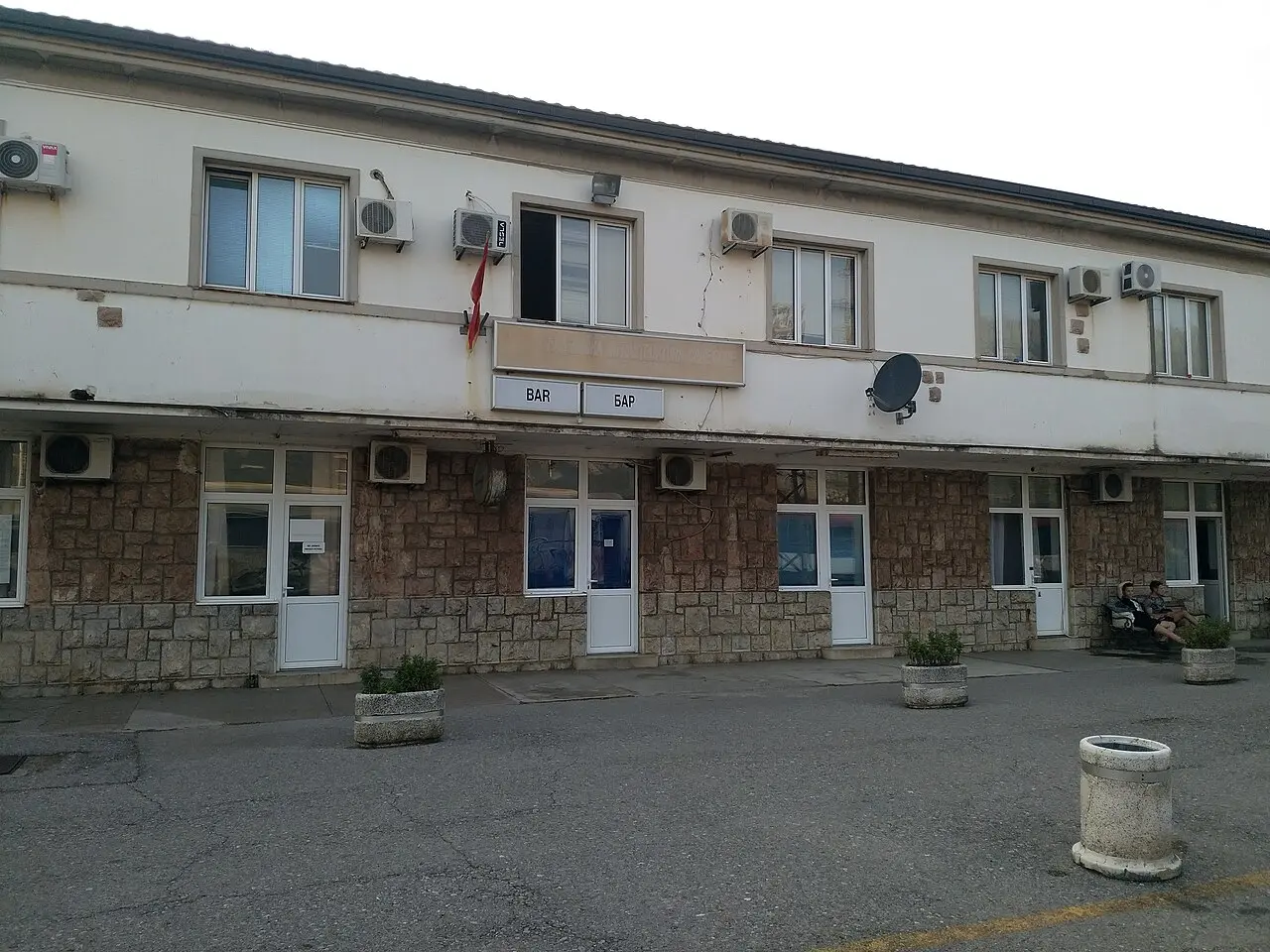
Montenegro has a small railway, and it is genuinely beautiful - but it reaches very little of the tourist coast. The main line runs Bar-Podgorica-Kolašin-Bijelo Polje and on to Belgrade, climbing through the mountains past the Mala Rijeka viaduct, one of the highest rail bridges in Europe. A second, electrified line links Podgorica and Nikšić.
Tickets are cheap: Podgorica-Bar costs only a couple of euros, and the full Bar-Belgrade run is a fraction of what the distance would cost in Western Europe - see the Belgrade to Bar train guide for 2026 overnight and summer day-train times. But there’s no rail along the Bay of Kotor or the main beach strip, so for most visitors the train is a scenic add-on - the ride up to Kolašin, or the long haul to Belgrade - rather than a way to get between the sights. For that, buses and a car still do the work.
Arriving by air or sea
Most visitors fly in. Tivat (TIV) is the coastal airport, closest to Kotor and Budva and very busy in summer; Podgorica (TGD) is inland, better for the capital and the north, and tends to have more year-round flights. Many people also fly into Dubrovnik (DBV) in Croatia and cross the border by car or bus. If you haven’t booked a flight yet, our how to get to Montenegro guide compares all three airports by destination, plus the current ferry and land-border options. From Tivat, a taxi or pre-booked transfer reaches Kotor in 15-20 minutes - the full breakdown of options, fares and the budget bus route is in our guide to getting from Tivat Airport to Kotor - and the same airport to the riviera is covered in Tivat Airport to Budva.
You can also arrive by sea, though 2026 is a thin year for it: neither the Bar-Bari line nor Ancona-Bar has a confirmed season, so there is currently no direct ferry from Italy to Montenegro. The workaround that still functions is Bari-Durres in Albania and a 2.5-3 hour drive north; the Croatian Bari-Dubrovnik boat is suspended until 21 October 2026, and its 2026 season was due to end on that date anyway. Schedules shift from year to year, so check the current status before booking; for fares, port fees and what it would take for either direct line to return, see our full guide to the ferry to Montenegro.
Practical money and planning notes
Montenegro uses the euro (€), even though it’s not in the EU. Cards are widely accepted in towns, but carry some cash for bus luggage charges, the Kamenari ferry, parking machines, rural fuel stations and small cafés. For how ATMs, withdrawal fees, cards and tipping actually work on the ground, see our full guide to Montenegro currency and money. Every price above is a 2026 ballpark from operators and aggregators - fares move with the season, so confirm current rates for your dates.
When you’re ready to price a hire car or a fixed-price airport transfer, compare options using the boxes below. For the bigger picture - when to come, how long to stay and where to base yourself - see our Montenegro travel guide, and for a self-drive plan that strings the highlights together, the Montenegro road trip itinerary.
Nearby / read also
- Renting a car in Montenegro - pickup points, roads, parking and costs.
- Driving in Montenegro - rules, speed limits, tolls, fuel and parking.
- Tivat Airport to Kotor - taxi, transfer and the budget bus route.
- Tivat Airport to Budva - the short hop over the hill to the riviera.
- Tivat vs Podgorica Airport - which airport to fly into for the coast or the north.
- Airport transfers in Montenegro - Tivat, Podgorica and Dubrovnik options compared.
- Podgorica Airport to Budva - taxi, transfer and the bus via Podgorica.
- Kotor to Dubrovnik - bus, transfer and the Croatian border crossing.
- Kotor to Budva - frequent buses, taxis and the two driving routes.
- Podgorica to Kotor - buses, taxis and the two mountain roads from the capital.
- Montenegro without a car - how far buses, ferries and the train get you with no rental.
- Ferry to Montenegro - why neither Ancona-Bar nor Bar-Bari is running in 2026, and what to do instead.
- Dubrovnik to Montenegro day trip - see the Bay of Kotor from Dubrovnik in a day.
- Montenegro road trip itinerary - the self-drive route through coast and mountains.
- Where to stay in Montenegro - pick your base by trip type: Boka, Budva, Tivat or the south.
- Montenegro travel guide - plan the whole trip.
- All routes in Montenegro - ready-made driving ideas.
Read also

Transport · 9 min read
Getting to Durmitor & Žabljak: Bus, Car, Tours
Verified · September 3, 2026Podgorica bus €10-12 (2h15-2h45), Budva €22-25, Kotor €20-23, drive times and KiwiTaxi from €253. Fares checked 3 Sep 2026.

Transport · 10 min read
Montenegro to Albania: Buses, Borders & Day Trips
Verified · August 22, 2026Budva-Tirana buses (~5.5 h), Ulcinj-Shkodër via Sukobin, Božaj/Hani i Hotit, day trips and the ride back, in one place.

Transport · 14 min read
Taxis in Montenegro: Apps, Prices & Scams to Avoid
Updated · September 25, 2026Montenegro taxi fares in August 2026: real municipal price bands in Budva, Kotor and Podgorica, airport surcharges, apps, and scams to avoid.

Transport · 8 min read
Balkan Car Hire: Crossing Borders Without a Refusal
Verified · August 15, 2026A hire car crosses these borders on paperwork, not luck: written permission, a Green Card in some countries and not others, and one country nobody insures.