
Driving in Montenegro 2026: Rules, Tolls & Parking
Driving in Montenegro 2026: speed limits, the Sozina tunnel toll, where to park in Kotor and Budva, fuel prices, fines and what the roads are really like.
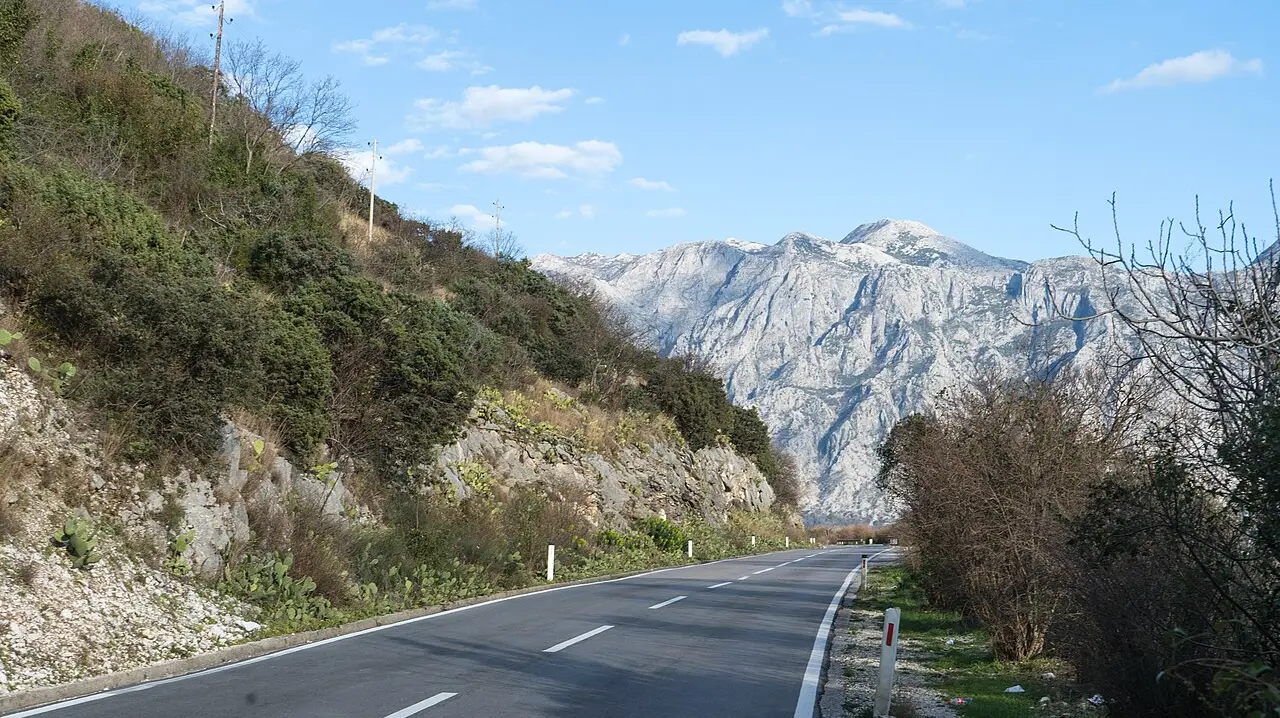
Montenegro drives on the right, and the limits are simple to remember: 50 km/h in towns, 80 on the open road and 100 on the A1, the country’s only motorway. There’s no vignette - the only tolls you’ll meet are the Sozina tunnel (€2.50 for a car, checked June 2026) and the new A1 motorway section. Headlights stay on day and night, the drink-drive limit is near zero, and the real challenge isn’t the rules but the roads: narrow, steep and slow around the Bay of Kotor and up into the mountains. Here’s everything that actually matters behind the wheel. If the trip leaves Montenegro at any point, crossing Balkan borders in a hire car covers the permission letter and where a Green Card is still required.
Which side, and what you need to carry
You drive on the right and overtake on the left, the same as most of continental Europe. The minimum driving age is 18.
For the paperwork, an EU or EEA licence is accepted as is. Drivers with a non-EU licence - including UK, US, Canadian, Australian and most CIS licences - are not legally required to hold an International Driving Permit (IDP): art. 176 of the road traffic safety act puts a valid foreign licence on the same line as an IDP, and sets no condition on the script it is printed in. The IDP matters at the rental desk, where some agencies insist on seeing one, and it doubles as a standard translation of a licence that isn’t in Latin script. Bring the vehicle registration document and proof of insurance. If you’re crossing a border - to Croatia, Albania, Bosnia or Serbia - ask the rental company for a Green Card and confirm the car is allowed to leave the country, because many contracts exclude Albania by default.
The car must carry the standard European kit: a warning triangle, reflective vest, first-aid kit and spare bulbs. Rental cars come with these; if you brought your own car, check before you reach the border. A vest within reach of the driver’s seat matters - you’re meant to put it on before stepping out on the hard shoulder, not fetch it from the boot.
Speed limits and the rules that catch tourists out
The legal defaults are 50 km/h in built-up areas and, outside them, 80 km/h on ordinary roads, 100 km/h on expressways and 130 km/h on motorways. On the A1, the only motorway, the signed maximum is 100 km/h, not 130, because of its gradients and many tunnels. Overtaking inside a tunnel is banned. Watch for lower signed limits through villages - the open road runs straight into a 40 or 50 zone with little warning, and that’s exactly where speed checks sit.
Three rules trip up visitors more than speed:
- Dipped headlights are mandatory 24 hours a day, all year. Not just in tunnels or rain - in full sun too. It’s the most common fine foreigners pick up.
- The drink-drive limit is 0.03% BAC - effectively zero. One beer can put you over. Penalties climb steeply with the reading, and a serious one runs into the thousands of euros.
- No handheld phone. Hands-free is fine; holding the phone to navigate isn’t.
Seatbelts are compulsory front and back. Children under 12 may not sit in the front, and a child under 5 needs an appropriate child seat. Speeding fines run on a sliding scale from €60 for a minor lapse up to €1,000 or up to 60 days in jail, and going 70 km/h or more over the limit in a town, or 90 km/h or more over it outside one, means 15 to 60 days in jail instead of a fine (tariff in force since 7 August 2026). Police do stop cars for routine checks; keep your documents in the glovebox, stay polite, and pay nothing in cash at the roadside - legitimate fines come on a ticket.
Tolls: the Sozina tunnel and the A1 motorway
Montenegro has no vignette, and there are only two places you’ll pay. At both you can settle in cash or by card at a staffed barrier, or use the operator’s ENP electronic tag, which has its own lanes and lets you through without stopping - the tag costs €20 and has to be topped up, so it only makes sense for repeat crossings, and Monteput publishes no discount for using it.
The Sozina tunnel cuts under the coastal mountains on the Podgorica-Bar road, saving roughly half an hour over the old Sutorman pass. A standard car pays €2.50 (checked June 2026). It is worth it for the time and for skipping a long, winding climb.
The A1 motorway - the Smokovac-Mateševo section of the future Bar-Boljare route - runs north from near Podgorica toward Kolašin and the mountains. The toll for a car is €3.50 for the full section (checked June 2026; reconfirm, and note further sections are still under construction so the road doesn’t yet run end-to-end). For most coast-and-bay trips you’ll never touch it; it matters if you’re heading to Kolašin, Biogradska Gora or Žabljak.
Both prices are small. Budget a few euros in coins or a card and you’re covered for any normal itinerary.
What the roads are actually like
This is the part to take seriously. Montenegro is small, but distances are slow. The coast and the Bay of Kotor are ringed by two-lane roads that twist, climb and squeeze through old towns, and in July and August they clog with traffic. A glance at the map says “30 minutes”; the reality in season is often double.
The Bay of Kotor coast road is the classic example - beautiful, but tight against the water through Perast, Dobrota and the bayside villages, with oncoming buses and almost no shoulder. The alternative to driving the whole horseshoe is the Kamenari-Lepetane car ferry across the narrows, which saves a long loop and runs around the clock.
The Kotor-Lovćen serpentine is the road people remember: roughly 25 numbered switchbacks climbing the wall behind Kotor toward Cetinje, with single-lane sections and passing places where you reverse to let oncoming cars by. It rewards an unhurried driver and a calm passenger; it punishes anyone in a rush. Drive it in daylight your first time.
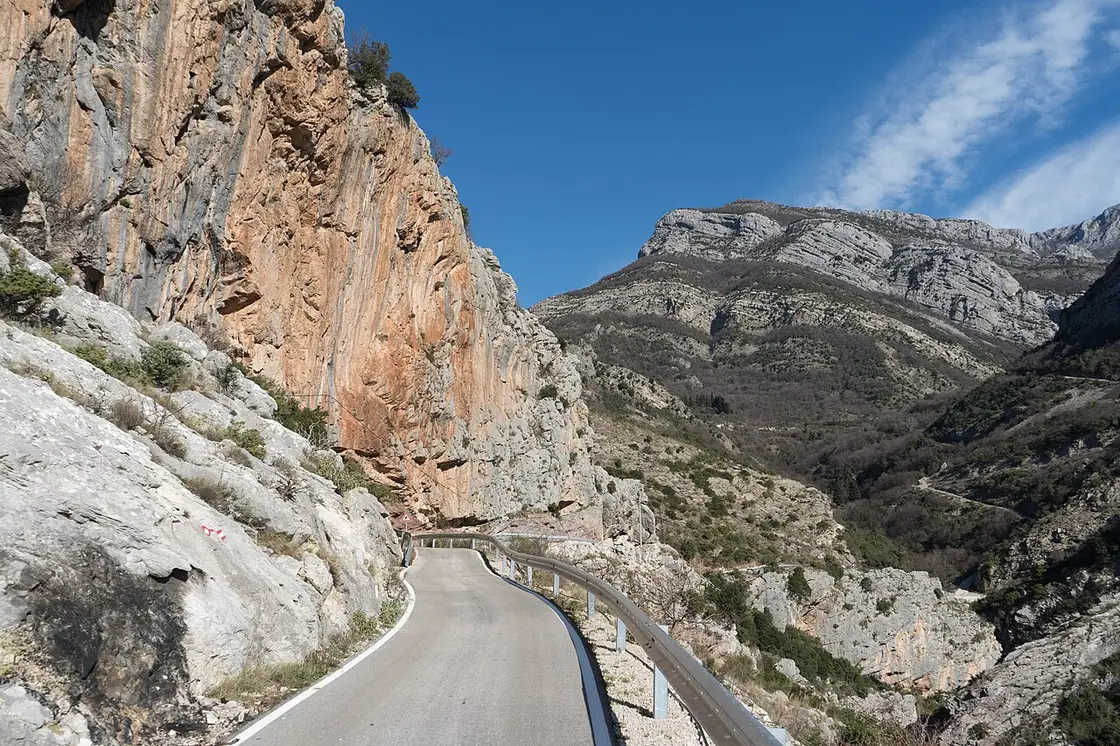
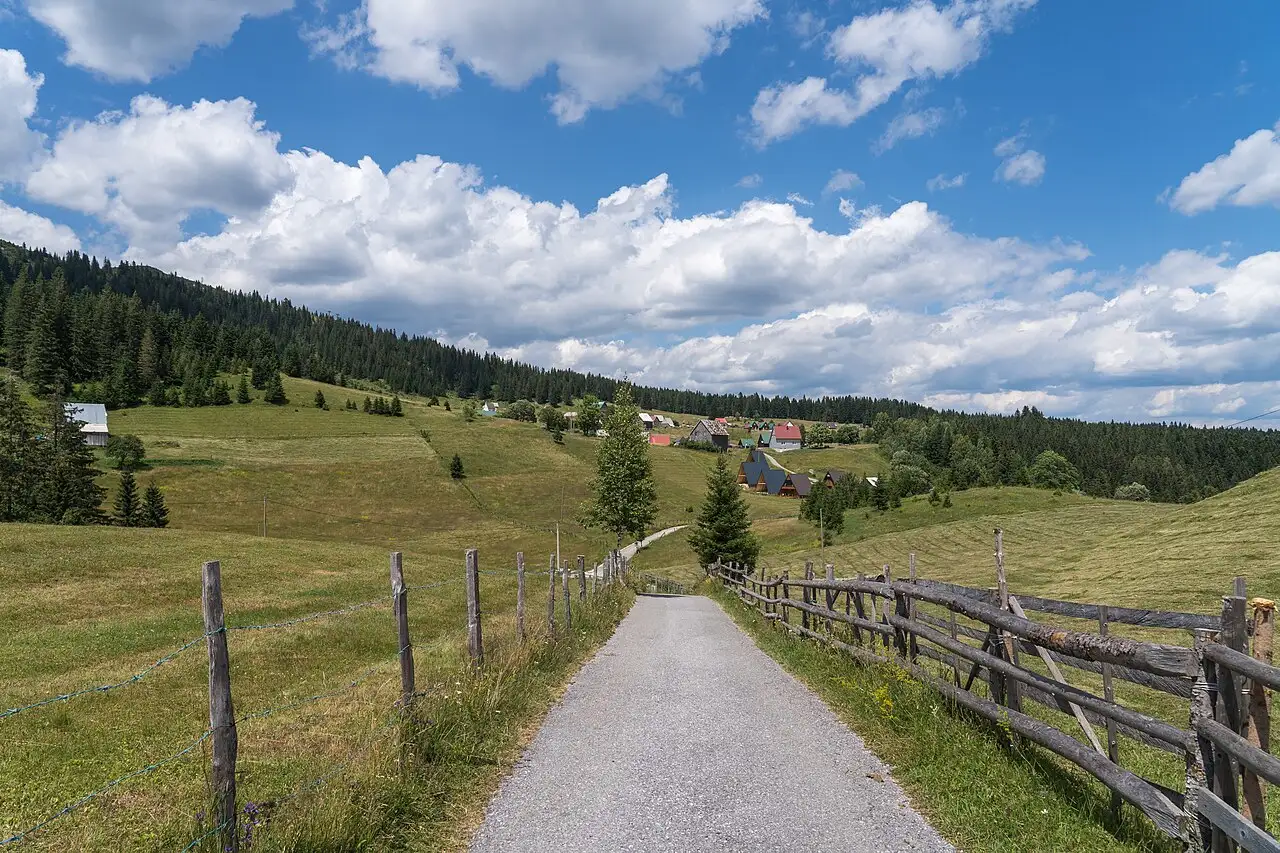
In the mountains the surface is generally good and the scenery is the payoff, but expect long climbs, tunnels with rough edges, livestock on the road and few petrol stations once you leave the main routes. Mountain weather turns fast even in summer.
Local driving habits lean assertive: close following, optimistic overtaking on blind bends, and a casual attitude to lane markings. Drive defensively, leave a gap, and let impatient drivers past rather than racing them.
Fuel, winter tyres and seasonal rules
Fuel is widely available on the coast and main roads, less so in the north. In June 2026, petrol was about €1.60/litre and diesel about €1.64/litre (checked June 2026 - prices move weekly). Stations on main roads take cards; small rural ones may be cash only, so keep some euros. Fill up before any mountain leg.
Winter tyres are a legal requirement from 15 November to 1 April, with fines reported in the €40-€100 range for non-compliance. Even outside those dates, the high passes get snow and the police can require winter equipment in wintry conditions, so carry chains if you’re heading to Žabljak or Kolašin in the cold months. Rental cars in winter should come fitted with winter tyres - confirm it when you book.
Parking in Kotor, Budva and the coast towns
Old towns here are walled and pedestrian - you park outside and walk in. In summer the lots fill early, so arrive before mid-morning or expect to circle.
In Kotor, the main car park sits just outside the Southern Gate and costs roughly €1-€1.50 per hour (checked June 2026); it fills by around 10am in peak season. Mind the marked no-stopping stretches on the access road into town - they’re towed, not just ticketed.
In Budva, parking around the old town runs on a blue-zone system: pay at the machine or by SMS, typically €0.50-€1.50 per hour (checked June 2026), with enforcement that’s brisk about overstays. There are larger lots a short walk from the walls that work out cheaper for a full day.
As a rule across the coast: never block a narrow lane or a passing place, watch for tow-away signs (a clear pictogram, often with a phone number), and if your hotel offers parking, take it - kerb space in Kotor, Budva and Sveti Stefan disappears by lunchtime in July.
Renting versus bringing your own car
Most visitors rent, and for a coast-plus-mountains trip a car is the difference between seeing one town and seeing the country. Pick up at Podgorica or Tivat airport, or just over the border in Dubrovnik - confirm cross-border permission first. Take photos of every existing scratch at handover, check the spare and the warning kit, and read the fuel and insurance terms before you sign.
If you would rather weigh the options first, our guide to renting a car in Montenegro covers pick-up points, costs and insurance, and the wider getting around Montenegro guide compares the car against buses, taxis and the ferry. For a ready-made drive, the Bay of Kotor coast road trip strings the best of the bay into a few unhurried days. And before you set off, 13 Montenegro travel mistakes to avoid rounds up the toll, ferry-queue and parking traps that catch first-time drivers here.
Driving here’s not difficult once you adjust your pace. Keep your lights on, stay sober, take the bends slowly, and the worst the roads will cost you is time you’ll be glad to have spent. Because the roads are the single biggest safety factor for visitors, it’s worth seeing how they fit the wider picture in our guide to whether Montenegro is safe for tourists.
Photos
Read also

Transport · 9 min read
Getting to Durmitor & Žabljak: Bus, Car, Tours
Verified · September 3, 2026Podgorica bus €10-12 (2h15-2h45), Budva €22-25, Kotor €20-23, drive times and KiwiTaxi from €253. Fares checked 3 Sep 2026.

Transport · 10 min read
Montenegro to Albania: Buses, Borders & Day Trips
Verified · August 22, 2026Budva-Tirana buses (~5.5 h), Ulcinj-Shkodër via Sukobin, Božaj/Hani i Hotit, day trips and the ride back, in one place.

Transport · 14 min read
Taxis in Montenegro: Apps, Prices & Scams to Avoid
Updated · September 25, 2026Montenegro taxi fares in August 2026: real municipal price bands in Budva, Kotor and Podgorica, airport surcharges, apps, and scams to avoid.

Transport · 8 min read
Balkan Car Hire: Crossing Borders Without a Refusal
Verified · August 15, 2026A hire car crosses these borders on paperwork, not luck: written permission, a Green Card in some countries and not others, and one country nobody insures.