
Lake Skadar National Park 2026: Boats, Birds, €5 Entry
Lake Skadar 2026: €5 park entry, boats from four harbours, park kayaks from €3/h, a record pelican summer, Pavlova Strana and the Crmnica wine road.
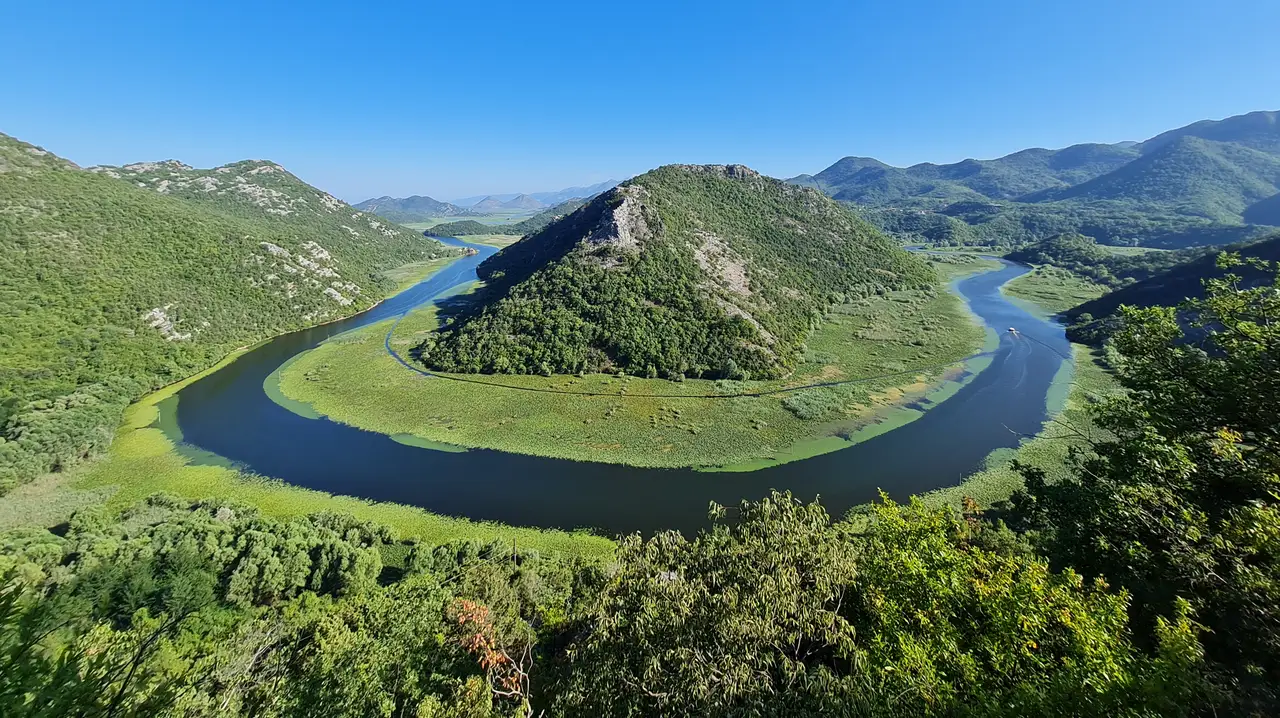
Lake Skadar is the largest lake in the Balkans and the wild, watery heart of southern Montenegro: a national park of mirror-still bays, lily-covered shallows, island monasteries and some of the richest birdlife in Europe. Entry costs €5 per person per day, boats leave from four different harbours, and the whole thing sits 30 km from Podgorica - a 30-40 minute drive. Most people come for a boat trip out of Virpazar, the horseshoe bend at Pavlova Strana, and the Vranac reds of the Crmnica hills behind the shore.
There’s a reason to come in 2026 in particular: Rewilding Europe reported in July that the park’s Dalmatian pelicans had reached an estimated 306 birds, the highest count since systematic monitoring began.
What Lake Skadar is and why it matters
Lake Skadar (Skadarsko jezero) is a huge, shallow freshwater lake straddling the border between Montenegro and Albania, with roughly two-thirds of its surface on the Montenegrin side. Its area swells and shrinks with the seasons - the winter rains can double it - and that constant breathing between wet and dry is what makes it so alive. The Montenegrin half became a national park in 1983, and the whole wetland is protected internationally as a Ramsar site.
What you actually see feels half water, half garden: rafts of white and yellow lilies across the bays, reedbeds, bare karst hills behind, and islets crowned with medieval monasteries. The park’s own history notes are precise about who built what: the Balšić dynasty raised Starčevo, Beška and Moračnik on the islets at the turn of the 15th century, while the Crnojevići, a couple of generations later, left the Kom monastery and the fortified town of Žabljak Crnojevića. Almost all are still working monasteries today.
Where to start: Virpazar, Rijeka Crnojevića, Vranjina or Plavnica
Nearly every guide sends you to Virpazar and stops there. The park in fact lists four harbours with licensed operators, and the choice shapes your whole day.
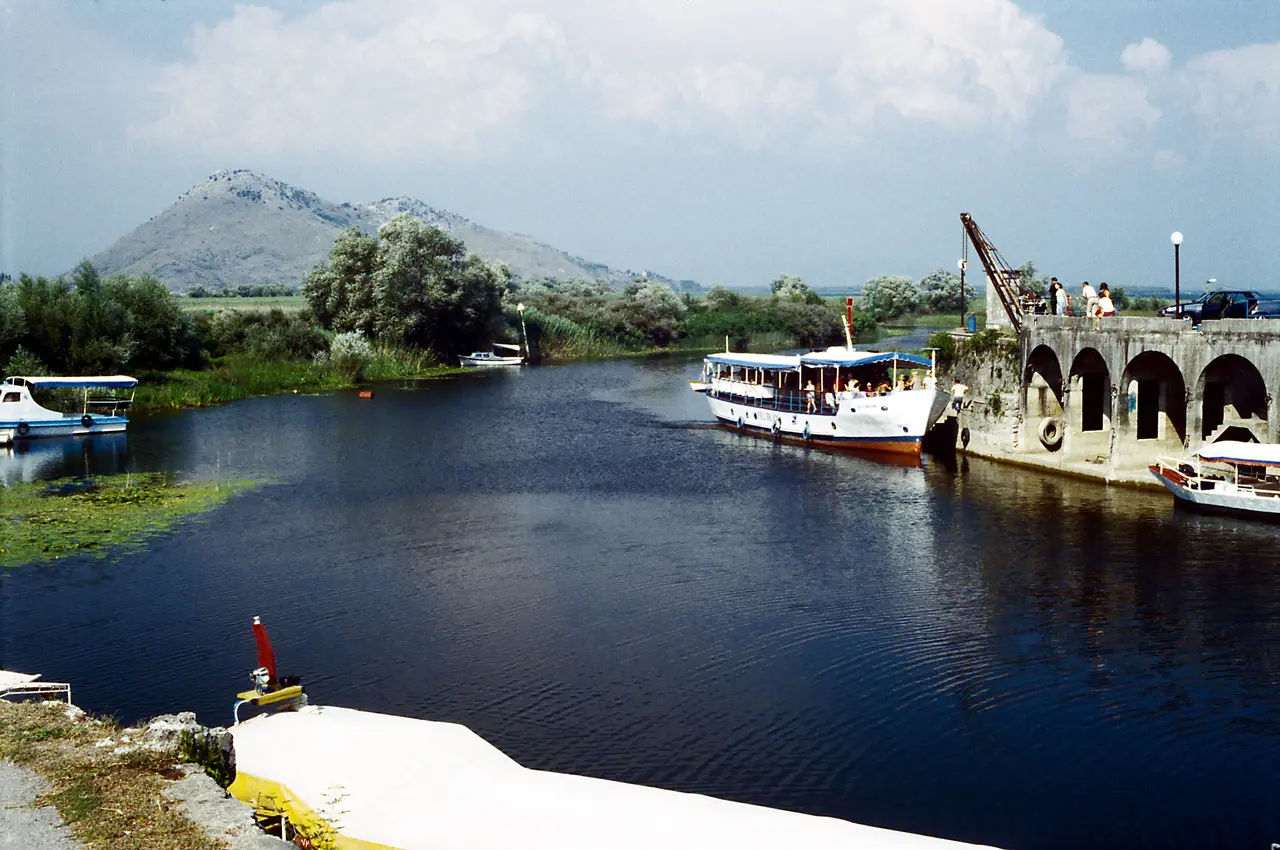
Virpazar is the busy one: a lakeside village right off the Podgorica-Bar road, with its own railway halt, skippers along the quay, restaurants, and the easiest access to open water and the island monasteries. Come here if you want to turn up without a plan and be on a boat within the hour.
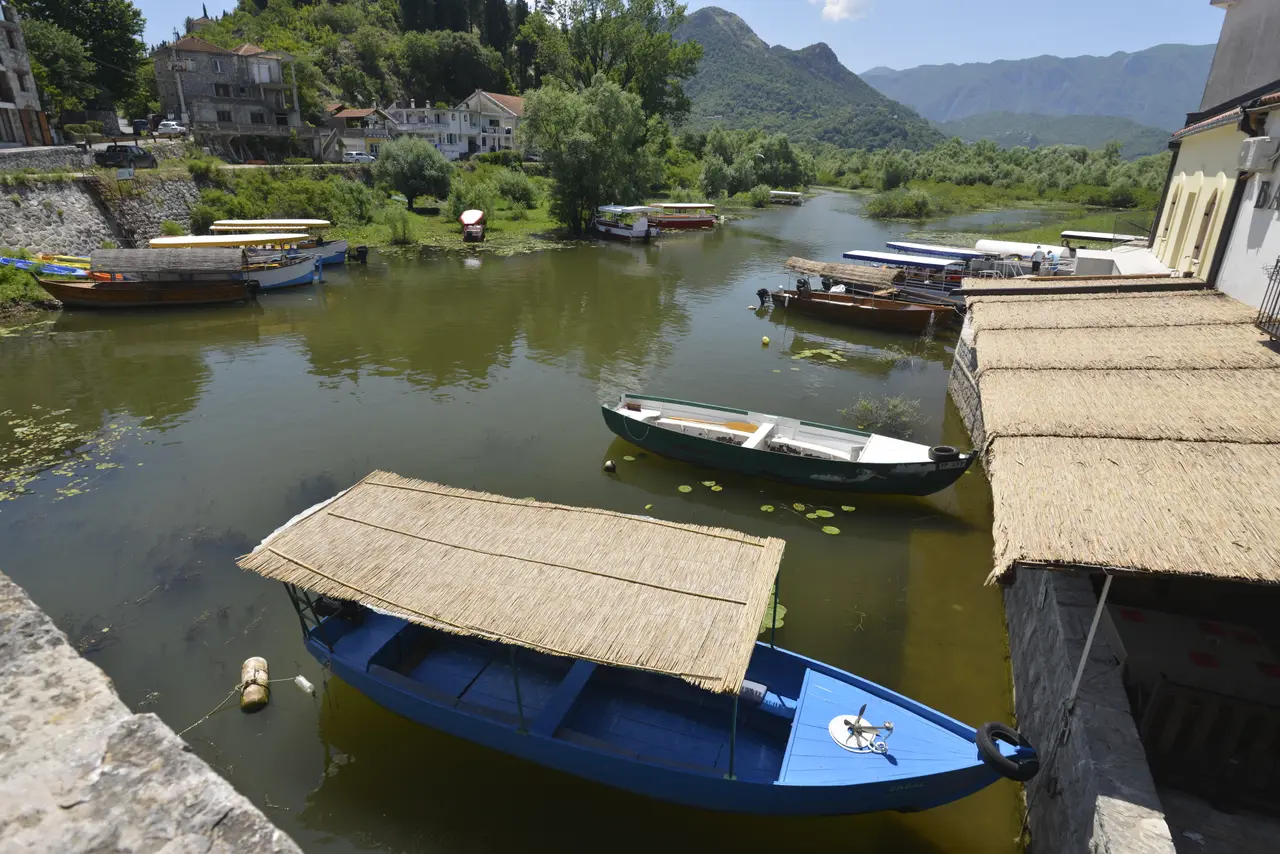
Rijeka Crnojevića sits on the northern arm, half an hour away on the old Cetinje road. It’s quieter and prettier - an arched stone bridge, riverside restaurants, reed-roofed wooden boats - and trips run down the meandering river channel rather than across open lake. It’s also the base for the famous viewpoint above the village; our Rijeka Crnojevića guide covers the village itself, its bridge and its history in more depth.
Vranjina is the practical one: the park office and one of its two visitor centres sit here on the causeway, and this is where you buy fishing permits and pick up trail maps. Plavnica, on the northern shore, is the fourth departure point and the quietest.
Boat trips: what they cost and what you actually see
Cruises are run by licensed private operators, not by the park, so there’s no official price list: the fare is agreed at the quay and moves with the boat, the season and the length of the trip. Shared departures are sold per person, a boat to yourselves by the hour, and the number is worth settling before you step aboard rather than after. Ask one more thing outright - whether the €5 park ticket is included in the fare or bought separately on arrival. Operators handle that both ways, and it’s the most common surprise on the quay.
What matters more than the price is the route. A one-hour loop will show you lilies, reeds and a lot of water, and that’s it. Two to four hours gets you out to the island monasteries, into the quiet bays, and near the bird zones, usually with a swim stop somewhere clean and shallow - in July and August that swim is half the point. Ask three questions before you agree: which islands you’ll actually land on, whether the trip includes a swim stop, and whether the skipper stays out of the no-disturbance zones during nesting season. Good operators answer all three without hesitating; the ones who don’t are the ones who will park you on open water for an hour.
Birds: pelicans, a record 2026, and where to see them properly
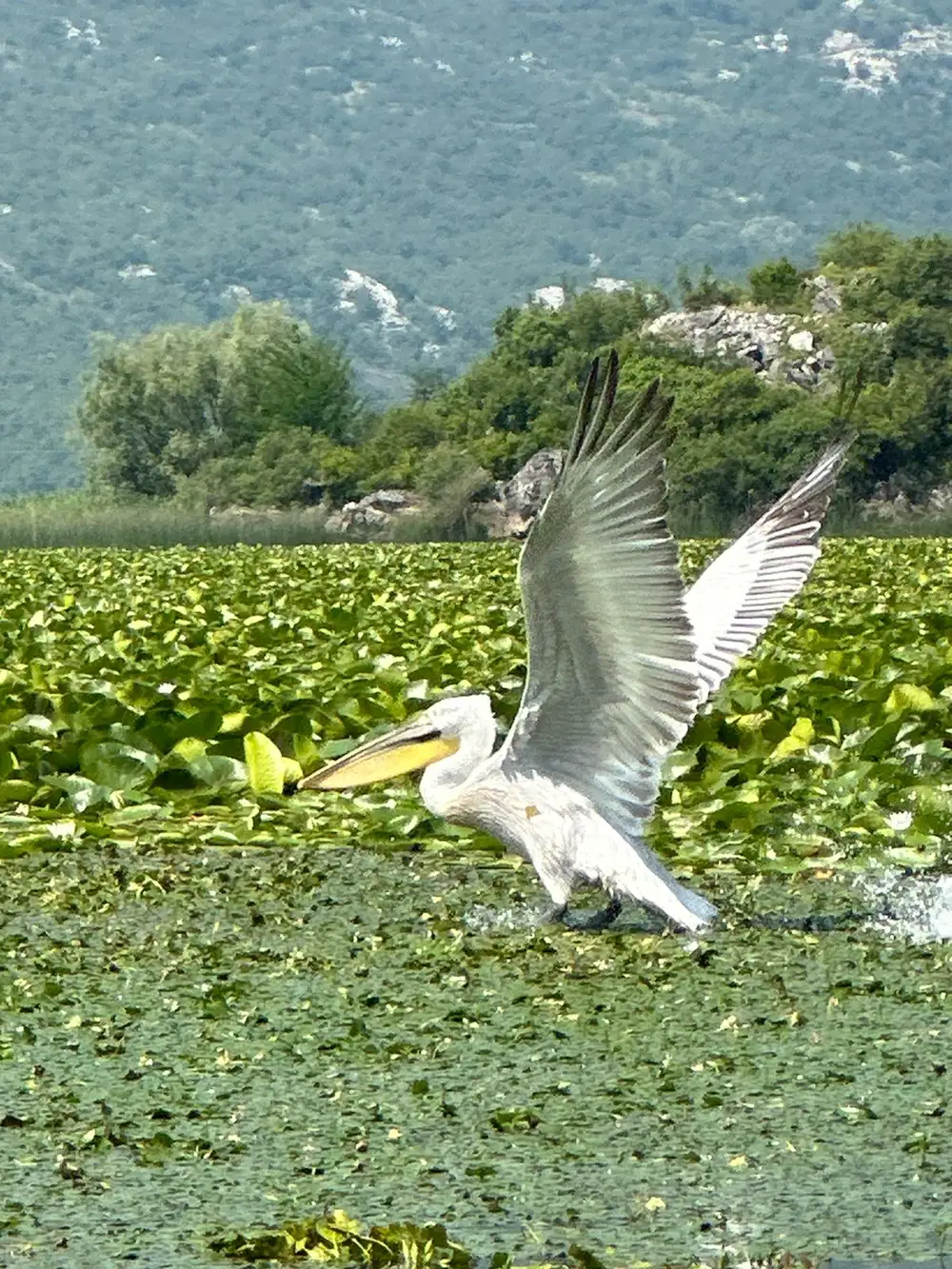
Skadar is, above all, a birdwatcher’s lake. The wetland supports somewhere around 280 bird species and it’s one of the last European refuges of the Dalmatian pelican (Pelecanus crispus), a huge, curly-crested bird with a wingspan that can pass three metres. Pygmy cormorants, herons, glossy ibis, terns and countless waders share the shallows, and in winter the lake fills with migrating ducks and grebes.
The pelican story is the good news of the decade here. Breeding success collapsed in 2008, when exceptionally high water flooded the nesting sites and disturbance did the rest. The turning point came in 2014 with no-disturbance zones marked by buoys and floating nesting platforms built to ride the changing water levels, and the numbers have climbed steadily since. The 2022 bird flu outbreak was a genuine setback - around twenty birds died and there was no successful breeding that year - but the colony moved from its old site at Pančeva Oka to Moračnik island and carried on. In July 2026 Rewilding Europe put the population at roughly 306 birds, the highest count since systematic monitoring began, against about 250 the year before.
If you want more than a lucky sighting from a tour boat, the park runs organised visits to the Pančevo oko ornithological reserve, with transport and a guide included: €160 for up to four people for four hours, €240 for a group of five to twelve. A park guide on their own costs €40 for four hours or €80 for a full day. That’s the difference between “we saw something white in the distance” and being taken to the right water at the right hour. Spring is the richest season, when residents are nesting and migrants pass through; bring binoculars whatever the month, because the lake is wide and the birds are not tame.
Under your own steam: kayaks, bikes and marked trails
The cheapest good day on this lake doesn’t involve a tour boat at all. The park itself rents kayaks - €3 an hour for a single, €5 for a double, or €20 for the whole day - and paddling is the one way into the narrow reed channels a motorboat can’t enter without scattering everything alive in them. Take water, a hat and a dry bag; there’s no shade out on the lily fields.
On land the park has marked nine walking trails and five cycling routes plus two mountain-bike routes, and hands out the maps free at the visitor centres in Vranjina and Virpazar. Its own recommendations are worth following: on foot, Komarno to Rijeka Crnojevića or Zabes to Godinje; by bike, Rijeka Crnojevića - Virpazar - Ckla or Rijeka Crnojevića - Karuč, with the rougher Dodoši - Žabljak Crnojevića for mountain bikes. Anglers buy a daily fishing permit for €5 (a week €20) at the park office in Vranjina or from the ranger on duty; carp, bleak and eel are what people come for.
The Pavlova Strana viewpoint
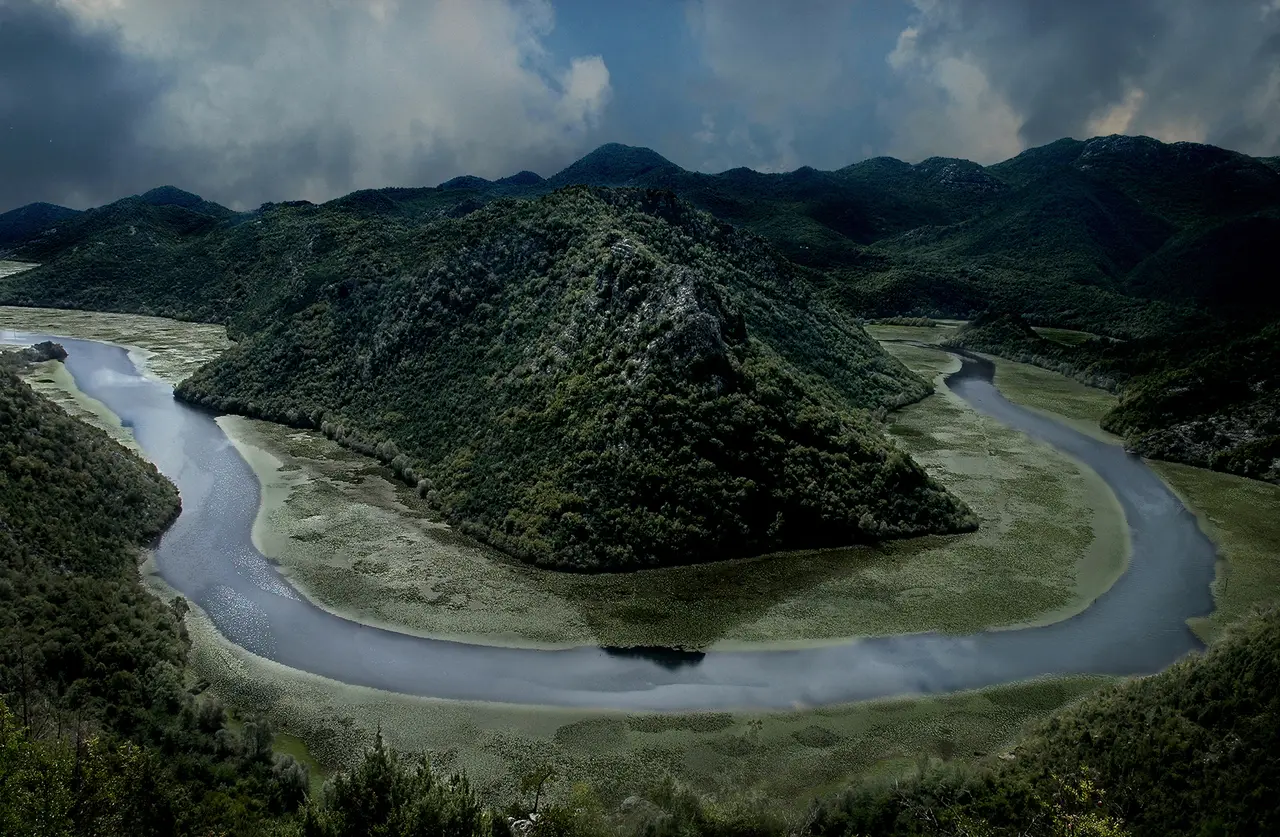
The single most photographed scene in the park needs no boat and no ticket. Above the village of Rijeka Crnojevića, a marked viewpoint called Pavlova Strana looks straight down onto the Crnojević River curling back on itself in a perfect horseshoe, green hills mirrored in still water. It sits right beside the old road between Cetinje and Podgorica, so it’s a two-minute stop by car.
Timing matters more than most people expect. The bend faces so that morning light and late afternoon both work, while the middle of a summer day flattens the whole scene into haze. In autumn and winter the low sun and the mist coming off the water make it the best it ever looks - one of the few Montenegrin sights that’s genuinely better out of season. For the walk up from the village, the bridge-side restaurants and the history behind that famous bend, see our dedicated Rijeka Crnojevića guide.
The Crmnica wine road
The hills along the lake’s south-western shore are Crmnica, Montenegro’s most celebrated wine country and the homeland of Vranac, the dark, full-bodied red that defines Montenegrin wine. The park’s own notes name Vranac and Kratošija as the native grapes poured in the village cellars; the white Krstač turns up on most tasting lists too. Cellars cluster around Virpazar, Godinje and Limljani, and the classic pairing on the table is smoked carp and bleak from the lake, prosciutto and hard cheese. Our Montenegro wine guide covers Vranac and Krstač in more depth, including tastings further afield.
Godinje is the village to aim for: stone houses with vaulted cellars built into the architecture, where families pour their own wine straight from the barrel, cheaply and informally, and will sell you a bottle to take away. The catch is that these are family cellars, not tasting rooms - hours bend with the season and the harvest. In quiet early July the cellars along the Virpazar road are easy to drop into unannounced. Once picking starts, from late August through September, the wine is at its most interesting but the families are at their busiest, so that’s the moment to call ahead or go with a guide rather than to turn up on spec; in spring the door may simply be locked.
Fees, tickets and the practical stuff
Entry to the national park is €5 per person per day, and that ticket includes the visitor centres at Vranjina and Virpazar - worth ten minutes before you get on a boat, because the wetland exhibits explain what you’re about to float over. Children under 15 go free. If you are touring the country, the annual pass for all five Montenegrin national parks costs €13.50, which pays for itself the moment you add Durmitor or Biogradska Gora. Tickets are also sold online through the parks’ e-ticket system.
The rest of the official pricelist is refreshingly cheap: parking €1 an hour for a car, and €3 a day for a tent pitch if you are staying over. Boat trips, wine tastings and private guides are separate, since they belong to private operators rather than the park.
Two things people get wrong. First, the lake is exposed: there’s no shade on the water, and a hat, sunscreen and more water than you think aren’t optional in July. Second, in winter the lake floods the flats around it - that’s the wetland doing what wetlands do, not a disaster, but it does close tracks and put some viewpoints out of reach.
When to go
May and June are the best all-round months: birds nesting, lilies opening, water still high, temperatures manageable. July and August are hot and busy, and the swim stop on a boat trip becomes the highlight rather than a bonus. September and early October bring the grape harvest, softer light and thinner crowds - the strongest month if wine is a reason you’re here. November to March is quiet, wet and often flooded, but the migrating ducks arrive in numbers and the viewpoint is at its best.
How to get to Lake Skadar
From Podgorica it’s about 30 km to Virpazar - a 30-40 minute drive down the main road towards Bar, and Virpazar has its own halt on the Podgorica-Bar railway, so you can reach the lake without a car for a couple of euros; check the current timetable and make sure your train stops there. From the coast, allow roughly 1-1.5 hours from Budva over the Sozina tunnel road, or a similar drive from Bar and Ulcinj. The northern gateway, Rijeka Crnojevića, is reached on the scenic old road from Cetinje or Podgorica.
A car gives you the most freedom to combine viewpoints, villages and cellars at your own pace - see our notes on renting a car in Montenegro. Without one, organised day tours run from Podgorica and the coastal resorts, usually bundling a boat trip with a wine tasting. The capital is the natural base, so the lake pairs well with our Podgorica travel guide, and the Montenegro travel guide maps where it fits in a longer trip.
Nearby / read also
If you are choosing between Skadar and the mountain parks, the national parks compared page sorts all five by days and fees.
- Ostrog Monastery - the cliff monastery, an easy pairing from Podgorica.
- Durmitor National Park - where the €13.50 annual pass starts paying off.
- Podgorica travel guide - the closest base, 30 km away.
- Montenegro travel guide - the whole country, region by region.
- Renting a car in Montenegro - the lake’s back roads reward having your own wheels.
- Montenegro in September - harvest month around the lake.
Photos
On the map
The map loads on click - to keep the page lightweight.
The map didn’t load. Check your connection and refresh the page.
Admission and opening hours
- Admission price
- €5 per person per day (includes the visitor centres at Vranjina and Virpazar); annual pass for all five national parks €13.50
- Opening hours
- Open year-round; boat trips and wineries run roughly April to October
Official park pricelist (nparkovi.me): kayaks €3-5/h, guide €40/4 h, parking €1/h for a car. Tickets also sold online.
Details checked: July 27, 2026
Distance
- Podgorica ≈30 km · ~30-40 min
- Budva ≈55 km · ~1-1.5 h
Read also

What to see · 10 min read
Hiking Bobotov Kuk: Durmitor Highest Peak
Verified · September 4, 2026Bobotov Kuk hike at 2,523 m: Sedlo (~10 km RT) vs Lokvice from Black Lake, €5 park fee, cables, season and early-start tips.

What to see · 10 min read
Swimming in the Bay of Kotor: Beaches & Lidos
Updated · August 31, 2026Can you swim in Kotor? Yes - on Dobrota pontoons, Morinj and small Boka shores. Water quality, season and what to expect.

What to see · 11 min read
Rent a Boat in Kotor Bay: No Licence Needed
Updated · September 5, 2026Private boat rental in Kotor Bay 2026: skippered hire from €90/h, bareboat prices, licence rules, speed limits and where boats leave from.

What to see · 9 min read
Piva Lake & Canyon: Montenegro's Emerald North
Updated · August 27, 2026Piva Lake guide: the 45 km emerald reservoir, Mratinje Dam, boat trips from Plužine, the relocated Piva Monastery and how to pair it with Durmitor.