
Taxis in Montenegro: Apps, Prices & Scams to Avoid
Montenegro taxi fares in August 2026: real municipal price bands in Budva, Kotor and Podgorica, airport surcharges, apps, and scams to avoid.
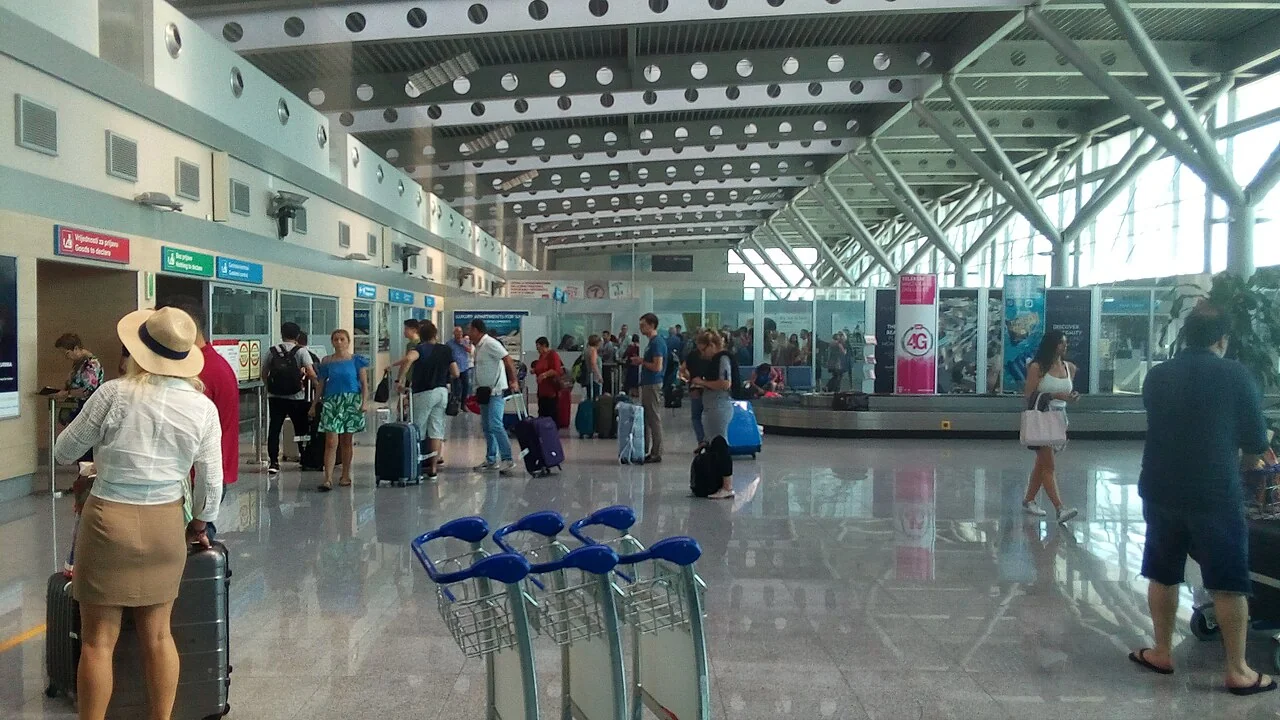
A legal taxi in Montenegro runs on a meter: around €0.50-1 to start, then €0.70-1.80 per kilometre on the coast - a band Budva and Kotor set by municipal decision back in 2018, the newest either town has published. Podgorica has its own 2023 decision too, though its two biggest operators price flat around the clock anyway. What decides whether you overpay isn’t the city, though - it’s where you get in. A taxi hailed at an airport rank tends to cost more than the same distance called from a hotel, and a handful of unlicensed drivers work the arrivals halls at both TIV and TGD counting on tourists who don’t know that gap exists. Know the going rate for your city and the difference between a fair fare and a scam becomes obvious in about ten seconds.
The quick answer
There’s no Uber and no Bolt anywhere in Montenegro - the single most useful thing to know before you land. Two local apps cover the gap instead: TeslaGo in Podgorica only, and MonteGO nationwide. Both are covered in full further down.
| City | Fare structure | Night or extras |
|---|---|---|
| Budva | €0.50-1 start + €0.70-1.80/km (2018 decision, latest published) | Can rise within the same band after 22:00 |
| Kotor | Same legal band as Budva, set the same year | Same; luggage and pickup are free by law |
| Podgorica | €0.50-1 start + €0.50-1/km (2023 decision; €1 ceiling across all three tariffs) | Night/weekend tariff is legal and has a higher floor - the operators checked price flat anyway |
| Tivat | No published city band; airport runs use fixed prices instead | Fixed prices don’t change by time of day |
Fares checked against each operator’s own site in August 2026 - pricing moves with the season, so treat the table as a starting point and confirm against the price list taped inside the car. These numbers cover a metered ride hailed in town; an airport taxi is a different animal with its own section below, and costing more there isn’t automatically a scam.
How the meter is supposed to work
Budva and Kotor regulate taxi fares through near-identical municipal decisions dated 2018 - Budva’s from July, Kotor’s from August - both built on the same nationwide transport-ministry price-list template. Podgorica has its own decision too, adopted 3 August 2023: same template, three tariffs instead of one. None of the three towns has published anything newer, so check the price list taped inside the car for the exact figure that applies to your ride.
It still holds up in practice. Terrae, a Budva operator covered below, was charging exactly €1.80 per kilometre in peak season as of August 2026 - the top of Budva’s 2018 ceiling, not a cent over.
Budva and Kotor’s decision sets a start fee of €0.50 to €1, €0.70 to €1.80 per km, and €6 to €12 an hour waiting. Podgorica’s 2023 decision runs three tariffs instead - a base rate, a higher-floor rate for nights, weekends and public holidays, and a lower-floor rate for trips outside the city - but all three share the same €1 ceiling on the start fee and the per-kilometre rate, with waiting capped at €6-10 an hour. That €1 ceiling, against the coast’s €1.80, is the real evidence behind “Podgorica is cheaper,” not just two companies’ own price lists.
One detail in all three decisions is easy to miss and worth knowing: pickup at your address and loading your bags into the boot are both listed at €0.00 in Budva, Kotor and Podgorica alike, “not tariffed separately.” Add a fee for either and a driver is charging you for something the regulation already calls free.
The law doesn’t actually give a driver a free choice between the meter and a quoted price. Montenegro’s road transport law requires a licensed taxi to switch the meter on at the start of every ride and charge exactly what it shows at the end. A fixed price is the exception, not an alternative: Budva’s own decision allows one only if the passenger asks for it, for a route agreed in advance, and even then the price legally can’t work out worse than the meter would have. A driver skipping the meter without being asked for a fixed price first is doing it backwards.
What each city actually charges
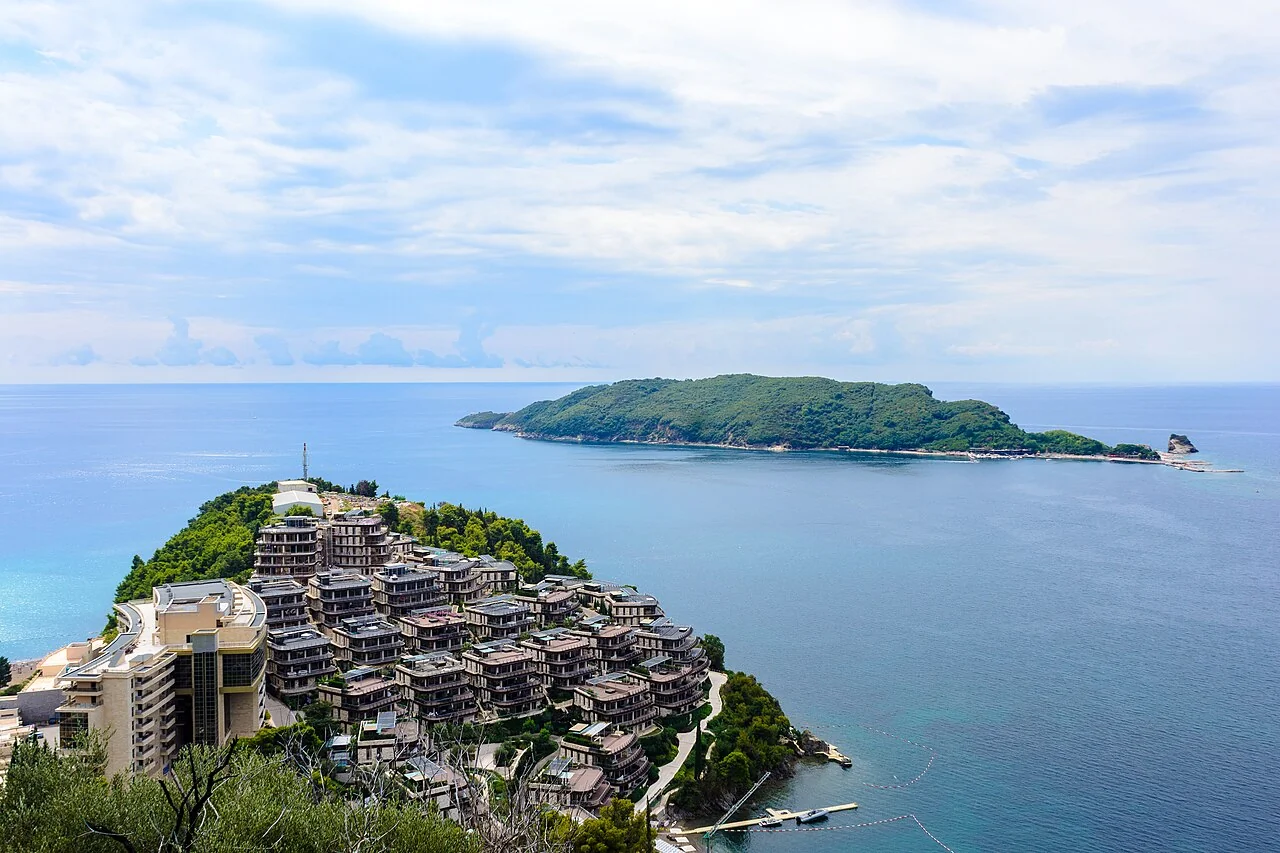
Budva sits inside the legal band above - on paper. Terrae, one of the coast’s better-known dispatch firms, prices right at the ceiling: €1 start plus €1.50 per km off-season, rising to €1.80 in peak season. Its own marketing leans into the contrast: by its own account, taxi service in Budva is “a very unregulated area” with no minimum or maximum price enforced - street rates run from €0.50 to €5 per km, both below the legal floor of €0.70 and well above the €1.80 ceiling - and roughly 100 unregistered taxis operate outside any rules. The town’s tidy legal band looks less like a guarantee and more like a reference point.
Kotor shares Budva’s exact legal band, set through the same 2018 process. Red Taxi, which dispatches for both Kotor and Tivat under two local numbers, publishes fixed prices for airport transfers rather than running the meter on those routes - more on how those compare with a metered fare in the airport section below.
Podgorica really is the cheapest of the four, and the 2023 decision’s €1 ceiling (against the coast’s €1.80, covered above) backs that up with more than two companies’ own price lists. Best Taxi’s €0.60 per km and City Taxi’s €0.90 both undercut even that lower ceiling, and TeslaGo’s electric fleet adds an app-based alternative that skips haggling entirely.
Tivat is the real gap: it doesn’t have a published start-plus-per-km band of its own, and that matters more than it sounds. Kotor’s legal band covers Kotor municipality, not Tivat’s, so the protection covering riders in Budva, Kotor and Podgorica simply doesn’t reach the airport where a large share of this guide’s readers land. Most of what you’ll spend on taxis in Tivat is airport-related rather than in-town running, since the town itself is small - which makes the airport section below the more useful read if Tivat is your point of entry.
Why the airport fare runs higher
City Taxi in Podgorica publishes a genuine, if small, airport premium. Its €0.70-start, €0.90-per-km meter runs only inside the city zone; airport trips are priced separately, as fixed transfers starting at €19.50 between central Podgorica and Golubovci Airport. A transfer starting at the airport costs €1 more, for the company’s own parking costs at the terminal - a modest surcharge on a fixed fare, not a hidden add-on to the meter. Two airport-based operators, Zeta Taxi and Vuk BG Taxi, independently publish the same fixed prices for the longer coastal legs: €75 to Budva, €100 to Kotor.
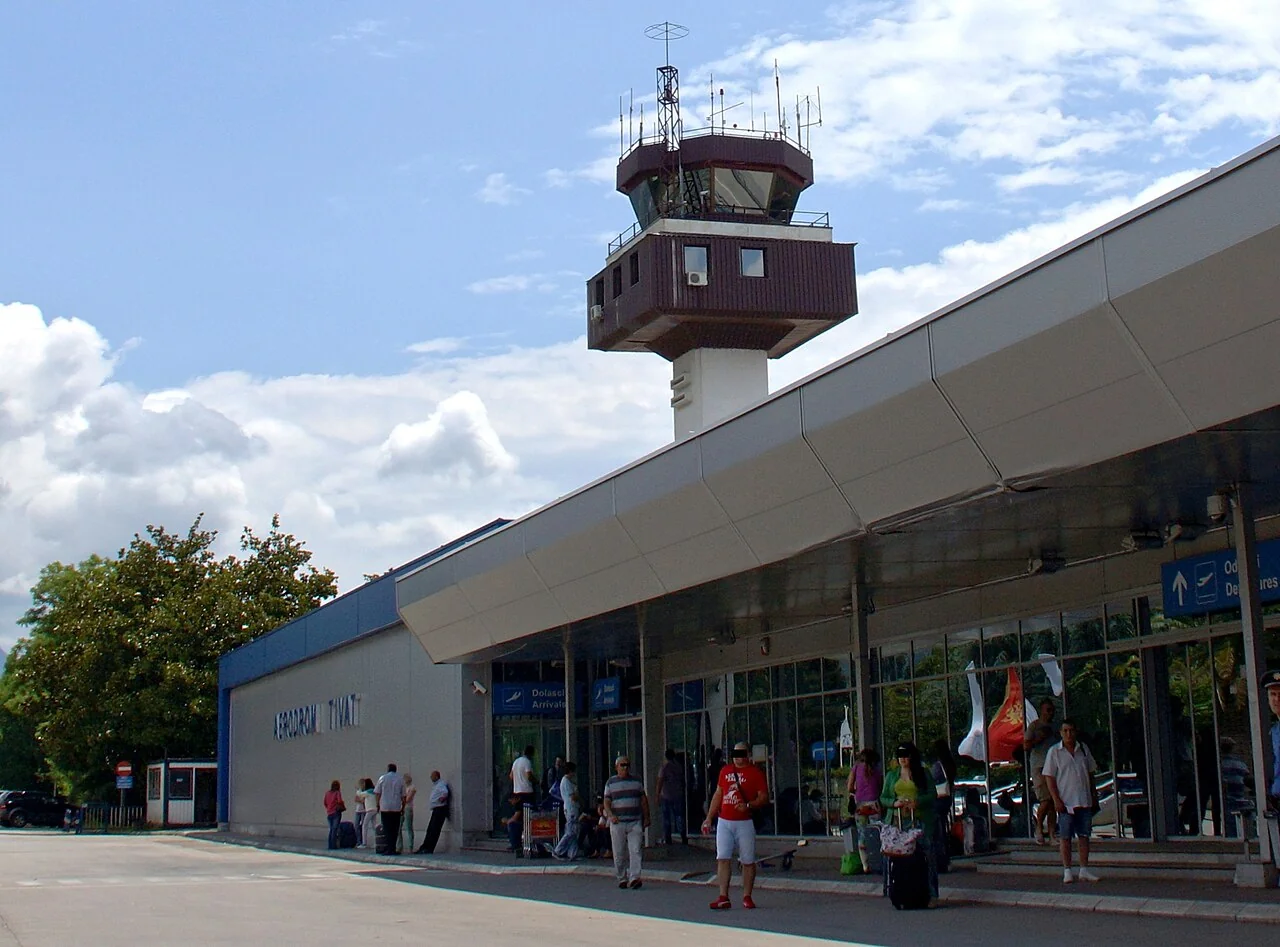
The bigger gap here isn’t really airport versus town - it’s a locked-in dispatch price versus a metered ride, two different products. Red Taxi’s own published price list is airport transfers only, not a general city meter (checked 24 September 2026). Tivat Airport to Kotor Old Town runs €30, well under the €50-70 a regional transfer firm lists for a sedan on the same run (€50 on its Tivat Airport page, €70 on its route page), as our Tivat Airport to Kotor guide sets out. Tivat Airport to Budva is €45, level with that firm’s €40-48 transfer and well under the €65-75 MonteGO riders paid (Tivat Airport to Budva has the detail), and Kotor to Podgorica Airport’s €100 is the same flat price the two airport taxi firms publish for that run, as Montenegro airport transfers shows.
What people actually pay is a different number from any price list, and one operator now publishes it. MonteGO, the app covered in the next section, prints the middle half of what its riders paid on each airport route in 2026, pickup at arrivals and luggage included: Tivat Airport to Kotor €35-45, to Budva €65-75, Podgorica Airport to the city €23-28 and to Budva €80-100 (MonteGO’s fare page, September 2026 table, checked 18 September 2026). That lands at or above the fixed prices above on every route we can line up: €35-45 against Red Taxi’s €30 to Kotor, €23-28 against City Taxi’s €20.50 from the terminal. They aren’t the same product - a fare in the app is an offer a driver accepted, a tariff is what a firm promises to charge. If the lowest certain price matters most, book a dispatch firm’s fixed transfer; the app earns its premium when you’d rather see the car, the driver and the plate on your screen before you walk out of arrivals.
Metered rank fares still run a little higher near an airport, for an honest reason beyond any surcharge: a driver who queues at the rank drives back empty, and that dead mileage gets folded into the next fare. A fixed transfer costs more again for a different kind of certainty - a number agreed before you land, a driver holding a name board. Landing in Tivat by day with nothing to carry, the rank is fine; at night, or with kids and suitcases, book ahead. Either way, the real scam, covered next, is the minority who skip the meter and just name a number.
The apps that actually work
There’s no Uber and no Bolt in Montenegro, and that hasn’t changed as of this August. A handful of local apps fill the gap instead, and they cover different ground.
TeslaGo is based in Podgorica, running an all-electric fleet of Tesla Model S cars, cash or card, with live tracking. Its own listing also advertises transfers to Tivat Airport and rides out to the coast, so it’s not strictly landlocked - what it lacks is local cars circling Budva or Kotor waiting to be hailed, the way it works in the capital.
MonteGO is the wider option: its own listing covers Podgorica, Budva, Kotor, Tivat, Bar, Herceg Novi, Ulcinj, Cetinje and Kolašin, among other towns, with airport transfers from both TGD and TIV at a price agreed before the car moves. Terrae, the Budva firm covered above, has its own app too - Terrae Taxi Budva, a GPS booking tool for the town rather than a national platform. Coverage on any of these varies by season and how many drivers are logged on, so a backup plan helps: the dispatch numbers for Terrae, Red Taxi or City Taxi, saved in your phone, cover you if an app comes up empty at 1am.
Night fares and legal add-ons
Officially, Kotor’s decision allows a separate night tariff between 22:00 and 06:00, plus a third for trips out of town; Budva follows the same three-tariff structure without spelling out the hours, so treat 22:00-06:00 as the working assumption and confirm on the card. The regulation sets only a ceiling for each tariff, not a fixed markup, so a driver can legally charge the same rate day and night. Podgorica’s own operators do exactly that: Best Taxi and City Taxi both run one rate around the clock instead of switching to the pricier night-and-weekend tariff their decision allows - don’t assume a quoted price at 11pm is a scam, and don’t assume a higher one after dark is automatically wrong either. The price list should show whichever tariff is running, and you’re entitled to see it.
What a legal fare can’t include, in Kotor, Budva or Podgorica, is a separate charge for the driver coming to your door or for handling your suitcase - all three explicitly zero this out. If it shows up as a line item, it’s worth pointing to the price list and asking why.
The scams worth knowing before you land
The UK Foreign Office’s own advice for Montenegro has a section on exactly this: “while many taxi drivers are honest, some may take advantage of tourists by overcharging” - check the price per kilometre or agree the full fare before you set off, not after. It goes further on Podgorica specifically: not all taxi companies are authorised to pick up passengers directly from the airport. No fine for the passenger, but it can cause delays if the driver gets pulled aside - a government, not a blog, telling you the safest move is the marked rank in front of the terminal, or confirming a pre-booked driver is actually permitted to collect there. That lines up with unlicensed drivers working the arrivals hall itself, ahead of the rank, looking the part with a vest or name board but running no meter and bound by no price list. A legal car has what theirs won’t: a working taximeter, a “TAXI” roof sign, and plates combining a two-letter town code with “TX” - KO TX in Kotor, TV TX in Tivat, PG TX in Podgorica, BD TX in Budva. In Budva, add a fourth marker: registered taxis must be white.
The other pattern that catches people: a driver claims the meter’s broken and names a flat price instead, usually well above what the ride should cost - the law says the meter is mandatory, so a driver who won’t run it and won’t show a price list isn’t worth getting into a car with. A handful of independent travel accounts point to Budva in peak season and both airports as where this comes up most, though that likely just reflects where first-time visitors are thickest.
A quieter version of the same problem is route padding - a longer way round on a metered ride, harder to prove but easy to notice if you’re watching a map on your phone. It adds up on longer runs like the Podgorica-to-Budva leg.
The same UK advice recommends licensed taxis booked in advance, or a taxi app, as a way to cut the risk of bag-snatching and mugging aimed at tourists too - a good habit even on the days overcharging isn’t the concern.
If you think you were overcharged
Note the plate number and company name before you get out - the one thing you can’t recover later. For a genuinely inflated fare, most companies would rather sort it out than lose a customer, so try the dispatch number on the door first. Budva’s municipality runs its own channel for exactly this: call or message +382 67 111 988, the communal inspection and police, by Viber or WhatsApp too, with a photo of the receipt or the car and its plates. Elsewhere, or after an aggressive or unlicensed driver, Montenegro’s general police line is 122.
None of this should put you off taking a taxi here. The honest math is that the overwhelming majority of rides in Montenegro run on a working meter, cost roughly what this guide says they should, and get you where you’re going without drama.
Getting around after you land
For the country-wide picture - buses, hire cars, the Kamenari-Lepetane ferry and the train - our getting around Montenegro guide covers every option side by side; this page just goes deeper on the taxi piece of it. If you’d rather sidestep the whole question and have a driver waiting with your name on a board, compare fixed transfer prices before you land and the airport arrival becomes the easy part of the trip.
Read also

Transport · 9 min read
Getting to Durmitor & Žabljak: Bus, Car, Tours
Verified · September 3, 2026Podgorica bus €10-12 (2h15-2h45), Budva €22-25, Kotor €20-23, drive times and KiwiTaxi from €253. Fares checked 3 Sep 2026.

Transport · 10 min read
Montenegro to Albania: Buses, Borders & Day Trips
Verified · August 22, 2026Budva-Tirana buses (~5.5 h), Ulcinj-Shkodër via Sukobin, Božaj/Hani i Hotit, day trips and the ride back, in one place.

Transport · 8 min read
Balkan Car Hire: Crossing Borders Without a Refusal
Verified · August 15, 2026A hire car crosses these borders on paperwork, not luck: written permission, a Green Card in some countries and not others, and one country nobody insures.

Transport · 8 min read
DBV to Montenegro 2026: Transfer €168+, Bus
Updated · August 21, 2026Dubrovnik Airport to Herceg Novi, Kotor or Budva: family transfer floors from KiwiTaxi checkout, Platanus €10 + coach, border/EES. Checked Aug 2026.