
Kamenari-Lepetane Ferry 2026: €5, Every 15-20 Min, Queues
Kamenari-Lepetane ferry: €5 a car, every 15-20 min, 5-minute crossing, free on foot. Winter every 20 min 06:00-24:00; peak queue 30-45 min.
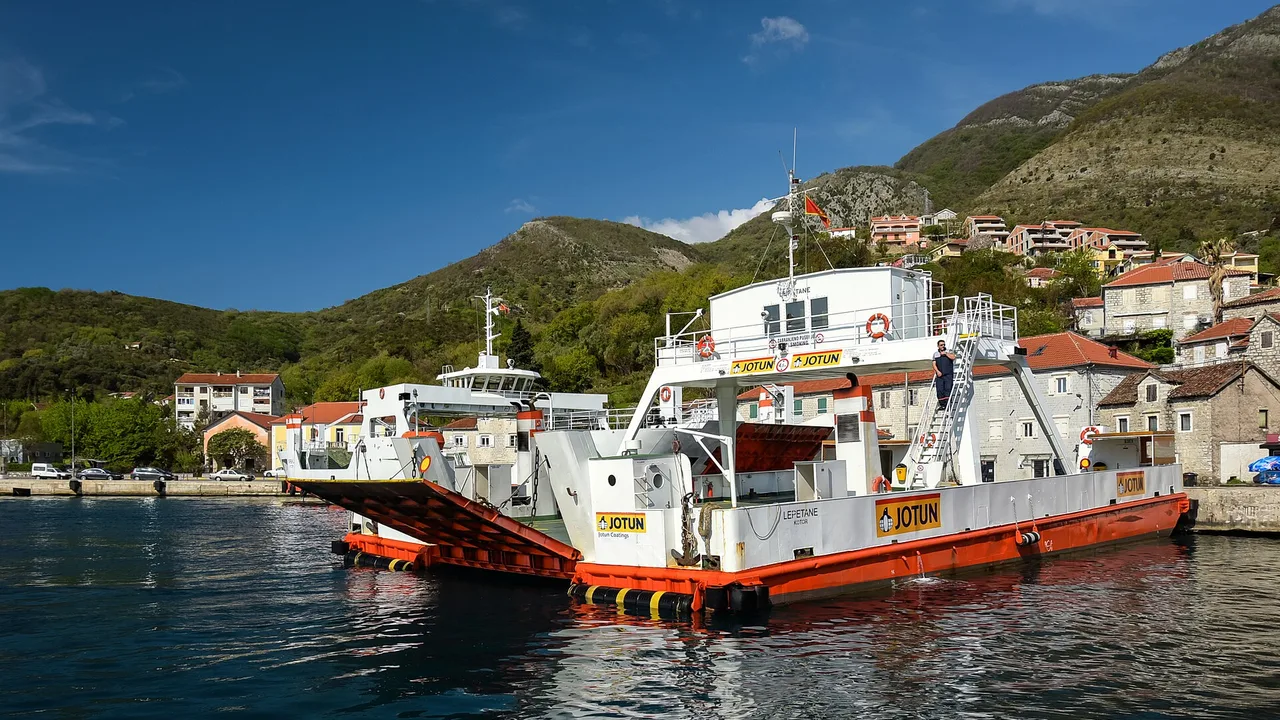
A car pays €5 each way - the official JP Morsko dobro fare, unchanged since the February 2025 pricelist and reconfirmed when the summer 2026 timetable came in. The operator’s site trajekt.me is back online after an outage earlier in the summer, with the current sailing plans, the pricelist and online ticket sales - even so, the booth runs on cash, so have it ready and treat the board at the ramp as the final word. A motorcycle €2.50, a van €7.50, and anyone crossing on foot or by bike goes free. The boat takes about five minutes, and there’s nothing to book. Under the summer plan, 4 May to 14 October 2026, departures run every 15 to 20 minutes, day and night; in winter it’s every 20 minutes from 06:00 to midnight and roughly one an hour overnight. The crossing saves about 28 km and half an hour against driving round the head of the Bay of Kotor, and at the worst moments you can lose 30 to 45 minutes in the queue.
| What you want to know | The number |
|---|---|
| Car, small vehicle, pick-up | €5 (~$6 / £4.30) |
| Motorcycle | €2.50 |
| Van (kombi) | €7.50 |
| Bus | €17.50 |
| On foot, by bike, wheelchair user | free |
| Crossing time | about 5 minutes |
| Summer departures, 4 May-14 Oct 2026 | every 15-20 min, day and night |
| Winter departures, mid-Oct to early May | every 20 min 06:00-24:00, about hourly overnight |
| Queue at peak | 30-45 min; 10-15 min overnight in summer |
| Saving versus driving round the bay | ~28 km, ~30 min |
| Tickets | cash at the booth as you drive up, no booking |
Here is the part most guides skip: whether the ferry is worth taking depends entirely on where you are going next. For Tivat and its airport it’s a no-brainer. For Budva it’s marginal. For Kotor it’s pointless, and people still queue for it.
What a crossing costs in 2026
Fares are set by JP Morsko dobro, the state company that runs the line, and were confirmed unchanged when the summer timetable came in on 23 May 2026. Montenegrin press reported a pricelist change in February 2025 that removed the cheaper off-season fare at the booth - though the operator’s own posted tariff sheet tells a slightly different story, of which more below.
| Vehicle | Fare |
|---|---|
| Motorcycle | €2.50 |
| Car, small vehicle, pick-up | €5 |
| Van (kombi) | €7.50 |
| Car or pick-up with trailer, minibus, van over 9 seats, truck up to 5 t | €10.50 |
| Van or truck with trailer, truck over 5 t | €14.50 |
| Bus | €17.50 |
| Semi-trailer, road train, bus with trailer | €25.50 |
| Oversized vehicle | €29 |
| Herceg Novi and Tivat residents, car (registered discount ticket) | €3 |
| On foot, by bike, wheelchair users, emergency vehicles | free |
You pay per vehicle: since anyone on foot crosses free, there is no head count and no extra charge for passengers. Tickets are sold at the booth as you roll up to the ramp, and in May 2026 the operator said again that this is how people buy them, so treat the €5 as a cash transaction and keep small notes in the door pocket rather than counting on a card reader.
One footnote for the off-season: the tariff sheet you can download from trajekt.me today still lists a cheaper out-of-season car ticket at €4 (motorcycle €1.50) - on the operator’s own document it is simply the off-season fare category, not an online-only deal. That document predates the February 2025 change the press reported, and we can’t tell you which figure the booth will apply next winter. So budget the €5, treat €4 as a pleasant surprise, and take the price quoted at the ramp as final. The site also sells tickets online again through its shop, after a stretch this summer when it wouldn’t load at all.
When the boats run
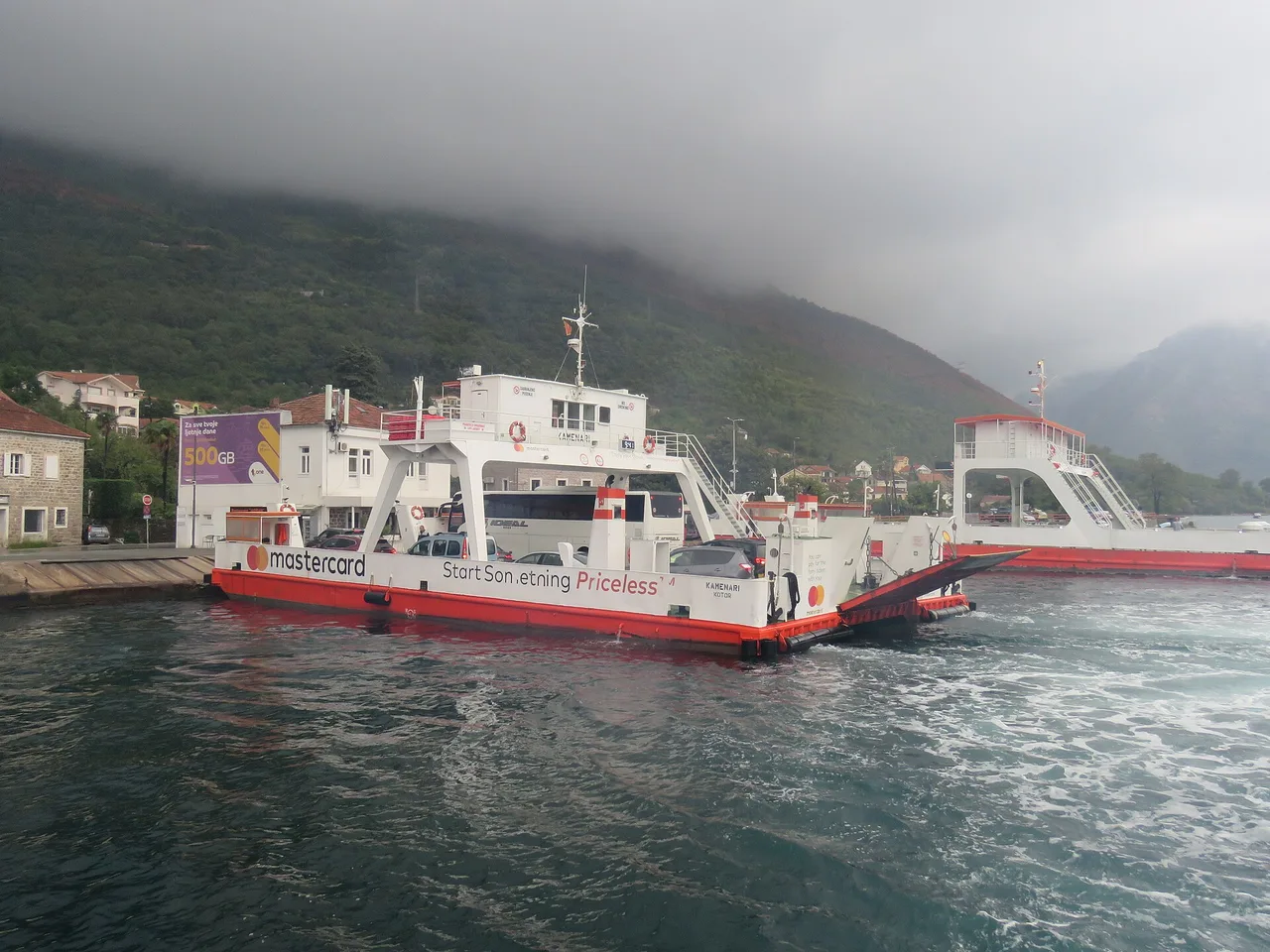
The summer navigation plan runs from 4 May to 14 October 2026, and the winter plan takes over after it, with summer departures every 15 to 20 minutes, continuously through the day and night. There’s no timetable to memorise and nothing to book: you drive up, you pay, you wait for the next boat.
Overnight in summer, two ferries stay on the line, which the operator says keeps the maximum wait on either shore to 10-15 minutes - useful to know if you are driving to a dawn flight out of Tivat.
Winter is the version worth checking before you set off. Under the winter plan - the operator posts the exact dates on trajekt.me, and the 2025/26 plan ran from 15 October to 3 May - departures run every 20 minutes from 06:00 to midnight, and between midnight and 06:00 the service thins to roughly one boat an hour from each shore - in the 2024/25 plan that meant departures from Kamenari on the hour and from Lepetane at half past. Turn up at the ramp at three in the morning in January and you can lose the best part of an hour waiting for a boat that in July would be along in ten minutes.
How the crossing actually works
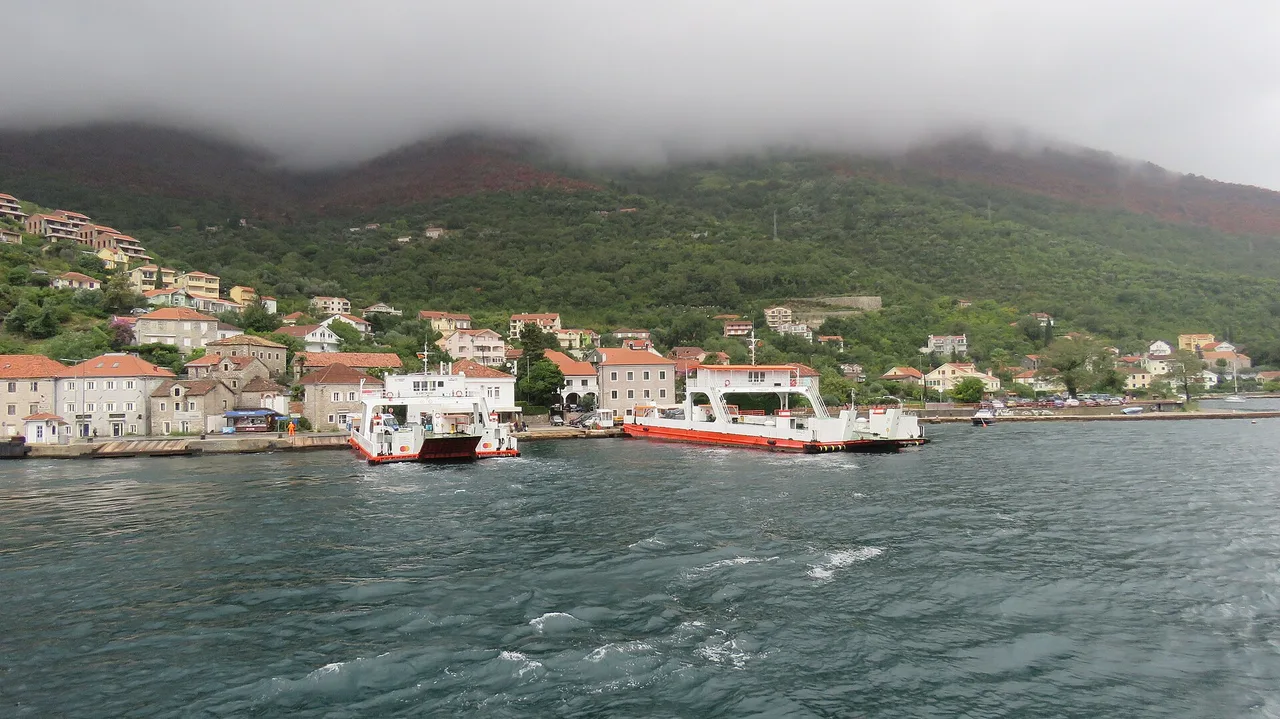
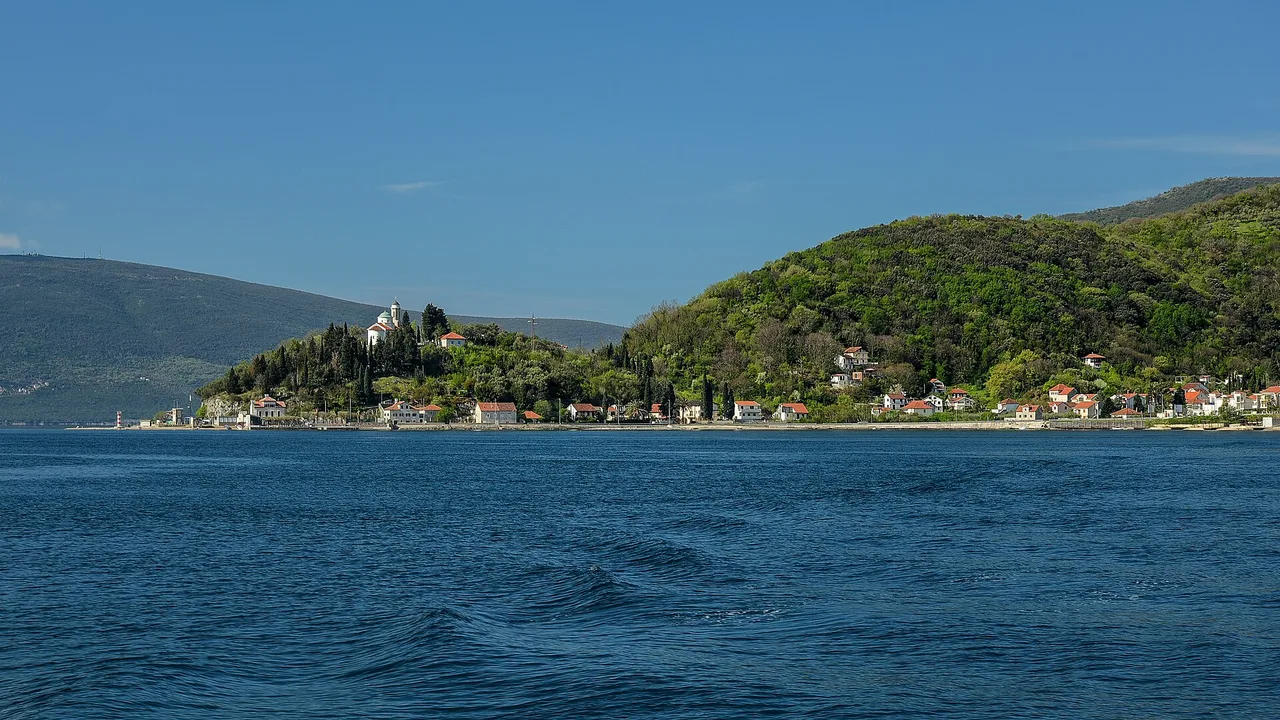
The line links Kamenari, on the Herceg Novi side of the bay, with Lepetane, on the Tivat side, across the Verige strait - a few hundred metres of water at the narrowest pinch of the whole Boka. Both ramps are signposted from the coast road as “trajekt”, so there is no detour to find them.
The sequence is short. You join the marked lane, a booth attendant takes the fare and hands over a ticket, marshals wave you onto the open deck in tight rows, the ramp lifts and the boat swings across. About five minutes later the ramp drops on the other shore and you’ll drive straight off. You can stay in the car or step out to the rail - most people get out, because the view down the bay from mid-channel is the best free thing you will do all day.
Two practical details. Handbrake on and engine off once you are parked - the deck is open, the crossing is short, and nobody is going anywhere for five minutes. And take the lane you are given: for summer 2026 Morsko dobro put professional security on both terminals, briefed to deal with problem drivers until the police arrive, on top of the staff directing traffic.
Ferry or the drive around the bay
This is the decision that actually matters, and it’s easy to get wrong, because the ferry saves a wildly different amount depending on your destination. The distances below come from routing on OpenStreetMap data, checked on 27 July 2026. The ferry column already includes the five-minute crossing; neither column includes time spent in the queue.
| Journey | With the ferry | Around the bay via Kotor | You save |
|---|---|---|---|
| Kamenari to Lepetane | the crossing, ~5 min | 28 km, ~35-40 min | ~28 km, ~30 min |
| Kamenari to Tivat town | 5 km, ~10 min | 26 km, ~35 min | ~21 km, ~25 min |
| Herceg Novi to Tivat Airport | 24 km, ~40 min | 50 km, ~75 min | ~15 km, ~20 min |
| Herceg Novi to Budva | 42 km, ~65 min | 52 km, ~80 min | ~10 km, ~15 min |
| Herceg Novi to Kotor | ferry not on the route | 30 km, ~50 min | nothing |
Read the bottom two rows again. For Budva the ferry buys you about fifteen minutes - so the moment the queue at Kamenari is longer than that, driving round through Risan, Perast and Kotor is genuinely faster, and you get the prettiest road in the country instead of a car park. For Kotor the ferry is a mistake: the town sits at the head of the bay on the road you’re already driving anyway.
One more case where the sums change: a caravan or a camper. You pay €7.50 to €10.50 rather than €5, and oversized vehicles are loaded last, so on a busy afternoon the drive round the bay is often the calmer call. Where the ferry is unarguable is the Tivat side. Airport pickups, the Luštica peninsula, Porto Montenegro, an evening flight - the ferry turns a 35-minute crawl into a five-minute hop, and that is the crossing’s real job. If you are going the other way and heading north for the Croatian border, our Kotor to Dubrovnik road trip covers where the ferry fits into that run.
The queue: how bad it really gets
Reputations linger. The horror stories date from spring 2023, when the line had just changed hands and only two small boats were working: a Podgorica newspaper timed over 40 minutes to board on an ordinary weekday and 48 minutes coming back, in a line of sixty-odd cars, with weekend waits over an hour.
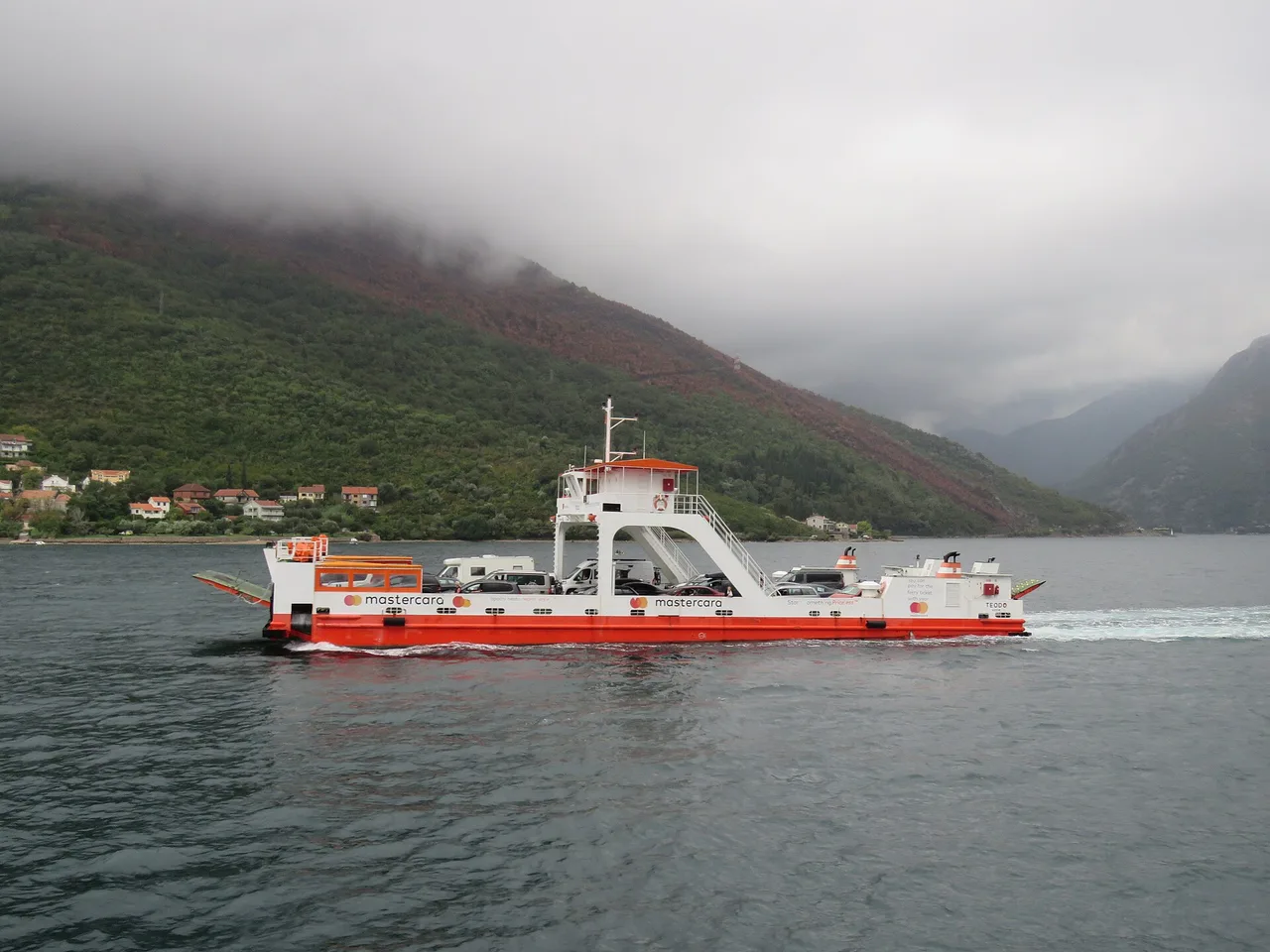
The 2026 picture is different. Five ferries were working the line in early July, and a sixth, the “30. avgust”, rejoined the timetable that month after a refit. In June alone the boats carried almost 163,000 vehicles. With that much steel on a five-minute shuttle, the queue is a rolling one rather than a dead stop.
Plan for a wait of up to 30-45 minutes at the worst moments anyway: peak time is the morning run and the late-afternoon return, weekends in July and August, and the hour after a cluster of flights lands at Tivat. Off-peak and overnight you’ll usually roll on within a boat or two. And leave margin if you are catching a plane: the crossing was suspended for two days in June 2026 for a political summit in Tivat, which is a reminder that it’s a bay shuttle, not a guaranteed link.
Does the €5 actually save you money
No, and it doesn’t - which is worth being straight about. Skipping the 28 km round the bay saves you roughly two litres of fuel. At Montenegro’s pump prices in mid-August 2026 (95 unleaded about €1.76 a litre, diesel about €1.88, re-set by the ministry every week) that is roughly €3.50-3.80 of fuel against a €5 ticket.
So the ferry is a time-and-nerves purchase, not an economy. What you are buying is half an hour, the bay’s most congested stretch of shore road avoided, and a five-minute break with the engine off. On a hire car with a full-to-full fuel policy the arithmetic is the same either way; on a day when you have already driven the Kotor shore once, the €5 is the easiest money you will spend. If you are still weighing up whether to drive at all, our guide to renting a car in Montenegro has the deposits, insurance and border rules.
On foot, by bike, or on the bus
Pedestrians and cyclists cross free, along with wheelchair users, so the ferry is also the cheapest way for a car-free traveller to hop between the two arms of the bay. It’s a real shortcut on a bike: the alternative is 28 km of narrow coast road shared with buses.
The gap to plan around is what happens at each end. Both ramps sit in small villages, not transport hubs, so a foot crossing only works if you have a bus, a taxi or a friend waiting on the far side. Some intercity coastal buses between Herceg Novi and Tivat cross on the ferry themselves rather than driving round the bay, but not all of them do, so ask which way your service goes when you buy the ticket. Our guide to Montenegro without a car sets out which coastal links actually connect.
Who runs it, and where to check before you go
The line has been operated by JP Morsko dobro, the state coastal-zone company, since it took over from the private operator Pomorski saobraćaj in February 2023. That handover is why fares, timetables and even the fleet are now government decisions announced in the Montenegrin press each spring and autumn, rather than posted quietly by a shipping firm.
The practical consequence for a traveller: check trajekt.me first - after an outage earlier in the summer it is back up with the current sailing plan and pricelist, and the fares and dates in this guide were cross-checked against it and against the Montenegrin reporting of Morsko dobro’s announcements on 20 August 2026. Before a winter trip, or if you are travelling on a public holiday, confirm at your accommodation or at the Kamenari booth as well.
For the wider picture of moving around the country, see getting around Montenegro; if you are planning to string the crossing into a day out, the Bay of Kotor day trip loop uses this ferry as its hinge, and crosses it once rather than doubling back.
Nearby and read also
- Getting around Montenegro - buses, taxis, car hire and how the coast joins up.
- Bay of Kotor day trip loop - Perast, Risan, this ferry, Tivat, back to Kotor.
- Herceg Novi guide - the town on the Kamenari side of the crossing.
- Tivat guide - Porto Montenegro and the airport, ten minutes from Lepetane.
- Tivat Airport to Kotor - the transfer options once you are across.
- Ferry to Montenegro from Italy - the overnight Bar crossings, a different animal entirely.
Photos
On the map
The map loads on click - to keep the page lightweight.
The map didn’t load. Check your connection and refresh the page.
Admission and opening hours
- Admission price
- €5 a car, €2.50 a motorcycle, €7.50 a van, free on foot or by bike
- Opening hours
- Summer plan 4 May - 14 October 2026, then the winter plan: every 15-20 minutes, day and night. Winter plan (2025/26 ran 15 October - 3 May): every 20 minutes 06:00-24:00, about hourly overnight
Tickets are sold at the booth as you drive up - bring cash. Fares and dates from JP Morsko dobro and trajekt.me, checked 20.08.2026; confirm for your date.
Details checked: August 20, 2026
Distance
- Podgorica ≈87 km · ~1 h 50 min to Kamenari
- Tivat ≈5 km · ~5-10 min to Lepetane
- Budva ≈26 km · ~35 min to Lepetane
Read also

Transport · 8 min read
Getting to Durmitor & Žabljak: Bus, Car, Tours
Verified · September 3, 2026Podgorica bus €10-12 (2h15-2h45), Budva €22-25, Kotor €20-23, drive times and KiwiTaxi from €253. Fares checked 3 Sep 2026.

Transport · 10 min read
Montenegro to Albania: Buses, Borders & Day Trips
Verified · August 22, 2026Budva-Tirana buses (~5.5 h), Ulcinj-Shkodër via Sukobin, Božaj/Hani i Hotit, day trips and the ride back, in one place.

Transport · 13 min read
Taxis in Montenegro: Apps, Prices & Scams to Avoid
Updated · August 19, 2026Montenegro taxi fares in August 2026: real municipal price bands in Budva, Kotor and Podgorica, airport surcharges, apps, and scams to avoid.

Transport · 8 min read
Balkan Car Hire: Crossing Borders Without a Refusal
Verified · August 15, 2026A hire car crosses these borders on paperwork, not luck: written permission, a Green Card in some countries and not others, and one country nobody insures.