
How to Get to Montenegro: Flights, Ferries & Overland
How to get to Montenegro in 2026: Tivat, Podgorica or Dubrovnik by air, why no Italy ferry runs, and every land border from five neighbours.
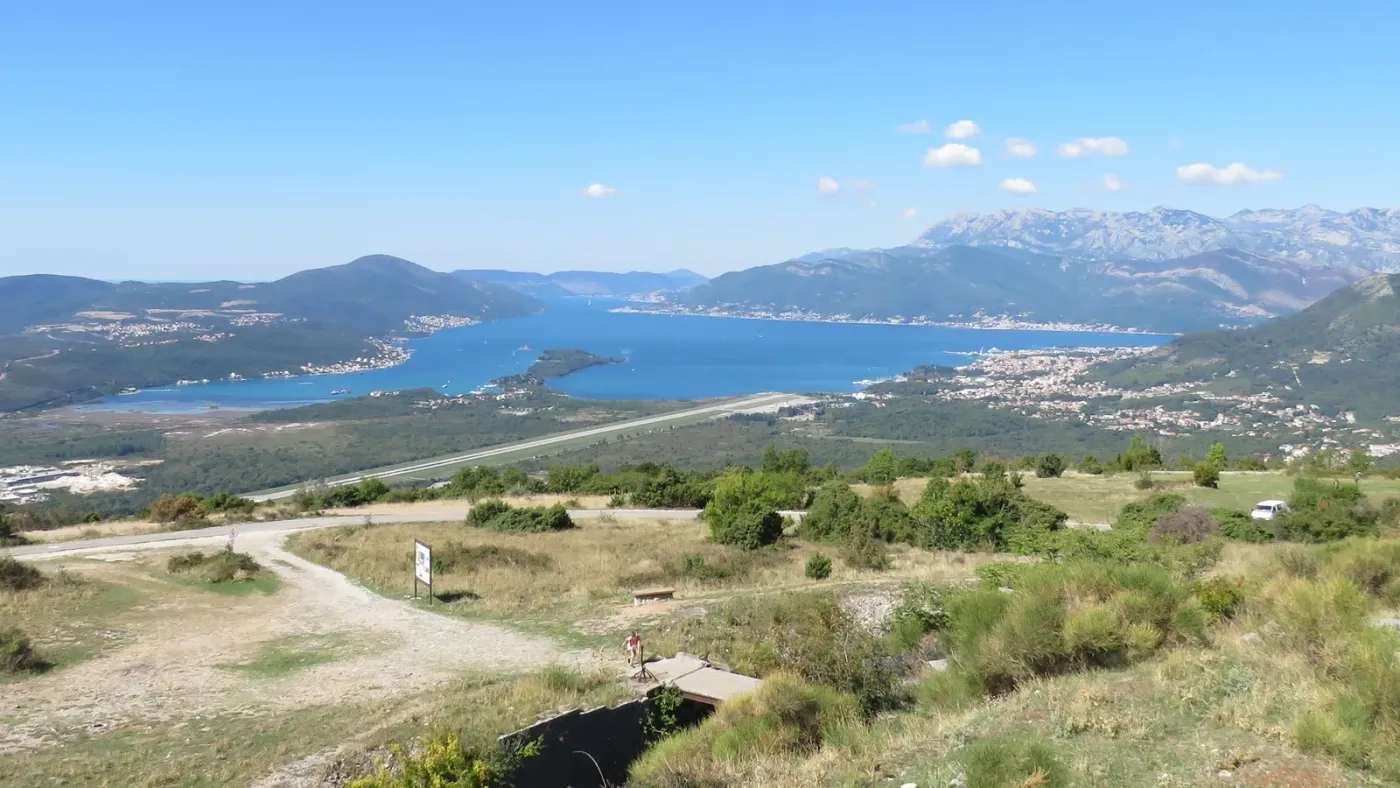
There’s no single right way to get to Montenegro - it depends on where you’re headed and where you’re starting from. Most people fly into one of three airports: Tivat and Podgorica inside the country, or Dubrovnik just over the Croatian border. Some drive in from Croatia, Serbia, Bosnia or Albania. Almost nobody arrives by direct ferry from Italy any more, because neither of the routes that used to run is sailing in 2026. Here’s how each option actually works, and which one gets you to Kotor, Budva or the mountains fastest.
The thing that catches first-timers out: the cheapest flight and the fastest arrival are often two different airports. A budget fare into Podgorica can save you real money on the ticket and then cost you two extra hours and a pricier transfer once you land - a fine trade if you’re heading to Ostrog or the north, a bad one if your hotel is in Kotor by dinner time.
The quick version: which way in
| You’re doing… | Best option | Time to the coast |
|---|---|---|
| A beach trip to Kotor, Budva or Herceg Novi, in season | Fly to Tivat (TIV) | 15-60 min |
| Anything off-season, or you want the cheapest fare | Fly to Podgorica (TGD) | 1-2 h |
| Chasing a cheap UK or European fare, western bay | Fly to Dubrovnik (DBV), Croatia | 40 min-2 h, plus a border |
| A Balkans road trip already under way | Drive in from a neighbouring country | Varies by border |
| Bringing your own car from Italy | Ferry Bari-Durrës, then drive north | A night at sea, plus 2.5-3 h |
Flying in: Tivat, Podgorica or Dubrovnik
Three airports put you within a few hours of the coast, and picking between them is really a trade-off between distance, season and fare.
Tivat (TIV) sits right on the Bay of Kotor - Kotor is a 12-minute drive from the terminal by the airport’s own figure, and Budva is under half an hour. The catch is the calendar: it’s a summer airport, and most routes run roughly April/May to October, so a December flight into Tivat is hard to find. The UK side of that got a boost this year: British Airways started flying direct from London Heathrow to Tivat on 14 May 2026, three times a week (Tuesday, Thursday, Saturday). Fares launched from £172 return including taxes - about $231 at the time - when BA announced the route back in November 2025; check current prices for your dates, since launch fares rarely stick around. It joins existing seasonal links from easyJet, Jet2 and others into the UK, plus routes to Germany and Scandinavia.
Podgorica (TGD) runs all year, sits inland, and usually wins on fare and choice. Wizz Air opened a base here on 30 March 2026, and between the two Montenegrin airports there are now more than 60 direct destinations across Europe, the Middle East and Asia in summer. The trade-off is distance: budget about 1h 25m to Budva and 1h 35m to Kotor over Cetinje (1h 50m via Budva).
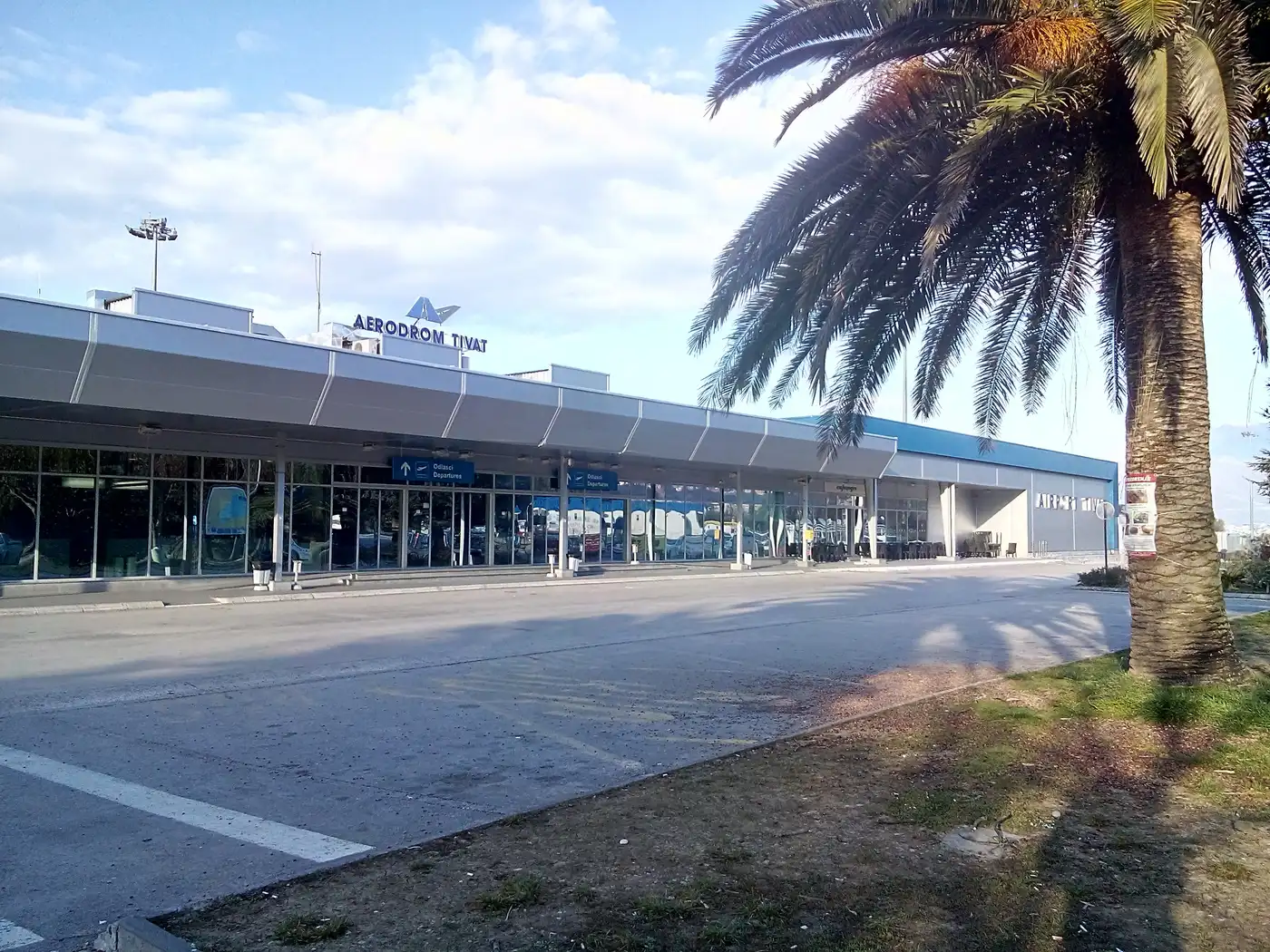
Dubrovnik (DBV), just over the border in Croatia, is worth comparing even though it isn’t in Montenegro at all. It’s often cheaper or more frequent than Tivat, particularly from the UK, and it’s the closest airport to Herceg Novi and the western Bay of Kotor - about 30 km. What’s different is the border: since EES went fully live in April 2026, a first-time entrant to Croatia gives four fingerprints and a face scan instead of getting a stamp, and Montenegro then checks you again on its own side a couple of kilometres down the road. Budget extra time, especially on a summer weekend. Our Montenegro-Croatia border and EES guide covers exactly what happens at the booth.
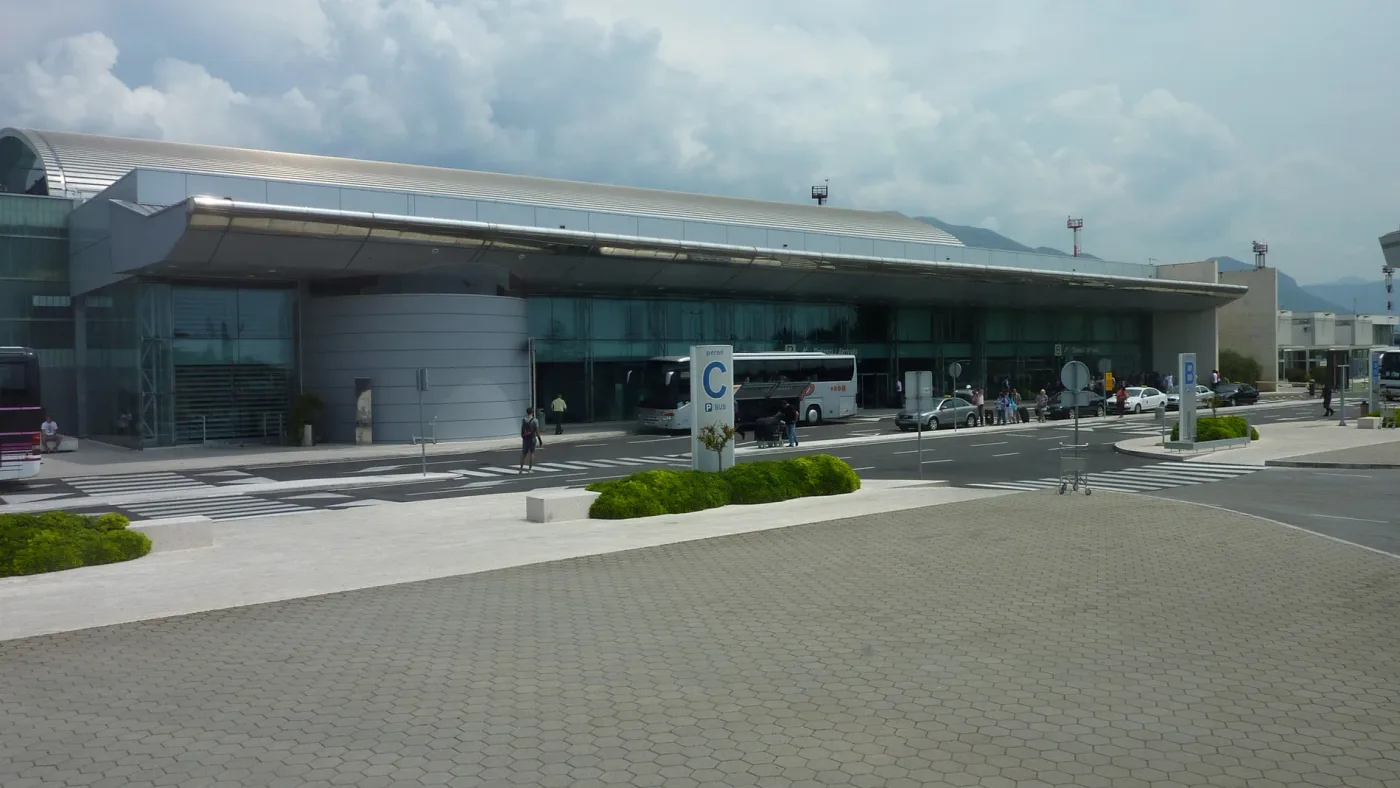
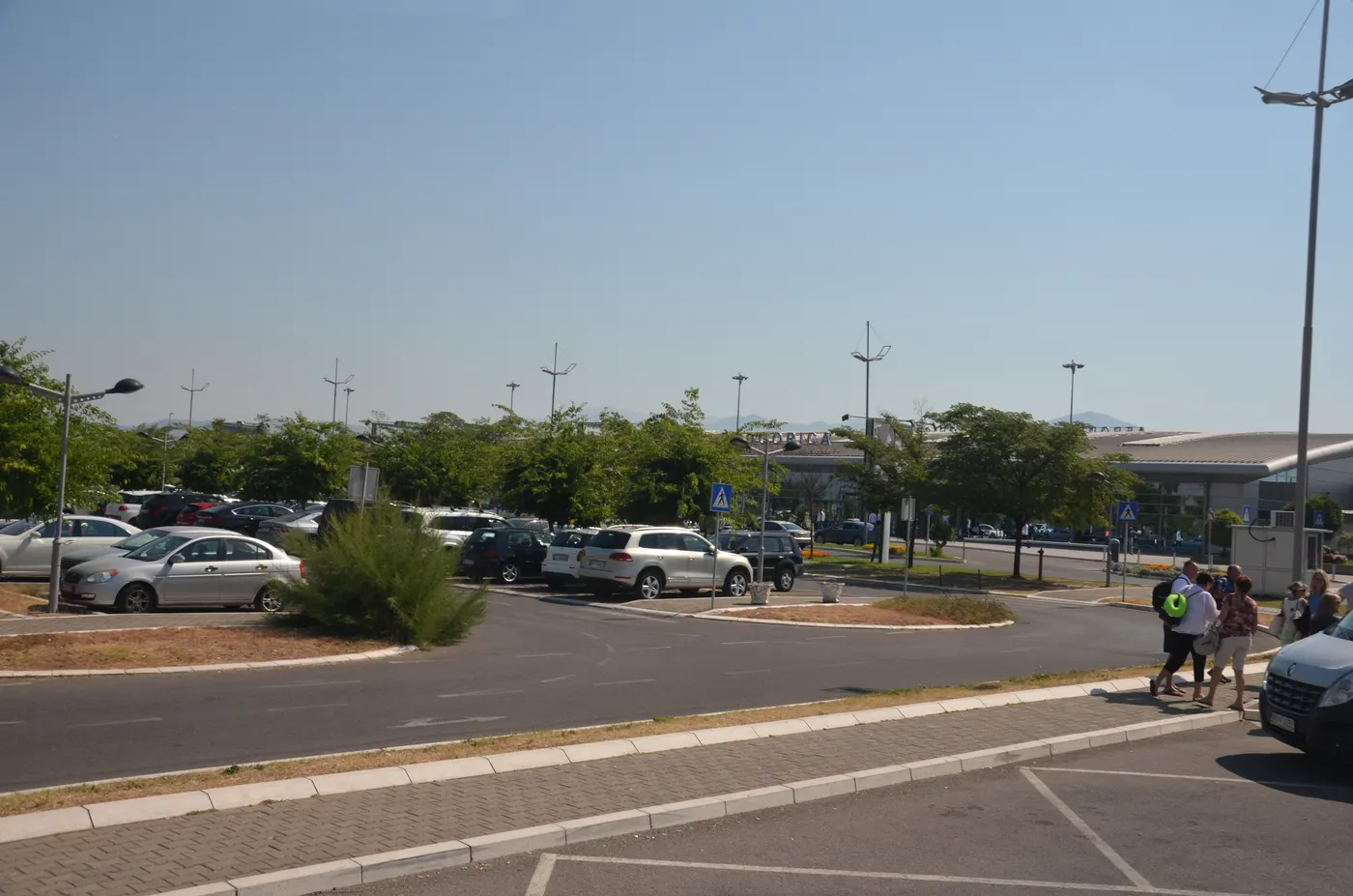
Not sure which of the two Montenegrin airports fits your dates and route best? Our Tivat vs Podgorica airport guide compares fares and flight choice in more depth, and once you land, Montenegro airport transfers walks through the taxi, transfer and bus options for all three.
Which airport actually suits your destination
The right airport depends entirely on where you’re staying, and the gap between options is bigger than most people expect.
| Destination | From Tivat (TIV) | From Podgorica (TGD) | From Dubrovnik (DBV) |
|---|---|---|---|
| Kotor | ~8 km, ~12 min | ~75 km, ~1h35m | ~90 km, ~2h (with border) |
| Budva | ~20 km, ~25-30 min | ~65 km, ~1h25m | further and slower than via Tivat |
| Herceg Novi | ~25 km, ~40 min (Kamenari ferry) | ~108 km, ~2h25m (Kamenari ferry) | ~30 km, ~40-60 min |
| Žabljak / Durmitor | ~154 km, ~3h20m | ~131 km, ~2h40m | not worth considering |
Two patterns are worth remembering. First, for Kotor and Budva, Tivat saves you an hour or more each way over Podgorica - if it’s flying that week, book it. Second, Durmitor and the far north flip the logic entirely: Podgorica is genuinely closer than Tivat once you skip the climb over the coastal mountains, and Dubrovnik doesn’t come into it at all - you’d be adding a border crossing on top of an already long drive. Herceg Novi is close to a toss-up between Tivat and Dubrovnik - both put you 25-30 km and 40-60 minutes away on paper, Tivat’s by the Kamenari ferry. Dubrovnik adds an international border crossing on top of that drive, so let the fare or flight schedule decide rather than assuming either airport wins outright.
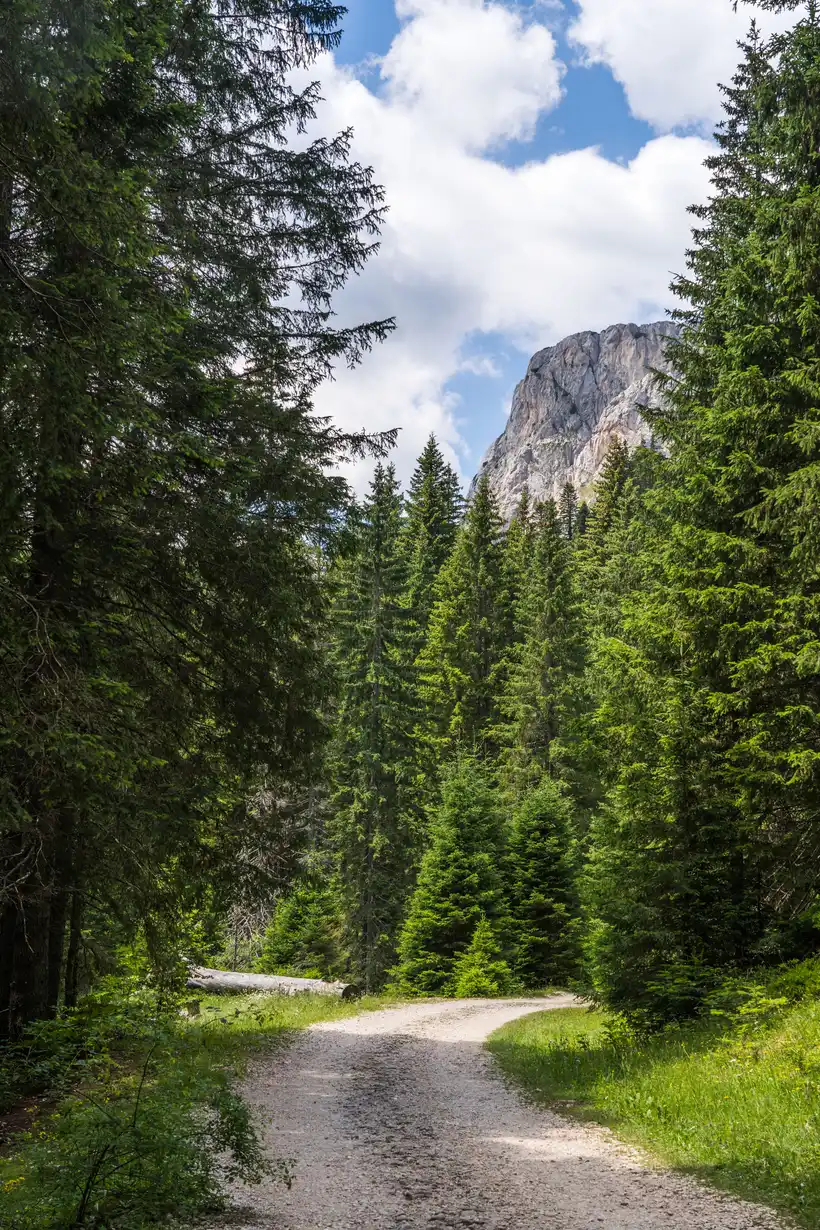
The ferry from Italy: the honest 2026 answer
If you’ve read that there’s a car ferry from Bari or Ancona to Bar, that’s out of date. Neither Bar-Bari nor Ancona-Bar has a confirmed season in 2026: the Montenegrin operator dropped the line for the year, and the Italian operator’s own booking engine doesn’t list Bar as a destination at all. What happened to that one line, and what it would take to bring it back, is in our Bar-Bari ferry guide; the wider sea picture is in ferry to Montenegro.
What gets you here by sea this year is a two-step trip, and since September there is only one of them left: Bari-Durrës in Albania, overnight and close to daily, followed by a 2.5-3 hour drive north. The Croatian alternative, Bari-Dubrovnik, is suspended until 21 October 2026 after a technical fault on Jadrolinija’s ferry Dalmacija, and 21 October is where that line’s 2026 season was due to end anyway. Either way, the boat is worth it mainly if you’re bringing a car - a night at sea plus a border rarely beats a two-hour flight into Tivat once you count the port fees and the drive. If the car is the whole point of the trip, book the vehicle deck first; if it isn’t, flying is simply the more practical route in.
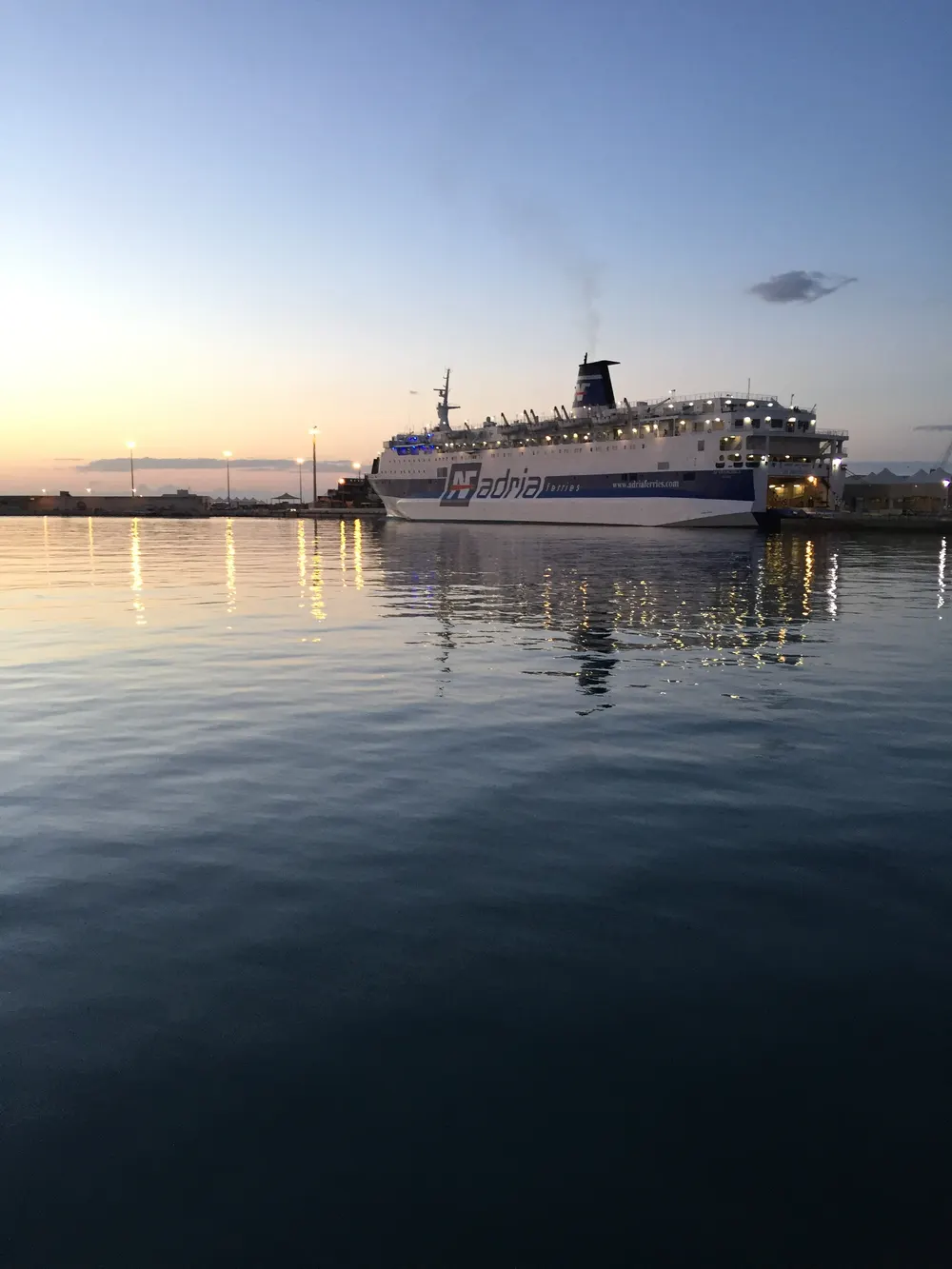
Driving in from Croatia, Serbia, Bosnia or Albania
Montenegro shares land borders with five countries. Four of them have one main, well-used crossing worth planning around; the fifth, Kosovo, has a smaller crossing covered further down.
| From | Main crossing | Notes |
|---|---|---|
| Croatia | Karasovići - Debeli Brijeg | Coastal E65/D8, ~40 km south of Dubrovnik; runs EES on the Croatian side since April 2026 |
| Serbia | Dobrakovo | On the E763, ~20 km north of Bijelo Polje; carries the bulk of Serbia-Montenegro traffic, feeds the motorway to Belgrade |
| Bosnia & Herzegovina | Šćepan Polje - Hum | By the Tara and Piva rivers, the gateway to Tara Canyon rafting; Klobuk and Zupci are two of the others |
| Albania | Sukobin - Muriqan | Coastal, near Ulcinj and Shkodër; a joint post - both countries’ officers work in one compound and clear you in a single stop |
From Croatia, most people are driving down from Dubrovnik itself - our Kotor to Dubrovnik guide covers the buses, the transfer options and the crossing in both directions.
From Serbia, the classic route is Belgrade to Podgorica: 9-10 hours by coach on the roads via Novi Pazar or Zlatibor, with operators including Lasta running the route daily. There’s also a genuinely scenic option if you’re not in a hurry - the Belgrade-Bar railway climbs through the mountains past the Mala Rijeka viaduct, one of the highest rail bridges in Europe, and our getting around Montenegro guide has more on how the train fits together with buses once you’re inside the country.
From Bosnia, direct coaches run from Sarajevo, Banja Luka, Bijeljina, Mostar and Trebinje, and the Šćepan Polje crossing doubles as the back door into the Durmitor and Tara Canyon area if that’s your first stop rather than the coast.
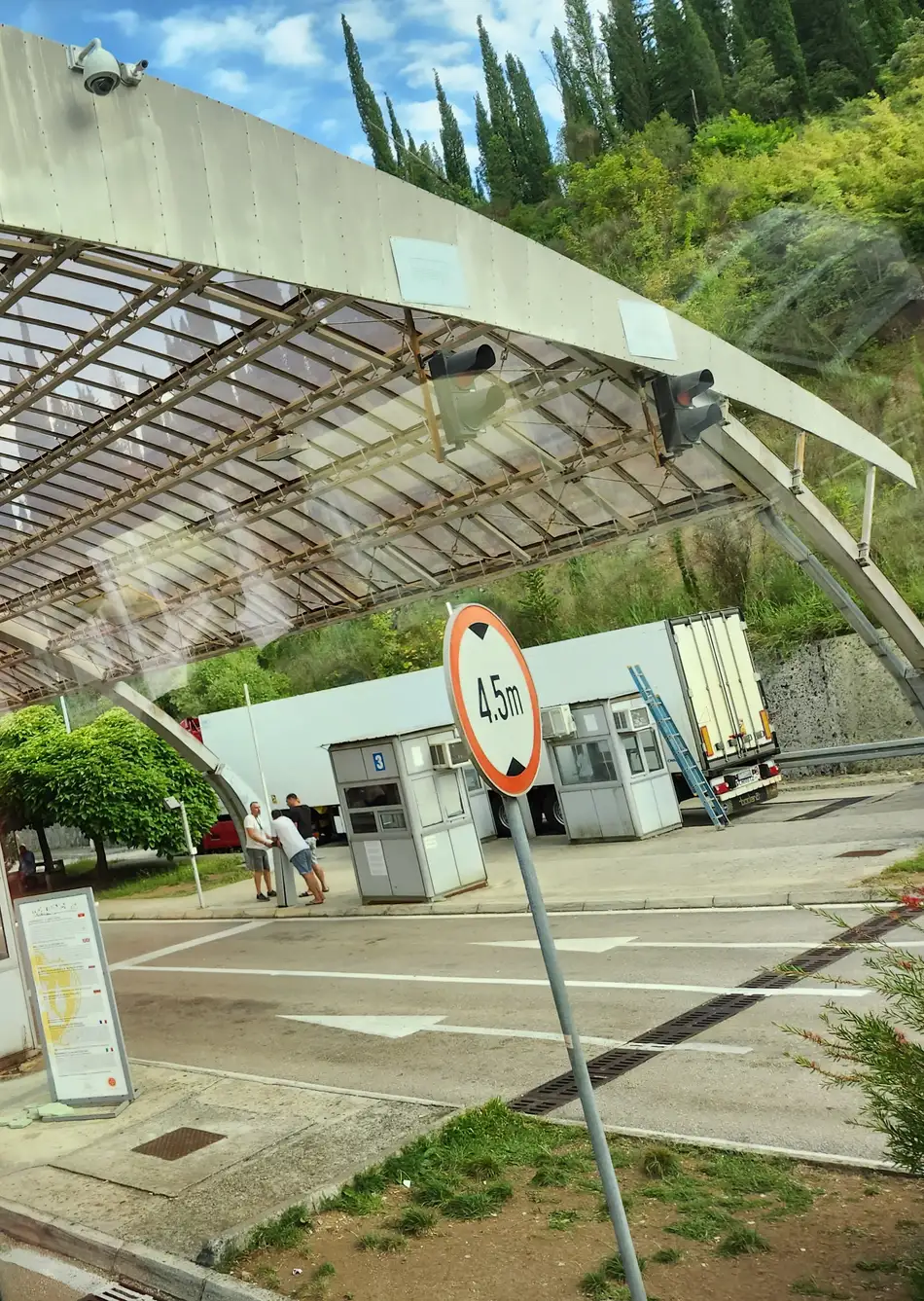
From Albania, the Sukobin-Muriqan crossing near Ulcinj is the quick one, and it’s a joint post: officers of both countries sit in a single compound and clear you in one stop. It isn’t the only one of its kind - Zatrijebačka Cijevna/Grabom, northeast of Podgorica, has worked the same way since August 2021, and Montenegro runs two more joint posts on the Bosnian border, at Vraćenovići and Sitnica. On the Albanian border only Albania’s side publishes opening hours: as of October 2026 its customs service gives Muriqan, the Sukobin side, a 24-hour service with customs operations from 07:00 to 19:00, Grabom isn’t on its list, and Montenegro’s register of crossings carries no timetable. So check locally before you count on a night arrival, and expect a queue at Sukobin on a July or August weekend. Our Montenegro vs Albania guide has more on combining the two coasts in one loop. There’s also a smaller crossing into Kosovo at Kula, near Rožaje, if your route comes from that direction - and that one needs real planning ahead. Kosovo is the only country in Europe outside the international Green Card motor-insurance system, so no Green Card covers it at all: you’ll need separate border (frontier) insurance bought at the crossing, and most standard rental agreements list Kosovo as an excluded country outright. Confirm in writing with your rental company before you build a Kosovo leg into the trip.
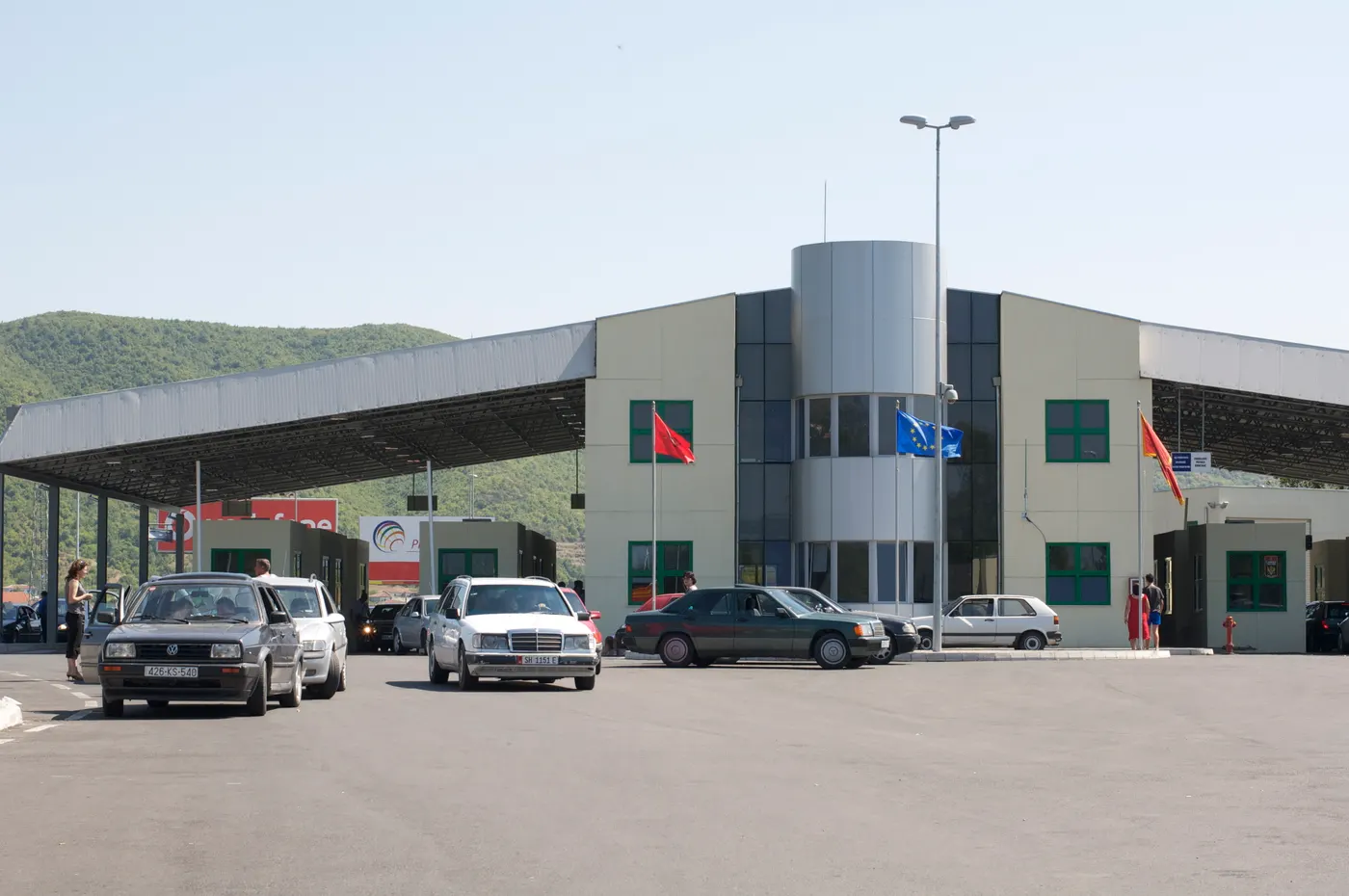
Whichever border you’re crossing, check your entry requirements before you travel rather than at the barrier - our Montenegro entry requirements guide covers the 90-day rule, passport validity and the 24-hour registration that catches out independent travellers more than any visa question does.
So which way should you book?
It comes down to your dates, your destination and whether you’re bringing a car:
- Beach holiday to Kotor or Budva, in season (April-October) - fly to Tivat. The short transfer is worth it after a long-haul flight.
- Travelling off-season, or chasing the cheapest fare - fly to Podgorica, and budget the extra hour or two to the coast.
- UK or European traveller comparing prices - check Dubrovnik too, especially for Herceg Novi and the western bay; just don’t forget the border.
- Heading for Durmitor, Žabljak or the north first - Podgorica beats both coastal options on distance.
- Already road-tripping the Balkans - drive in from Croatia, Serbia, Bosnia or Albania; each has one clear main crossing.
- Bringing your own car from Italy - Bari-Durrës plus a drive north, not a direct sailing, in 2026.
Once you’ve landed or crossed the border, getting around Montenegro picks up the story with buses, hire cars and the Bay of Kotor ferry, and how many days in Montenegro helps turn the arrival into a full trip.
Read also

Transport · 9 min read
Getting to Durmitor & Žabljak: Bus, Car, Tours
Verified · September 3, 2026Podgorica bus €10-12 (2h15-2h45), Budva €22-25, Kotor €20-23, drive times and KiwiTaxi from €253. Fares checked 3 Sep 2026.

Transport · 10 min read
Montenegro to Albania: Buses, Borders & Day Trips
Verified · August 22, 2026Budva-Tirana buses (~5.5 h), Ulcinj-Shkodër via Sukobin, Božaj/Hani i Hotit, day trips and the ride back, in one place.

Transport · 14 min read
Taxis in Montenegro: Apps, Prices & Scams to Avoid
Updated · September 25, 2026Montenegro taxi fares in August 2026: real municipal price bands in Budva, Kotor and Podgorica, airport surcharges, apps, and scams to avoid.

Transport · 8 min read
Balkan Car Hire: Crossing Borders Without a Refusal
Verified · August 15, 2026A hire car crosses these borders on paperwork, not luck: written permission, a Green Card in some countries and not others, and one country nobody insures.