
Best Beaches in Montenegro (2026)
The best beaches in Montenegro: Budva Riviera, Sveti Stefan, Jaz, Mogren, Bečići, Velika Plaza in Ulcinj and Plavi Horizonti - and how to reach them.
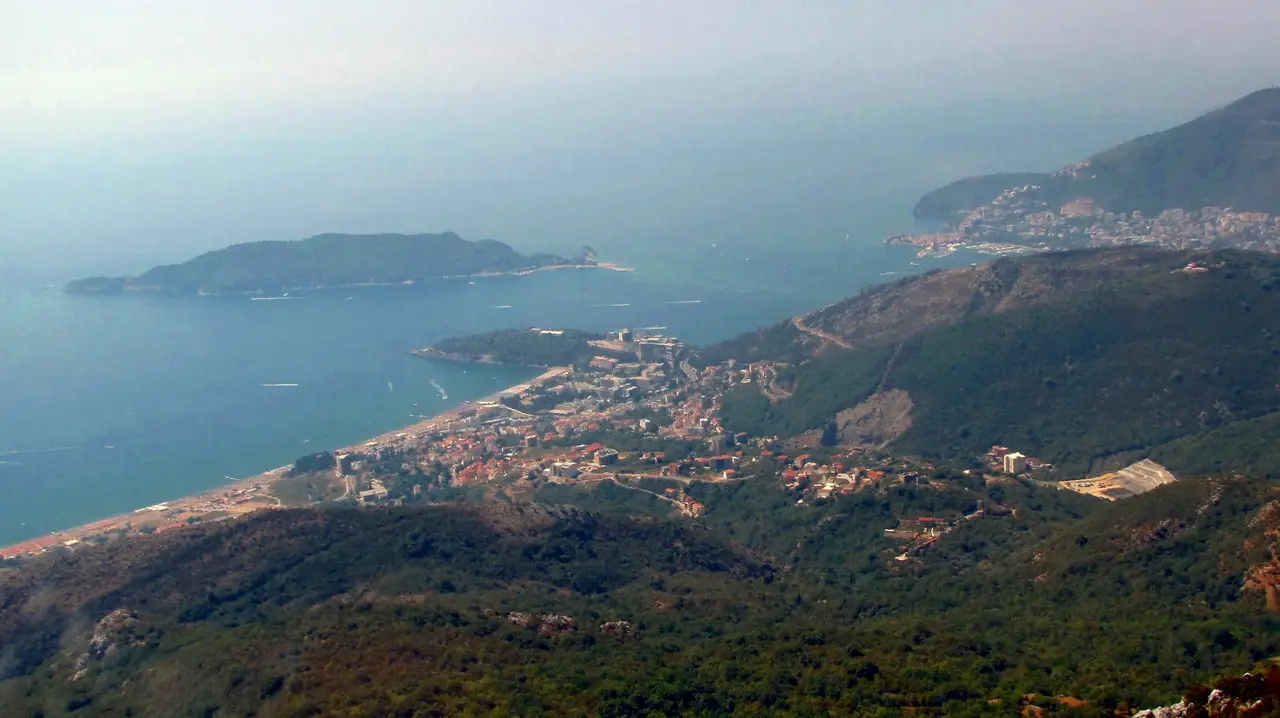
The best beaches in Montenegro run almost the whole length of the coast, but they fall into a few clear types. For resort energy and easy access, the Budva Riviera (Slovenska, Mogren, Bečići) is the obvious base. For the postcard view it’s Sveti Stefan; for the country’s longest sand it’s Velika Plaza in Ulcinj; for a wilder, greener bay it’s Jaz; and for shallow, family-friendly sand it’s Plavi Horizonti on the Luštica peninsula. The Bay of Kotor has small shore beaches too, but it’s calm-water and scenery rather than open sea.
Montenegro’s coast is short - about 100 km from Herceg Novi to the Albanian border - so most of these beaches sit within an hour or two of each other. The big practical split is the surface underfoot: the central Budva-Bečići stretch is mostly fine pebble and “beton” (concrete) platforms, while the far south around Ulcinj is true sand. Get that one distinction right and you are most of the way to picking the right beach for your trip.
Budva Riviera: the resort core
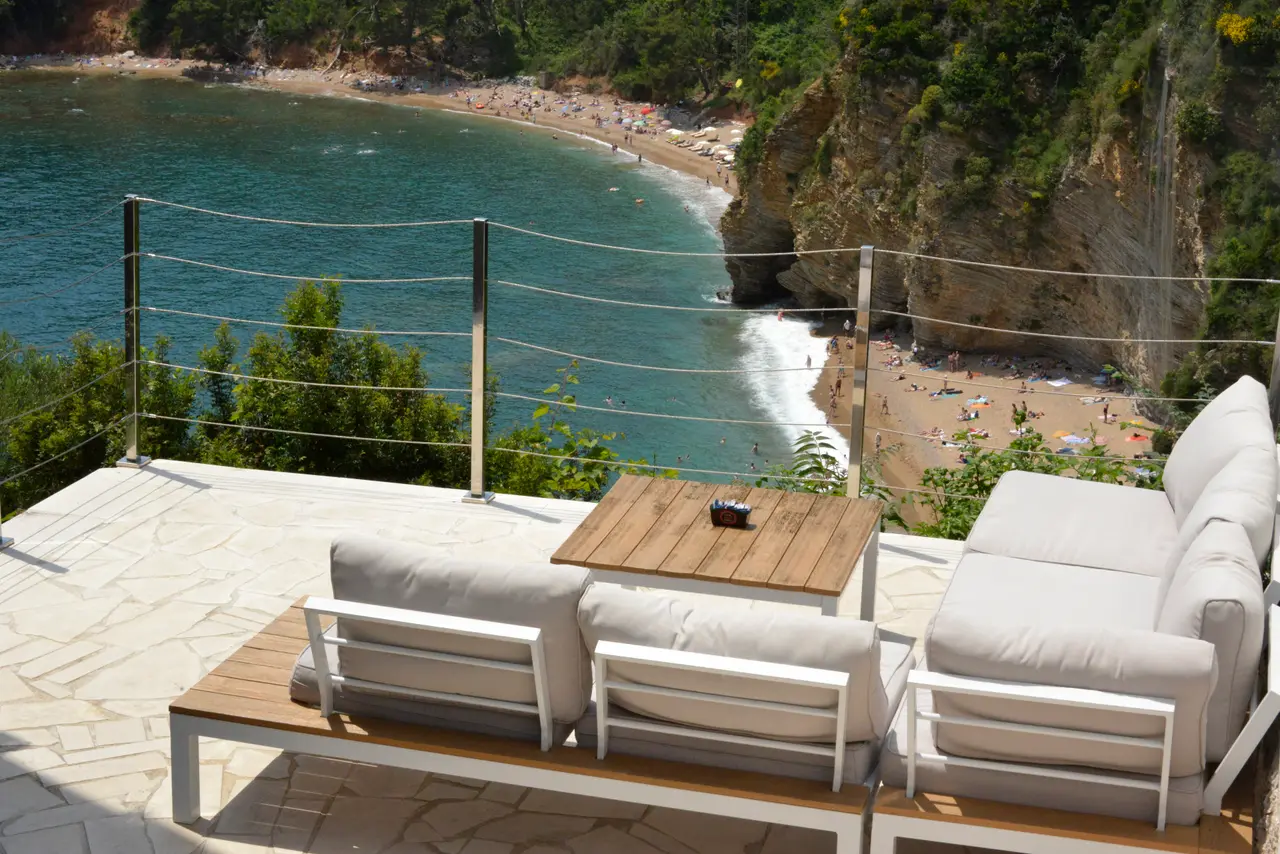
The Budva Riviera is the busiest and most developed stretch of coast, and for many travellers it’s simply where a Montenegro beach holiday happens. The town beach, Slovenska plaža, is a long pebble strip lined with loungers, bars and watersports right below the resort blocks - convenient rather than beautiful, and packed in July and August. Just around the headland from the Old Town, Mogren is the prettier town option: two small sandy-pebble coves tucked under cliffs, linked by a short seaside path from the Old Town walls.
Budva is the natural base for a beach-first trip because everything is close: restaurants, nightlife, day-boat trips and a string of beaches within a short drive or walk. It’s well connected by bus along the coast, and Tivat airport is only about 20 km away. For a beach-by-beach breakdown of the whole Riviera - Slovenska, Mogren, Jaz, Bečići and Kamenovo - see the best beaches in Budva; for the town itself - the walled Old Town, the citadel and where to stay - see the full Budva guide.
Bečići: the long resort beach
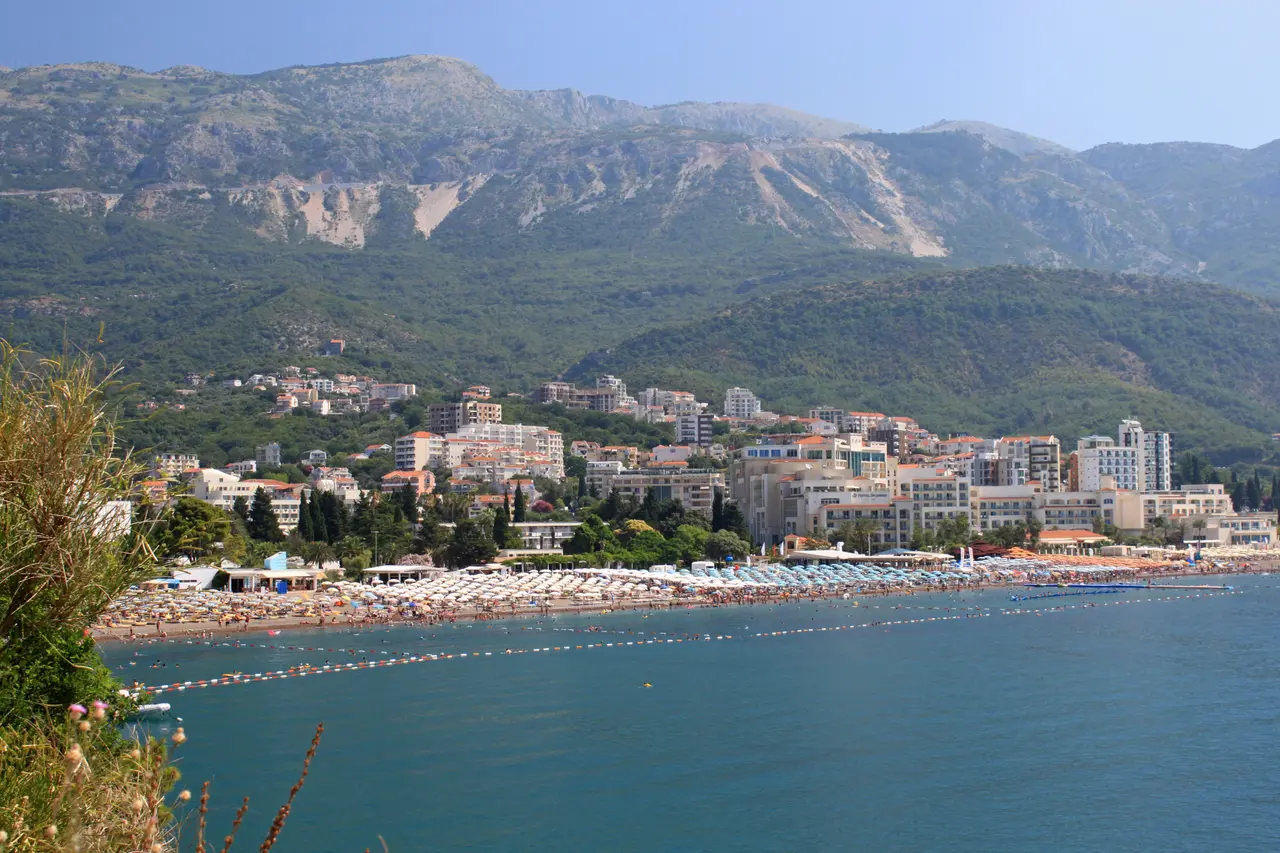
Just south of Budva, Bečići is the Riviera’s package-holiday beach: a long curve of pebble and sand walled in by hotel towers and a dramatic run of grey mountains, with a seafront promenade back to Budva in well under an hour on foot. Come for the full-service package - organised sunbeds, watersports desks, snack bars, shallow water that suits families - and skip July and August if crowds aren’t your thing; May, June and September stay usable and far calmer. It also holds a genuine rarity for this coast: Iberostar Waves Bellevue, right on the beach, runs true all-inclusive rather than a repackaged half-board deal, one of the few resorts here that do; see our all-inclusive Montenegro guide for the others. For hotels and how Bečići compares with sleeping in central Budva, the best beaches in Budva breakdown goes deeper.
Sveti Stefan: the postcard view
Sveti Stefan is the single most photographed spot on the Montenegrin coast: a tiny fortified islet of stone houses, joined to the mainland by a narrow causeway, sitting between two small beaches. The islet is run as an Aman resort - it closed in 2021 over a public beach-access dispute and reopened as an Aman hotel in July 2026 - and the built-up island itself isn’t open to non-guests. Access to the beaches is clear-cut: the public can use Sveti Stefan Beach and King’s Beach, while Queen’s Beach stays guests-only. Add the public viewpoint above the road and this is the reason most travellers stop. The pink-tinged pebble beaches here are some of the prettiest on the coast.
It’s about 10 km south of Budva and easy to reach by car, taxi or coastal bus. In practice, this is a photo-and-a-dip stop rather than a place to spend the day, usually paired with a longer visit to Budva or Petrovac. The islet is scenery, not a destination you can walk into, and you’ll not be disappointed. Sveti Stefan also makes the obvious sunset stop on a Budva Riviera day. Our full Sveti Stefan guide covers the viewpoints, the public beaches and Miločer Park.
Jaz: a wilder green bay
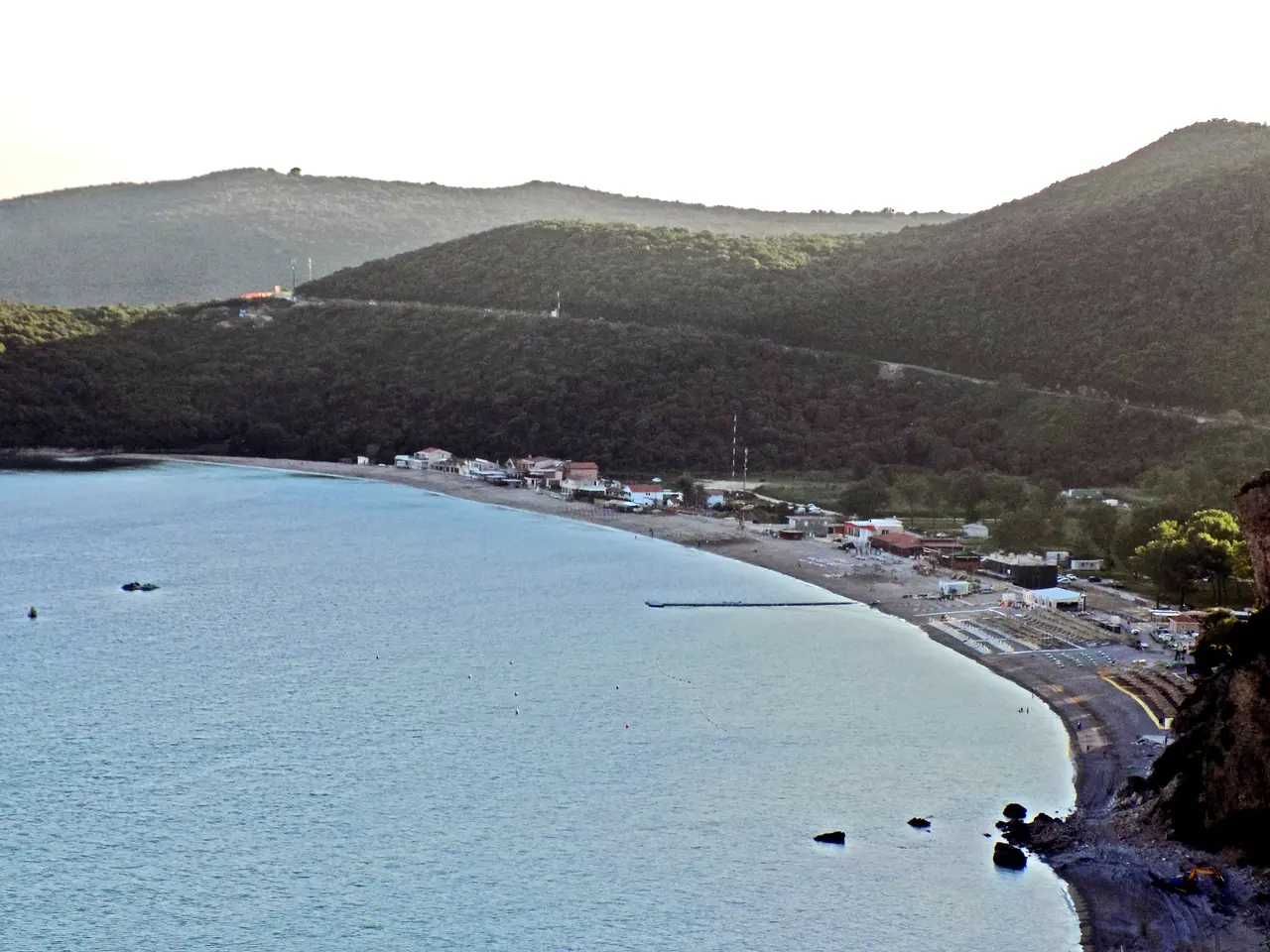
A few kilometres northwest of Budva, Jaz flips the resort formula: a long open beach in a green bay backed by hills instead of hotel blocks, part loungers and part free sand to spread out on. It has history too - big summer concerts have used the site as a stage, and a campground sits at the back for anyone extending the stay. Pick it if you’ve got a car and want space and cleaner water over convenience; there’s barely any natural shade, so bring your own cover if you skip the rented sunbeds. Our best beaches in Budva guide has Jaz’s full concert history and current beach layout.
Velika Plaza, Ulcinj: the longest sand
For real sand, head to the far south. Velika Plaza (“Long Beach”) near Ulcinj is the longest beach in Montenegro - roughly 13 km of fine, dark sand running toward the Albanian border. The sea here’s shallow and warms quickly, which makes it popular with families, and the steady afternoon wind makes the southern end a kitesurfing and windsurfing hub. The beach is broad and gently sloping, with bars and watersports clustered near the access roads and long empty stretches in between.
Ulcinj is the southernmost coastal town and has a different, more Mediterranean-Ottoman character than Budva - a walled old town above a small harbour, plus the smaller sandy town beach. It’s about an hour’s drive south of Budva. Choose Velika Plaza if sand, shallow water and watersports matter more to you than nightlife or proximity to Kotor. For where to sleep once you’re here, see where to stay in Ulcinj. To string these beaches together on the drive down, the Montenegro coastal road trip runs the whole shore from Herceg Novi to Ulcinj. Azul Beach Resort Montenegro by Karisma sits directly on this sand and markets itself honestly - genuinely all-inclusive, not a half-board deal dressed up; see all-inclusive Montenegro for what’s actually covered.
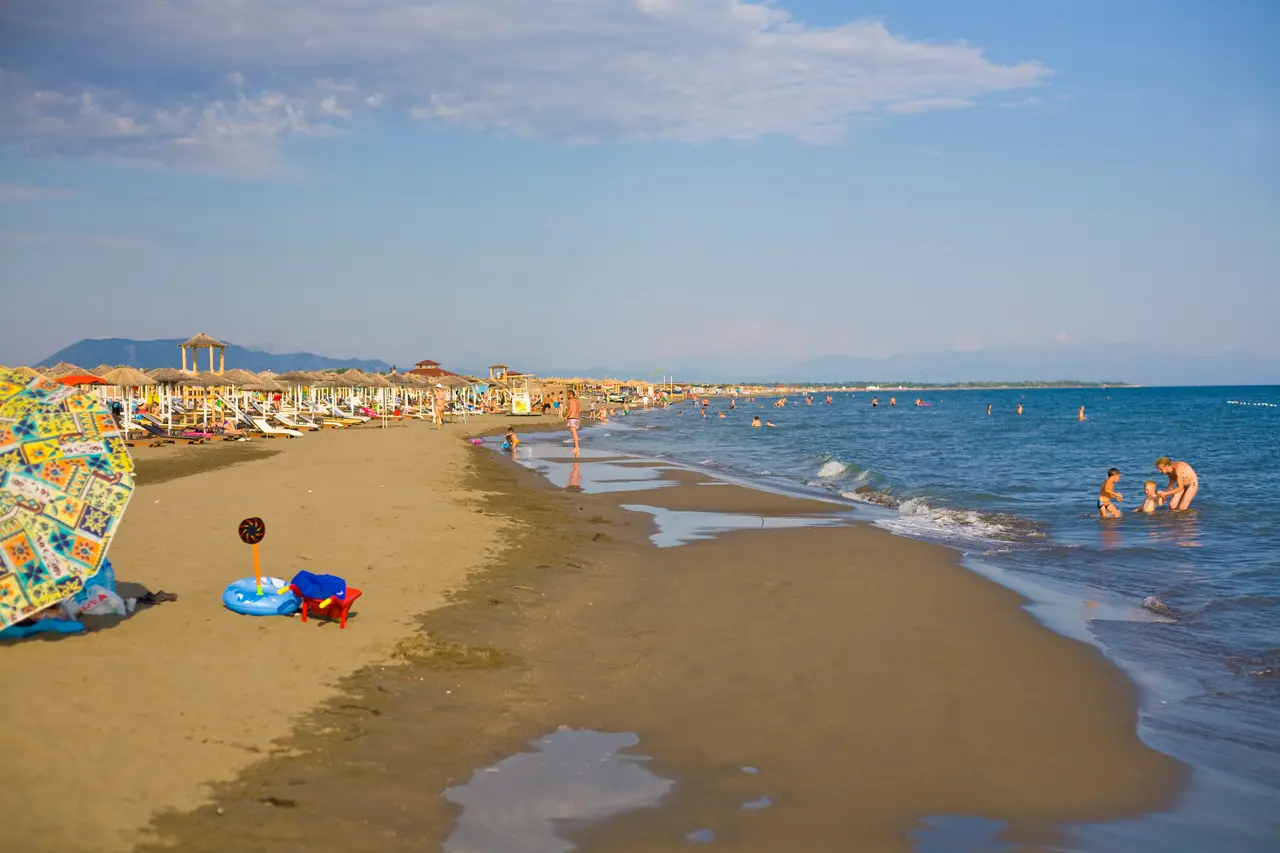
Luštica & Plavi Horizonti: shallow family sand
On the Luštica peninsula, between Tivat and Herceg Novi, Plavi Horizonti (“Blue Horizons”) is one of the few genuinely sandy, shallow bays north of Ulcinj. It’s a sheltered horseshoe of sand backed by pine woods, with calm, clear, slowly deepening water that’s ideal for small children. The bay is partly organised with loungers and a couple of cafés, and it stays noticeably calmer than the Budva beaches.
Luštica is a quieter, greener corner of the coast, and it’s easiest to reach with a car via Tivat or the Verige road around the Bay of Kotor. Combine Plavi Horizonti with the marina town of Tivat and the hidden coves along the peninsula for a slower beach day away from the resort crowds - the Luštica peninsula guide covers the Blue Cave, Rose village and the quiet pebble bays beyond the sand.
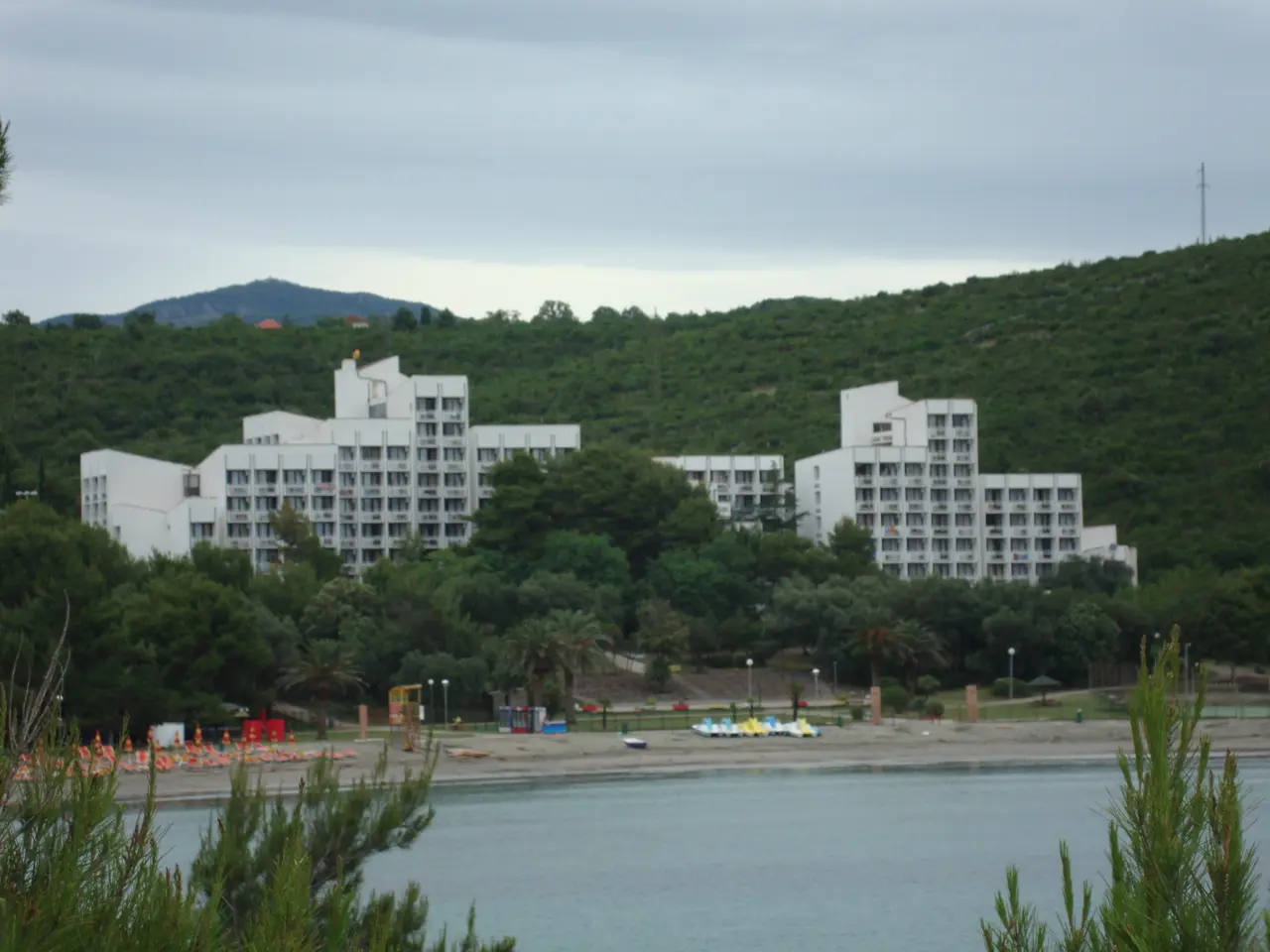
Bay of Kotor: calm-water swimming
The Bay of Kotor isn’t where you come for open-sea beaches, but it has plenty of small shore beaches and concrete bathing platforms at Kotor, Dobrota, Perast, Herceg Novi and the villages in between. The water is sheltered and flat, the swimming is calm, and the backdrop - steep limestone slopes and stone towns - is some of the most dramatic on the whole Adriatic. Beaches here are small and often pebbly or built-up rather than broad and sandy.
Treat the bay as scenery-plus-swim rather than a beach holiday in its own right. It’s a natural pairing with sightseeing in Kotor and Perast, and many travellers split a trip between calm bay mornings and open-coast beach afternoons. For pontoons, Dobrota, Morinj and Boka swimming in practice, see swimming in the Bay of Kotor. For the wider picture of how the bay, the towns and the parks fit together, see things to do in Montenegro.
Which beach should you choose?
If you’d like one easy base with the most beaches in reach, choose Budva or Bečići - central, well connected and full-service. For the iconic view, add Sveti Stefan; for space and a more natural setting, add Jaz. Families chasing shallow sand should look at Plavi Horizonti on Luštica or, for the longest sand of all, Velika Plaza in Ulcinj in the far south. The Bay of Kotor is for calm-water swims wrapped in spectacular scenery rather than classic beach days. For a scored, side-by-side ranking of every beach here by sea, surface, crowds and cost, see Montenegro beaches ranked.
Whichever you pick, timing matters as much as the beach itself. July and August bring the warmest sea but also the biggest crowds and highest prices, while June and September are warm enough to swim and far calmer underfoot - our guide to Montenegro in September makes the case for the coast’s best shoulder month. Before you lock in dates, read the best time to visit Montenegro, and if the rest of the trip is still open, our Montenegro travel guide shows how the coast fits with the bay and the mountains - then base yourself somewhere central and let the coast come to you.
Read also

What to see · 10 min read
Hiking Bobotov Kuk: Durmitor Highest Peak
Verified · September 4, 2026Bobotov Kuk hike at 2,523 m: Sedlo (~10 km RT) vs Lokvice from Black Lake, €5 park fee, cables, season and early-start tips.

What to see · 10 min read
Swimming in the Bay of Kotor: Beaches & Lidos
Updated · August 31, 2026Can you swim in Kotor? Yes - on Dobrota pontoons, Morinj and small Boka shores. Water quality, season and what to expect.

What to see · 11 min read
Rent a Boat in Kotor Bay: No Licence Needed
Updated · September 25, 2026Private boat rental in Kotor Bay 2026: skippered hire from €90/h, bareboat prices, licence rules, speed limits and where boats leave from.

What to see · 9 min read
Piva Lake & Canyon: Montenegro's Emerald North
Updated · August 27, 2026Piva Lake guide: the 45 km emerald reservoir, Mratinje Dam, boat trips from Plužine, the relocated Piva Monastery and how to pair it with Durmitor.