
Sveti Stefan, Montenegro: What to Know Before You Visit
Sveti Stefan, Montenegro: the islet is an Aman hotel closed to non-guests. The viewpoints, which beaches are public, Milocer Park and how to visit.
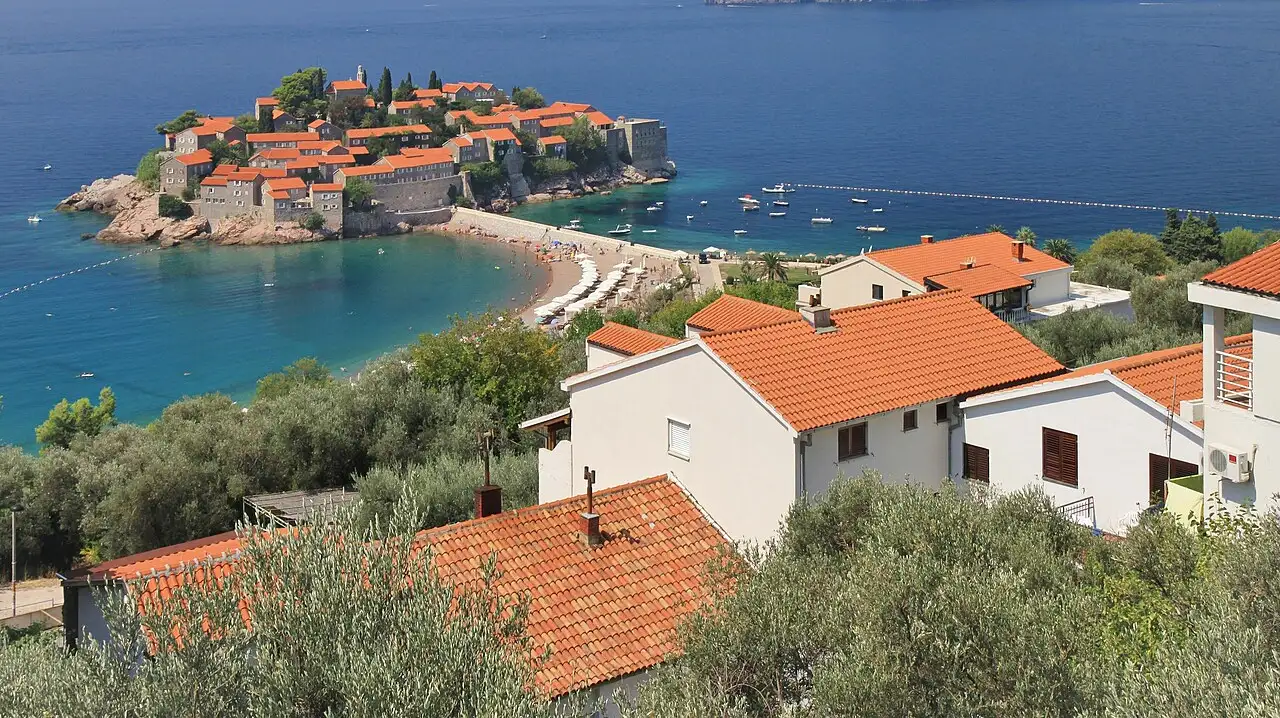
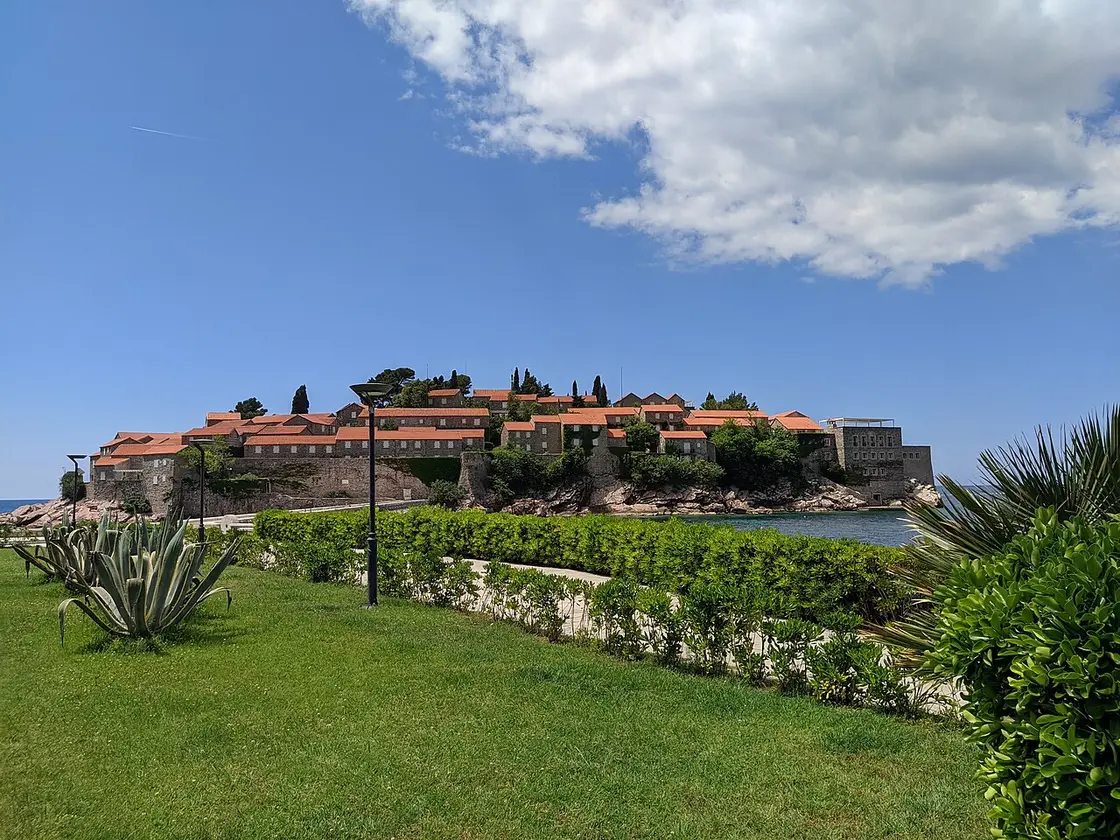
Sveti Stefan is the single most photographed spot in Montenegro: a tiny fortified islet of red-roofed stone cottages, joined to the mainland by a slim causeway between two curving beaches. The catch, and the thing to know before you go, is that the islet itself is a private hotel (the Aman Sveti Stefan) and closed to anyone without a room. You can’t walk across and wander its lanes. What you can do is admire it from the viewpoints, walk the pine-shaded Miločer Park, and swim off two of its three beaches, which is exactly why most people come. Here is how to make the most of it.
What is Sveti Stefan?
The island sits on the coast road about 10 km south of Budva, between the villages of Pržno and Petrovac. It began not as a resort but as a real place: a fortified fishing village and the old seat of the Paštrovići clan, its stone houses packed onto a rocky islet for safety. A few hundred people lived here before the government cleared them out, and their descendants still hold the ordinary modern village of Sveti Stefan on the mainland slopes opposite the island. In the late 1950s and 1960s the Yugoslav government did something unusual with it, clearing out the residents and turning the entire village into a single luxury “town-hotel”, which through the 1960s and 70s drew the sort of guest list, Sophia Loren, Elizabeth Taylor and others, that still shapes its reputation. The islet covers only about 12,400 square metres, so what looks like a small town is really one very compact hotel. It even hosted the second half of the 1992 Fischer-Spassky chess rematch, a measure of the odd fame the place has carried for decades.
That history is why it looks the way it does, an untouched cluster of vernacular stone houses rather than a modern resort, and why access is so tightly controlled. To this day the buildings you photograph are hotel rooms.
Can you actually visit the island?
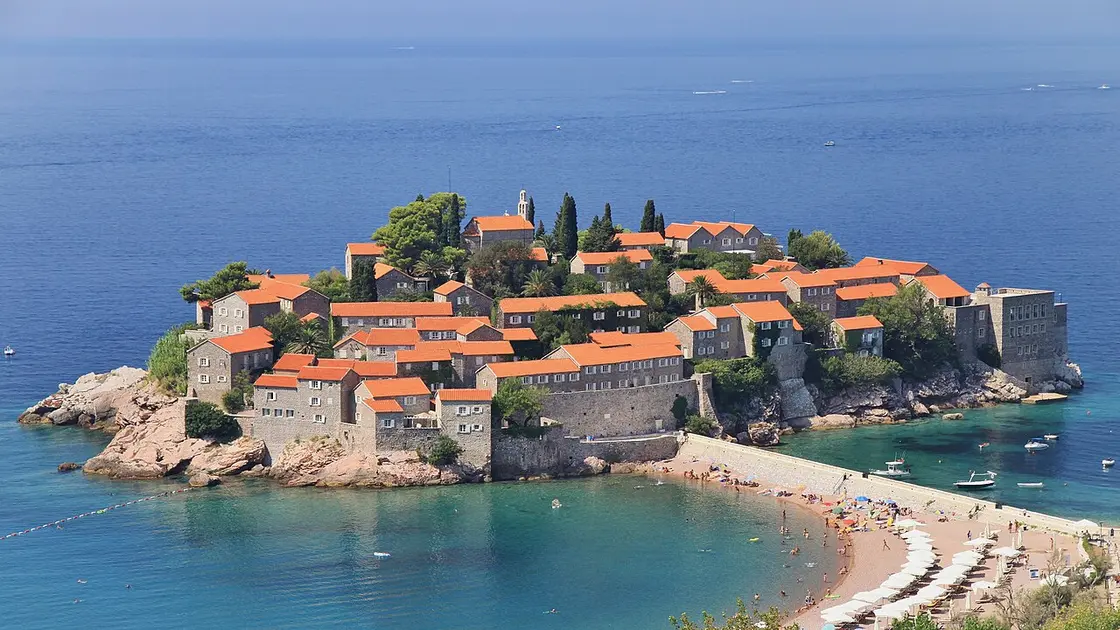
Not the island, no, unless you’re staying there. After a five-year closure over a public beach-access dispute, the Aman Sveti Stefan reopened its island cottages on 1 July 2026, and the mainland part, Villa Miločer, reopened earlier on 22 May. The reopening came with a settlement that hands the state a share of the profits and, crucially for visitors, returns two of the beaches to public use. In total the resort now runs around 41 rooms across the island cottages and Villa Miločer, and the agreement also bars any new building in Miločer Park, which protects the green belt around the villa. Unlike the island, which runs as a seasonal summer hotel, Villa Miločer on the mainland is set up to operate year-round. Room rates are on request and famously high, so for the vast majority of travellers this is a place to look at, not stay in.
The practical upshot is simple. Treat the islet as scenery, plan your visit around the viewpoints, the park and the public beaches, and you’ll not be disappointed. Turn up expecting to stroll its lanes and you’ll be turned back at the causeway.
The beaches: which ones you can use
This is the part that changed in 2026, and it’s good news. Of the three beaches around the island, two are now open to the public:
- Sveti Stefan Beach, the pink-pebble strip on the north side of the causeway (about 170 m), and
- King’s Beach (Kraljeva plaža), a longer stretch of roughly 280 m,
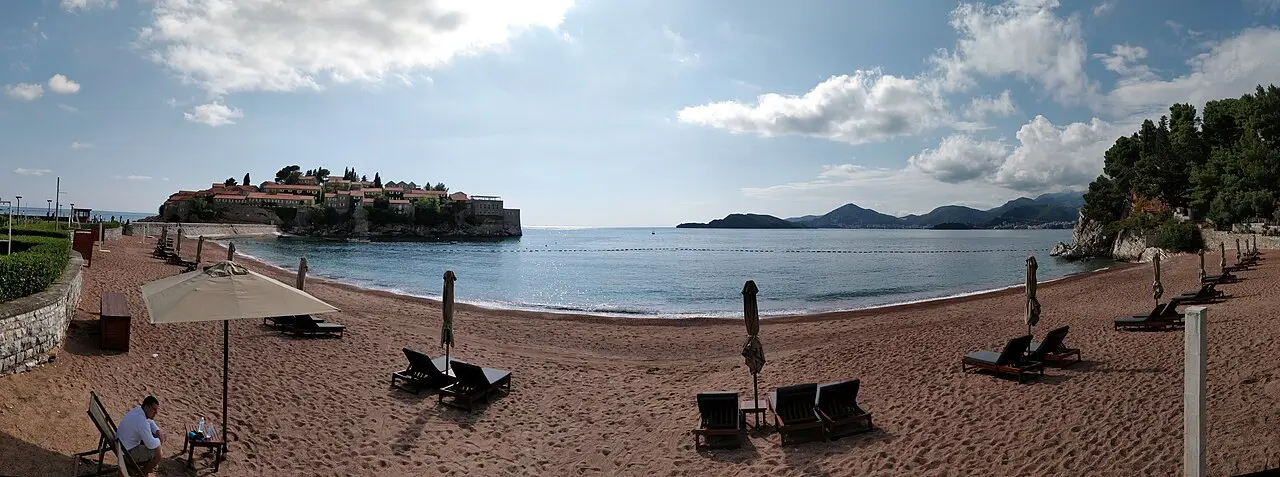
are both accessible to non-guests, though the managed sections run pricey premium sunbeds in summer. The third, Queen’s Beach (Kraljičina plaža), the emerald cove with pink sand tucked below the villa, stays reserved for Aman guests only. The sand here has a genuine rosy tint that photographs beautifully, and the water is clear and calm. The honest tip: lounger and umbrella rental on the managed strips is steep in July and August, so if you just want the view and a swim, bring your own towel and use the free areas. Note too that the two public beaches sit on opposite sides of the causeway, so you choose your side rather than strolling between them past the island.
Miločer Park and the royal walk
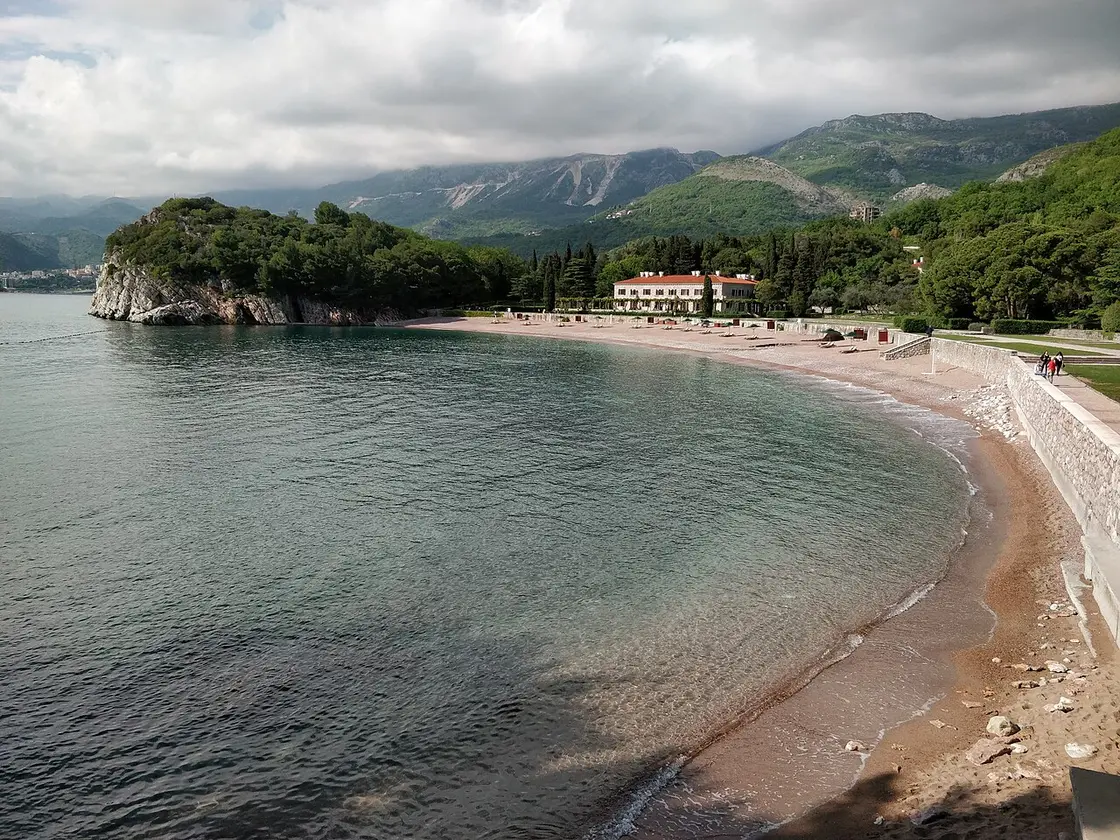
The other half of Sveti Stefan is on the mainland, and it’s fully open to everyone. Villa Miločer, the low, red-roofed house set back among the trees, was built between 1934 and 1936 as the summer residence of Queen Marija Karađorđević of the old Yugoslav royal family, and its grounds are the loveliest part of any visit. The Miločer Park estate spreads over roughly 32 hectares, planted with about 800 olive trees along with cedars, palms and other subtropical species brought in from around the world, and its shaded walking paths through the pines are public.
The nicest way to arrive is on foot. A coastal path, sometimes called the royal walk, runs from the Pržno and Budva side through Miločer Park to the Sveti Stefan causeway, threading between the pines and the water past the villa and King’s Beach. It’s a gentle, mostly level stroll of a couple of kilometres, and it delivers you to the island with a series of changing views far better than any car park.
The best views of Sveti Stefan
Since you can’t go onto the island, the view is the experience, and the classic one is from above. The coast road (the Adriatic Highway) runs along the hillside behind the island, and the laybys and terraces here give you the textbook postcard shot, the whole islet framed by its two beaches and the blue Adriatic. It is busiest and most photographed at sunset, when the low light warms the stone and the sea. For a lower, closer angle, the Miločer Park path and the public beaches put you almost at sea level beside the causeway. Between the high road and the park, you get every version of the picture without ever needing a room key.
How to get there, and when to go
Sveti Stefan is easy to reach and works best as a half-day from a Budva Riviera base.
- From Budva. It’s about 10 km south, 10 to 15 minutes by car or taxi. Coastal buses running the Budva to Petrovac road pass the turn-off, dropping you on the highway above the island, from where you walk down. There’s no train on this coast.
- By car. Parking sits up on the main road, not at sea level, so factor in the walk down and back up. Combining Sveti Stefan with nearby Pržno or Petrovac makes an easy coast day.
- When to go. July and August bring the warmest sea and the biggest crowds at the viewpoints; June and September are warm enough to swim and far calmer. Early morning and sunset are the best light. See our best time to visit Montenegro guide for the seasonal picture, and getting around Montenegro for the coastal connections.
For a bit more than the view, the hillside just above the resort holds Praskvica Monastery, an old Orthodox monastery tied to the Paštrovići clan. It’s a short detour off the coast road, quiet and shaded, with a long view back down over Sveti Stefan and the sea, and it pairs well with a walk through Miločer Park on the same half-day.
Where to stay
Staying on the island means the Aman, with rates on request and a limited number of rooms across the cottages and Villa Miločer, so book far ahead if that’s the plan. Everyone else bases nearby: Pržno, the small village just north, is the closest and quietest, while Budva has the widest range of hotels and the liveliest scene, and Petrovac to the south is a calmer, family-friendly alternative. The mainland side of Sveti Stefan itself has a small cluster of cafés and restaurants (the Sveti Stefan Agora area), so you can make a relaxed afternoon of it even without a room. For the wider coast, our guide to the best beaches in Montenegro covers where else to swim, and things to do in Montenegro has the rest of the country’s headline sights.
Nearby / read also
Photos
On the map
The map loads on click - to keep the page lightweight.
The map didn’t load. Check your connection and refresh the page.
Good to know
The island itself is a hotel, closed to non-guests; two of the three beaches are open to the public. Status as of July 2026 - confirm before you travel.
Details checked: July 12, 2026
Distance
- Tivat ≈26 km · ≈40 min
- Budva ≈10 km · ≈12 min
Read also

What to see · 10 min read
Hiking Bobotov Kuk: Durmitor Highest Peak
Verified · September 4, 2026Bobotov Kuk hike at 2,523 m: Sedlo (~10 km RT) vs Lokvice from Black Lake, €5 park fee, cables, season and early-start tips.

What to see · 10 min read
Swimming in the Bay of Kotor: Beaches & Lidos
Updated · August 31, 2026Can you swim in Kotor? Yes - on Dobrota pontoons, Morinj and small Boka shores. Water quality, season and what to expect.

What to see · 11 min read
Rent a Boat in Kotor Bay: No Licence Needed
Updated · September 5, 2026Private boat rental in Kotor Bay 2026: skippered hire from €90/h, bareboat prices, licence rules, speed limits and where boats leave from.

What to see · 9 min read
Piva Lake & Canyon: Montenegro's Emerald North
Updated · August 27, 2026Piva Lake guide: the 45 km emerald reservoir, Mratinje Dam, boat trips from Plužine, the relocated Piva Monastery and how to pair it with Durmitor.