
Tivat, Montenegro: Porto Montenegro & Around
Tivat travel guide: the Porto Montenegro marina, the naval museum, the Pine seafront, Gospa od Milosti island, Plavi Horizonti beach and how to get there.
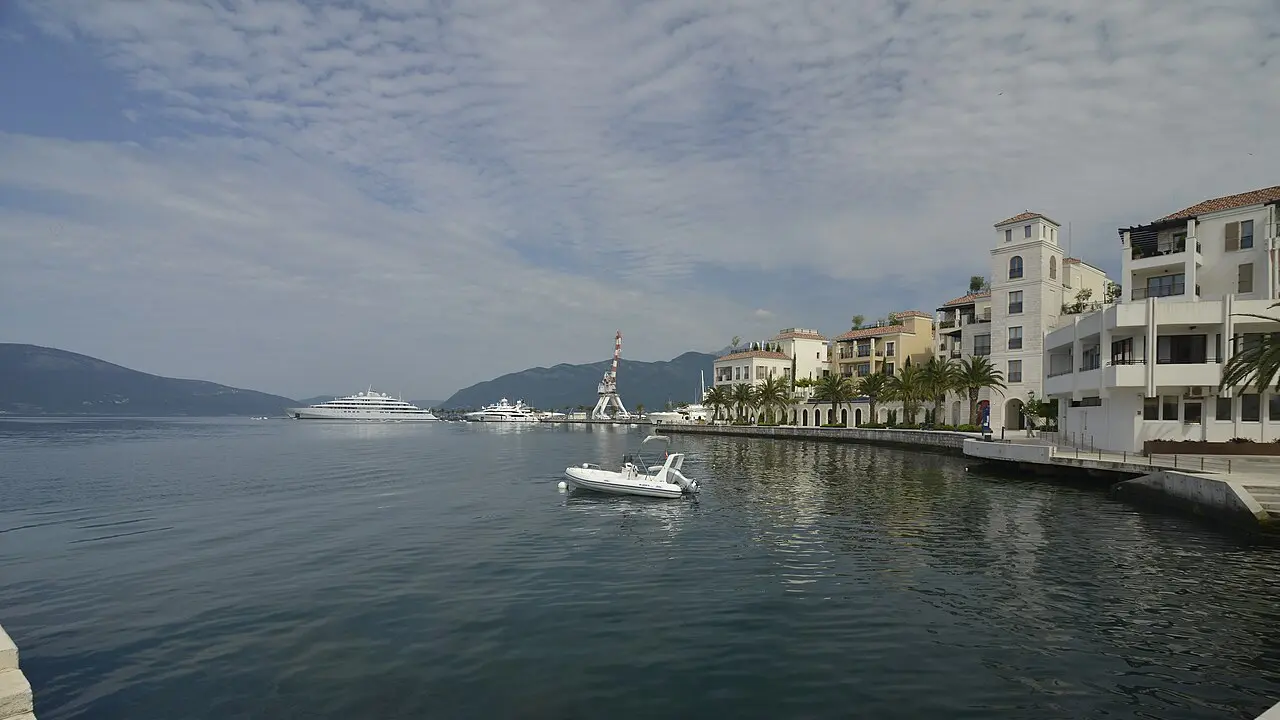
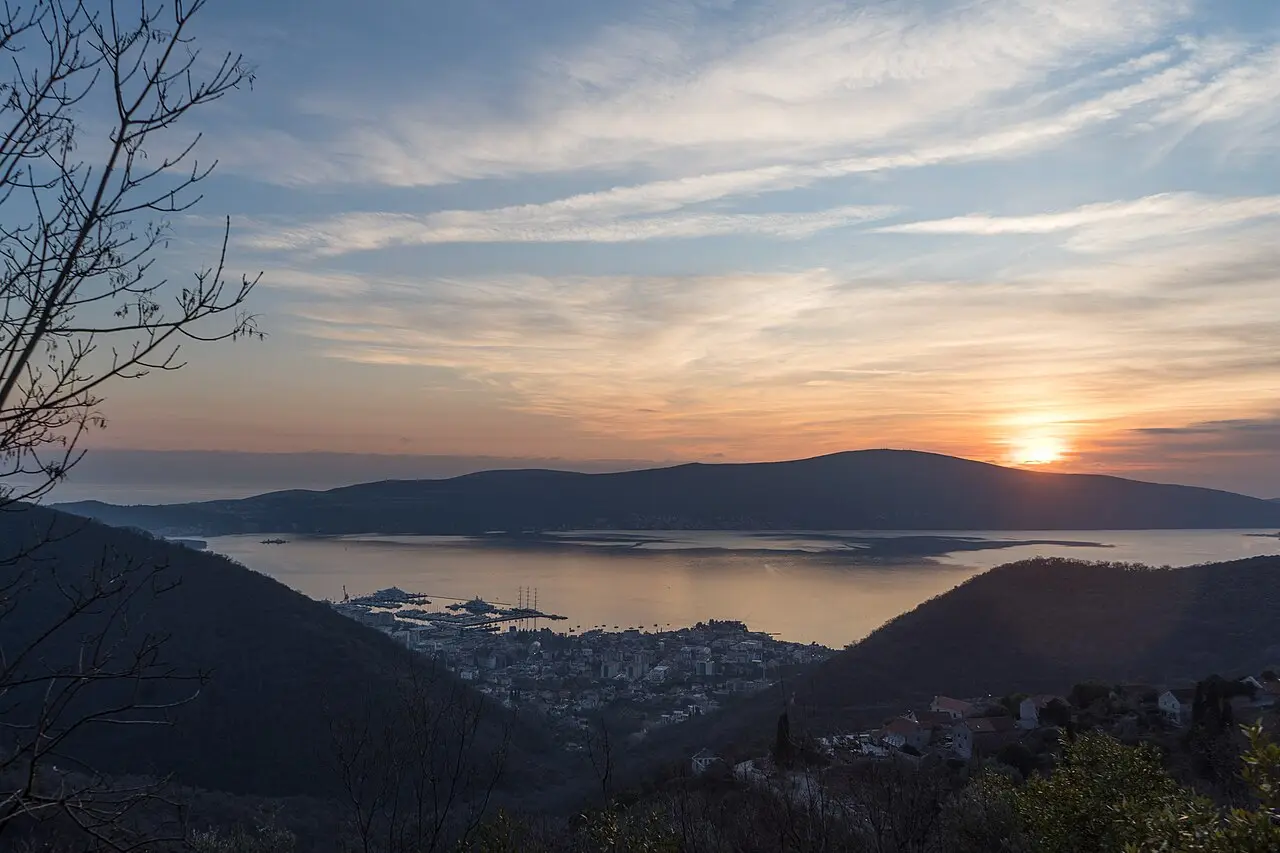
Tivat is the gateway to the Bay of Kotor: home to the region’s main summer airport (TIV) and to Porto Montenegro, the glossy superyacht marina that turned a former naval shipyard into the Adriatic’s most luxurious harbour. Once the plainest of the Boka towns, Tivat now pairs that polished waterfront - boutiques, the Naval Heritage Collection museum and a long palm-lined promenade - with easy beaches, the tiny island of Gospa od Milosti (the Island of Flowers) and the sandy bay of Plavi Horizonti on the Luštica peninsula. It makes an easy, central base for the whole bay.
Is Tivat worth visiting?
Yes - especially if you want a comfortable, well-connected base rather than a museum-piece old town. Tivat’s draw is convenience and contrast: you fly into the airport almost in town, you’re 20 minutes from Kotor and Budva by road, and you can spend a day strolling Porto Montenegro’s yacht-lined quays and another on a quiet beach across the water. The town itself doesn’t have Kotor’s medieval walls or Perast’s baroque palazzi, so people who come purely for old-stone atmosphere sometimes find it modern. What Tivat does well is everyday ease - a flat, walkable seafront, plenty of cafés and restaurants, and short hops to the rest of the bay.
The headline change is Porto Montenegro, built from 2009 on the old Arsenal naval base: berths for some of the world’s largest yachts, a marina village, hotels and a museum. Whether that polish appeals is a matter of taste, but it’s what most first-time visitors come to see.
What to see in Tivat
The sights cluster along the water - the marina, the seafront promenade and the museum - with the island and the beaches a short boat or drive away.
Porto Montenegro and the marina
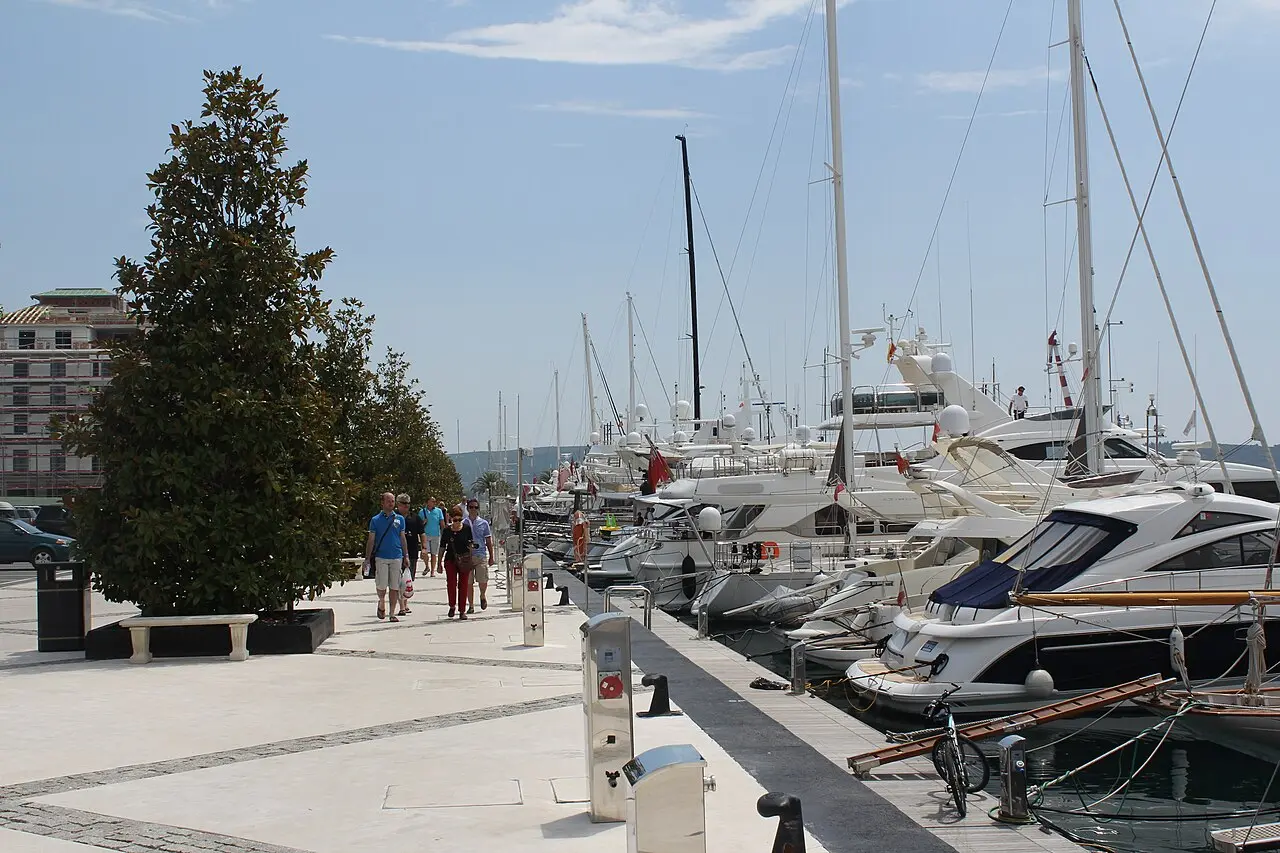
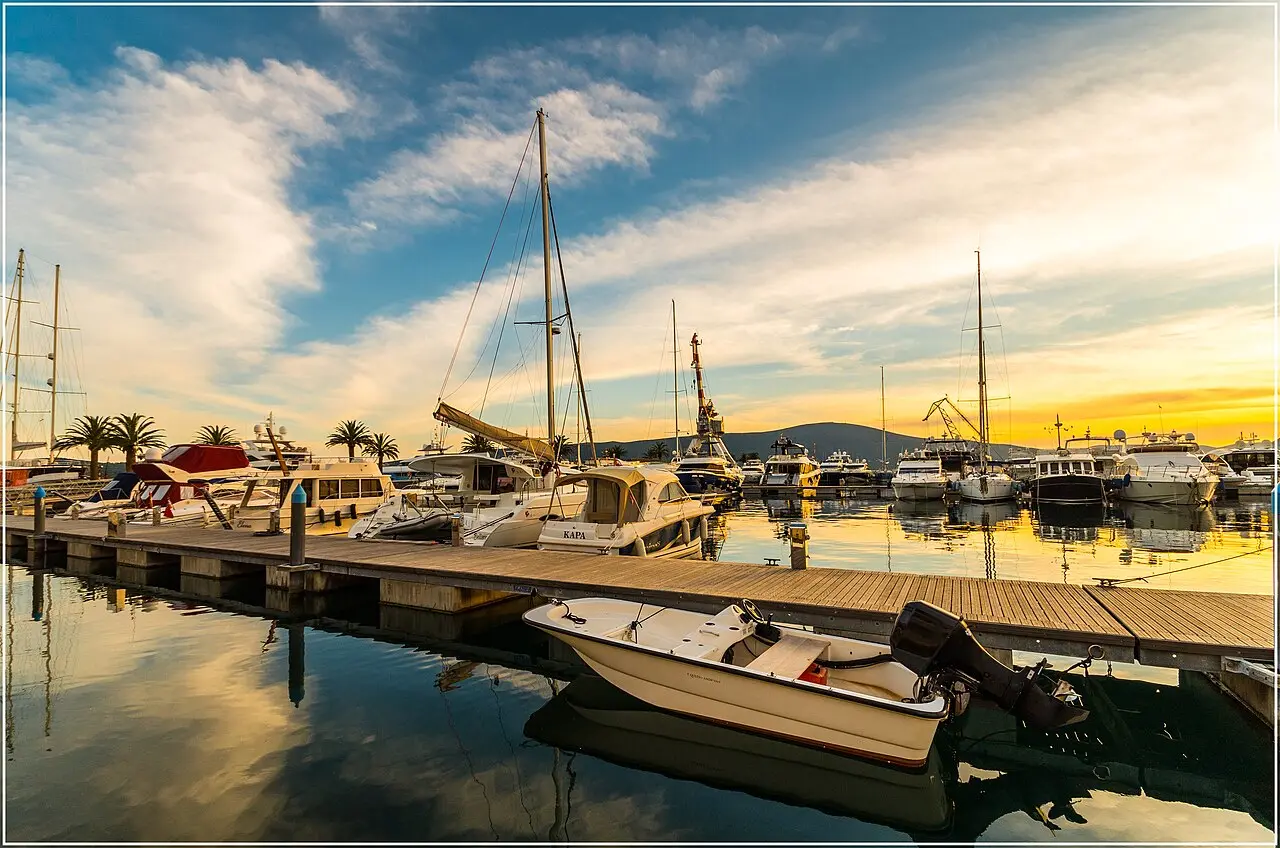
Porto Montenegro is the centrepiece. The marina holds several hundred berths, including some sized for the world’s biggest superyachts, ringed by a “village” of low stone-and-render apartment blocks, designer boutiques, cafés and restaurants, a couple of hotels and a yacht club. Even if you’re not stepping aboard anything, it’s free to wander: the quays and the central square are open public space, and walking the line of moored yachts - with the grey limestone mountains of the bay rising behind - is the classic Tivat thing to do. The old shipyard cranes have been kept as landmarks, one of them lit up at night above the esplanade.
The Naval Heritage Collection (maritime museum)
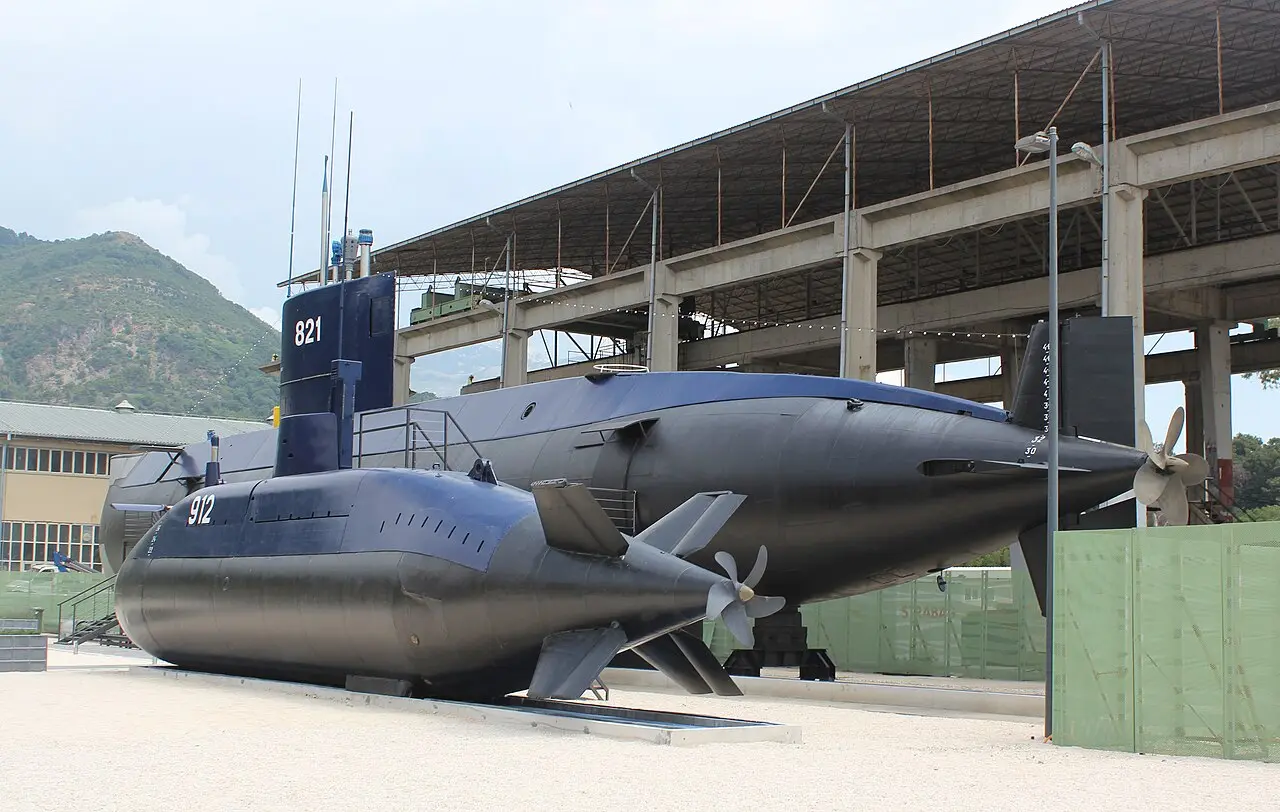
Tucked inside Porto Montenegro, the Naval Heritage Collection (Zbirka pomorskog nasljeđa) keeps the memory of the site’s military past. The headline exhibits are two preserved Yugoslav-era submarines - Heroj (P-821) and the smaller Mala class boat P-912 - displayed out of the water on the quay, which you can view up close, alongside torpedoes, engines, naval guns and archive material from the old Arsenal shipyard. It’s an unusual stop - and a reminder the marina was a closed military zone within living memory. Check opening hours and tickets locally.
The Pine seafront (Pine / Šetalište Pet Danica)
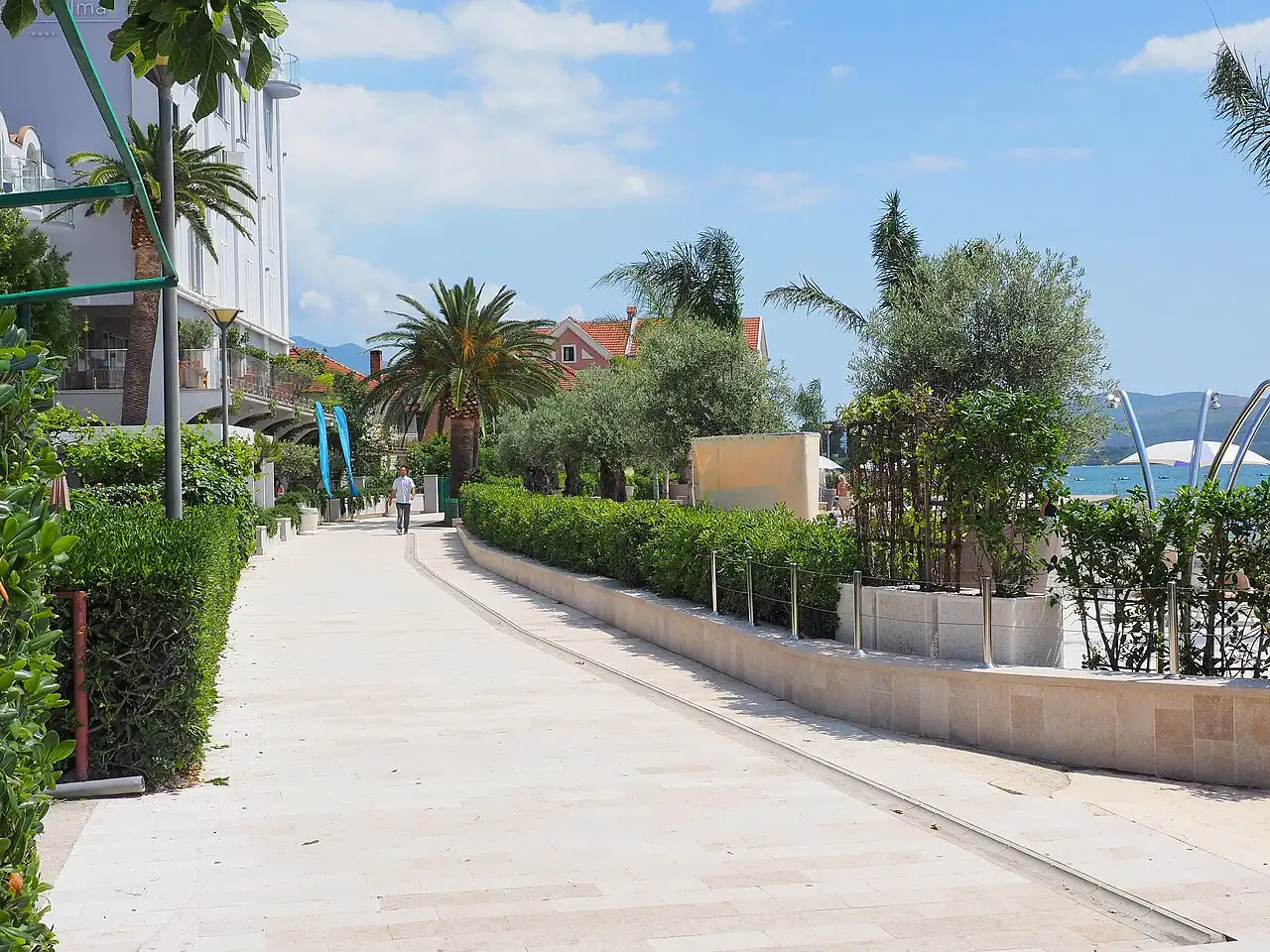
West of the marina, Tivat’s older seafront - the Pine promenade - runs along the bay past hotels, cafés and a small public beach. It’s a gentle, shaded walk lined with palms and pines, busier and more local-feeling than the marina, and the easiest way to get your bearings on the water. From here you look straight across the bay to the wooded Vrmac ridge and the islands.
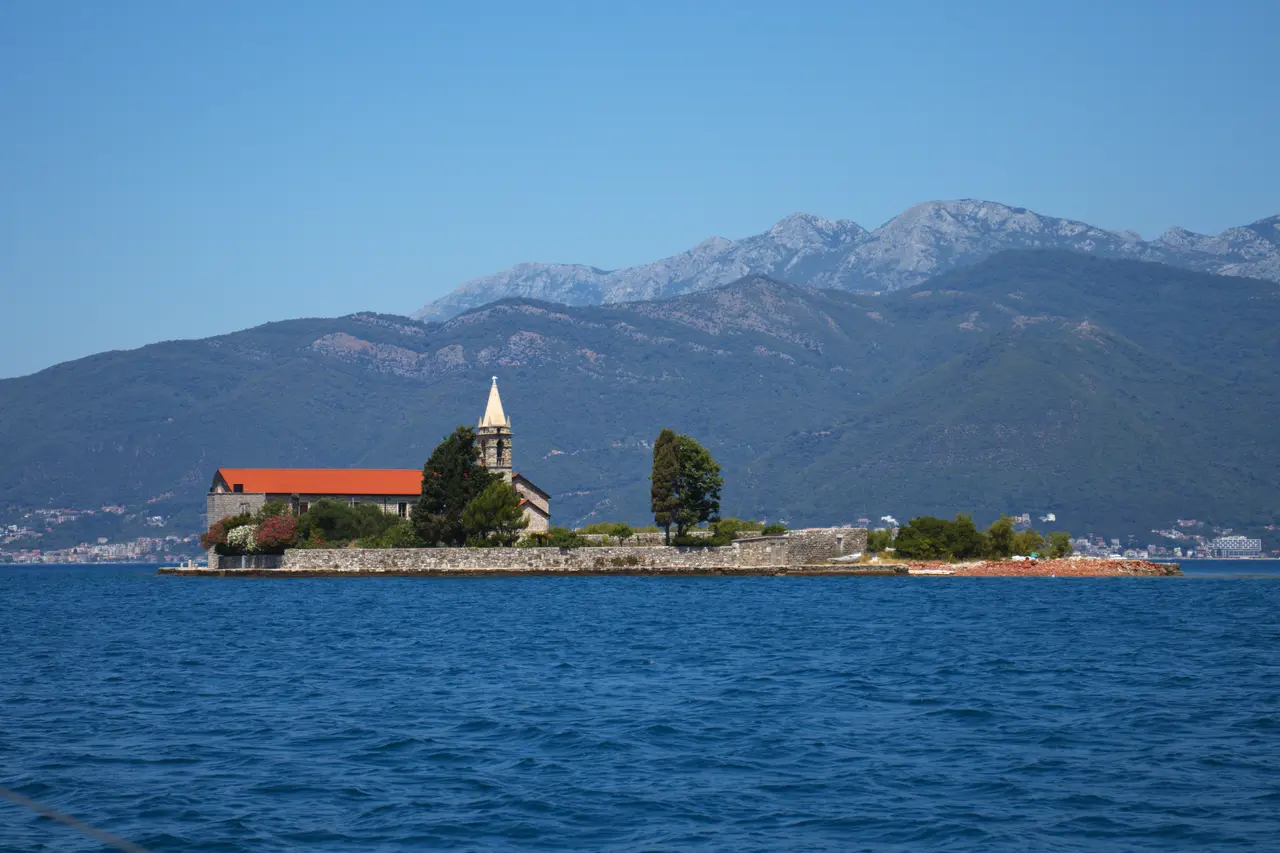
Gospa od Milosti - the Island of Flowers
Just offshore lies Gospa od Milosti (“Our Lady of Mercy”), a small islet usually called the Island of Flowers (Ostrvo cvijeća) because a slim causeway once linked it to the Prevlaka peninsula. On it stand an old church and a monastery among cypresses, set against the open water of the bay and the mountains behind - one of Tivat’s prettiest views. Access is restricted (it’s a religious site), so most visitors admire it from the shore or from a passing boat tour rather than landing.
Plavi Horizonti beach and the salt pans
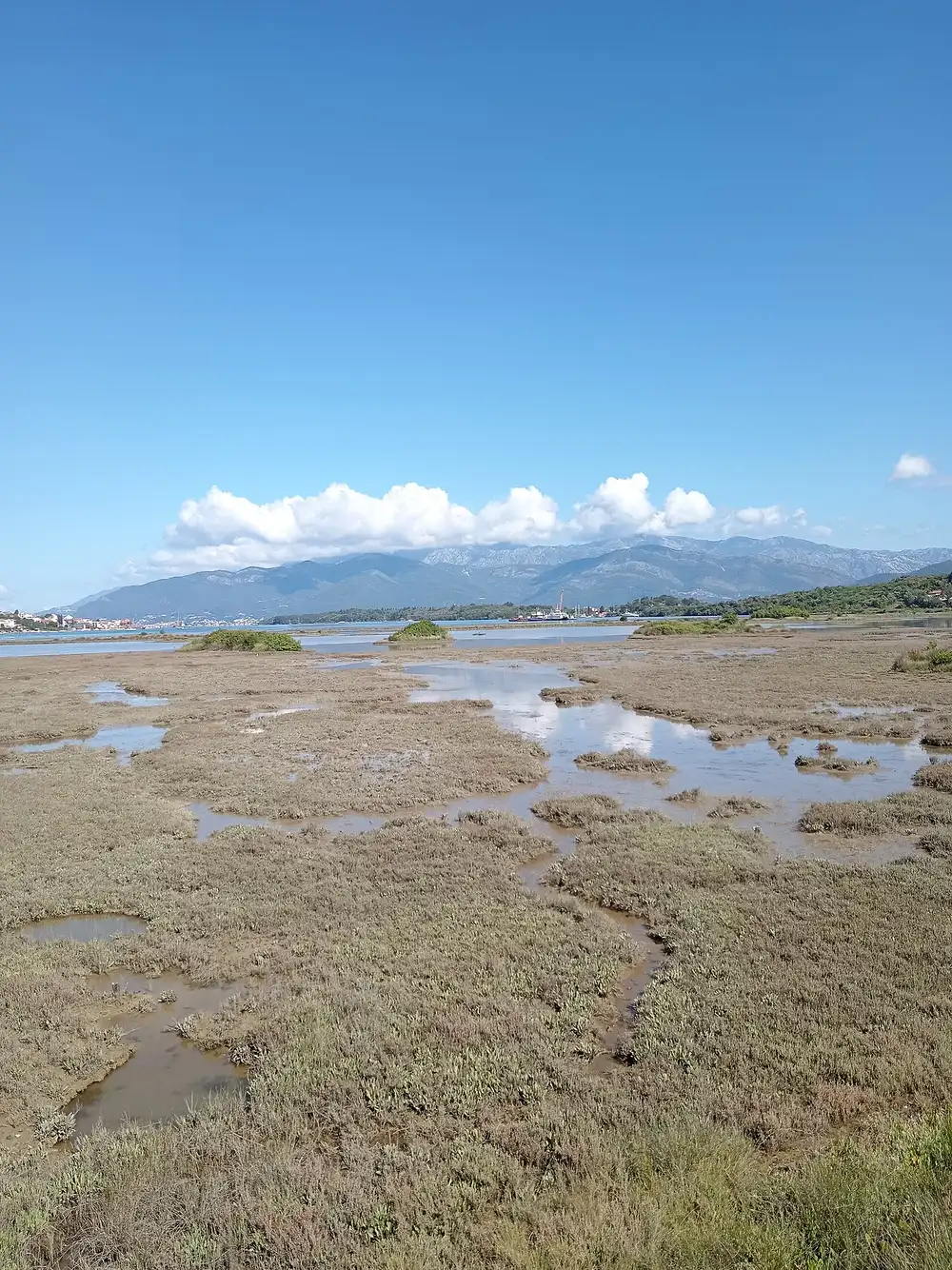
For sand, head out to the Luštica peninsula. Plavi Horizonti (“Blue Horizons”) near the village of Radoviči is one of the best-regarded sandy beaches on this stretch of coast - a shallow, sheltered bay backed by pine woods, popular with families and about a 15-20 minute drive from Tivat. It earns its place among the best beaches in Montenegro alongside the Budva Riviera and Ulcinj’s long sands. Closer to town, the Solila salt pans are a protected wetland nature reserve where flamingos and other birds stop on migration - a quiet, flat walk that’s a complete change of pace from the marina.
Sailing and yacht charter from Tivat
Tivat is the Bay of Kotor’s charter hub because Porto Montenegro sits in town and the airport is minutes away. The marina publishes 580 berths for boats from day-sailers up to 250-metre superyachts, with year-round berthing and arrival coordinated on VHF Channel 71 (Porto Montenegro berthing, checked 7 August 2026). Vessels over 1,000 GRT need pilotage through the marina’s Yacht Assist team at the bay entrance - confirm the live procedure before you approach.
For most visitors the question isn’t a berth for an 80-metre yacht. It’s what you can book for a day or a week:
- Shared bay boat tours - the cheapest way onto the water. Half-day and full-day trips from the marina cover Perast, Our Lady of the Rocks and often the Blue Cave. See our Bay of Kotor boat tour for what the loop includes.
- Skippered day charter - a private boat with a local skipper for your group. Useful if you want swim stops and quieter Luštica coves without holding a sailing licence.
- Bareboat weekly charter - only if you hold a recognised skipper certificate the charter company accepts for Montenegrin waters. Licence rules change; verify with the operator before you pay a deposit, and read the Bay of Kotor boating rules for what the law asks of the person at the helm. We don’t publish weekly rates here - they swing hard by season and boat class, so get a current quote.
Peak charter season runs roughly May to October, with July and August the busiest weeks. Shoulder months are quieter on the water and in the marina village. If you only want a few hours afloat, book a bay tour rather than a full charter - you still leave from the same quays.
There’s no separate yacht-charter guide on this site: search demand hasn’t justified a standalone page, so the practical picture lives here next to Porto Montenegro.
How to get to Tivat
Tivat is one of the easiest places to reach on the whole coast, because the airport is effectively in town.
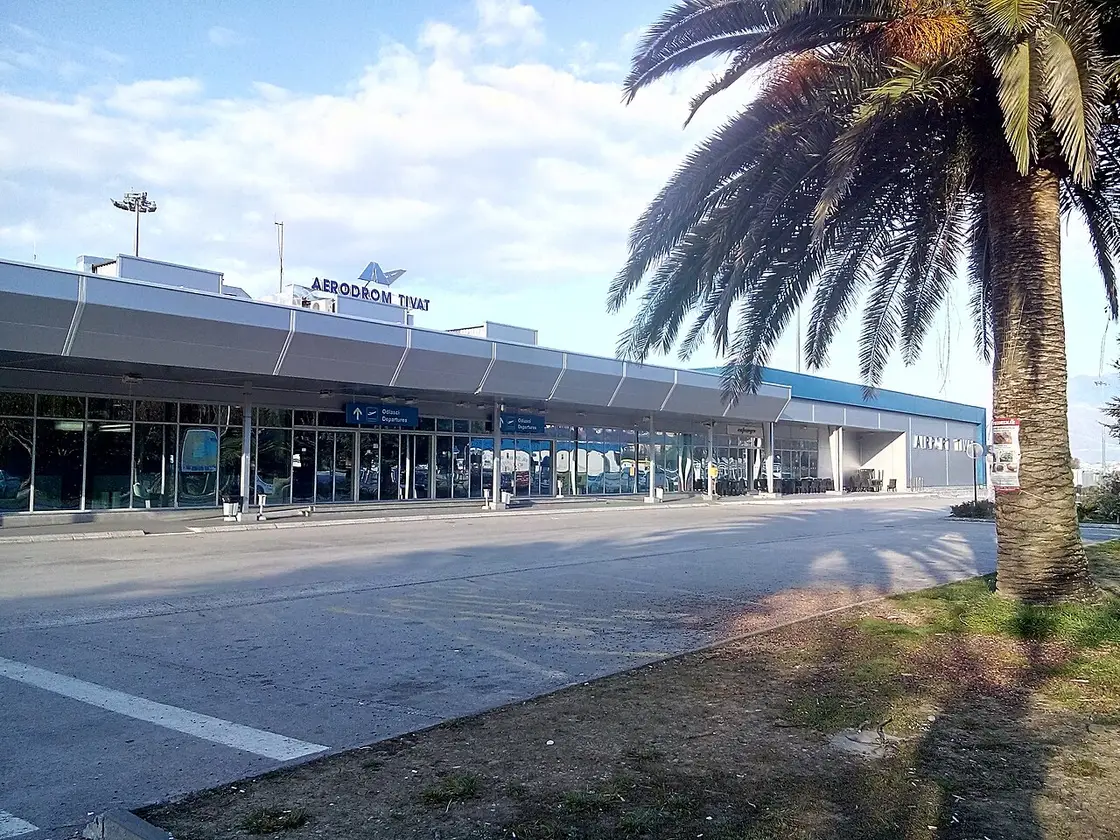
- By air. Tivat Airport (TIV) sits about 3 km from the centre and is the busiest summer gateway to the Bay of Kotor, with seasonal flights to many European cities; it’s a short taxi ride into town or to Porto Montenegro. Podgorica Airport (TGD) is the country’s main year-round airport, around 90 km away (roughly 1.5 hours by car). Dubrovnik (DBV) in Croatia is also used, but involves a border crossing.
- From Kotor. About 9 km / 20 minutes by car, taxi or bus. See the Kotor guide.
- From Budva. About 20 km / 25-30 minutes over the hill; see the Budva guide.
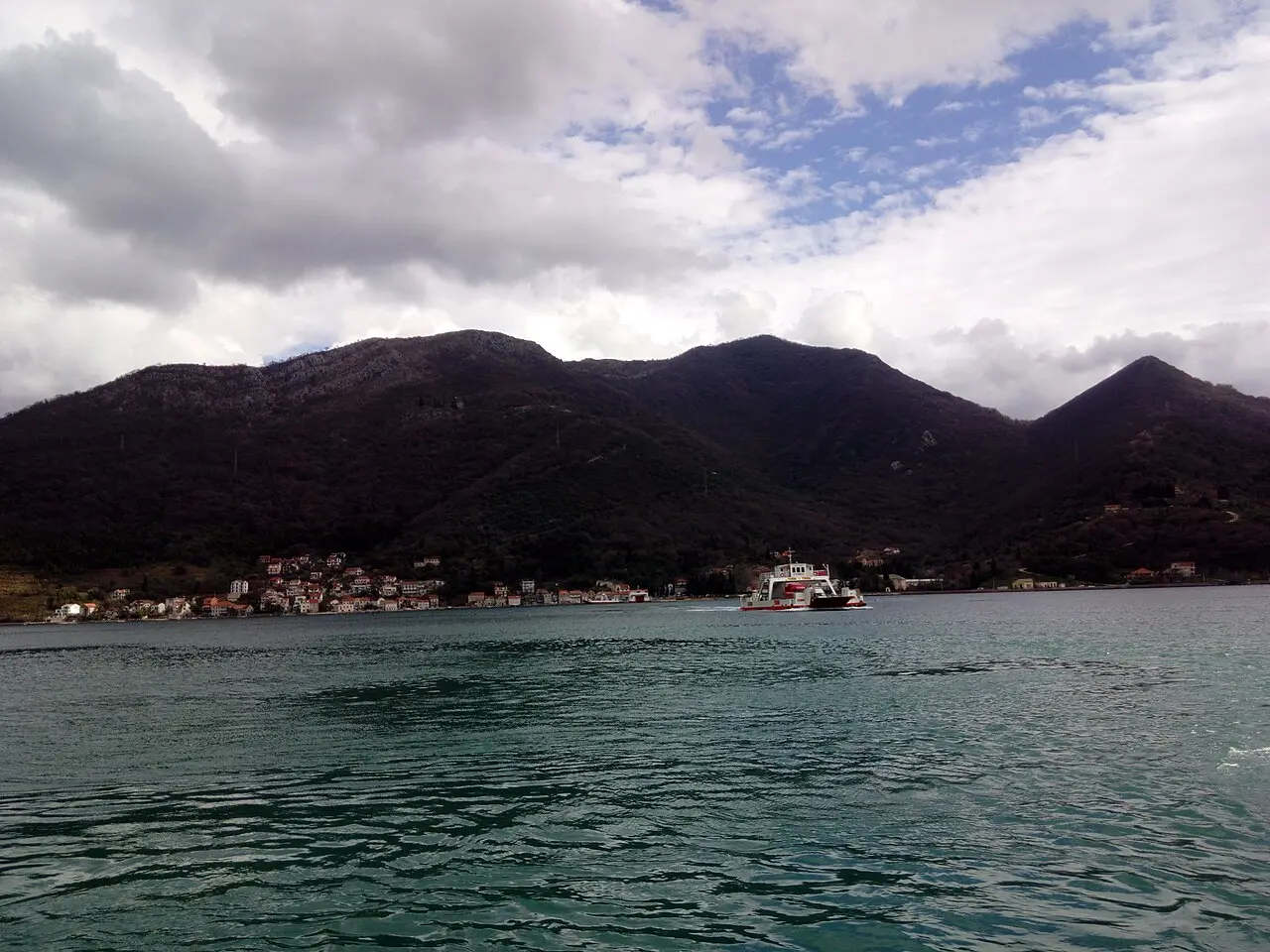
- By car and the Lepetane ferry. Driving gives the most freedom for the bay. The Kamenari-Lepetane car ferry crosses the narrow Verige strait just north of Tivat and runs frequently around the clock, cutting a long drive around the head of the bay to Herceg Novi and the Croatian border - €5 a car, about five minutes across. See our guide to renting a car in Montenegro.
Where to stay
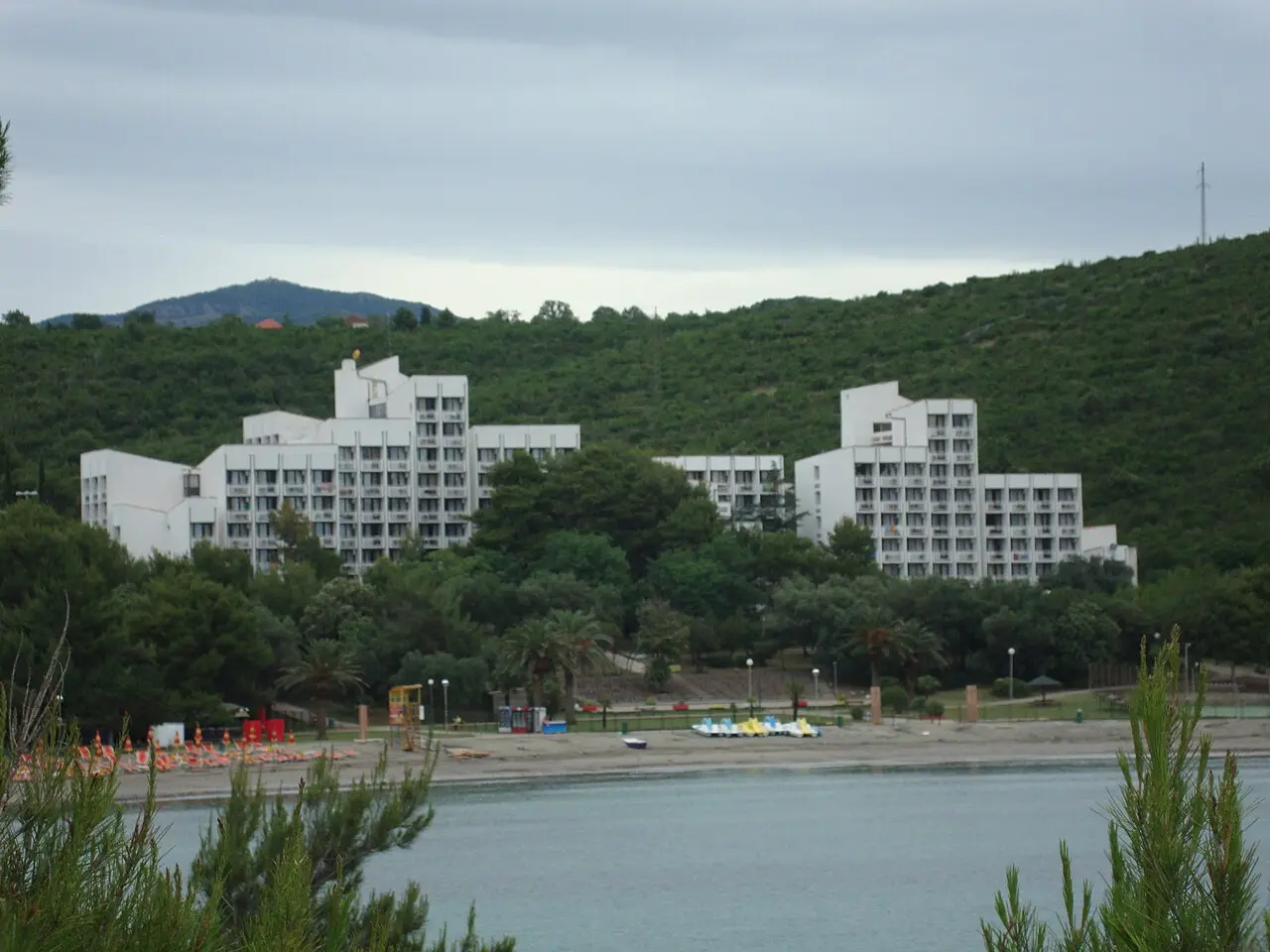
Tivat suits a range of budgets, from the luxury marina down to ordinary seaside apartments. The most prestigious - and priciest - beds are inside Porto Montenegro, in its hotels and serviced apartments right on the quays; this is the place to be if the yacht-set atmosphere is the point of the trip. For a more normal coastal stay, the streets around the Pine seafront and the town centre have hotels, guesthouses and rental apartments within walking distance of the water at far gentler prices. Quieter still are the villages around the bay and out on Luštica, handy if you have a car and want beaches over nightlife. As everywhere on the coast, rooms fill and prices climb in July and August, so book peak summer well ahead. For a neighbourhood-by-neighbourhood pick, see where to stay in Tivat.
Where to eat
Tivat’s dining splits neatly in two. Around Porto Montenegro you’ll find polished, international restaurants and cafés aimed at the marina crowd - good quality, but at the higher end of Montenegrin prices. Step back into the town and along the Pine seafront and you eat more cheaply and more locally: grilled fish and seafood, Njeguški prosciutto and cheese from the mountains above the bay, Adriatic pasta and risotto, and local Vranac red and Krstač white wines. We don’t quote fixed prices we can’t verify, so check current menus locally - but expect the marina to sit well above the town for the same meal. Named tables - APG, Murano, Kalimanj konobas and a Luštica Italian board with euros - are in where to eat in Tivat. For specific addresses around the bay, browse our food section.
Day trips from Tivat
Tivat’s central position is its biggest asset: almost everything in the bay is a short hop away.
| Day trip from Tivat | Approx. distance | How to go |
|---|---|---|
| Kotor | about 9 km | Bus, taxi, car or bay boat tour |
| Perast & Our Lady of the Rocks | about 25 km | Car or bus to Perast, then shuttle boat |
| Budva | about 20 km | Bus, taxi or car |
| Luštica & Plavi Horizonti | about 15 km | Car or taxi |
Kotor is the obvious first trip - barely 20 minutes around the bay. From there, Perast and Our Lady of the Rocks make a natural half-day, and a Bay of Kotor boat tour from the marina adds the Blue Cave and the islands. Over the hill, Budva offers a busier resort scene. On your doorstep, the Luštica peninsula guide covers quieter beaches and coves beyond Plavi Horizonti.
Practical tips for visiting Tivat
- Currency. Montenegro uses the euro (€) even though it’s not in the EU. Cards work around Porto Montenegro and in town; carry some cash for small cafés, buses and parking.
- Getting around. The seafront is flat and walkable. For Kotor, Budva and Luštica you’ll want a bus, taxi or hire car - see renting a car in Montenegro.
- When to go. July and August are hot and the marina’s peak; late spring and early autumn are quieter. See best time to visit Montenegro.
- How long to stay. A day covers the marina, museum and seafront; two or three days add beaches, the salt pans and day trips to Kotor and Perast.
For the wider trip, use the Montenegro travel guide and the cities guide.
Nearby / read also
Photos
On the map
The map loads on click - to keep the page lightweight.
The map didn’t load. Check your connection and refresh the page.
Read also

Cities · 9 min read
Bečići, Montenegro: Beach Resort Guide
Updated · August 28, 2026Bečići resort guide: 2 km beach, hotels from Splendid to Iberostar, the promenade walk to Budva, season tips and how to get there from Tivat.

Cities · 13 min read
Petrovac, Montenegro: Guide to the Quiet Beach Town
Updated · July 31, 2026Petrovac travel guide: 600 m of red sand, the Kastio fort, the chapel islet, buses from Budva in half an hour, and whether to base here or in Budva.

Cities · 12 min read
Herceg Novi, Montenegro: Old Town, Forts & Riviera
Updated · July 12, 2026Herceg Novi travel guide: the sunny stepped Old Town, the Forte Mare, Kanli Kula and Spanjola forts, the Igalo spa and how to get there from the border.

Cities · 12 min read
Žabljak: Where to Stay in Montenegro's Mountain North
Updated · September 3, 2026Žabljak travel guide: the base town for Durmitor - where to stay (centre, Black Lake road or a cabin), the Savin Kuk ski area, prices and how to get there.