
Ostrog Monastery Opening Hours & How to Visit (2026)
Ostrog Monastery opening hours: open daily ~6:00-17:00 in summer, ~5:00-16:00 off-season, entry free. Dress code, the cliff shrine and how to get there.
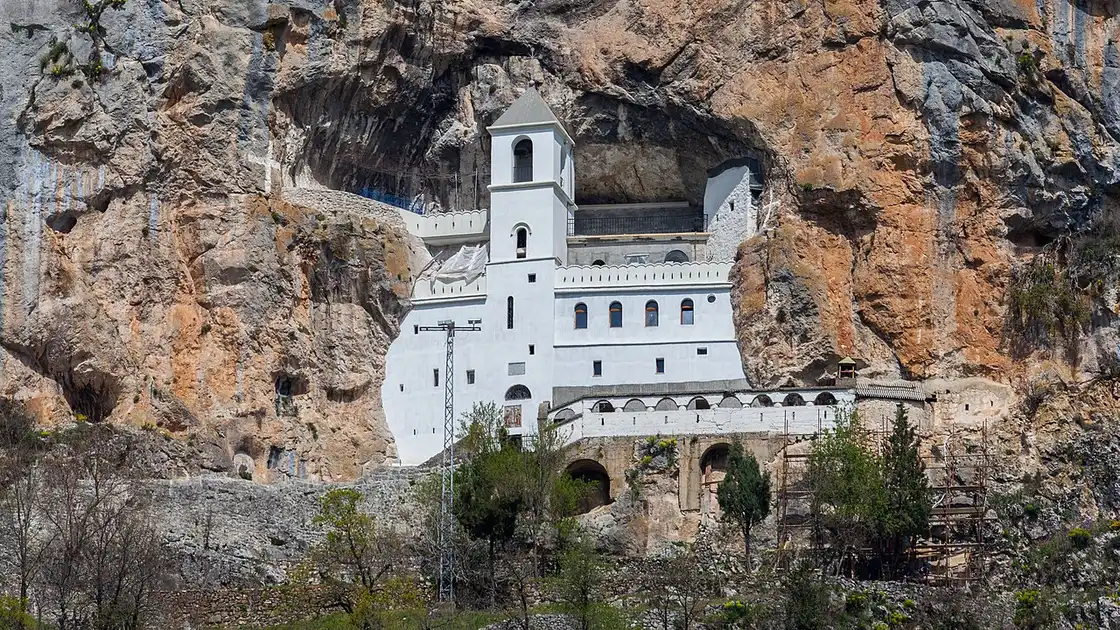
Ostrog Monastery is a whitewashed Orthodox shrine built directly into a vertical cliff high above the Bjelopavlići plain, and it’s Montenegro’s most important place of pilgrimage. The site is famous for the relics of Saint Basil of Ostrog (Sveti Vasilije), a 17th-century miracle-worker whose body is kept in a tiny cave-church carved into the rock. It’s split into two parts - the spectacular Upper Monastery in the cliff and the larger Lower Monastery below - and sits about 41 km from Podgorica, an easy day trip by car. Entry is free, the dress code is modest, and you should plan for a steep mountain road and, in summer, a queue for the relics.
Quick visit facts (checked July 2026): open daily, roughly 6:00-17:00 in summer (May-September) and about 5:00-16:00 in the cooler months; entry is free. Modest dress code - shoulders and knees covered. Hours shift with services and feast days, so confirm locally before you go.
What is Ostrog Monastery and why it matters
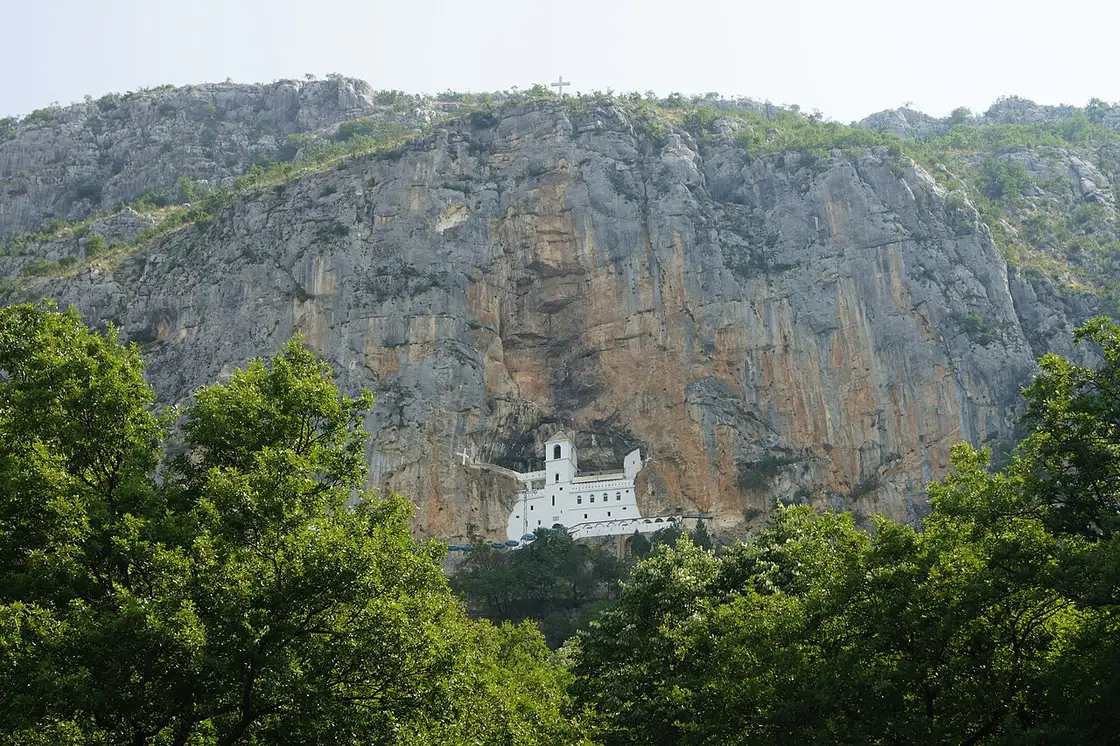
From a distance Ostrog barely looks man-made: a slab of white wedged into a grey rock wall, as if the mountain grew it. Up close it is two small cave-churches and a cluster of monastic buildings shoehorned into a near-vertical cliff of Ostroška Greda. That impossible setting is the whole point. The monastery was founded in the 17th century by Vasilije Jovanović, Metropolitan of Herzegovina, who withdrew into the rock with a few monks; after his death in 1671 he was canonised as Saint Basil of Ostrog, and his relics turned the cliff into the holiest site in the country.
What makes Ostrog unusual is how widely it’s venerated. It draws Orthodox pilgrims by the hundred thousand, but Catholics and Muslims come too, asking the saint for healing - it is one of the rare shrines in the Balkans honoured across faiths. Estimates put annual visitors in the range of a million or more, which is why a remote mountain monastery has a coach park, shuttle vans and, on busy days, a slow-moving line of people. Come for the faith or come for the view; most travellers leave moved by both.
The Upper Monastery and Saint Basil’s relics
The Upper Monastery (Gornji manastir) is the image you’ve seen on postcards - the white façade pressed into the cliff, reached by a short walk up from the upper car park. It holds two small cave-churches. The Church of the Holy Cross, higher up, is famous for frescoes painted by the master Radul that were worked directly onto the rock. The lower Church of the Presentation is where pilgrims come: it shelters the reliquary of Saint Basil, and a monk ushers visitors in a few at a time to pause briefly before the saint.
The relic chamber is genuinely tiny, so the experience is intimate rather than grand. Photography is usually not allowed inside the cave-churches, voices are kept low, and you move through quickly out of respect for the people behind you. If you are not religious, it is still worth stepping inside: the soot-darkened rock, the candlelight and the worn stone tell the story better than any description. Outside, the terrace gives a long view down the green valley - a good place to catch your breath before the walk back.
The Lower Monastery and the walk up
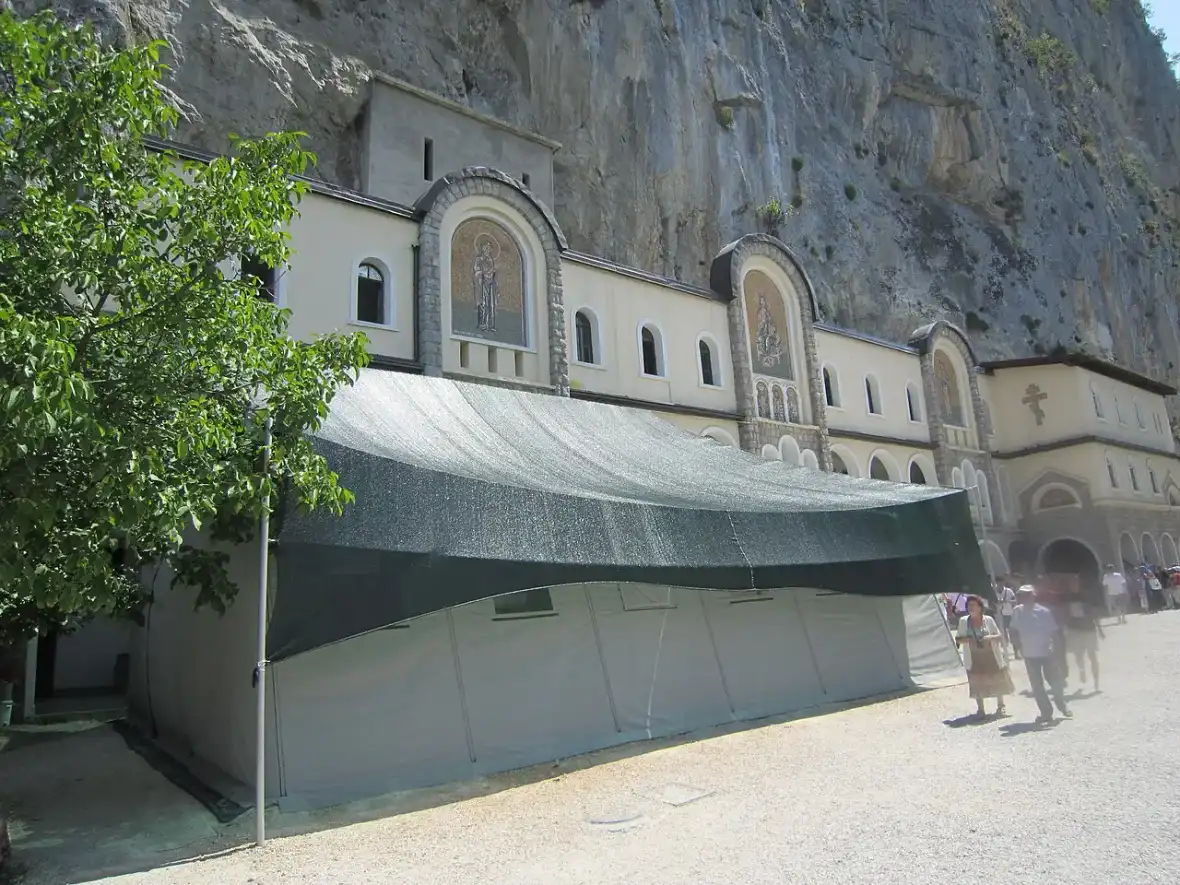
The Lower Monastery (Donji manastir) sits about 3 km below the upper one and is the practical heart of the complex: it has the larger Church of the Holy Trinity, built in 1824, plus monk residences, a spring of holy water and dormitory rooms where pilgrims can stay the night. Many visitors stop here first, light a candle and fill a bottle at the spring before continuing up.
Between the two monasteries runs a tradition that defines Ostrog: devout pilgrims walk the 3 km from the lower to the upper monastery on foot, and some barefoot, as an act of penance and devotion. You don’t have to - most day-trippers drive the road up to the upper car park - but you will likely see people making the climb the hard way, especially around the feast of Saint Basil on 12 May (29 April on the old calendar), when thousands converge on the cliff and the site is at its busiest.
How to get to Ostrog
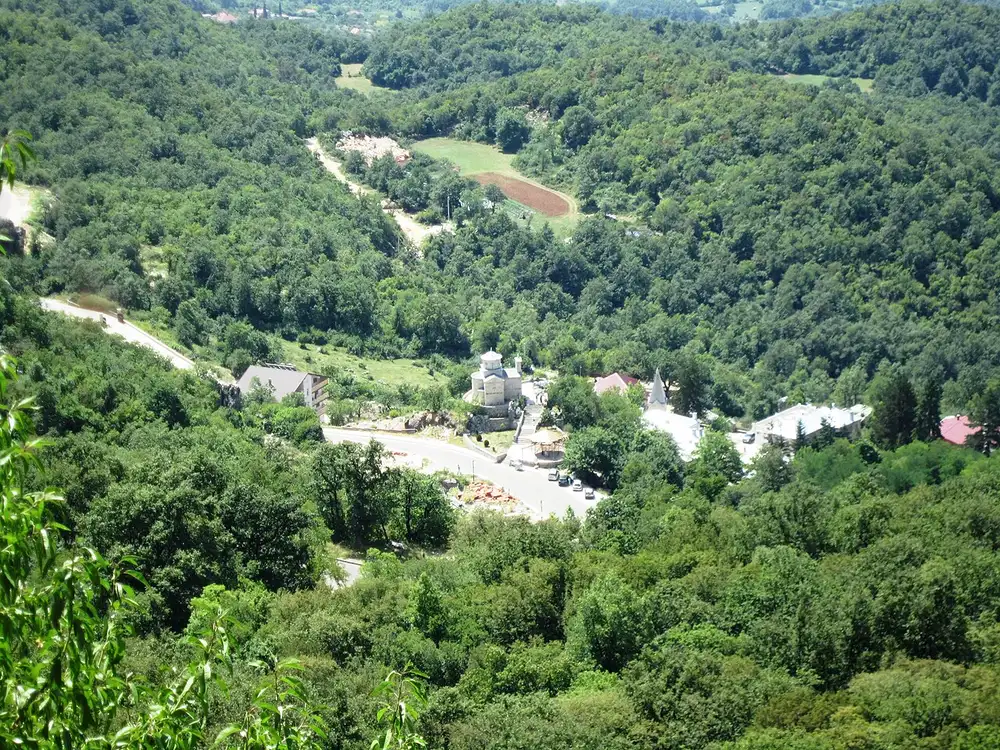
Ostrog is in central Montenegro, near Danilovgrad, and is easiest reached by car. From Podgorica it is roughly 41 km and about an hour; it is also close to Nikšić (~24 km) and Danilovgrad (~20 km). From the coast it’s a longer day trip - figure on 2-2.5 hours from Budva or Kotor each way - but it’s one of the most popular excursions in the country, so organised tours run from all the main coastal towns if you would rather not drive.
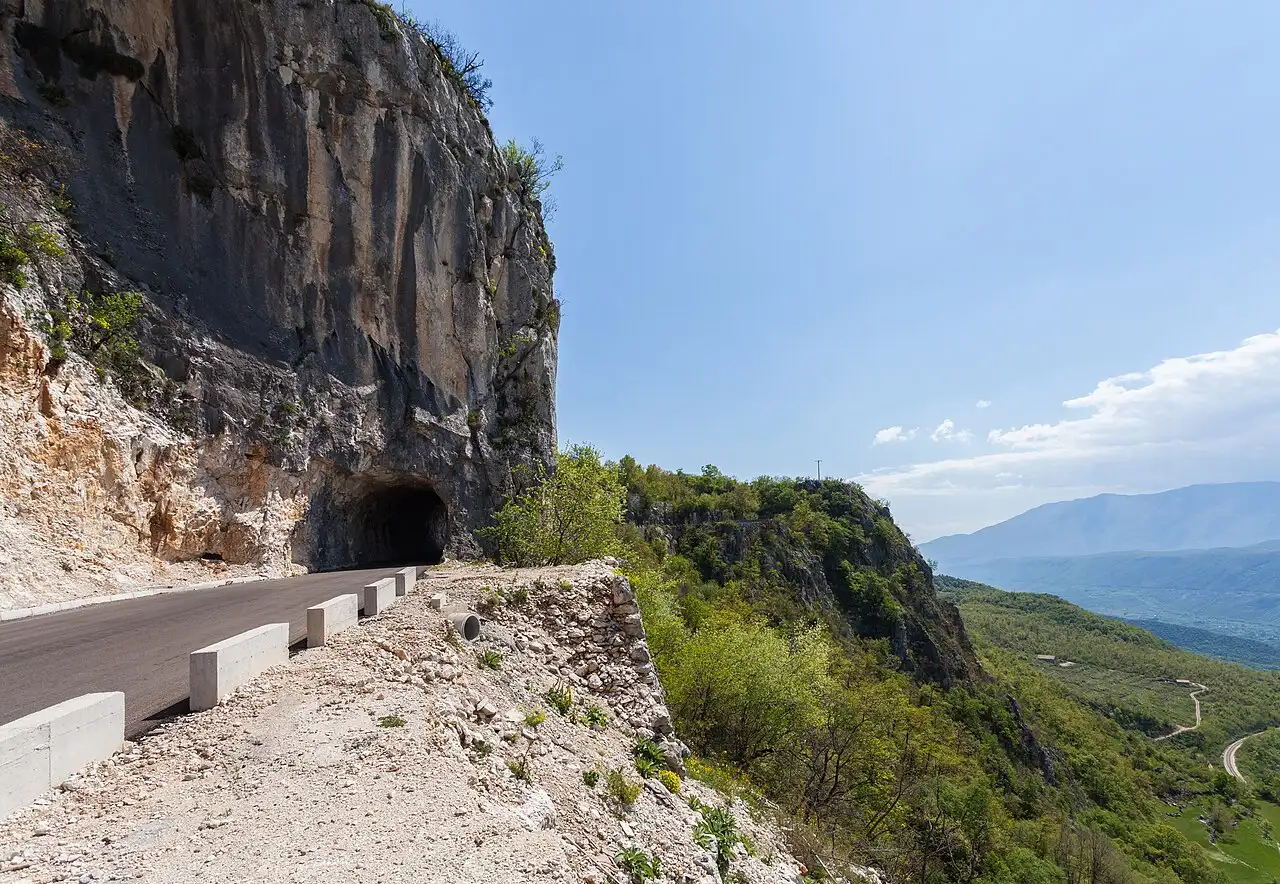
The catch is the final approach. After the turn-off, a narrow switchback road climbs the cliff face in tight hairpins, sometimes single-lane where two vehicles (or a tour coach) must squeeze past. It’s perfectly drivable but slow and not for nervous drivers; take it gently and use the horn on blind bends. There are two car parks: a lower one near the Lower Monastery, and an upper one a short, steep 10-minute walk from the Upper Monastery. In peak season the upper lot fills fast.
| From | Distance | Driving time |
|---|---|---|
| Podgorica | ~41 km | ~1 h 5 min |
| Nikšić | ~24 km | ~40 min |
| Budva / Kotor | ~110 km | ~2-2.5 h |
If you’re putting together a wider trip, see our Podgorica travel guide - the capital is the natural base for Ostrog - and our notes on renting a car in Montenegro, since a car gives you the most flexibility for the mountain roads. The table above is the usual booklet figure. A pin-to-pin drive from central Podgorica, with times, is on the Ostrog road trip - use that if you’re looping via Niksic rather than driving out and back.
Dress code, hours and rules
Ostrog is an active monastery, so a modest dress code applies: shoulders and knees should be covered for both men and women - long trousers or a skirt below the knee, and no bare shoulders or beachwear. Women may cover their heads but it is not required. If you arrive unprepared, wraps are usually available near the entrance to the Upper Monastery. Wear proper shoes rather than flip-flops; the stone paths are steep and polished smooth by millions of feet.
According to widely published visitor guides, the monastery is generally open daily from around 6:00 to 17:00 in summer (May-September) and roughly 5:00 to 16:00 in the cooler months, and entry is free. Treat those hours as a guide and check locally before you go, as monastic schedules and access to the cave-churches can change with services and feast days. Inside, keep your voice down, give pilgrims priority at the relics, and don’t photograph inside the cave-churches.
A few practical notes. Summer on the Bjelopavlići plain is hot, and the relics queue is longest on weekends and around the 12 May feast - arrive early to beat both the heat and the crowds, ideally in the shoulder months of May, June or September. Shuttle vans usually run between the lower and upper car parks for a small fee if you can’t manage the climb, and there’s a spring of holy water at the Lower Monastery where many pilgrims fill bottles to take home.
Ostrog pairs naturally with other inland sights. It sits on the way to the north, so many travellers fold it into a route toward Durmitor National Park, or combine it with a day around the capital. For where it fits in a broader plan, our Montenegro travel guide maps the country region by region, and the attractions hub lists more of the country’s headline sights.
Nearby / read also
- Day trips from Podgorica - Ostrog as one inland day from the capital, not the Niksic loop.
- Durmitor National Park
- Podgorica travel guide
- Montenegro travel guide
- Renting a car in Montenegro
On the map
The map loads on click - to keep the page lightweight.
The map didn’t load. Check your connection and refresh the page.
Distance
- Podgorica ≈50 km · ~1 h
- Budva ≈110 km · ~2-2.5 h
Read also

What to see · 10 min read
Hiking Bobotov Kuk: Durmitor Highest Peak
Verified · September 4, 2026Bobotov Kuk hike at 2,523 m: Sedlo (~10 km RT) vs Lokvice from Black Lake, €5 park fee, cables, season and early-start tips.

What to see · 10 min read
Swimming in the Bay of Kotor: Beaches & Lidos
Updated · August 31, 2026Can you swim in Kotor? Yes - on Dobrota pontoons, Morinj and small Boka shores. Water quality, season and what to expect.

What to see · 11 min read
Rent a Boat in Kotor Bay: No Licence Needed
Updated · September 5, 2026Private boat rental in Kotor Bay 2026: skippered hire from €90/h, bareboat prices, licence rules, speed limits and where boats leave from.

What to see · 9 min read
Piva Lake & Canyon: Montenegro's Emerald North
Updated · August 27, 2026Piva Lake guide: the 45 km emerald reservoir, Mratinje Dam, boat trips from Plužine, the relocated Piva Monastery and how to pair it with Durmitor.