
Where to Stay in Podgorica: Best Areas & Hotels
Where to stay in Podgorica: Nova Varoš for hotels, Stara Varoš for quiet, near the station for an early bus - and how many nights you actually need.
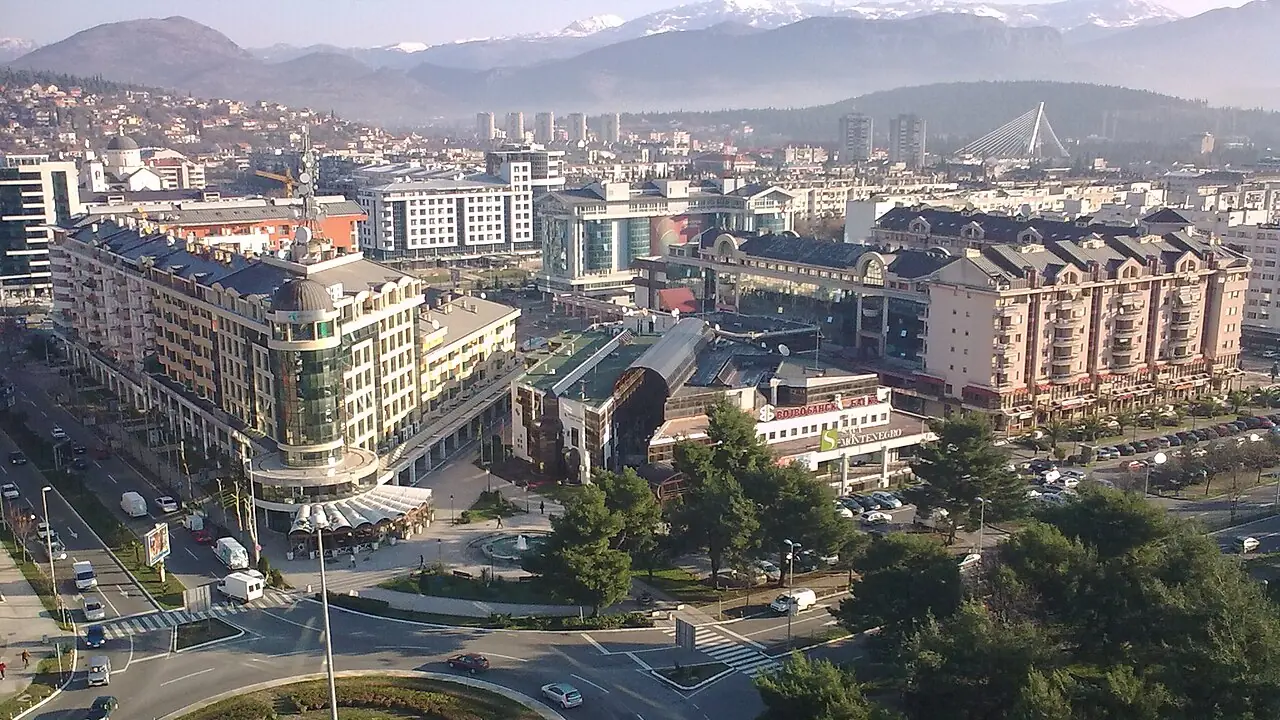
Most visitors need one night in Podgorica, not five, and that’s the fact that should actually decide where you sleep. If you want cafés, nightlife and the widest hotel choice on foot, base in Nova Varoš, the modern centre. If you’d rather wake up somewhere with a bit more character, Stara Varoš, the old Ottoman quarter by the river, is smaller but quieter. And if you’re catching an early bus or train, staying near the station saves you the taxi. None of these areas is more than a fifteen- to twenty-minute walk from any other, so the choice really comes down to what kind of evening you want, not how far you’ll have to travel.
What to see, the airport boom and day trips to Cetinje and Lake Skadar all live in the full Podgorica travel guide - here we’re only deciding where to sleep. And if the real question is whether to base in the capital at all rather than on the coast, where to stay in Montenegro answers that wider one first.
Nova Varoš: the convenient default
Nova Varoš, west of the Morača, is where most visitors end up without really deciding to. It’s the modern half of the city - office blocks, glass towers, the pedestrian shopping streets around Slobode and Njegoševa - and it holds most of Podgorica’s hotels, from business chains to simple guesthouses. The Hilton Podgorica Crna Gora, on the central boulevard Svetog Petra Cetinjskog, is the clearest landmark: it’s the rebuilt version of the old Hotel Crna Gora and still the closest thing the city has to a five-star flagship, with around 180 rooms and suites in total and its own spa. You don’t need to stay there to get the benefit of the area - anywhere in Nova Varoš puts you within walking distance of dinner, a late coffee and the Millennium Bridge lit up over the river.
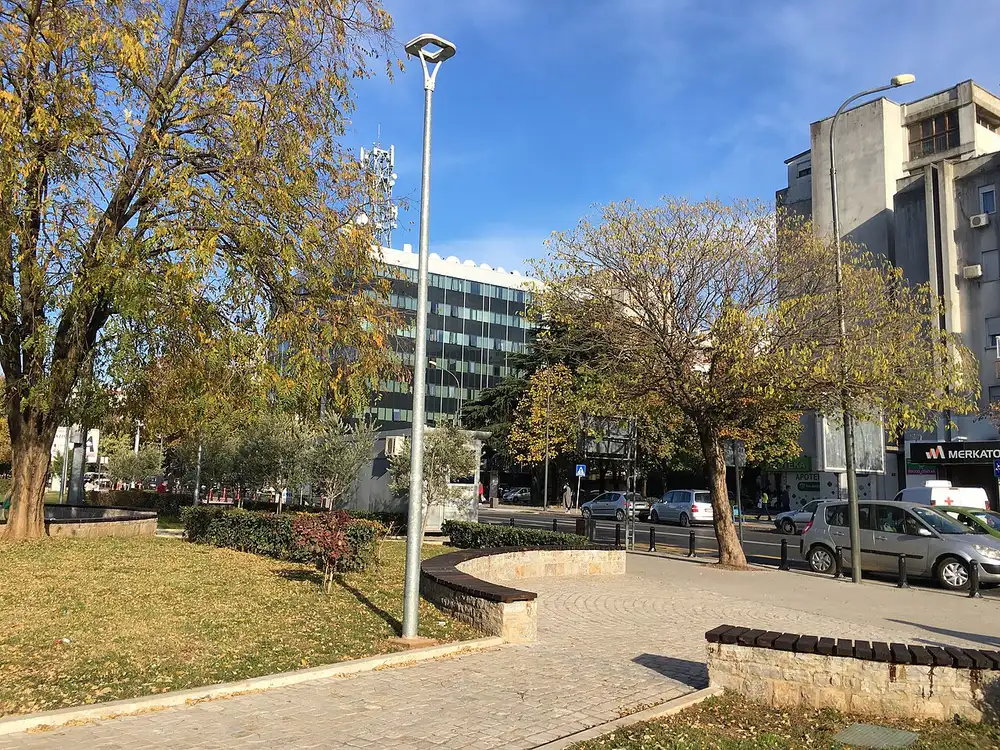
The trade-off is that Nova Varoš looks like a working European city rather than a postcard - if you came from Kotor expecting stone lanes, it can feel plain at first. Give it an evening and that stops mattering: the terraces fill up, the river paths are pleasant to walk, and it’s simply the easiest base if getting to dinner without a taxi matters more than the view from your window. Locals treat a slow evening coffee, or a glass of Vranac poured on a pedestrian-street terrace, as the real Podgorica experience rather than an afterthought - and Nova Varoš is where that actually happens, block after block of it once the sun goes down.
Stara Varoš: quieter, and older by a few centuries
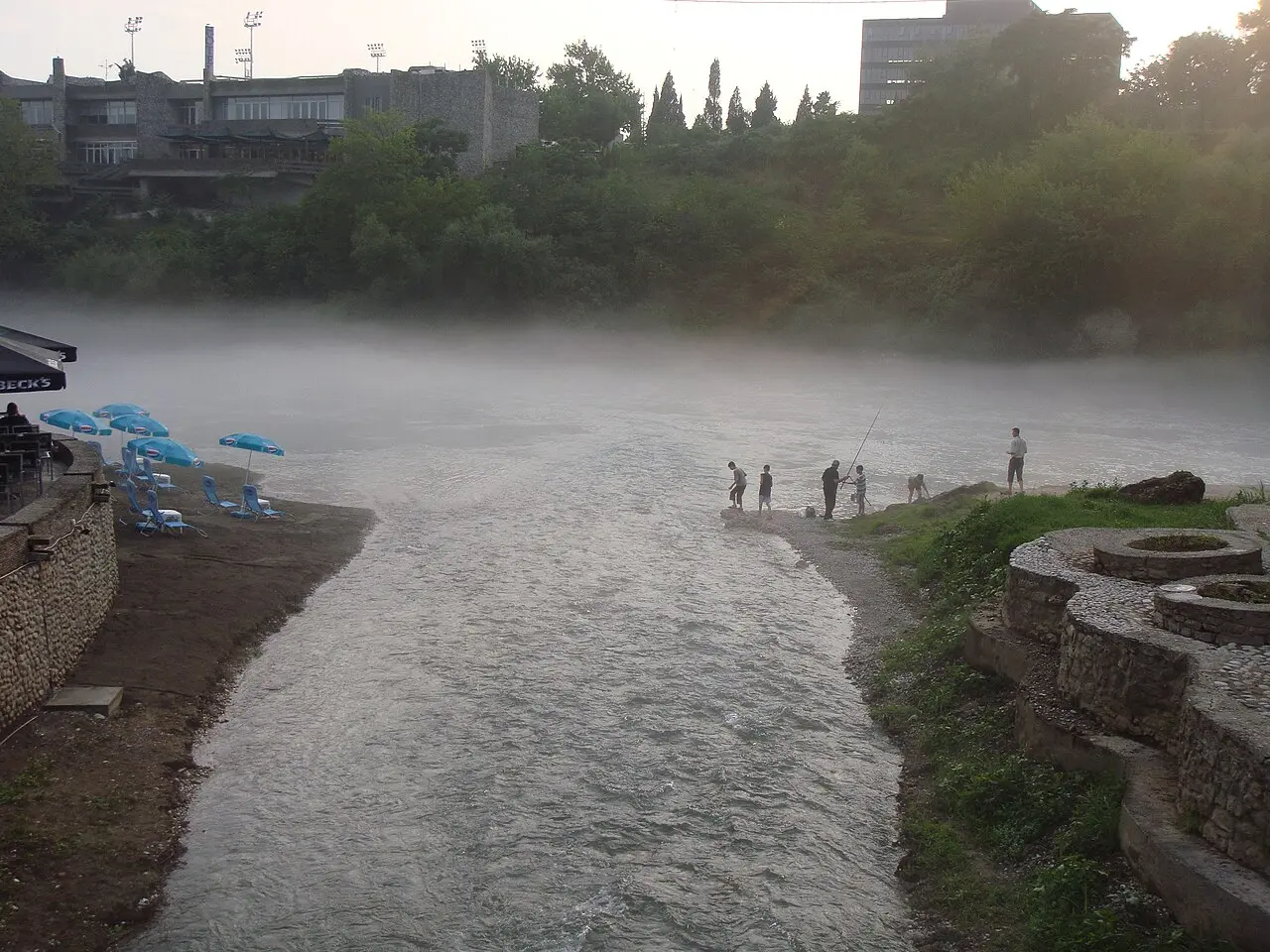
Cross toward the Ribnica-Morača confluence and the city changes character. Stara Varoš, the old Ottoman quarter, is a knot of narrower streets around the Clock Tower (Sahat Kula) and the Osmanagić Mosque - lower buildings, fewer bars, and a noticeably calmer feel once the sun goes down. It sits right where the two rivers meet, a spot called Sastavci, where an old stone arch bridge and the ruins of the Ribnica fortress make for one of the more atmospheric short walks in the city.
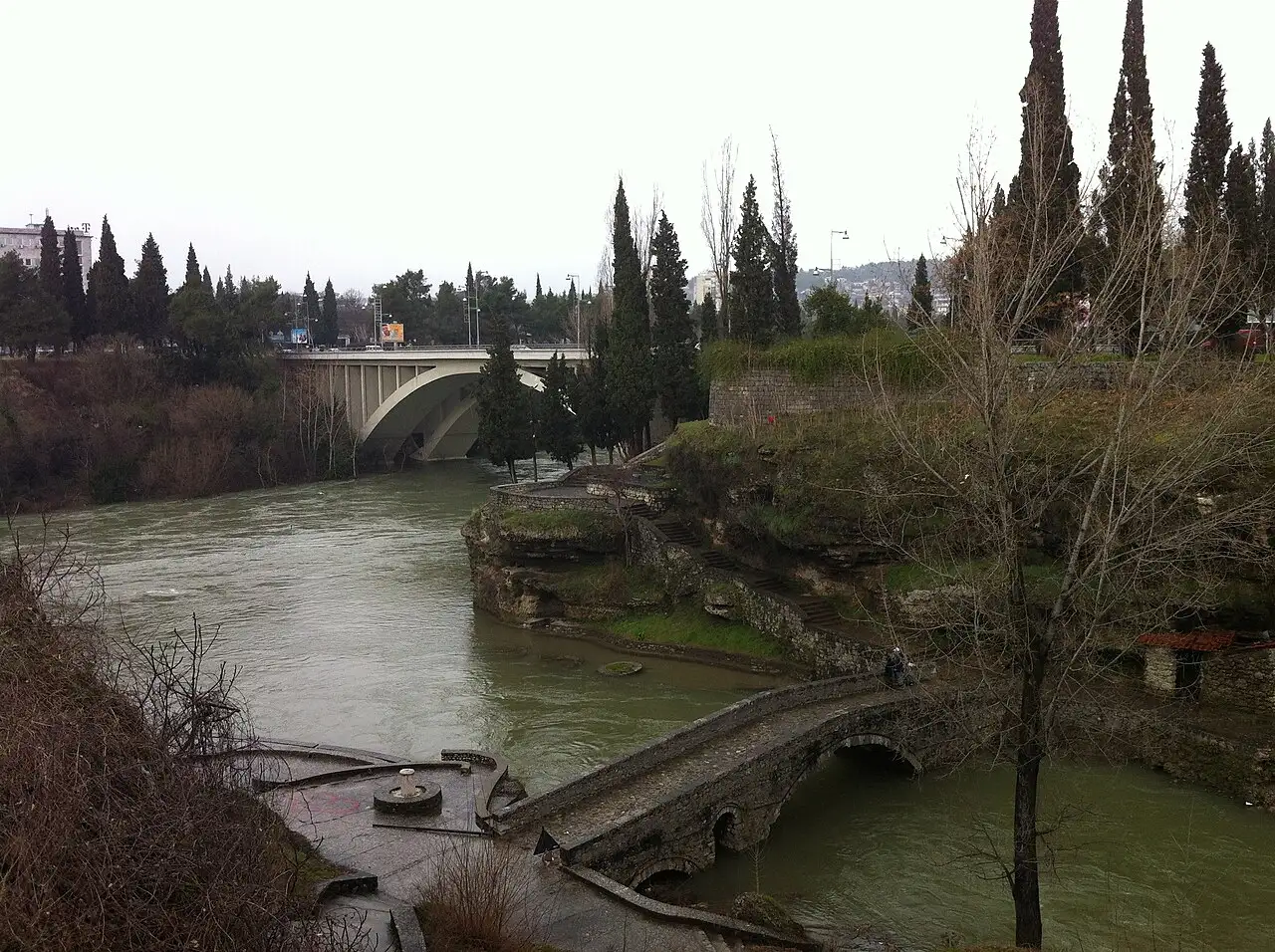
Don’t come here expecting a walled old town on the scale of Kotor or Herceg Novi - Podgorica was flattened in the Second World War and rebuilt as an administrative city, so Stara Varoš is a handful of streets, not a historic core. What it offers instead is a calmer night’s sleep within ten minutes of Nova Varoš’s restaurants, and a genuine sense of the city before it became the capital. It suits travellers who want one quiet evening more than they want to be in the middle of the action.
Near the station: practical, plain, and fine for one night
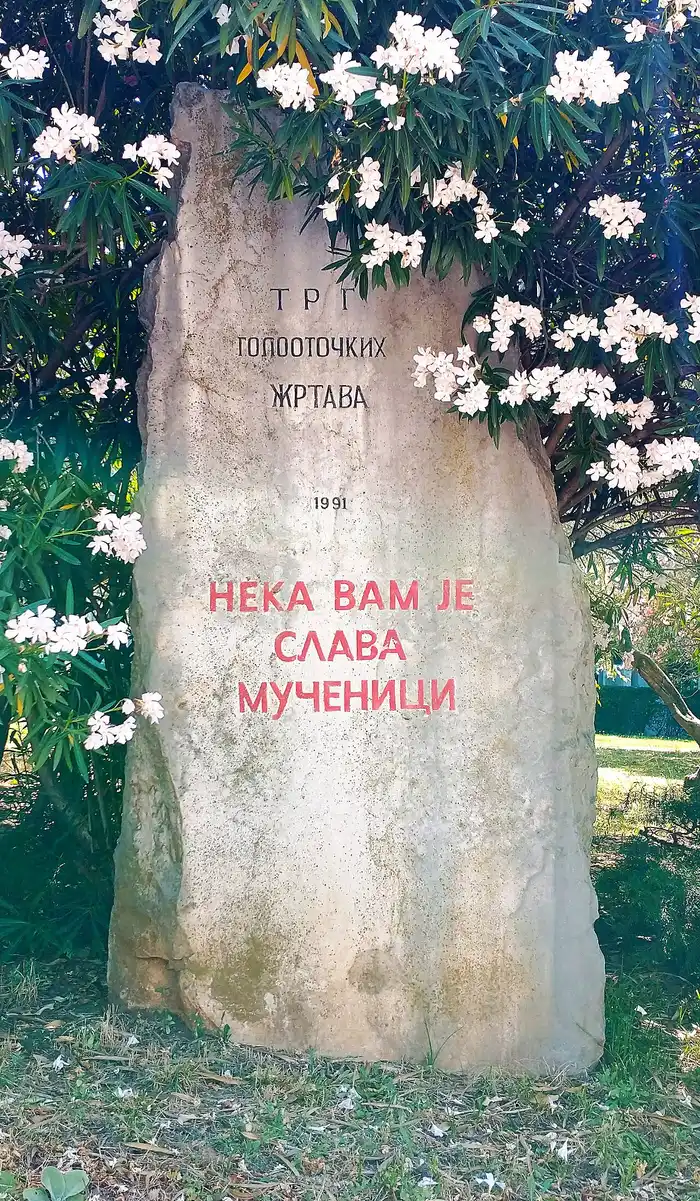
If your Podgorica stop is really a hinge between a flight and a bus or train, the area around Trg golootočkih žrtava - the square in front of both the bus and railway stations - is the least romantic option and often the most useful one. It’s plainer than either Nova Varoš or Stara Varoš, but hotels like Terminus sit right by the platforms, and the Mall of Montenegro is close enough for a meal before an early departure. The square itself carries a 1991 memorial stone to the victims of the Goli Otok prison camp, a quiet reminder that this part of the city has its own history even without a tourist trail attached to it.
This base makes sense for exactly one situation: you land or arrive late, you leave early, and you’d rather not pay for a taxi twice. For anything longer, Nova Varoš is a fifteen- to twenty-minute walk away and gives you far more to do in the evening.
How many nights does Podgorica actually need?
Be honest about what you’re here for. Podgorica isn’t a sightseeing city - it’s the country’s transport hub, and its real job is to put the mountains, the coast and Lake Skadar within reach of a single flight. Most people get everything they need from half a day and one night: an afternoon at the Cathedral of the Resurrection and the Millennium Bridge, dinner on a Nova Varoš terrace, and an early start the next morning. Staying two or three nights only pays off if you’re using the city as a base for day trips rather than a destination in its own right - Cetinje is 45 minutes away, Lake Skadar half an hour, and both are genuinely worth the detour if you have the time.
Fixed nightly rates would be misleading more than helpful here: Podgorica’s hotel market leans business rather than tourist, so prices move with conferences and trade fairs more than with the summer crowds that set the coast’s rates. The pattern that does hold is worth knowing - rooms are easier to find here than in Kotor or Budva even in August, simply because this isn’t where the beach holiday happens.
Getting around and day trips
Podgorica Airport (TGD) sits about 12 km south of the centre, and a taxi or pre-booked transfer is the usual way in - there’s a request stop called Aerodrom on the Bar-Podgorica railway about 1.4 km from the terminal, but few visitors with luggage bother walking to it. Once you’re based, the city is compact enough to walk between Nova Varoš, Stara Varoš and the station area, and taxis are cheap if the day is hot or your bag is heavy. There’s no Uber or Bolt anywhere in Montenegro, Podgorica included - a local app called TeslaGo covers the capital if you’d rather not haggle, though most visitors still just agree the fare or make sure the meter is running before they set off. Cards are accepted everywhere in the centre, but keep some cash for the station-area cafés and smaller guesthouses - Montenegro prices everything in euros (€) regardless of it sitting outside the EU. For onward travel, see renting a car in Montenegro if you plan to pick one up at the airport, or Podgorica to Kotor for the drive to the bay. If you’re deciding which airport to fly into in the first place, Tivat vs Podgorica airport compares the two on price, season and distance to the coast.
Two day trips are worth planning around before you even book a room: Cetinje, the Old Royal Capital, and Lake Skadar, the Balkans’ biggest lake, with boats leaving from Virpazar half an hour south. Both work as half-day trips from any of the three areas above, which is really the point of staying in Podgorica at all - it’s a hinge, not a headline.
Nearby / read also
- Podgorica travel guide - what to see, the airport boom and day trips.
- Where to stay in Montenegro - the capital compared with the coast and the bay.
- Tivat vs Podgorica airport - which one to fly into.
- Lake Skadar - boats and wineries, half an hour south.
- Cetinje - the Old Royal Capital, 45 minutes away.
- Renting a car in Montenegro - collect one at TGD.
Photos
Read also

What to see · 10 min read
Hiking Bobotov Kuk: Durmitor Highest Peak
Verified · September 4, 2026Bobotov Kuk hike at 2,523 m: Sedlo (~10 km RT) vs Lokvice from Black Lake, €5 park fee, cables, season and early-start tips.

What to see · 10 min read
Swimming in the Bay of Kotor: Beaches & Lidos
Updated · August 31, 2026Can you swim in Kotor? Yes - on Dobrota pontoons, Morinj and small Boka shores. Water quality, season and what to expect.

What to see · 11 min read
Rent a Boat in Kotor Bay: No Licence Needed
Updated · September 5, 2026Private boat rental in Kotor Bay 2026: skippered hire from €90/h, bareboat prices, licence rules, speed limits and where boats leave from.

What to see · 9 min read
Piva Lake & Canyon: Montenegro's Emerald North
Updated · August 27, 2026Piva Lake guide: the 45 km emerald reservoir, Mratinje Dam, boat trips from Plužine, the relocated Piva Monastery and how to pair it with Durmitor.