
Montenegro Weather by Month
Montenegro weather month by month: coast temperatures, sea temperature and rainfall, plus how the Podgorica lowlands and northern mountains differ.
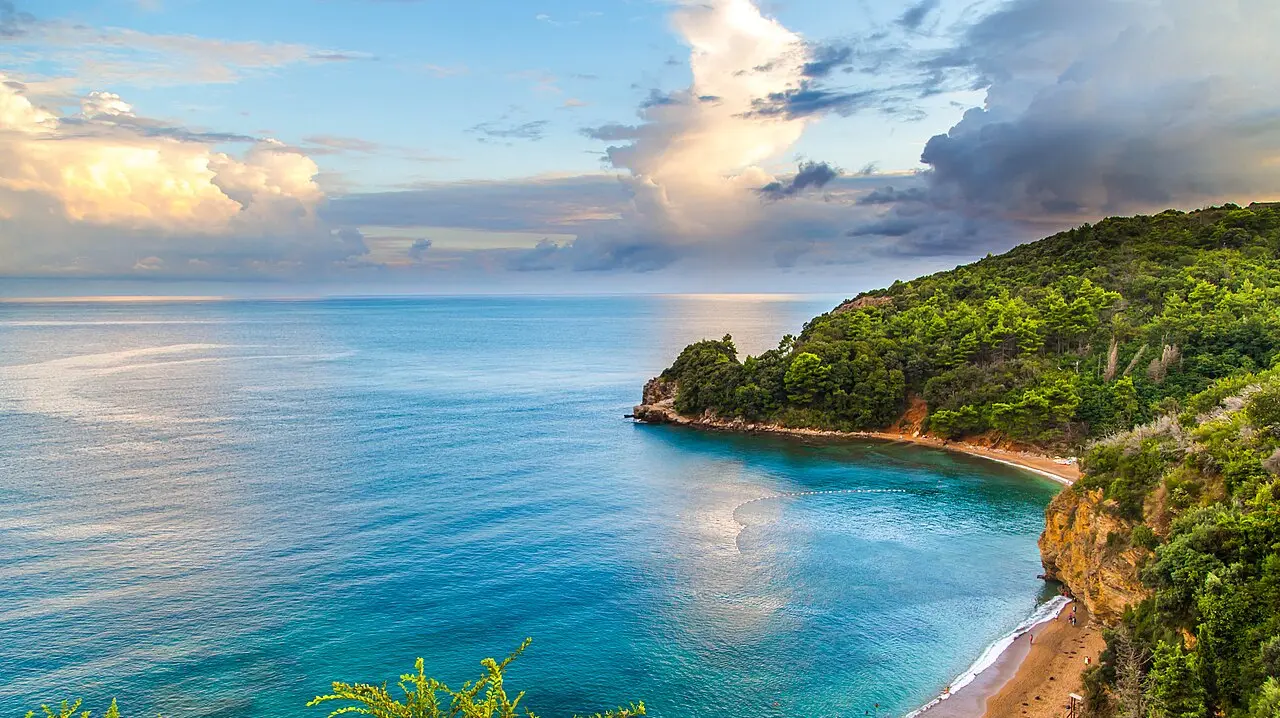
On the coast, Montenegro has a straightforward Mediterranean climate: hot, dry summers with highs around 30°C in July and August, and mild, wet winters that rarely freeze but see plenty of rain. The sea peaks later than the air, holding about 25°C in August and still a swimmable 23°C in September. The twist is that “Montenegro weather” is really three climates in one small country - the warm coast, the baking Podgorica lowlands and the snowy northern mountains can differ by 20°C or more on the same day. Here is what each month actually looks like, coast first, with the numbers to plan around.
Montenegro weather month by month (the coast)
These are long-term averages for the Budva Riviera, which is a fair proxy for the whole coast from Herceg Novi to Bar. Treat them as typical, not guaranteed - any given year runs warmer or wetter.
| Month | Avg high | Avg low | Sea | Rain | Sun/day |
|---|---|---|---|---|---|
| January | 13°C | 6°C | 14°C | 142 mm | 4 h |
| February | 14°C | 6°C | 14°C | 128 mm | 4.5 h |
| March | 16°C | 8°C | 14°C | 131 mm | 5.5 h |
| April | 19°C | 10°C | 15°C | 112 mm | 6.5 h |
| May | 24°C | 15°C | 18°C | 82 mm | 8.5 h |
| June | 28°C | 18°C | 21°C | 54 mm | 10 h |
| July | 30°C | 21°C | 24°C | 32 mm | 11.5 h |
| August | 30°C | 21°C | 25°C | 45 mm | 10 h |
| September | 27°C | 18°C | 23°C | 134 mm | 8.5 h |
| October | 23°C | 14°C | 20°C | 152 mm | 6.5 h |
| November | 19°C | 10°C | 17°C | 165 mm | 4 h |
| December | 14°C | 7°C | 15°C | 179 mm | 3.5 h |
Two things jump out of that table, and both catch people off guard. First, the coast is genuinely rainy, and the wettest months are late autumn and early winter - October through December each get more than 150 mm - not deep midwinter. Second, the driest, sunniest stretch is high summer: July averages just 32 mm of rain across eleven and a half hours of daily sun. If you came for guaranteed dry beach days, the calendar isn’t subtle about when they are.
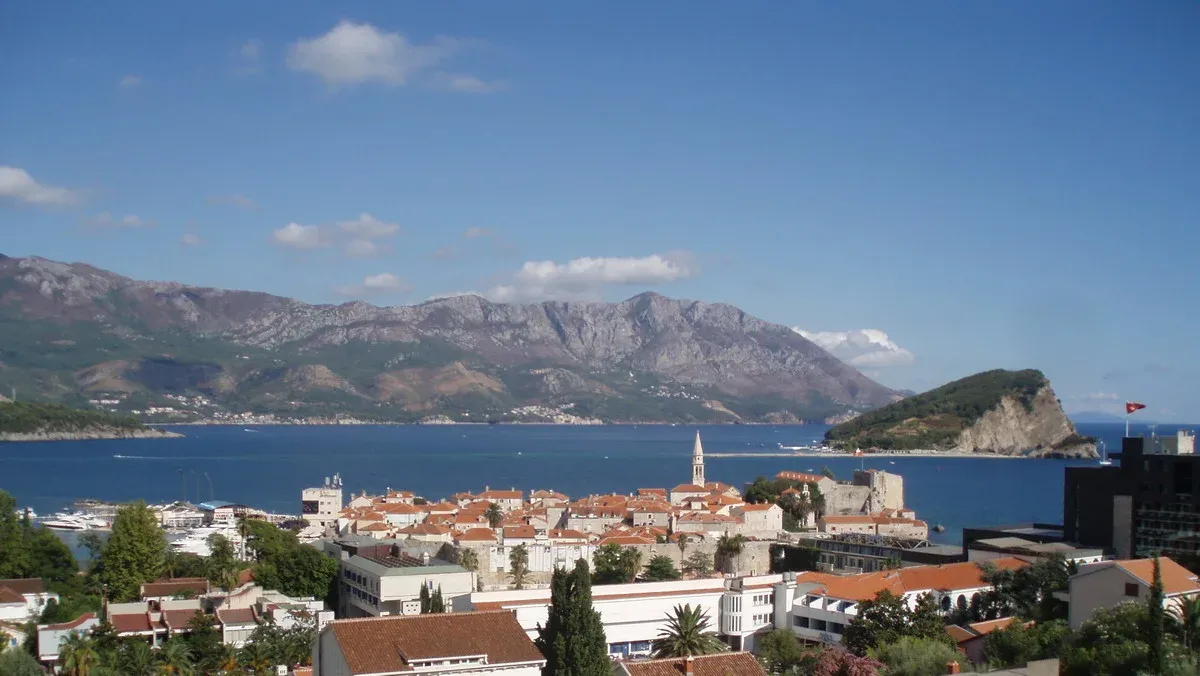
What each season actually does
Winter (December-February) is mild but grey and wet on the coast. Highs sit around 13-14°C, nights rarely dip below 5-6°C, and hard frost is unusual at sea level - but you’ll get rain, and the short days give you barely three to four hours of sun. It’s fine for atmospheric old-town wandering in Kotor or Budva; it’s not beach weather, and the sea is a bracing 14°C.
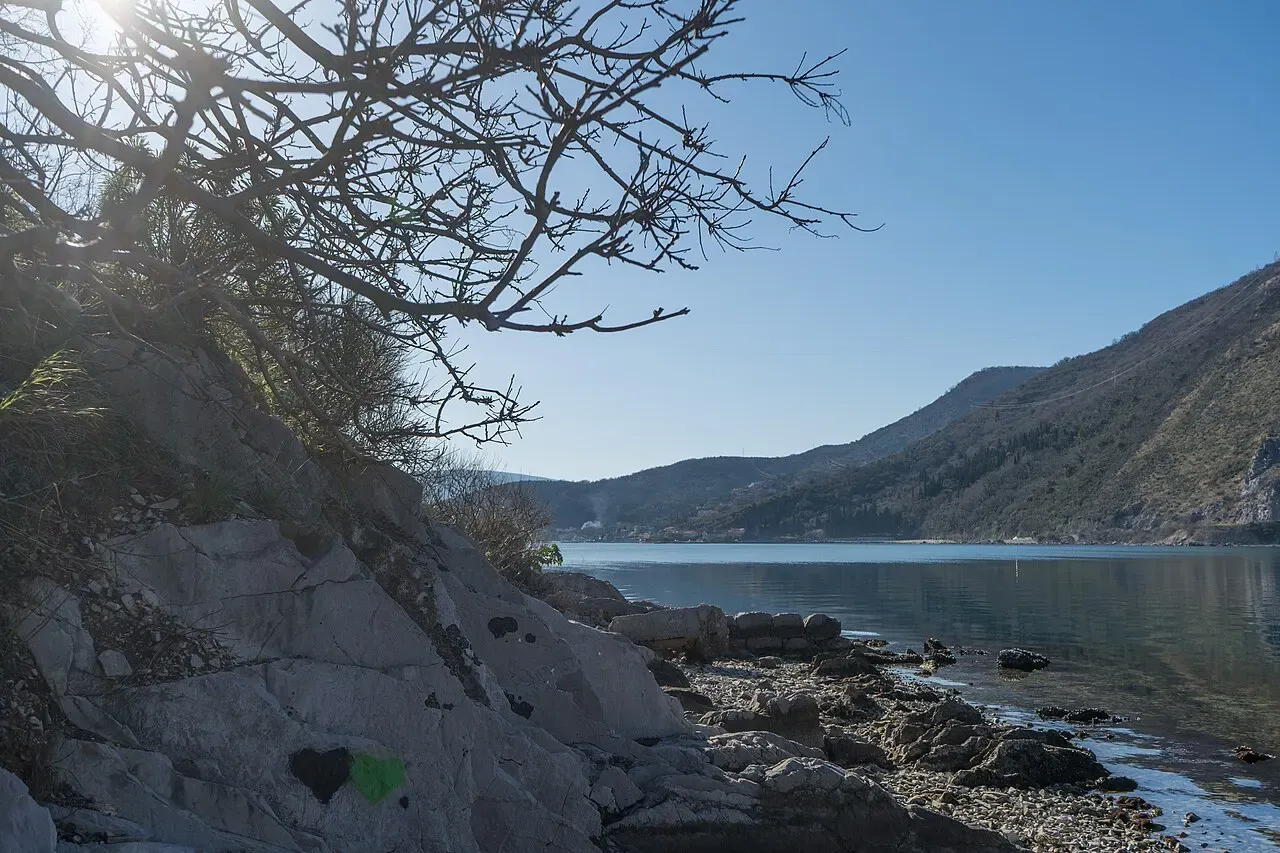
Spring (March-May) warms fast. March is still cool and damp, April turns pleasant, and by May the coast hits a sweet spot: highs near 24°C, eight and a half hours of sun and rainfall dropping to 82 mm. The sea, though, is still only about 18°C in May - fine for a quick dip, cold for lounging in the water.
Summer (June-August) is hot, dry and bright. Expect highs of 28-30°C, minimal rain, and long sunny days. This is peak beach season and peak crowds, and inland it gets considerably hotter (see below). Nights stay warm at around 21°C on the coast.
Autumn (September-October-November) cools gradually but gets progressively wetter. September is still warm (27°C) with a 23°C sea, which is why it’s such a popular month, but the rain has already picked up sharply to 134 mm. By November you’re back to short, wet days. For a proper “when should I go” verdict rather than raw numbers, see our best time to visit Montenegro guide.
Three climates in one small country
The single most useful thing to understand about Montenegro’s weather is that the coastal table above stops being true the moment you drive inland. The country packs three distinct climates into a couple of hours of driving.
The coast is Mediterranean, as tabled: warm sea, hot dry summers, mild wet winters.
Podgorica and the central lowlands are a different beast. Shut in from the sea by mountains, the capital is one of the hottest cities in Europe in summer - July and August highs sit in the low-to-mid 30s, the thermometer tops 35°C on about 23 days a year, and it can push toward 40°C in a heatwave. If you’re sightseeing in Podgorica or around Lake Skadar in July, start early and treat the afternoon as siesta time. The flip side: Podgorica is also one of Europe’s rainiest capitals, though almost all of that falls outside summer.
The northern mountains are colder and snowier than most first-timers expect. Žabljak, the gateway to Durmitor at about 1,450 m, averages roughly -2°C in January with night lows near -7°C and cold snaps well below that. Heavy snow blankets the plateau from November into April, the ski season is Montenegro’s longest (roughly November to May), and patches of snow can linger in the high country into June. In practice this means you can swim in a 25°C sea on the coast and, the same week, find snow still lying in the Durmitor peaks a few hours’ drive away - our Durmitor National Park guide covers the mountain seasons, when to hike in Montenegro turns those numbers into walkable months, and Žabljak has the ski-town detail.
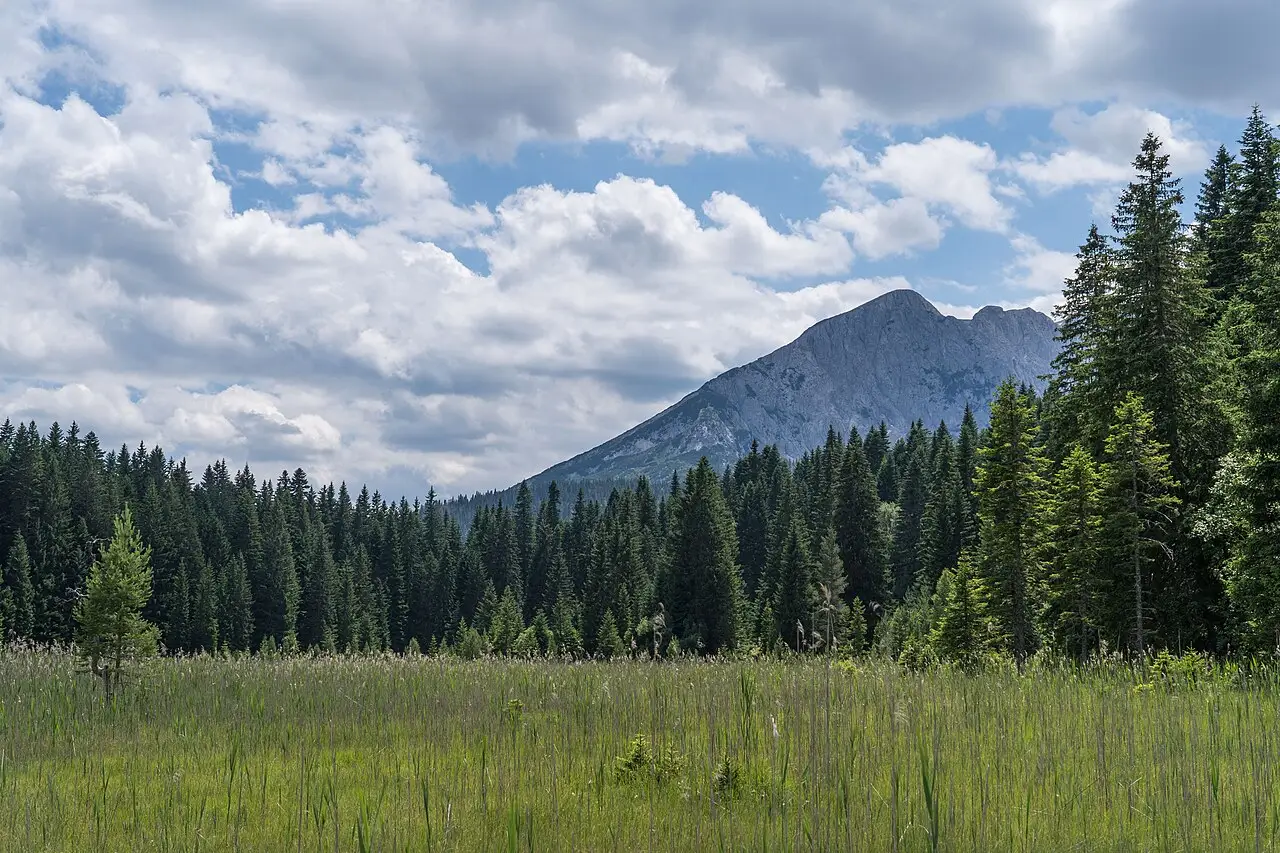
The practical upshot of that split is that a single trip can’t always line up perfect weather for the beach and the mountains at once. In July the coast and lowlands bake while the high country is ideal for hiking; in May or October there may still be (or already be) snow up top while the coast is mild and green. Plan around whatever matters most to you, and keep a backup for the day the mountain sits under cloud.
Sea temperature and the swimming season
The sea runs on a delay behind the air, and knowing the lag saves disappointment. The Adriatic here’s coldest in late winter (about 14°C, January to March), crawls up through spring, and only reaches comfortable swimming temperatures in June (21°C). It peaks in August at around 25°C, and - this is the part worth planning around - it stays warm well after the air cools: September holds about 23°C and October around 20°C. For the water on its own - where it runs colder, why the data sources disagree and where to check live readings - see our Montenegro sea temperature guide.
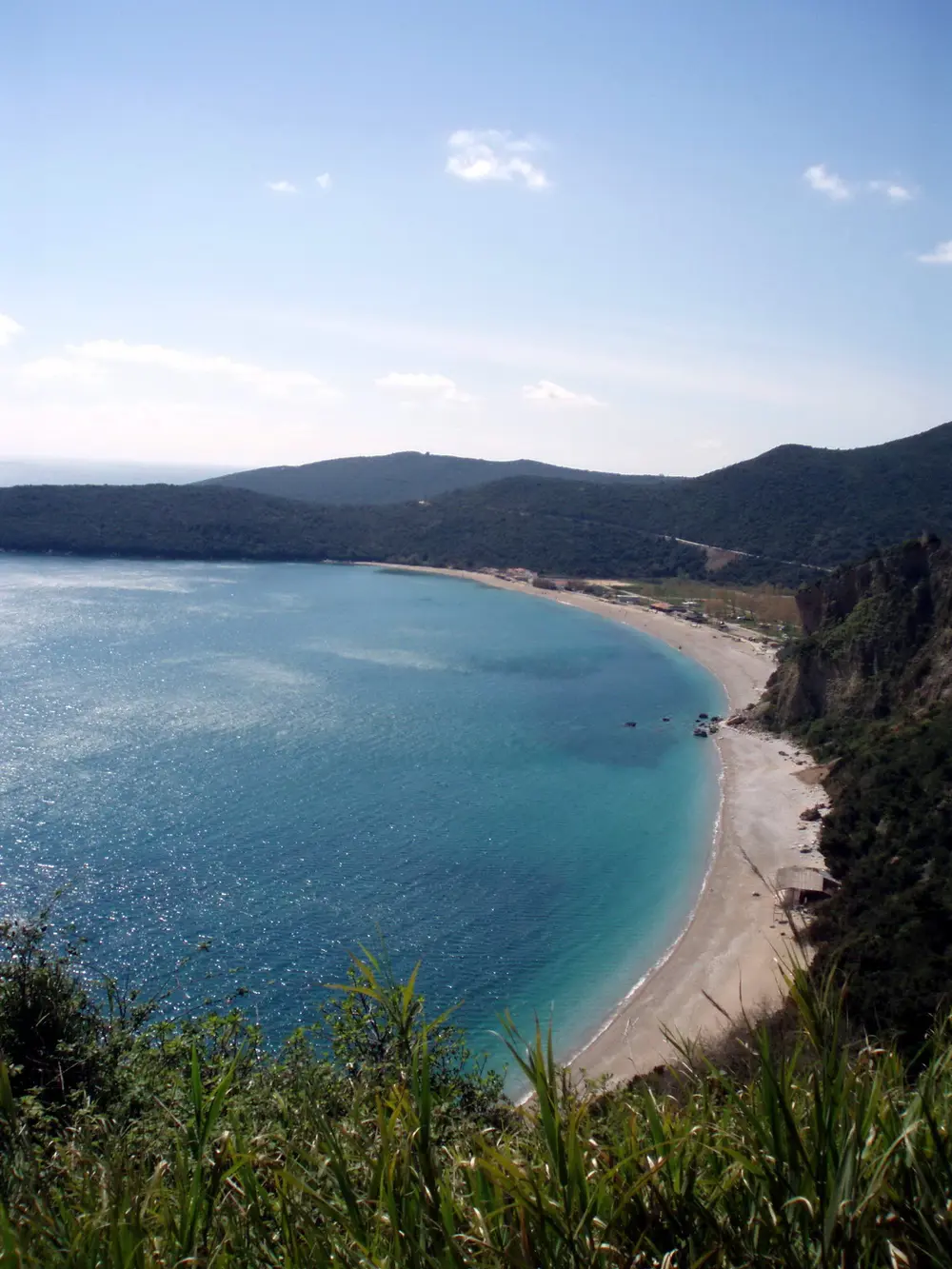
That means the realistic swimming season is roughly June to October, five months rather than the two everyone books. September in particular gives you a warm sea with fewer crowds and softer prices, and even early October can be pleasant for swimming on a sunny day. If beaches are your priority, our roundups of the best beaches in Montenegro and the ranked Montenegro beaches guide pair well with the sea-temperature calendar.
When the rain actually falls
Montenegro’s coast is wetter over the year than many Mediterranean spots, but the rain is heavily concentrated. The wet season runs from October to December, each month topping 150 mm, with a secondary bump in early spring. High summer is close to bone dry: June, July and August together get less rain than a single December. September sits awkwardly in between - still warm, but the first autumn rains have usually arrived, so pack a light layer and don’t assume unbroken sun.
The packing takeaway is simple. For a summer trip, sun protection matters far more than a raincoat. For anything from October through April, bring proper rain gear and waterproof shoes, because the coast can deliver a genuinely wet day even when it’s mild. And whenever you visit, having a car lets you chase the weather - drop inland or up a mountain when the coast is grey, or the other way round; our notes on renting a car in Montenegro cover the basics.
Quick planning notes
If you’re matching a month to a plan, the short version is: July-August for guaranteed hot, dry beach weather and the warmest sea; May-June and September for warm days, a swimmable sea and thinner crowds; October-April for cheap, mild but wet city breaks on the coast; and December-March for snow and skiing in the north. For the full trade-offs of crowds, prices and what’s open, read best time to visit Montenegro, and for the wider picture of getting around and what to see, our Montenegro travel guide maps it out region by region.
Nearby / read also
- Best time to visit Montenegro - the season-by-season verdict on when to go.
- Montenegro travel guide - the full country overview.
- Durmitor National Park - the mountains that drive the winter and ski seasons.
- Best beaches in Montenegro - where to use that warm summer sea.
- Montenegro in September - the sea, crowds and prices in the coast’s best shoulder month.
- Renting a car in Montenegro - how to chase the weather across the climates.
Read also

Before you go · 16 min read
Bay of Kotor Boating Rules: Licence, Speed Limits & Fines
Updated · September 5, 2026Montenegro boat rules 2026: certificate at 18 for self-drive, 6 knots within 300 m, 18-knot corridors, no motor boats in the Blue Cave, fines from €500.

Before you go · 12 min read
13 Montenegro Travel Mistakes to Avoid
Verified · August 29, 2026Concrete Montenegro travel mistakes with real numbers: toll lanes, ferry queues, ATM fees, park fees per day, and roads slower than the map admits.

Before you go · 10 min read
Kotor or Herceg Novi: Which Bay Town to Stay In
Updated · August 26, 2026Kotor or Herceg Novi as your Bay of Kotor base? Old towns, beaches, cruise crowds, Dubrovnik access and prices compared - who each town suits.

Before you go · 14 min read
All-Inclusive Montenegro: Resorts That Actually Exist
Updated · August 23, 2026Real all-inclusive hotels in Montenegro are rare - most listings are half board. The five that are genuine, and how to check before you book.