
Montenegro in Winter: Skiing €15-25, Christmas, Empty Coast
Montenegro in winter: ski passes from €15 a day, the coast at 13°C, an eighth of August arrivals countrywide, and Christmas on 25 Dec and 7 Jan.
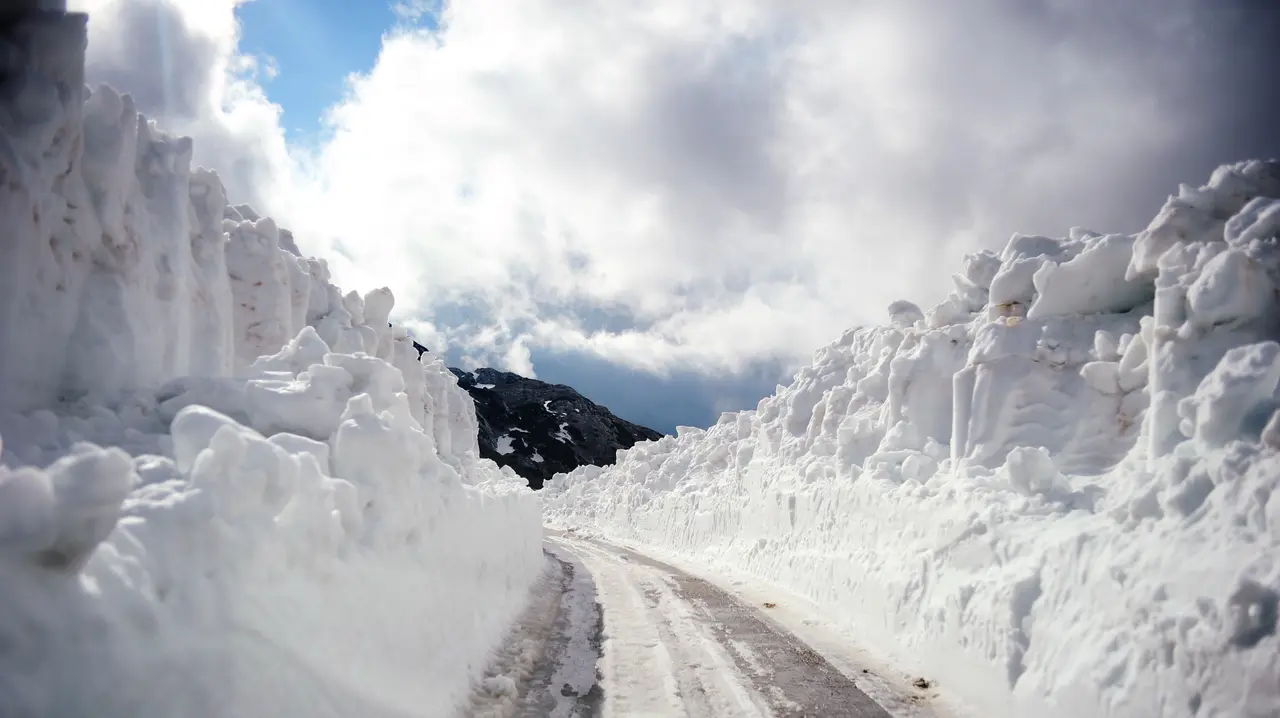
A day on the snow in Montenegro costs €15 to €25 for an adult pass at one ski area, or €30 for the two linked Kolašin areas together, about a quarter of an Alpine day, and in January the coast runs a daytime 13°C while the country as a whole takes about an eighth of the arrivals it logs in August. Christmas happens twice, on 25 December for Catholics and on 7 January for the Orthodox majority. Prices and dates below come from the 2025/26 season, the last one published, and were checked on 4 August 2026.
Now the part the brochures leave out. Montenegro’s two main ski centres managed about ten skiable days each last season, fewer than twenty between them, and none at all the season before, because the snow didn’t come and the state resort still has no snowmaking. That one fact should reorder your whole plan: book the country, treat the skiing as a bonus, and you’ll have a good week either way.
The short answer
| Winter trip | What it costs | When | Best for |
|---|---|---|---|
| Ski at Kolašin 1450 | €15 a day adult, €12 child (~$17 / £13) | mid-Dec to early Apr, snow permitting | The cheapest day ticket in the country |
| Ski at Kolašin 1600 | €25 a day adult, €16.50 child | same window | The six-seat chairlift and 21 km of runs |
| Both areas on one pass | €30 a day adult, €24 child | same window | Only worth it if the K7 link is running |
| Ski at Savin Kuk, Žabljak | €16 a day, €10 half day, €9 night ski | mid-Dec to early Apr | Durmitor scenery and a small, cheap hill |
| Coastal city break | Rooms and flights at their lowest | Dec to Mar | Kotor and Budva without the cruise crowds |
| New Year and Orthodox Christmas | Coast prices rise for a fortnight | 31 Dec to 7 Jan | Squares, concerts and oak fires |
Conversions use €1 = $1.15 = £0.86, and Montenegro is on the euro.
What a day on the snow costs
The official price list for the state company, Skijališta Crne Gore, was published in mid-January 2026 and reported in the Montenegrin press. At Kolašin 1600 an adult day pass is €25 and a child under 14 pays €16.50; three days cost €56.50, seven days €105, a full season €400. The beginners’ magic carpet is €10 a day, a sightseeing ride up the lift without skis is €8, and ten runs on the tubing track are €6.
Next door, the privately owned Kolašin 1450 charges €15 a day for an adult and €12 for a child on its own lifts, with a combined ticket for both areas at €30 adult and €24 child. Its own site also lists something you won’t find in the Alps: residents of Kolašin, Berane, Andrijevica and Petnjica ski free from Monday to Thursday.
At Savin Kuk above Žabljak, run by a different company again, an adult day pass is €16, half a day €10, night skiing €9, a season €260.
For scale, KitzSki in Austria sells an adult day ticket at €69 to €83 depending on the season tier, checked on its own site on 4 August 2026. Montenegro’s headline number really is a quarter of that, and what you give up is size: the linked Kolašin areas add up to about 45 km of piste between 1,420 m and 2,072 m, while Savin Kuk has around 4.7 km on six lifts between 1,515 m and 2,212 m. Both run roughly mid-December to early April, Kolašin 09:30-16:00 and Savin Kuk 09:00-16:00.
The snow itself is the gamble
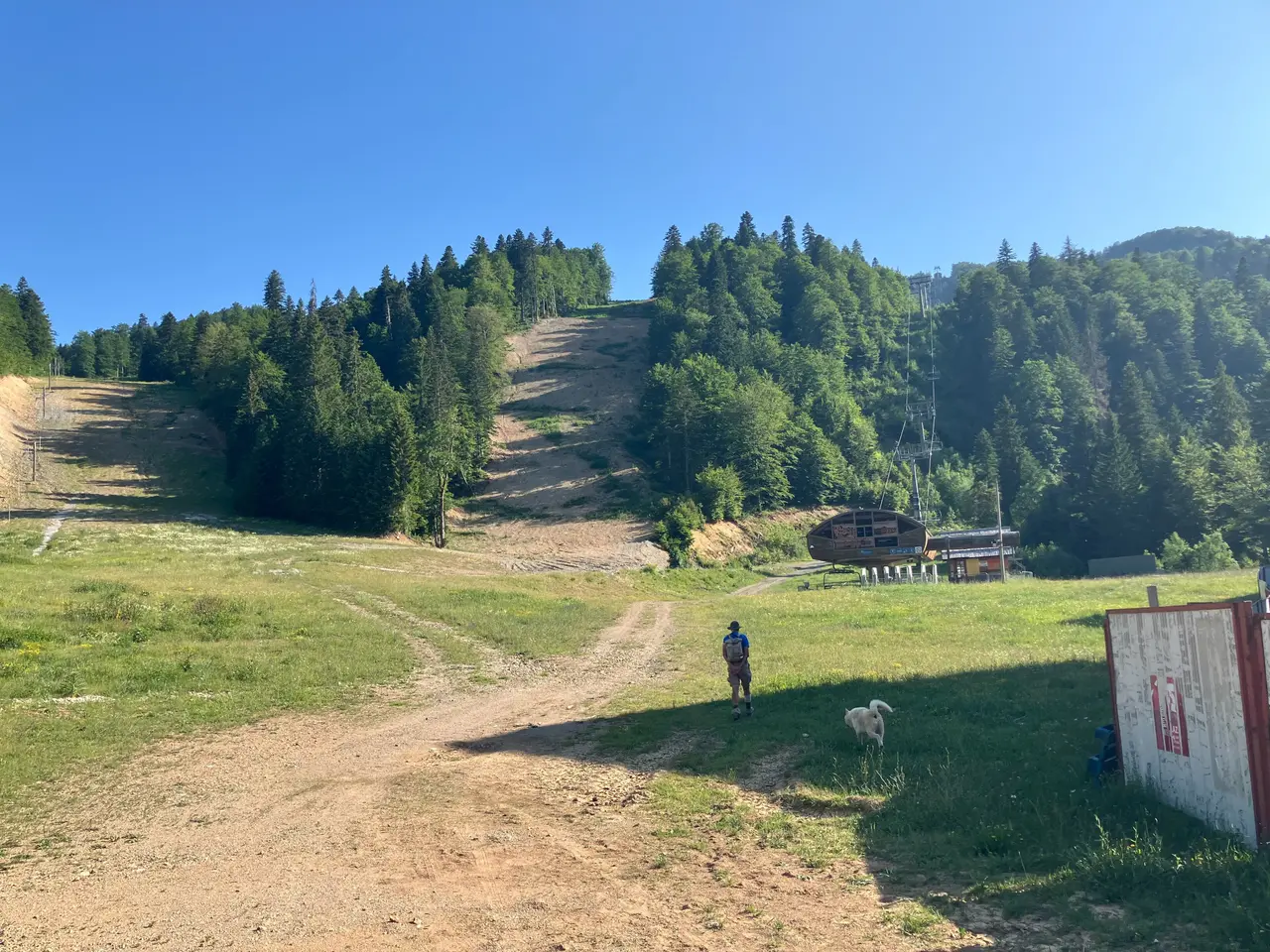
Montenegrin reporting on the 2025/26 season is unusually blunt about it. The winter season at the state-owned Kolašin 1600 opened on 12 December 2025 with a DJ set, children’s entertainers and a Christmas bazaar, and no skiing at all: no snow, and no snowmaking, despite ministers promising it in March 2024 and again in June 2025. The centre closed on 15 March 2026.
Local papers put the recent record plainly: each of the two national centres had only about ten skiing days last season, fewer than twenty between them, and not a single one the season before that. Snowmaking exists only on part of the private Kolašin 1450, and at Savin Kuk cannons arrived to cover roughly one run at the base.
The response is not to drop the idea, it’s to book like a local. The head of Kolašin’s tourist board put it plainly in late December: bookings there are last minute and cancellable up to 48 hours before arrival. Pick flexible rates, watch a snow report the week before you fly, and keep a wet-weather plan for the coast. Our weather guide shows why Žabljak, at about 1,456 m and roughly -2°C in January, is the safer bet for snow than Bjelasica.
The lifts, and what happened last December
The hardware matters as much as the snow, in two ways.
The K7 chairlift links the state Kolašin 1600 with the private 1450, and it’s the reason a combined pass makes sense. It was damaged in spring 2024 during construction work on private land, a €145,200 emergency tender was cancelled in late 2025 after no valid bids arrived, and without it roughly half the state area is unusable. A contract for urgent ground stabilisation near pillar 4 was signed on 31 July 2026, with no return-to-service date announced. Before paying €30 for the joint ticket rather than €15 or €25 for one area, ask at the window whether K7 is turning.
The second is harder reading. On 20 December 2025 a German visitor died on the Savin Kuk 2 chairlift at Žabljak after his chair slipped, and the woman with him was seriously injured. The director of the Durmitor ski centre resigned, the tourism ministry demanded an extraordinary technical inspection of the neighbouring Savin Kuk 1 chairlift from the state Development Bank that owns it, and local reporting said Savin Kuk 2 would not run for the rest of that winter, with a couple of surface lifts expected to run instead. That is not a reason to write the place off. It is a reason to check which lifts are certified and open for the season before you build a week around them, and to make sure your insurance covers winter sports at all.

Christmas twice, and New Year in between
Montenegrin law splits its holidays in a way that catches visitors out. State holidays are non-working for everyone and mostly run two days: 1-2 January, 1-2 May, 21-22 May, 13-14 July, 13-14 November. Religious holidays are non-working only for believers of that faith, which is why 25 December isn’t a day off for most of the country.
The big one is Orthodox. The church here follows the Julian calendar, so Christmas Eve falls on 6 January and Christmas on 7 and 8 January. The evening of the 6th, Badnje veče, is the atmospheric half: oak branches are burned in front of churches and on town squares, and you’ll smell them right through the old towns. Our events calendar tracks the rest of the season.
In between sits the noisiest fortnight of the Montenegrin winter. Budva, Podgorica, Kotor and Herceg Novi all run free open-air concerts over New Year, the coast refills for two weeks, and Budva’s room rates climb for that week. In the mountains, Kolašin ran a Christmas bazaar from 12 December to 12 March and a guitar festival from 12 to 18 January 2026, and Žabljak put up an ice rink. Arrive on 30 December and leave on 8 January and you get both New Year and Orthodox Christmas.
The coast in winter is the real off-season deal
Here’s the number that reframes everything. MONSTAT counted 32,268 tourist arrivals in January 2026 in hotels and other collective accommodation, against an all-time monthly high of 244,904 in August 2025. Roughly one arrival in eight, nationally. The coast still takes the larger share of winter nights, so the emptiness is real but not absolute.
The weather is milder than northern Europeans expect: January averages a high of 13°C on the coast, February much the same, and hard frost at sea level is unusual. The rain is the real story, 142 mm in January and 179 mm in December, the wettest month of the year, with barely three to four hours of sun a day. The sea sits at 14°C, so swimming is for the brave.
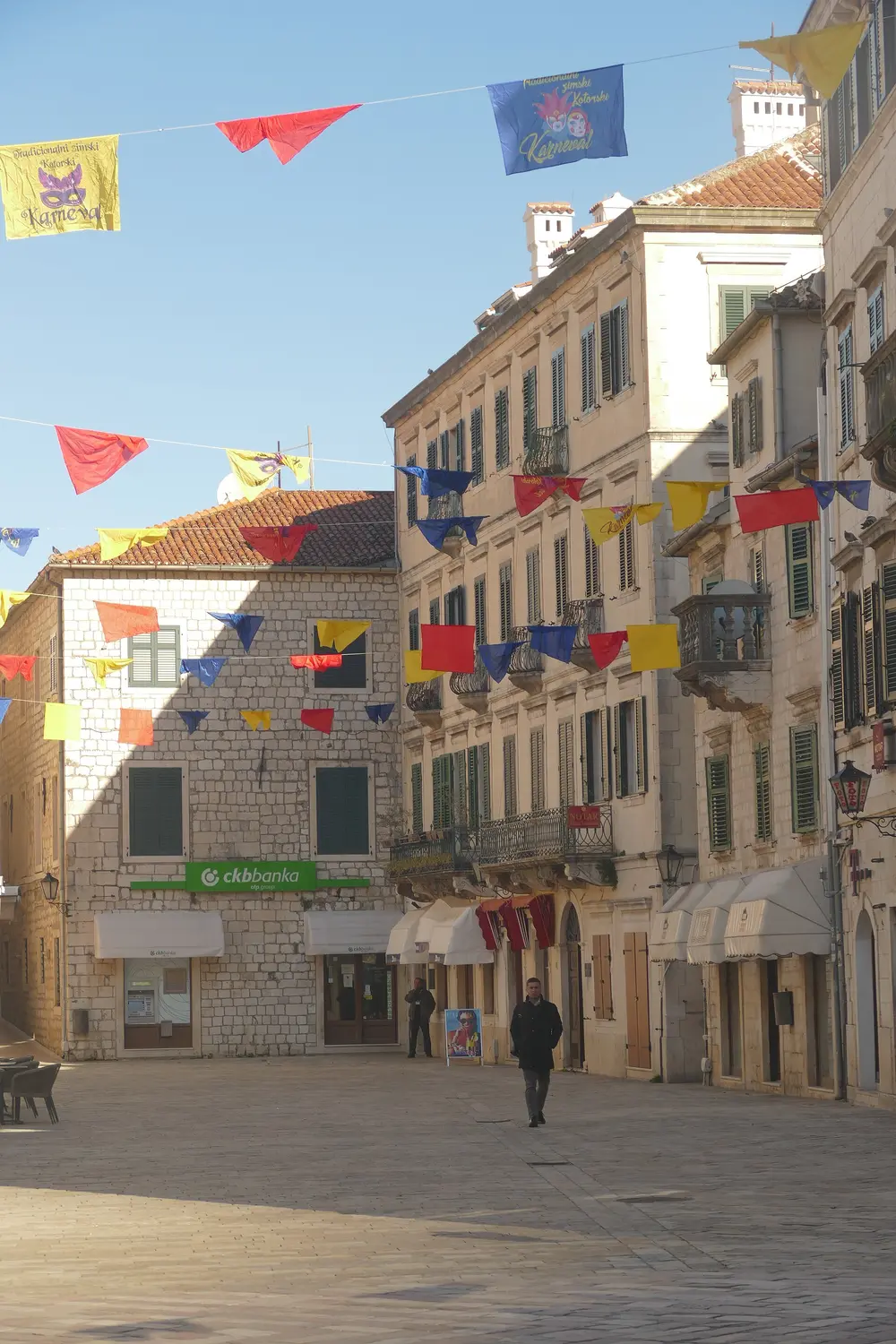
February is when the coast earns its keep. Kotor’s winter carnival ran 6-15 February 2026, the Mimosa Festival in Herceg Novi 13-28 February, and St Tryphon’s Day on 3 February brings the Boka Navy out to dance in front of the cathedral in red and gold. The 2027 dates aren’t usually out until December, so treat February as a window, not a date to book against today. Our best time to visit guide sets the seasons side by side.
A couple of things to check rather than assume. The Kotor cable car runs a shorter calendar out of summer and has closed for weeks around a season start; our page has current tickets and hours. Ostrog Monastery, by contrast, is open all year, roughly 05:00 to 16:00 in the cold months, and entry is free.
Flying in when Tivat shuts
Tivat is a summer airport: most routes run April or May to October, and Turkish Airlines dropped it for the whole of the coming winter. Podgorica runs year-round, and Wizz Air based aircraft there on 30 March 2026, which widened the budget choice considerably. A December fare into Tivat, if you can find one, is often dearer than a Podgorica fare plus the drive. Our comparison of the two airports has the distances and transfer times.
From Podgorica, Kolašin is the easy one: about an hour by road, with a station on the Belgrade-Bar railway, so you can reach the ski town without a car. Žabljak is 125-140 km and 2.5 to 3 hours by road, longer in snow, and not something to attempt after a late flight.
Driving in the cold months
Winter tyres are a legal requirement from 15 November to 1 April, with fines reported in the €40-100 range, and chains are the sensible extra for the passes. Rental cars should come fitted in season, but it’s worth confirming when you book; driving in Montenegro covers the rest of the rules and tolls.
Two seasonal facts to plan around. The Durmitor ring road over the Sedlo pass at 1,907 m is a late-May to October drive, so the scenic loop out of Žabljak is off the table in January. And the Kamenari-Lepetane ferry across the Bay of Kotor switches to its winter plan from mid-October to early May (the 2025/26 plan ran 15 October to 3 May): departures every 20 minutes from 06:00 to midnight, then roughly one an hour overnight, at the usual €5 for a car. The ferry guide has the full fare table.
Where to base yourself
Kolašin is the best all-rounder for a snow trip. It’s a working town rather than a resort, the lifts are 12 km out, the railway means you don’t need a car, and if the snow fails you are 20 km from Biogradska Gora and about an hour from Podgorica.
Žabljak is the pick if the mountains themselves are the point. At about 1,456 m it’s the highest town in the Balkans, Savin Kuk is five minutes away, and the cold is real. The cost is access: three hours from the airport on roads that get snowed in. Our Žabljak guide covers where to sleep.
Kotor or Budva is the winter city break, and honestly the better choice for most first-timers: mild, wet, cheap and almost empty, with the carnival in February.
So what should you actually book?
If you need guaranteed snow, book the Alps and come back in June. The lift tickets here are cheap for a reason, and a season of ten skiable days per centre will ruin a trip built entirely around skiing.
If you want a cheap, quiet week where a day on the snow is a bonus rather than the point, this is a very good country in winter. Fly into Podgorica, base in Kolašin on flexible rates, buy a €15 day at 1450 if the snow shows up, and give the rest to Biogradska Gora, Ostrog and the Tara valley.
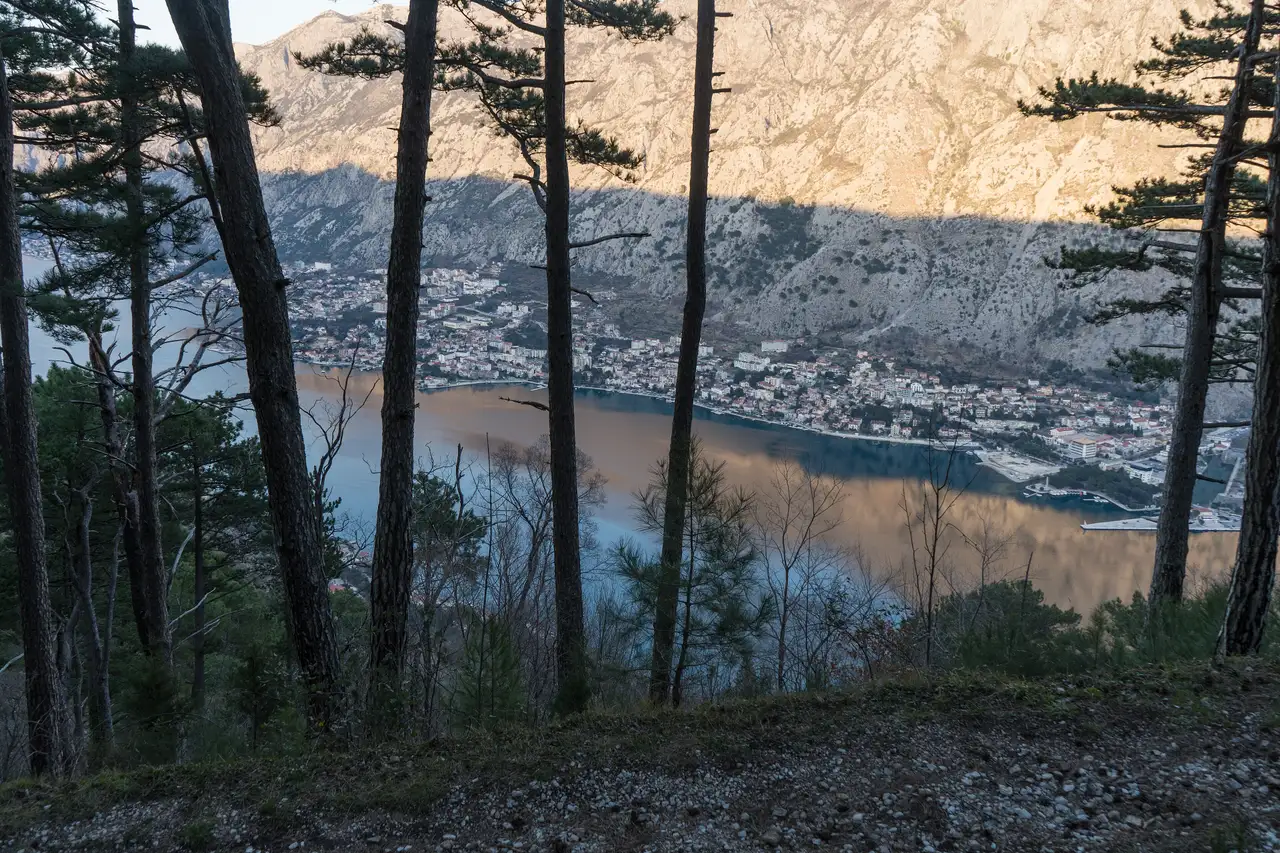
And if what you actually want is Kotor without the cruise ships, come in February: carnival flags over an empty square, the Vrmac ridge at 13°C, a room at a price you’ll never see in August, and a snowball fight on Lovćen an hour up the hill if the mood takes you. That, more than the skiing, is what Montenegro does well in winter.
Nearby and read also
Photos
Read also

Before you go · 16 min read
Bay of Kotor Boating Rules: Licence, Speed Limits & Fines
Updated · September 5, 2026Montenegro boat rules 2026: certificate at 18 for self-drive, 6 knots within 300 m, 18-knot corridors, no motor boats in the Blue Cave, fines from €500.

Before you go · 12 min read
13 Montenegro Travel Mistakes to Avoid
Verified · August 29, 2026Concrete Montenegro travel mistakes with real numbers: toll lanes, ferry queues, ATM fees, park fees per day, and roads slower than the map admits.

Before you go · 10 min read
Kotor or Herceg Novi: Which Bay Town to Stay In
Updated · August 26, 2026Kotor or Herceg Novi as your Bay of Kotor base? Old towns, beaches, cruise crowds, Dubrovnik access and prices compared - who each town suits.

Before you go · 14 min read
All-Inclusive Montenegro: Resorts That Actually Exist
Updated · August 23, 2026Real all-inclusive hotels in Montenegro are rare - most listings are half board. The five that are genuine, and how to check before you book.