
Bay of Kotor Boating Rules: Licence, Speed Limits & Fines
Montenegro boat rules 2026: certificate at 18 for self-drive, 6 knots within 300 m, 18-knot corridors, no motor boats in the Blue Cave, fines from €500.
To take the wheel yourself in the Bay of Kotor, Montenegrin law wants you to be 18 or older and to hold a boat-operator’s certificate, the uvjerenje za voditelja čamca. Hire a boat with the operator’s own skipper and none of that is your problem. Whoever drives, the same numbers bind everyone on the water: 6 knots within 300 m of the shore, 10 knots beyond it, up to 18 knots only inside marked corridors down the middle of the bay, and no motorised craft at all inside the Blue Cave. Fines start at €500 for an individual, and the Ministry wrote up 190 penalty orders in July 2026 alone.
Most of this comes from two documents that didn’t exist a year ago: the Law on Safety of Maritime Navigation, published in the Official Gazette as 160/2025 and in force since 7 January 2026, and the Ministry of Maritime Affairs rulebook that followed it in May 2026, which fills in the numbers the law leaves blank. Hourly prices, deposits and pickup piers are on the boat rental page; this page is the rulebook you’ll be held to once you’re aboard.
Checked on 5 September 2026 against the government’s bill text, the Ministry’s map and the sources listed below. The law has since been corrected (Official Gazette 32/2026, March 2026) and amended (104/2026, in force since 17 July 2026); the government’s own summary of that amendment covers anchoring, AIS exemptions, telemedicine, seafarers’ rights and the inspectors’ powers, not the articles quoted here, and the final wording sits behind a paid legal database. Article 299 gives the Ministry 18 months for further by-laws, so expect details to keep moving. General information, not legal advice; the harbour master has the last word.
What the law calls a boat, and who writes the numbers
The law’s own word is čamac. Article 6, point 15 defines it as a sea-going craft registered for up to 12 passengers, with an engine over 5 kW, a hull between 2.5 and 12 m and gross tonnage under 15. Canoes, kayaks, pedal boats, gondolas and windsurf and surf boards are excluded by name, and a paddleboard has no engine either. So a rented kayak or SUP sits outside the licence rules entirely, while every motorboat you’ll be offered on the bay, from a small outboard runabout to a 12-seat speedboat, sits inside them.
The working core is Article 8. Anyone in charge of a vessel has to navigate according to the collision regulations, the speed limit, the traffic routing system, the anchoring rules and the rules on approaching the shore, and it’s the Ministry that prescribes how. That’s why the speed figures don’t appear in the law itself. They live in the Ministry’s Pravilnik on navigation safety, reporting and traffic management, in force since 20 May 2026, and on the “Informativna karta za Bokokotorski zaliv” the Ministry published on 26 May 2026. That’s a 1:25,000 sheet drawn by the hydrometeorological institute, showing the zones and corridors, with a note that it doesn’t replace official charts. The legend on that sheet is the most useful single page for anyone driving a boat here, and the figures below come from it.
Who may drive
The baseline is simple: a čamac is driven by someone who has turned 18 and holds the operator’s certificate (Article 99). The exam is taken before a commission the Ministry appoints, under a programme published as a separate rulebook in October 2021; the fee is set by the Government and isn’t posted as a fixed figure. In practice you register and sit it at the harbour master’s office (Lučka kapetanija) in Kotor or Bar, and the theory course has been taught at the Maritime Faculty’s training centre in Kotor. The rulebook itself sets the pace: you apply to the harbour master in writing with proof of medical fitness, the commission announces the date and place at least 30 days ahead on its notice board and website, and the exam is oral plus a practical part on a boat. The certificate is issued bilingually, in Montenegrin and English. The rulebook doesn’t say which language the sitting is held in, and we haven’t found one advertised in English; either way the 30-day notice alone outlasts most holidays, which is why short-stay visitors almost never hold this document.
The certificate alone covers a boat registered for personal use. A hull registered for commercial or public use, which is what a rental fleet’s boats normally are, needs more at the helm: a mornar-motorista (sailor-motorist) authorisation plus a VHF or GMDSS radio-operator qualification, and a second crew member aboard holding the basic certificate. Jet skis with up to three seats are the one exception, where either the basic certificate or the mornar-motorista authorisation will do. How a given rental boat is registered decides which regime applies to it, and that isn’t visible on a booking page, so it’s one more question to put to the operator in writing.
Someone hands you the keys for the afternoon. On paper that’s now a boat with an unauthorised operator, because Article 100 lets only the owner, the owner’s close family or a holder of a written power of attorney with a certified signature be aboard a privately owned personal-use boat under way, and it forbids carrying anyone else as a passenger. Company-owned personal boats work the same way with employees or a notarised power of attorney. The document has to be on the boat. A friend’s boat with a verbal “take it for the afternoon” doesn’t pass an inspection.
Foreign licences: ICC, RYA and what the law leaves open
The question every visiting skipper asks is whether an International Certificate of Competence, an RYA Powerboat Level 2 or a home-country licence counts here. The law answers it only for boats flying a foreign flag: Article 102 says a foreign-registered čamac may be driven on a licence from a state that has a reciprocity agreement with Montenegro, or from a state on a list the Ministry publishes on its website. We couldn’t find that list online on 5 September 2026. For a Montenegrin-registered rental boat, which is what you’ll be handed in Kotor or Tivat, Article 102 doesn’t apply on its face, and the law says nothing else about foreign certificates.
That leaves the answer with the operator and the harbour master. An operator that writes “ICC accepted” is telling you its own policy; it isn’t quoting a statute. Before you plan a self-drive holiday around a foreign ticket, phone the harbour master in Kotor or Bar (numbers at the end of this page) and ask how the specific boat is registered and what they’ll accept at the helm. If you’d rather earn the paperwork on the spot, Porto Montenegro Yacht Club in Tivat runs the RYA Powerboat Level 2 over two days at €400 for members and €450 for non-members, minimum age 12, and describes it as the basis for an ICC. The course is real training, and it will make an operator more comfortable handing you the keys. It is not a Montenegrin certificate, and nobody at the harbour master’s office will read it as one. It also costs more than a four-hour skippered day out of Kotor, which comes to €360 on the operator rate quoted on the rental page, so for one holiday the captain is the cheaper way to your own route.
Speed, distance from shore and the fast corridors
The Ministry map fixes both limits and distances, and they interlock. The distance you must keep from the shore and from bathing areas depends on the size of your vessel; the speed you may do depends on where you are.
| Where you are | Limit |
|---|---|
| Within 300 m of the shore, anywhere on the coast | 6 knots |
| Beyond 300 m from shore | 10 knots |
| Inside the marked fast corridors down the centre of the bay | 10-18 knots |
| Kumbor Strait, Verige Strait, the Perast-Verige area, the southern Kotor basin | 6 knots throughout |
| Vessel length | Minimum distance from shore or bathing areas |
|---|---|
| Under 15 m (every rental motorboat) | 50 m |
| 15-30 m | 150 m |
| Over 30 m | 300 m |
State secretary Jovan Šćekić put the corridor width at “some 185 m” when Boka residents complained in June 2026 about speedboats running Verige at 15-20 knots instead of six. Marinas post their own limits on top: Porto Montenegro’s basin is dead slow, no wake. The practical reading for a rental day out of Kotor is simple. You’ll spend the run to Perast and back at six knots, because the whole southern basin and the Perast-Verige stretch are 6-knot zones, and the throttle only opens once you’re in a marked corridor in the wider western bay. The map covers the bay only. Past the Mamula line the one figure we can document is the general rule of six knots within 300 m of any shore; whatever the rulebook allows further out isn’t drawn on the map, so ask the operator before you open the throttle on the open Adriatic.
Enforcement isn’t a man in a dinghy with a stopwatch. The minister said on 14 June 2026 that the season runs with drones overhead, inspectors on the ground and the VTMIS system tracking vessels by their AIS transmitters, and 12 vessels were sanctioned that day. Šćekić admitted the Ministry had one navigation-safety inspector plus three or four port-state-control inspectors at the time, and he explained what that means in practice: every vessel in territorial waters transmits to the control centre, and every kind of violation gets identified from that signal. You may never see anyone on the water and still get written up from the track.
Straits, anchoring and the Blue Cave
The two straits, Kumbor at the entrance and Verige between the outer and inner bay, carry their own rules on the map: no anchoring, no overtaking, and smaller craft must not obstruct larger ships. The Kamenari-Lepetane car ferry crosses the Verige zone every 15-20 minutes in summer, in both directions, so you’re both slowed to six knots and expected to give way. Anchoring anywhere in the bay needs VTS approval, with restricted zones in Risan Bay and the Port of Kotor, and nobody may tie up to a navigation mark.
The Blue Cave on the Luštica peninsula has a rule of its own since the May rulebook: entry is for unpowered craft only. Every tour boat and every rental is now supposed to anchor off the low mouth and send swimmers in; Montenegro Submarine, which runs skippered hire out of Kotor, says its boats hold 10-20 m from the entrance. The minister chose the cave for his inspection visit on 14 June 2026, and the vessel found in the cave area that day was taken out of service on the spot and faces a ban on its business. That didn’t settle it. On 11 July 2026 a British visitor was seriously injured by a speedboat propeller in the water in front of the cave, and two days later inspectors counted 18 boats there, the Ministry said. If you’re driving yourself, the cave is a swim stop, never a place to nose the bow in.
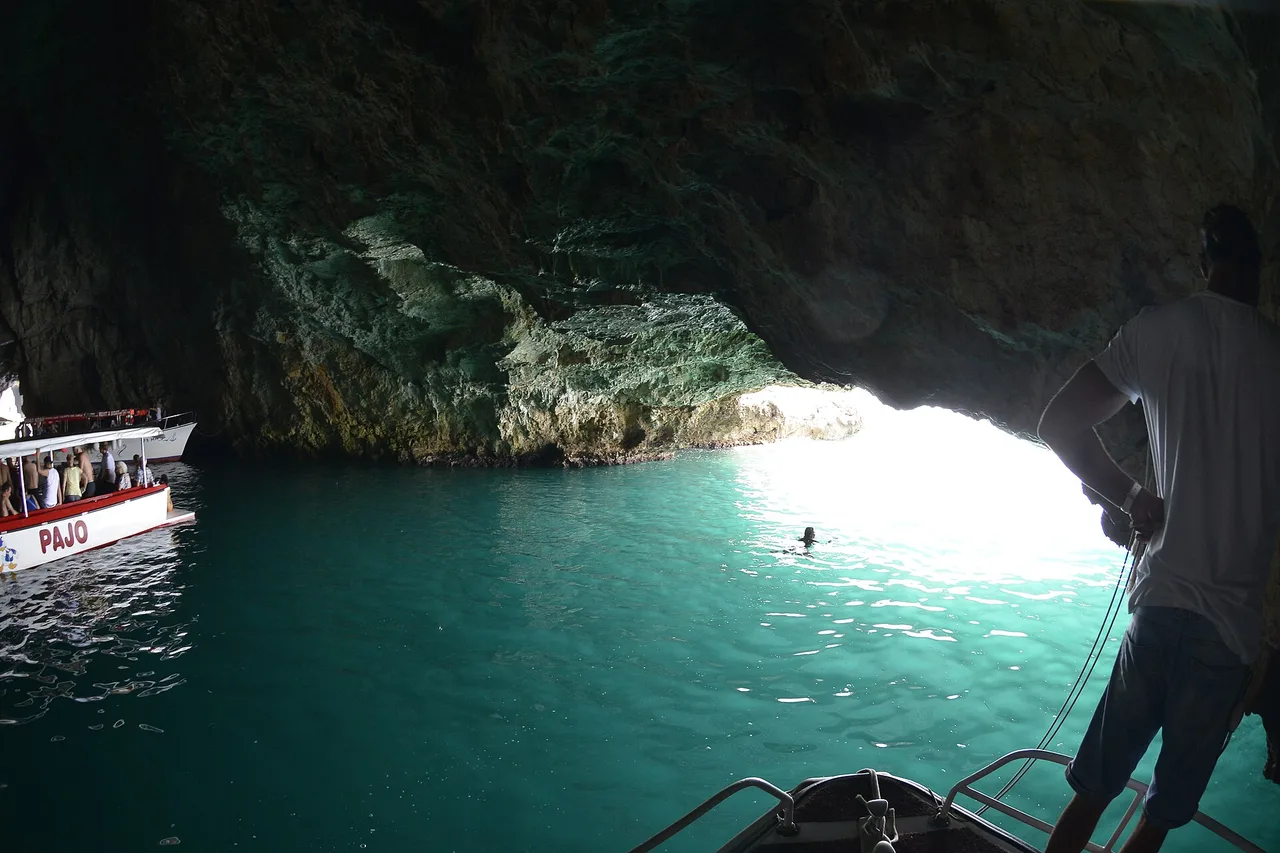
Swimmers, jet skis and divers
The shore is where the inspectors write most. The Ministry’s July count named three violations as the most frequent, without ranking them: sailing closer to the shore and swimmers than permitted, speeding, and operating without documents. The first one is the shore-approach rule of Article 8, paragraph 3, fleshed out by the map’s 50 m minimum for boats under 15 m, and it applies to every hull on the bay. Paragraph 4 is the harder edge: passenger and cargo vessels, speedboats, jet skis and hovercraft may not navigate, dock, beach or anchor at arranged, built or natural bathing areas at all. Either way, the buoyed swimming line off any beach is a wall you don’t cross.
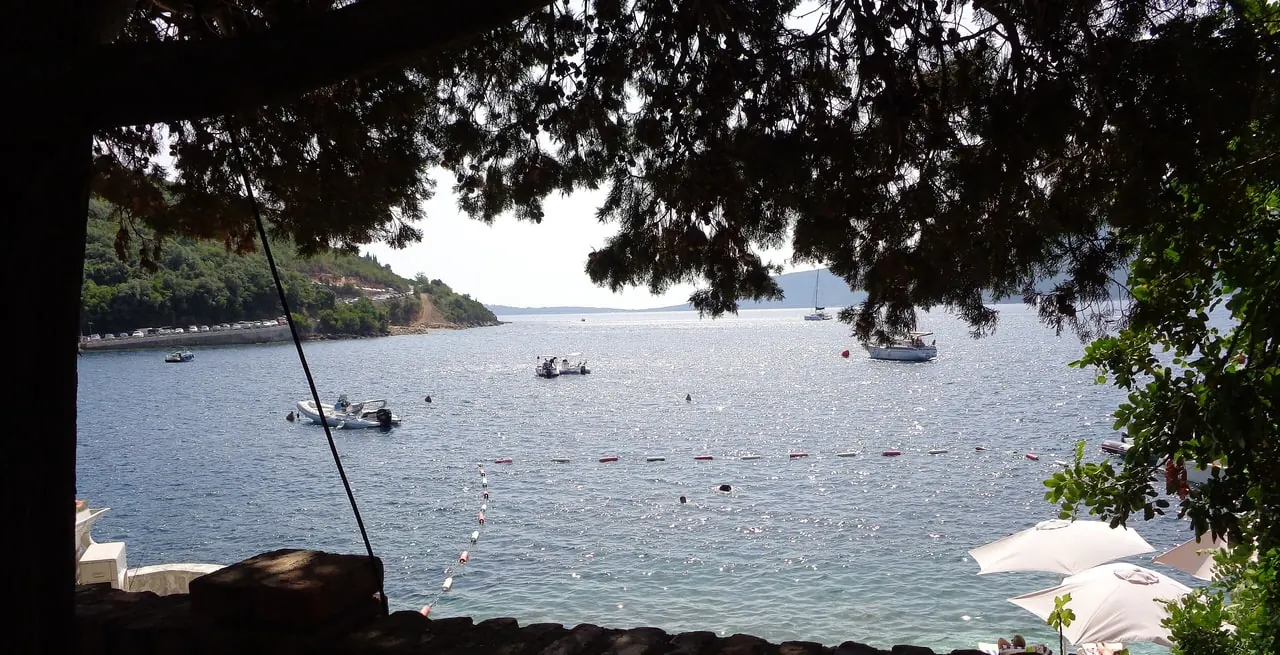
Jet skis get two extra lines in the law. Renting them out, like parasailing and any activity that tows a person, is only allowed with the harbour master’s approval (Article 15), so a beach stand without that paper isn’t cutting corners on its own licence, it’s putting you on an unapproved machine. And a jet ski with up to three seats still needs its driver to hold the basic certificate or the mornar-motorista authorisation. Divers are protected twice over: Article 16 obliges anyone spearfishing or working underwater to tow a yellow or orange buoy at least 60 cm across, and the map keeps every boat 50 m clear of that marker. Where people swim in the bay off pontoons and village beaches without buoys, the shore-distance rule is what protects them, and it protects your deposit too.
Alcohol on board
There’s no grey zone at the helm, but there is a number. Article 101 bans a crew member on a čamac from being under the influence of alcohol or drugs, an inspector may test on the spot, and refusing the test sends you to a medical examination with blood and urine analysis, with the police called if you refuse that too. The fine clause in Article 296 attaches to a crew member with more than 0.05% alcohol in the blood on duty. A positive result means removal from duty for at least eight days, and if that leaves the boat below its minimum crew, the inspector bans it from leaving. On the road the limit is 0.03%, as the driving page explains, so on paper the bay is the more lenient of the two; in practice the beer at the Perast konoba still belongs to the passengers, because “under the influence” in Article 101 has no number at all.
Fines, and what enforcement looked like in summer 2026
Breaching Article 8, which covers the speed limit, the routing rules, the anchoring rules, the shore-approach rules and the bathing-area ban, costs what Article 296 says it costs.
| Who | Fine per offence |
|---|---|
| Company (rental operator, charter firm) | €3,000-20,000 |
| Responsible person in a company, and any private individual | €500-2,000 |
| Sole trader (preduzetnik) | €500-6,000 |
| Repeat offence, same offender | up to five times the minimum |
The 2026 season shows the scale. In July the Ministry’s inspectors ran 220 checks, issued 190 penalty orders for 239 violations and wrote €204,800 in fines, split between the Bar harbour office (100 orders, €68,700) and Kotor (90 orders, €136,100). Do the division and the Kotor office’s average order comes to about €1,500 against roughly €690 in Bar, more than double for fewer orders, which fits a bay where the offenders are charter companies rather than fishermen. The first eight days of August added 126 checks, €45,900 and nine boats impounded; 15-22 August brought 90 checks, €59,200 and four more vessels taken off the water. An impounded boat, that’s the operator’s problem; the fine written to the person at the helm is yours, and so is the certificate. Between 1 and 12 July the inspectors took 20 operator certificates off people at the wheel and 24 more on 13 July alone, the Ministry said, while it was finalising the amendment with stricter penalties that took effect on 17 July.
Who to call
- 129 - the Maritime Safety Service duty line run by the Maritime Safety Administration in Bar, open around the clock for accidents, distress and anything that’s gone wrong on the water.
- Lučka kapetanija Kotor - Benovo bb, +382 32 326 242. Certificates, registration questions, the inner bay.
- Lučka kapetanija Bar - Obala 13 jula 18, +382 69 290 274. The southern coast.
- Uprava pomorske sigurnosti Bar - +382 30 313 240, the administration behind the 129 line.
Before you take the wheel
- Skippered hire means the operator’s captain carries every document above. If you don’t hold a Montenegrin certificate, that’s the product for you; the rental page compares it with a group tour.
- Bareboat starts with two questions to the operator in writing: how is the hull registered, and which certificate will you accept at the helm? Then confirm with the harbour master.
- Originals on board: certificate, the boat’s papers, any power of attorney. Missing paperwork is among the three violations the inspectors cite most.
- Six knots near anything: the shore, the straits, the southern basin, swimmers. The corridors are the only place to open up, and they’re drawn on the Ministry map.
- Never under power into a buoyed bathing area or the Blue Cave; 50 m clear of a dive buoy.
- Zero alcohol at the helm: the fine starts at 0.05% in the blood, the ban starts at “under the influence”.
- Save 129 before you cast off.
Good to know
Rules, zones and fines were read from the government bill text, the Ministry map of 26 May 2026 and the sources listed on 5 September 2026. This is general information, not legal advice - the harbour master (Lučka kapetanija) has the final word on the water.
Details checked: September 5, 2026
Read also

Before you go · 12 min read
13 Montenegro Travel Mistakes to Avoid
Verified · August 29, 2026Concrete Montenegro travel mistakes with real numbers: toll lanes, ferry queues, ATM fees, park fees per day, and roads slower than the map admits.

Before you go · 10 min read
Kotor or Herceg Novi: Which Bay Town to Stay In
Updated · August 26, 2026Kotor or Herceg Novi as your Bay of Kotor base? Old towns, beaches, cruise crowds, Dubrovnik access and prices compared - who each town suits.

Before you go · 14 min read
All-Inclusive Montenegro: Resorts That Actually Exist
Updated · August 23, 2026Real all-inclusive hotels in Montenegro are rare - most listings are half board. The five that are genuine, and how to check before you book.

Before you go · 12 min read
Montenegro SIM Card: Local Operators vs eSIM
Verified · August 17, 2026€15 buys 500 GB on a local tourist SIM. Telenor is now One. When to skip the kiosk for an eSIM. Prices checked 17 August 2026.