
Montenegro Travel Insurance: Not Required, GHIC Isn't Enough
Not required for visa-free entry, but care is often paid up front. The certificate a UK GHIC needs, rescue cover, and activities your policy must name.
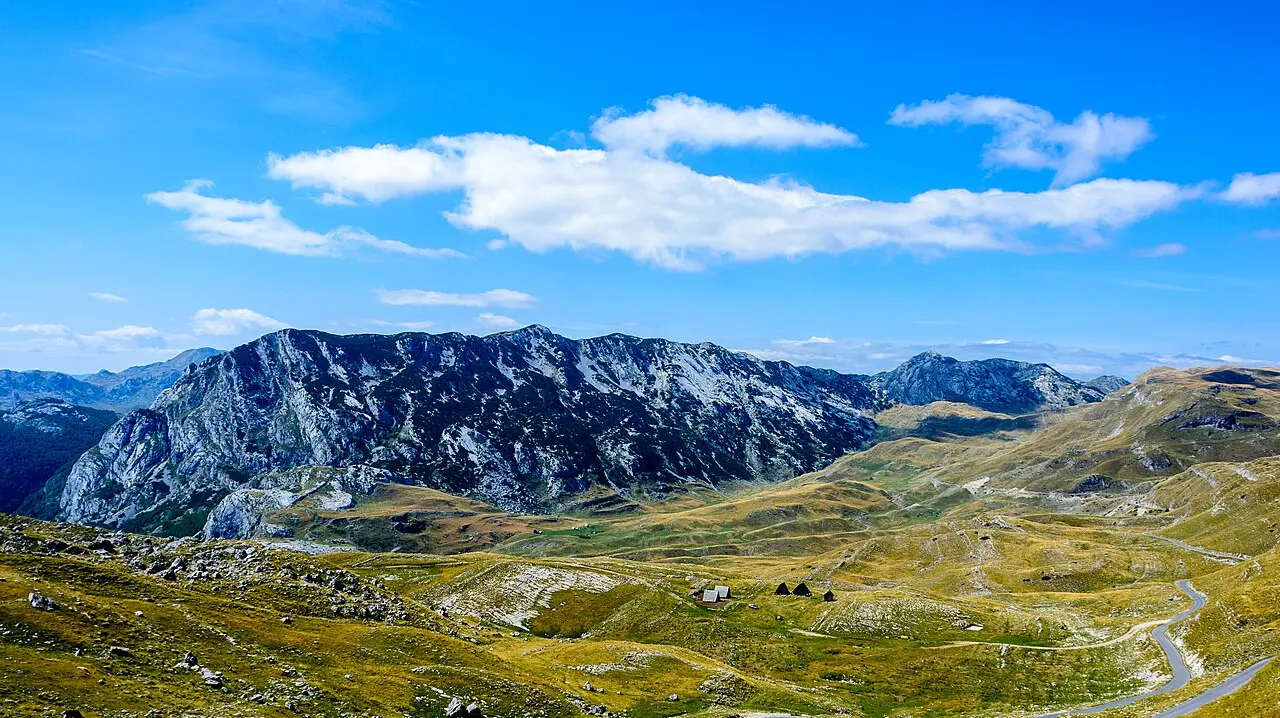
Travel insurance is not required to enter Montenegro if you travel visa-free, which covers US, UK, Canadian, Australian and EU passports for short stays. It becomes close to essential the moment you land, because healthcare for foreigners is paid up front and a mountain or sea rescue can cost many times the price of the trip. If you’re going to raft the Tara, walk the Durmitor high trails or ride a scooter along the coast, the policy also has to name those activities: standard plans often exclude them. And if you’re British, there is a piece of paperwork almost nobody carries that decides whether your hospital bill is free or unrefundable.
Checked 1 August 2026 - verify before you buy. General information, not insurance or legal advice. Entry rules, healthcare agreements and policy terms change, so confirm the current position on the official sources linked here and in your own policy wording.
Is travel insurance required to enter Montenegro?
Not for visa-free visitors. Montenegro doesn’t ask arriving tourists to show a policy at the border, and citizens of the EU, the UK, the US, Canada, Australia and dozens of other countries enter without a visa - EU nationals for up to 30 days on an ID card or 90 days on a passport, most other visa-exempt nationalities for up to 90 days (gov.me visa page, checked 1 August 2026). Our Montenegro entry requirements guide has the full border picture, including the rule that catches people out: you must register with the police or tourist office within 24 hours of arrival (hotels do it for you).
It’s a different story if your passport does need a visa. The documents for a Montenegrin short-stay (C) visa include proof of health insurance and evidence of means of support of at least €50 for each day of the requested stay, and the same official page lists failure to “submit proof of travel health insurance” among the grounds for refusing a visa. The same goes for a longer stay: a residence permit such as the digital nomad visa can require proof of health cover, so check the current requirements on official channels. Apply for anything and the policy becomes paperwork rather than a precaution.
But “not required” isn’t the same as “not needed.” What makes a policy near-essential starts after the border, not at it.
Healthcare is pay-as-you-go for foreigners. Public hospitals will treat you, but as a non-resident you’re billed, and you typically pay before or at the point of care. Canada’s government travel advice puts it plainly: doctors and hospitals here “often expect immediate cash payment for health services” (travel.gc.ca, checked 1 August 2026). A GP visit may be modest; an X-ray, an admission or surgery is the bill that hurts.
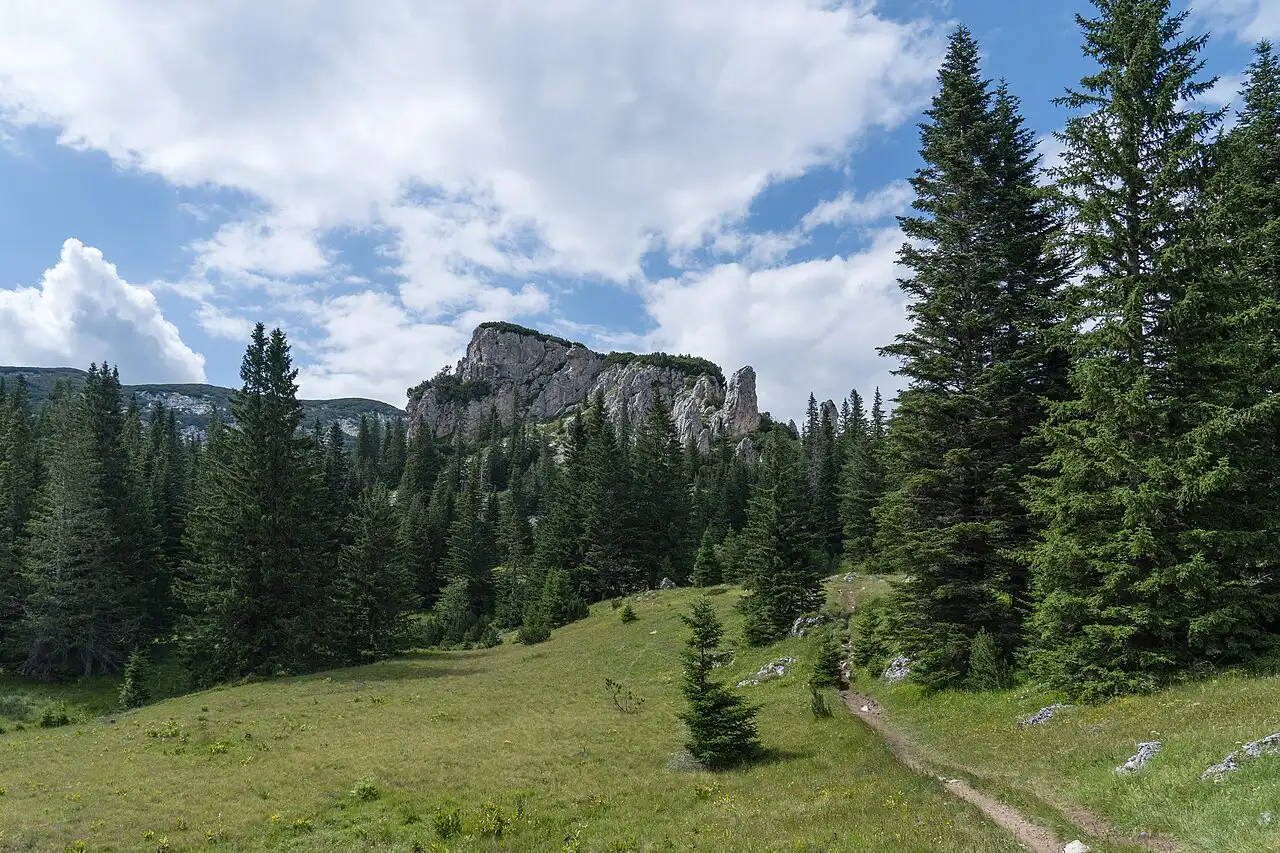
Evacuation is where the real money is. A canyon floor, a ridge above 2,000 m and an empty beach can sit within an hour of each other here, and none of them is within an hour of a hospital. If something goes wrong on a remote trail or river, a mountain or helicopter rescue plus repatriation home costs many times more than the trip itself. The same Canadian advice tells hikers and climbers to “buy travel insurance that includes helicopter rescue and medical evacuation”, and notes that trails here “are not always marked and weather conditions can change rapidly, even in summer”. That’s the single most important line in your policy.
The GHIC works here, but only with a certificate you apply for
Most guides get this wrong in both directions, so here’s the mechanism. Montenegro recognises the UK’s Global Health Insurance Card (GHIC). The NHS lists Montenegro among the places a UK GHIC can be used, and the Foreign Office states it plainly on its Montenegro health page, under a reciprocal agreement that entitles British nationals to free emergency treatment (NHS and gov.uk, both checked 1 August 2026).
Carrying the card isn’t the last step, and this is where the money disappears. You must hold a valid British passport and the GHIC “to apply for a certificate of entitlement from the Montenegrin Health Insurance Fund”, and it’s that certificate, not the card in your wallet, that unlocks free or subsidised care at state-run facilities. Apply for it “in advance or as soon as possible after an urgent admission to hospital”, because the Foreign Office spells out the alternative in one sentence: “If you do not have a certificate, you will have to pay for the treatment and paid bills cannot be reimbursed.” Pay now and reclaim later, the normal reflex abroad, gets you nothing here.
Which document does the work depends on who you are: the NHS says a UK passport gives UK nationals access to emergency healthcare here, while UK residents who are not UK nationals need their passport plus a UK GHIC (or older UK EHIC). Either way the hospital acts on the certificate, so start that application instead of waving a card at the desk.
“Free” is also narrower than it sounds. Only emergency treatment is covered: the NHS states you’ll pay for prescribed medicines and for other medical treatment. The card does nothing about being flown home, treatment in a private facility, or ski and mountain rescue, which is why the NHS tells you to hold a card and private travel and medical insurance. Helicopter rescue being the risk most worth insuring here, the card is a supplement, never a substitute.
If you’re not British, don’t assume a card covers you. Montenegro isn’t in the EU or the EEA, so an EU-issued EHIC gives you no entitlement here, and there’s no equivalent for US, Canadian or Australian travellers: domestic health plans and Medicare-style cover generally stop at the border. A few countries hold their own bilateral healthcare agreements with Montenegro, so an EU passport is worth a two-minute call to your national health insurer before you find out at a hospital desk.
What a good Montenegro policy should cover
Think of cover in layers: the first two are non-negotiable, the rest depend on your trip.
| Cover | Why it matters in Montenegro |
|---|---|
| Emergency medical treatment | Hospitals bill foreigners directly, often in cash; this is the core of any policy. |
| Medical evacuation & repatriation | The expensive one - helicopter, mountain or sea rescue and getting you home. |
| Trip cancellation & interruption | Refunds non-refundable bookings if you must cancel or cut a trip short. |
| Lost, stolen or delayed baggage | Covers gear and essentials, useful on multi-stop coast-and-mountain trips. |
| Personal liability | If you accidentally injure someone or damage property. |
| Adventure activities | Rafting, hiking, canyoning, diving - only if explicitly listed (see below). |
The last line matters most on an active trip. Standard travel insurance often excludes adventure sports, or covers only gentle versions of them. If you plan to raft the Tara, hike the higher Durmitor trails, go canyoning, zip-lining or diving, confirm in the wording that your activities are named and that the altitude or grade you’ll reach is within the limits. Buying the cheapest plan and discovering the exclusion after a claim is the classic mistake.
Insurance for adventure activities (rafting, hiking, more)
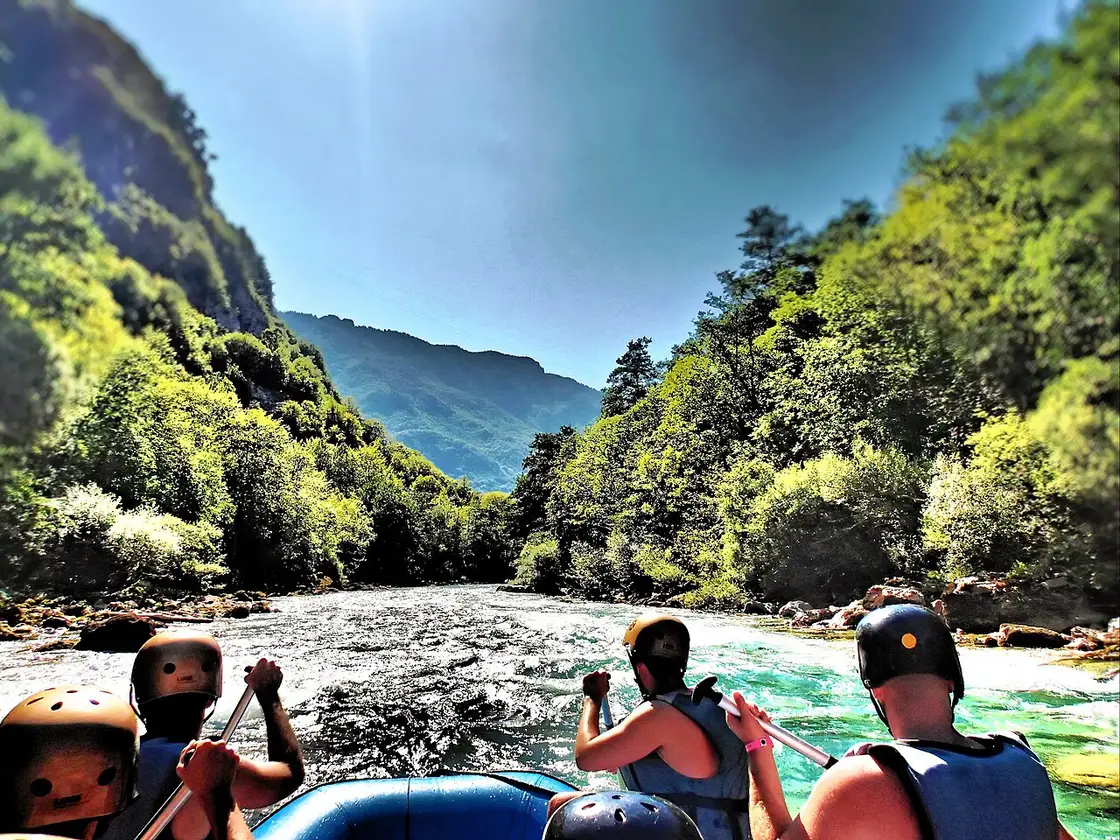
The north is Montenegro’s adventure heartland, and the add-ons most travellers buy - Tara Canyon rafting and Durmitor hiking - sit exactly where ordinary leisure policies get nervous.
- Rafting the Tara. White-water rafting is usually classed as an adventure or “hazardous” activity. Check that your policy lists rafting and does not cap it below the grade of water you’ll run.
- Hiking and mountaineering in Durmitor. Casual walking is normally included, but many policies set an altitude limit, above which you’re uninsured. Durmitor’s peaks climb past 2,000 m, so a higher-altitude trek may need an upgraded plan.
- Other sports. Canyoning, diving, paragliding, zip-lines, kayaking and via ferrata each have their own clauses. If it’s on your itinerary, it should be named in your policy.
- Winter sports and scooters. Skiing at Savin Kuk or Kolašin is normally a paid add-on rather than part of a summer policy, and riding a scooter or quad bike, the classic coastal holiday impulse, is often excluded unless you hold the right licence and wear a helmet.
In doubt, ask the insurer to confirm in writing that your activities are covered; the detail lives in your policy wording.
Insurance for digital nomads and long stays
Staying for weeks or months, increasingly common here, makes a single-trip tourist policy the wrong tool. Long-stay travellers and remote workers usually want continuous cover that renews monthly and isn’t tied to one return date, often with a primary-care element rather than emergencies only. That’s what nomad-focused plans are built for, and they normally price by month rather than by trip. Our cost of living in Montenegro guide covers the wider budget picture. Inclusions differ sharply between providers, so confirm the terms before you buy.
Travel insurance vs car rental cover (CDW)
These two get confused constantly, and they protect completely different things. Travel insurance protects you - your health, your trip, your belongings. Car rental insurance protects the car, and is a separate product.
Hire a vehicle and you’ll be offered a Collision Damage Waiver (CDW) and theft protection, which cap your liability for damage to the rental, usually with an excess you still owe. Your travel policy won’t pay for that damage. Our renting a car in Montenegro guide explains how CDW, the excess and cross-border green-card rules work. Some travellers add a standalone “excess reimbursement” product; check you aren’t paying twice for the same protection.
What a policy actually costs
Your quote depends far more on you than on Montenegro: age, trip length, cover limits and any adventure add-on move the number more than the destination does. None of the figures below is an insurer’s price or a quote for your trip, and they aren’t like for like. Squaremouth and MoneySuperMarket publish averages of the policies sold through them, not Montenegro figures; HealthQuotes gives one example range for a three-week Europe trip; Finder gives the starting price for basic cover. Each publisher is named in the last column. Montenegro is in Europe but not in the EU, so check that it falls inside the area your policy covers.
| Where you buy | Market figure (not a quote) | Who publishes it, and date |
|---|---|---|
| United States | Average $307 a policy, with an average trip of 15 days, roughly $20 a day; comprehensive plans run 4-10% of insured trip cost, averaging around 6% | Squaremouth, a comparison marketplace, from its 2026 sales data, checked 13 Sep 2026 |
| United Kingdom | Average £22.43 single trip, £52.09 annual multi-trip, across policies sold through it in August 2026 | MoneySuperMarket, a price-comparison site, checked 13 Sep 2026 |
| Canada | Example range of CA$120-180 for a full package on a three-week Europe trip with prepaid hotels, healthy 35-year-old | HealthQuotes, a broker comparison tool, May 2026, 2025 market rates |
| Australia | Basic cover advertised from A$3.36 a day; comprehensive plans cost well above that | Finder, a comparison site, updated 16 Apr 2026 |
Age is one of the top factors in the price. In Squaremouth’s breakdown by generation, drawn from its quotes and sales over the last 12 months, travellers born in 1945 or earlier averaged $681 a policy, Gen Z (born 1997-2012) $209 and millennials, the cheapest group, $173. It isn’t age alone: Squaremouth puts the oldest group’s higher price down to health risks as well as longer, more expensive trips. The other thing the averages hide: a cheap headline price usually means a high excess or a short exclusions list you haven’t read, which is precisely the wrong saving on a trip that might involve a canyon.
Set against the cost of a helicopter callout, the premium isn’t where you optimise.
How to choose your cover amount
Because limits vary so much, the useful question isn’t “how much does it cost” but “how high should the limits be.” A few principles travel well:
- Prioritise the medical and evacuation limits. These protect you from a catastrophic bill; generous evacuation cover beats a high baggage limit.
- Match the activity to the policy, not the policy to the price. If you’re rafting or trekking, the right plan is the one that names those activities.
- Check the excess (deductible). A low premium with a high excess means you pay most small and mid-size claims yourself.
- Mind the exclusions. Pre-existing conditions, alcohol-related incidents and “unlisted” activities are the common gaps.
- Keep the paperwork. Save the policy number and the 24-hour assistance line on your phone.
None of these figures is a Montenegro price or your quote, and none of them says what your policy covers: use the table to sanity-check a quote, the checklist to judge the policy.
Disclaimer. General information, not insurance or legal advice; last reviewed 1 August 2026. Entry rules, healthcare agreements and insurance terms change - check the official sources linked above and your own policy wording before you travel or buy.
Nearby / read also
- Insurance section - all our cover guides.
- Montenegro entry requirements - visas, ETIAS and the 24-hour registration rule.
- Renting a car in Montenegro - how CDW and the excess differ from travel insurance.
- Durmitor National Park - where adventure cover earns its keep.
- Best time for hiking in Montenegro - the months that put you above your policy’s altitude limit.
- Lake Skadar - the gentle day out, baggage cover still worth having.
- How many days in Montenegro - plan the trip your policy covers.
- Is Montenegro safe for tourists? - the risks a policy backs you up against.
Read also

Before you go · 16 min read
Bay of Kotor Boating Rules: Licence, Speed Limits & Fines
Updated · September 5, 2026Montenegro boat rules 2026: certificate at 18 for self-drive, 6 knots within 300 m, 18-knot corridors, no motor boats in the Blue Cave, fines from €500.

Food · 9 min read
Where to Eat in Tivat: Porto Montenegro & Konobas
Verified · September 5, 2026Where to eat in Tivat: Porto Montenegro marina tables, Kalimanj konobas, and Luštica Italian menus with prices from restaurant sources.

What to see · 10 min read
Hiking Bobotov Kuk: Durmitor Highest Peak
Verified · September 4, 2026Bobotov Kuk hike at 2,523 m: Sedlo (~10 km RT) vs Lokvice from Black Lake, €5 park fee, cables, season and early-start tips.

Food · 9 min read
Best Restaurants in Herceg Novi: Riviera Dining
Verified · September 3, 2026Where to eat in Herceg Novi: Old Town konobas, Pet Danica seafood, Meljine marina and Žanjice beach tables - our shortlist, checked Sep 2026.