
Montenegro Digital Nomad Visa 2026: Requirements & Process
How the Montenegro digital nomad residence permit works in 2026: income rules, the tax question, documents, how to apply and the 2026 programme deadline.

Montenegro’s “digital nomad visa” is really a temporary residence permit for remote workers, and in 2026 it lets you live in the country for up to four years while paying no Montenegrin income tax on money you earn from abroad. To qualify you work online for a company or clients based outside Montenegro, prove an income of roughly three times the local minimum wage, and apply in person once you’re already in the country. The catch: the programme is currently scheduled to close at the end of 2026, so timing matters.
Disclaimer - verify before you act. This is general guidance, last reviewed on 15 July 2026, not legal or tax advice. Residence and tax rules change, and the income threshold is a moving figure. Confirm the current requirements on the official government portal digitalnomads.gov.me and, for anything tax-related, talk to a Montenegrin accountant before you commit.
What the “visa” actually is
There’s no separate Montenegrin visa stamped in your passport for this. What you get is a temporary residence permit for digital nomads (boravišna dozvola), created under the government’s programme to attract remote workers. Most Western travellers can already enter Montenegro visa-free for 90 days in any 180, so the usual pattern is: arrive first, then apply for the permit in-country. If you want the entry side of this straight, read our Montenegro entry requirements guide before you book flights.
The distinction matters because the permit ties you to conditions the tourist stamp doesn’t: your income has to come from outside Montenegro, you need a local address, and you have to keep health insurance for the whole stay.
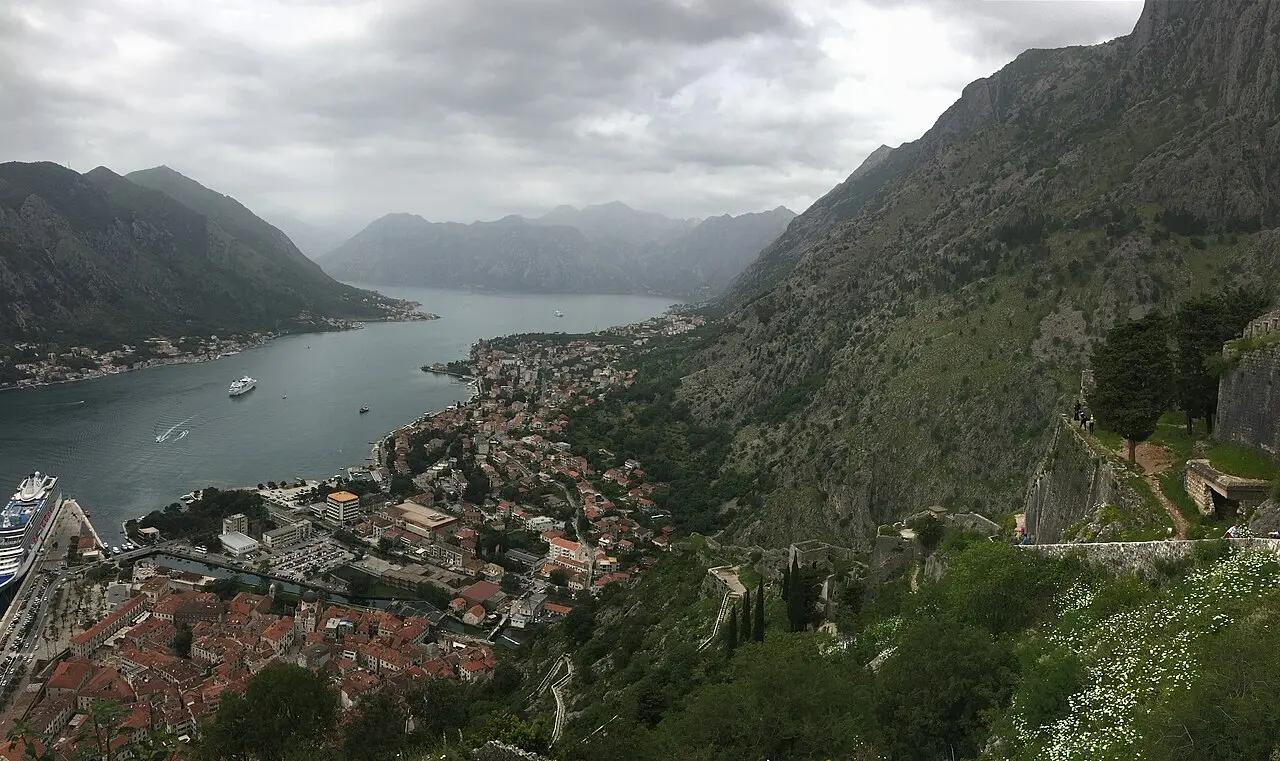
Who qualifies
The rule is about where your money comes from, not your nationality. You’re eligible if you’re employed by, or run, a company that’s not registered in Montenegro and you do that work electronically. In practice that covers salaried remote employees of a foreign firm, freelancers with clients abroad, and people running their own company registered somewhere else. What it doesn’t cover is taking a local Montenegrin job or invoicing Montenegrin clients - the income has to be foreign-sourced.
You also can’t have a serious criminal record. The official condition is that you must not have been sentenced to an unconditional prison term of more than six months, and you provide a police clearance certificate from home to prove it.
The income requirement, as a formula
This is the number people want, and it is the one most likely to be out of date in any article, so treat it as a formula rather than a fixed figure. Montenegro sets the bar as a multiple of the national minimum wage - most guidance points to about three times it - and the minimum wage is revised periodically.
In practice, that has worked out to roughly €1,800 to €2,400 per month in recent 2026 guidance, depending on your education level. As a mid-2025 sense check, the minimum wage sat around €670, which put the bar near €2,010. Because the underlying number moves, do not budget to the euro off a blog post: check the current multiplier and minimum wage on the official portal, then confirm the exact figure with the Ministry.
You show you meet it with bank statements. Guidance commonly asks for three to six months of statements, so keep your account tidy in the run-up rather than moving a lump sum in the week before you apply.
How long you can stay
The permit is issued for up to two years, and you can extend it for a maximum of two more - so four years is the ceiling under the current rules. If you want an extension, submit the request no later than 30 days before your permit expires; leaving it to the last week is how people end up with a gap. Once a permit finally runs out, the rules let you apply for a fresh one only six months after it expired, so this isn’t designed as a permanent-residence back door.
The tax question
The headline is real but comes with a caveat worth understanding. Under Article 32d of Montenegro’s Law on Personal Income Tax, digital nomad permit holders are exempt from Montenegrin personal income tax on foreign-sourced income - effectively 0% locally on the money you earn from abroad. That’s the genuine draw.
The caveat is tax residency. Spend more than 183 days in a calendar year in Montenegro and you can be treated as a tax resident, which changes how your worldwide income is viewed both here and back home. Your home country may also still want its share depending on its own rules and any double-taxation treaty. None of that cancels the benefit, but it does mean the “tax-free” line only holds if your situation is set up correctly - genuinely a case for a short paid session with an accountant rather than a forum thread.
Documents you need
The official checklist is short, but each item hides some legwork (apostilles and certified translations of foreign papers take time):
- A valid passport or ID, valid for at least three months beyond the permit period.
- Proof of income / financial means (the bank statements above).
- Proof of accommodation - a rental contract or property at a Montenegrin address.
- Health insurance valid in Montenegro for the stay.
- An employment contract or equivalent showing you work online for a foreign company or your own company not registered here.
- A criminal record certificate from your home country.
Two of these quietly shape the whole move. Insurance is a hard requirement, not a formality, so sort a policy that a Montenegrin authority will accept - our Montenegro travel insurance guide covers what nomads tend to use. And the accommodation proof means you usually need somewhere to live lined up before the paperwork, which pushes you toward a long-stay rental rather than hopping between short lets.
How to apply, step by step
The process is deliberately low-tech and done on the ground:
- Enter Montenegro on your visa-free stay and settle a place to live.
- Gather and legalise the documents - get your police certificate and any foreign papers apostilled and translated where required.
- Apply in person at the Ministry of Internal Affairs office for the area where you live, on the prescribed form. There’s no fully online route; you submit the file yourself.
- Wait for the decision. The Ministry works to a limit of 40 days from a complete application, then you collect the residence card.
Expect modest official fees rather than a big price tag - recent reporting puts the administrative cost around €40 to €70 depending on location, plus roughly €25 for the residence card. Treat those as approximate and confirm the current amounts when you apply.
What it really costs to live here
The permit is the cheap part; the rent isn’t. A single remote worker generally needs somewhere in the region of €1,200 a month all in for a comfortable-but-modest life, more on the coast in summer. We break the numbers down by city, rent and lifestyle in the cost of living in Montenegro guide, and it is worth reading alongside the income requirement - the threshold you must prove and the budget you actually spend are two different figures. Montenegro uses the euro, which keeps banking simple; see our currency and money notes for cards and cash.
Coworking and coliving (what actually exists)
Montenegro doesn’t have a dense coworking market the way Lisbon or Bali do. Dedicated spaces open and close with the season, and most remote workers end up in a mix of a rented flat, a handful of cafe tables with stable wifi, and - on the coast in summer - one or two paid desks if a space is still running when you arrive. Treat any “coworking Montenegro” list you find online as a starting point to verify on the ground, not as a guarantee.
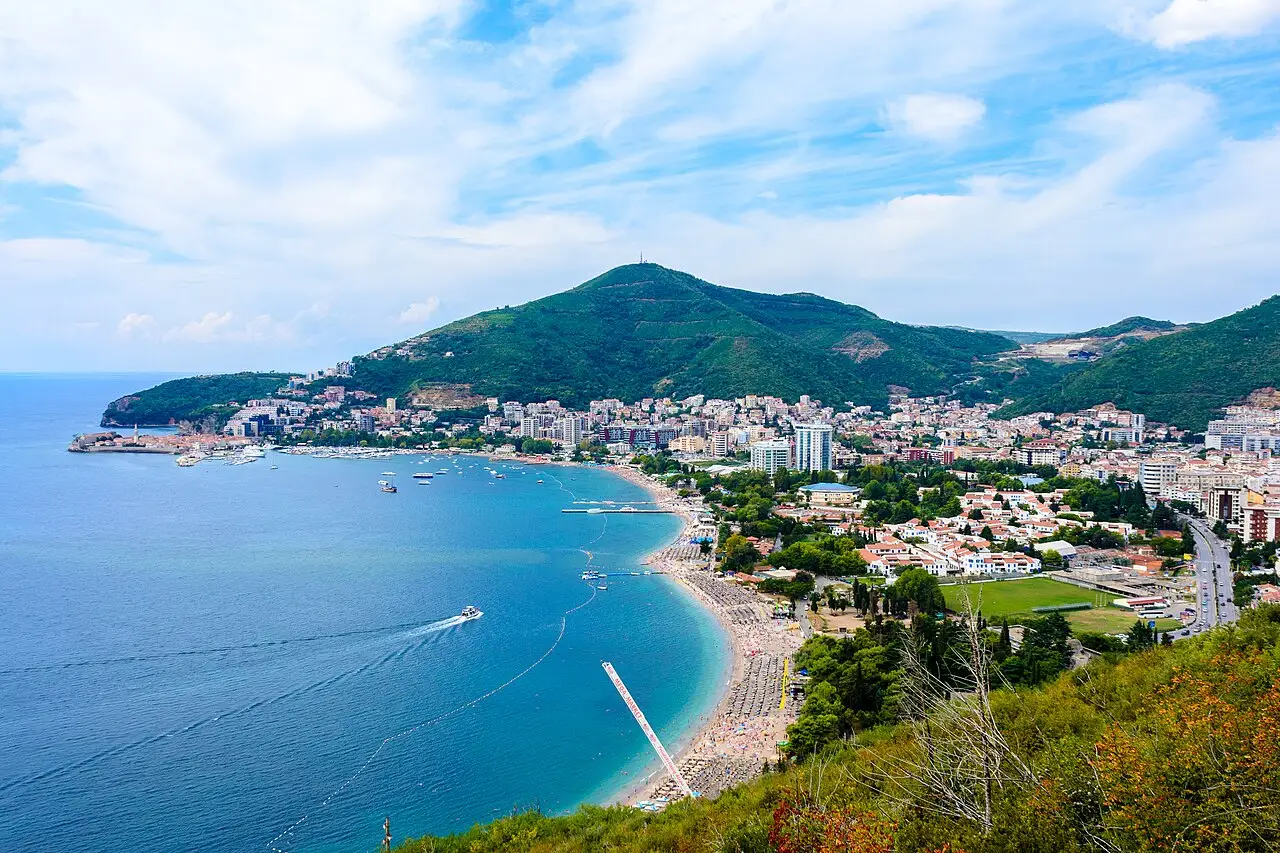
Where people actually work. Tivat (Porto Montenegro and the newer apartments around it) and Budva have the densest cafe-wifi scene and the easiest monthly rentals. Podgorica is quieter socially but practical if your priority is paperwork and banks. Kotor’s Old Town is beautiful and usually a poor desk: crowded, noisy, and short on reliable seating once cruise ships dock. Before you sign a long lease, test the flat’s upload speed yourself - a “fast wifi” listing can still choke a video call.
Coliving. Formal coliving houses are rare. What you get instead is long-stay apartments and the occasional shared flat advertised to remote workers in season. For a first base while you look, use a month-flexible stay rather than a year lease - the hotel comparison box on this page and the cost of living guide help size rent before you commit. Day-pass or monthly desk prices, when a space exists, move with the season; confirm on the day rather than budgeting off an old blog post.
There’s no separate coworking guide on this site: search demand for coworking montenegro on our domain hasn’t justified a standalone page, so the practical picture lives here next to the permit itself.
The deadline you cannot ignore
Here’s the part that changes your timeline. The scheme began as a “Programme for Attracting Digital Nomads in Montenegro” that originally ran only to 2025, was extended, and is currently scheduled to expire on 31 December 2026. As of mid-2026 the government had not published a decision on what happens next - it could be extended again, replaced, or wound down.
Because a decision takes up to 40 days and your file has to be complete and legalised first, do not aim for December. Realistically you want your application in by around October 2026 to give the Ministry time to decide before the programme’s end date. If you’re reading this later in the year, check the official portal for the current status before you plan a move around it - this is exactly the kind of time-limited rule that gets quietly renewed or dropped.
Is it worth it?
For a remote worker who wants an affordable, EU-adjacent base on the Adriatic with a genuine tax break and a straightforward in-person process, it is one of the more accessible nomad permits in Europe - especially next to the paperwork-heavy schemes in Portugal or Spain. The honest downsides: the four-year ceiling means it’s not a path to settling for good, the 2026 deadline creates real uncertainty, and the “0% tax” only works cleanly if you handle residency properly. Go in for a defined chapter rather than a forever move, sort insurance and an accountant early, and Montenegro rewards it with mountains, coast and a low-friction life. If you would rather scout it on a short trip first, our Montenegro trip cost and daily budget guide shows what a visit runs before you commit to a year.
Read also

Relocation · 8 min read
Cost of living in Montenegro: a 2026 budget guide
Updated · August 9, 2026How much does it cost to live in Montenegro in 2026? Rough monthly budgets, rent by property type and city, and a digital-nomad note - estimates to verify.

Before you go · 16 min read
Bay of Kotor Boating Rules: Licence, Speed Limits & Fines
Updated · September 5, 2026Montenegro boat rules 2026: certificate at 18 for self-drive, 6 knots within 300 m, 18-knot corridors, no motor boats in the Blue Cave, fines from €500.

Food · 9 min read
Where to Eat in Tivat: Porto Montenegro & Konobas
Verified · September 5, 2026Where to eat in Tivat: Porto Montenegro marina tables, Kalimanj konobas, and Luštica Italian menus with prices from restaurant sources.

What to see · 10 min read
Hiking Bobotov Kuk: Durmitor Highest Peak
Verified · September 4, 2026Bobotov Kuk hike at 2,523 m: Sedlo (~10 km RT) vs Lokvice from Black Lake, €5 park fee, cables, season and early-start tips.