
Where to Stay in Ulcinj: Old Town vs Velika Plaža
Where to stay in Ulcinj: Old Town for atmosphere and Mala Plaža below, or Velika Plaža for 13 km of sand, kitesurf and resort hotels - who each suits.
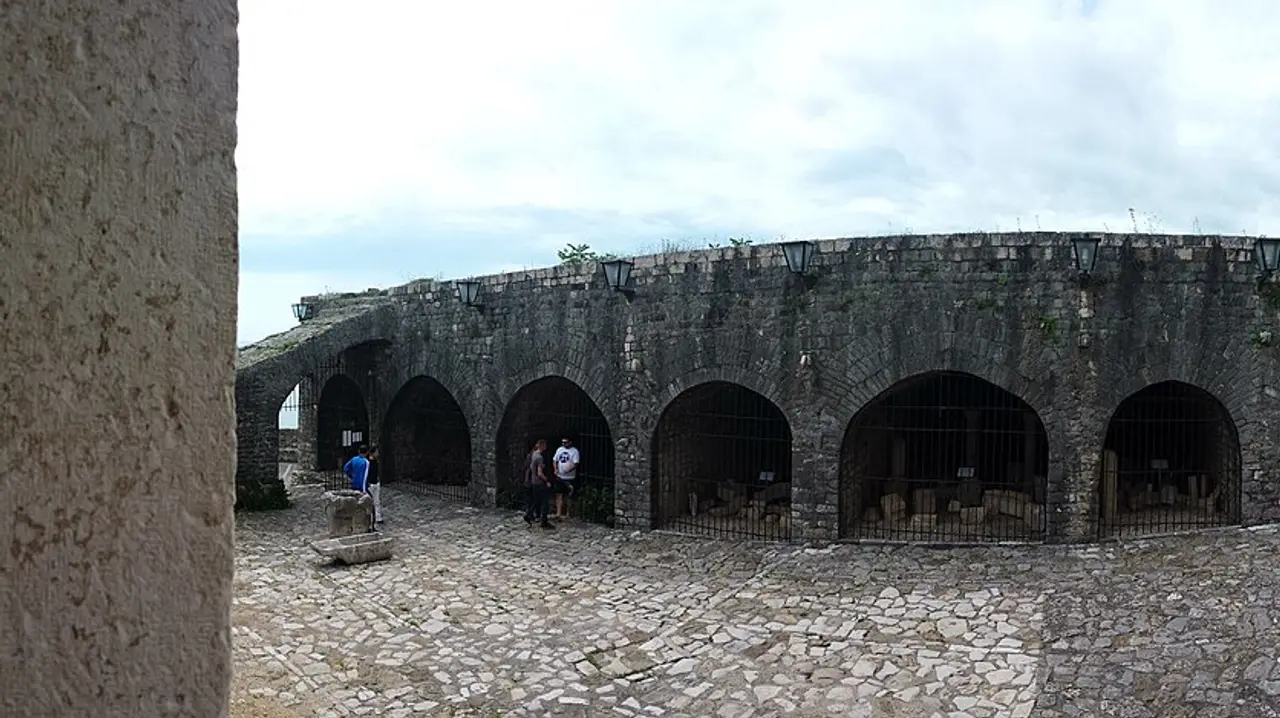
If you’re choosing between Ulcinj’s two main bases, pick the Old Town (or the streets just below it) when atmosphere, restaurants and a walkable fortress matter more than waking up on sand. Pick the Velika Plaža strip when the trip is a beach holiday - shallow sand, kitesurfing and resort hotels on the longest beach in the country. Most first-timers split the difference wrong: they book the Old Town expecting Long Beach on the doorstep, or they sleep on Velika Plaža and then taxi in every evening for dinner in the lanes. The fortress history, the Salina’s flamingos and the drive down from Bar all belong to the Ulcinj guide - this one sticks strictly to beds. Still weighing Ulcinj against Budva or Kotor as your base? Where to stay in Montenegro answers that question before you get here.
Who wins: Old Town or the Long Beach strip?
| You want… | Stay in… |
|---|---|
| Walled lanes, minarets, cafés on the bluff | Old Town (or immediately below on Mala Plaža) |
| A swim framed by the fortress walls | Mala Plaža area, still walkable to the Old Town |
| Sand, shallow water, kitesurf schools | Velika Plaža strip (accept the resort-road setting) |
| Naturism, river fish, a different rhythm | Ada Bojana - a separate base, not a suburb of town |
Ulcinj is spread out. The walled Kalaja sits on a rocky point; Mala Plaža is the small town beach tucked under it; and Velika Plaža runs southeast from the edge of town as a broad ribbon of sand toward the Albanian border. They’re only a few kilometres apart on the map, but they’re different holidays - cobbles and call to prayer versus pool decks and afternoon wind on the kite line.
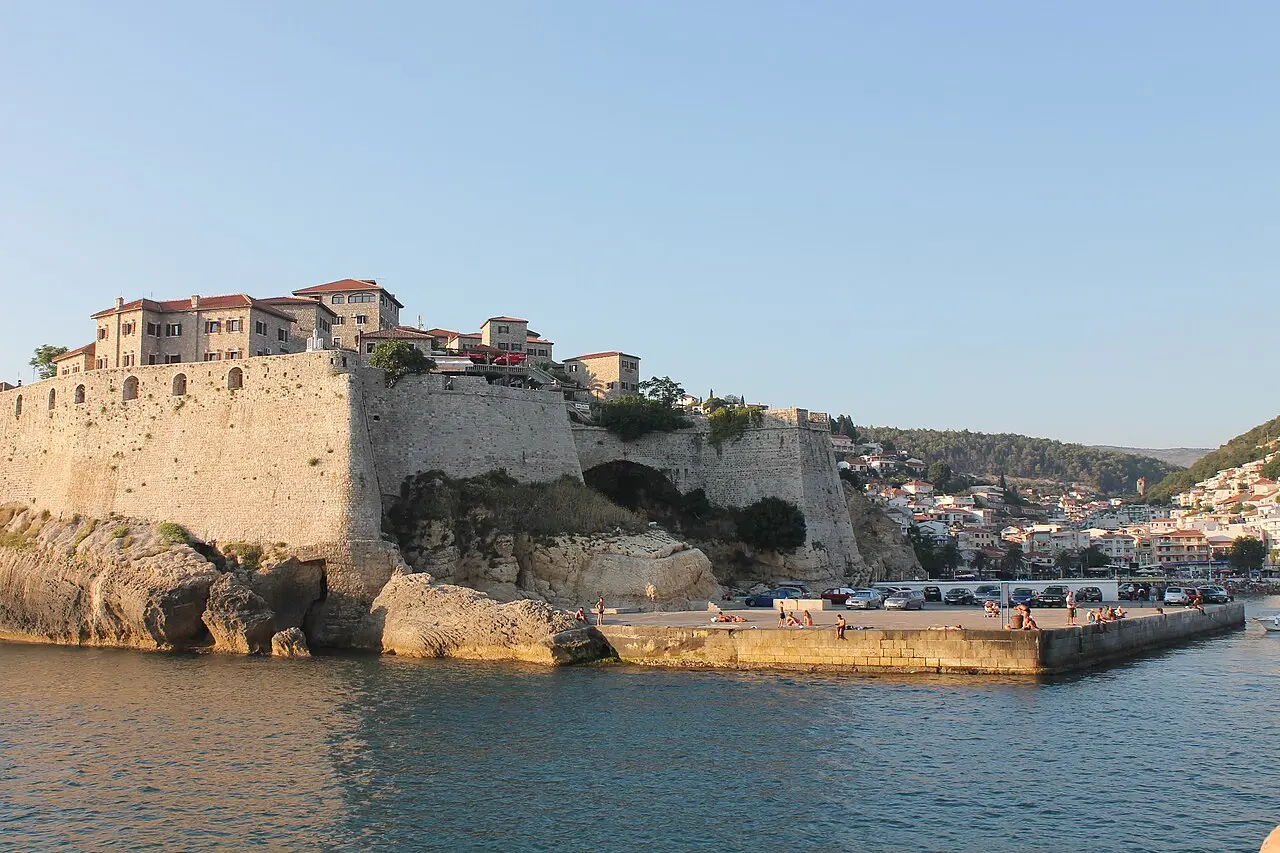
The Old Town and Mala Plaža: atmosphere on the bluff
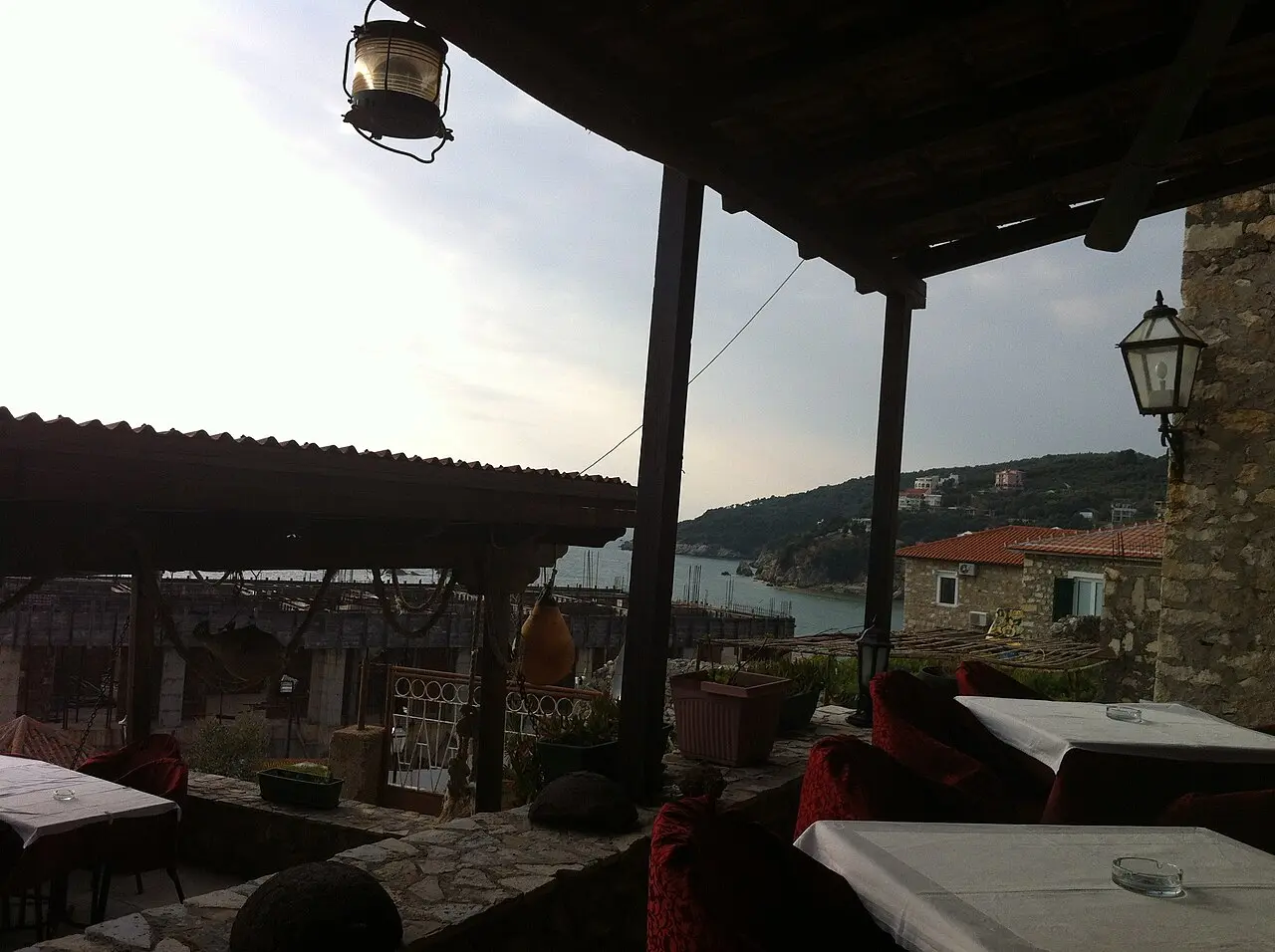
Staying in or just below the Old Town puts you in the most distinctive corner of Montenegro’s coast. The walled citadel climbs a rocky bluff above the harbour, with Ottoman minarets among the rooftops and narrow stone lanes that feel closer to Albania than to Kotor. A small number of boutique hotels and guesthouses sit inside the walls or on the slope just outside; you’ll trade resort amenities for views from the ramparts and a two-minute walk to a square for coffee.
Right under the fortress is Mala Plaža (“Small Beach”) - a compact, 360-metre crescent that’s pretty, central and busy in July and August; the town’s own tourism board puts capacity at around 2,500 people on a full day, and the sand runs out into the town harbour at its far end, tucked beneath the Old Town walls. (What reads as dark from a distance is mostly the seabed, not the sand itself.) The Korzo promenade runs between the cafés and the water, and on summer evenings it fills with families and strollers; pedestrian traffic can run late, so light sleepers should look for a room set back from the front rather than over the busiest strip. You’ll hear the call to prayer from the mosques - part of the town’s character, not a surprise to plan for.
What you don’t get here is Velika Plaža’s scale. The Long Beach starts southeast of town; reaching the near edge of the wide, empty sand is a walk of around 35-40 minutes (about 2.7 km), and the main hotel strip further along the coast is better reached by a short taxi or local bus. Parking near the Old Town is tight in peak season, and the lanes are steep - fine with a small bag, awkward with heavy luggage. For a two- or three-night stop focused on the fortress, the harbour and evening meals, this is the right base; for a week of sand and watersports, you’ll be commuting.
Velika Plaža: sand, kitesurf and the resort strip
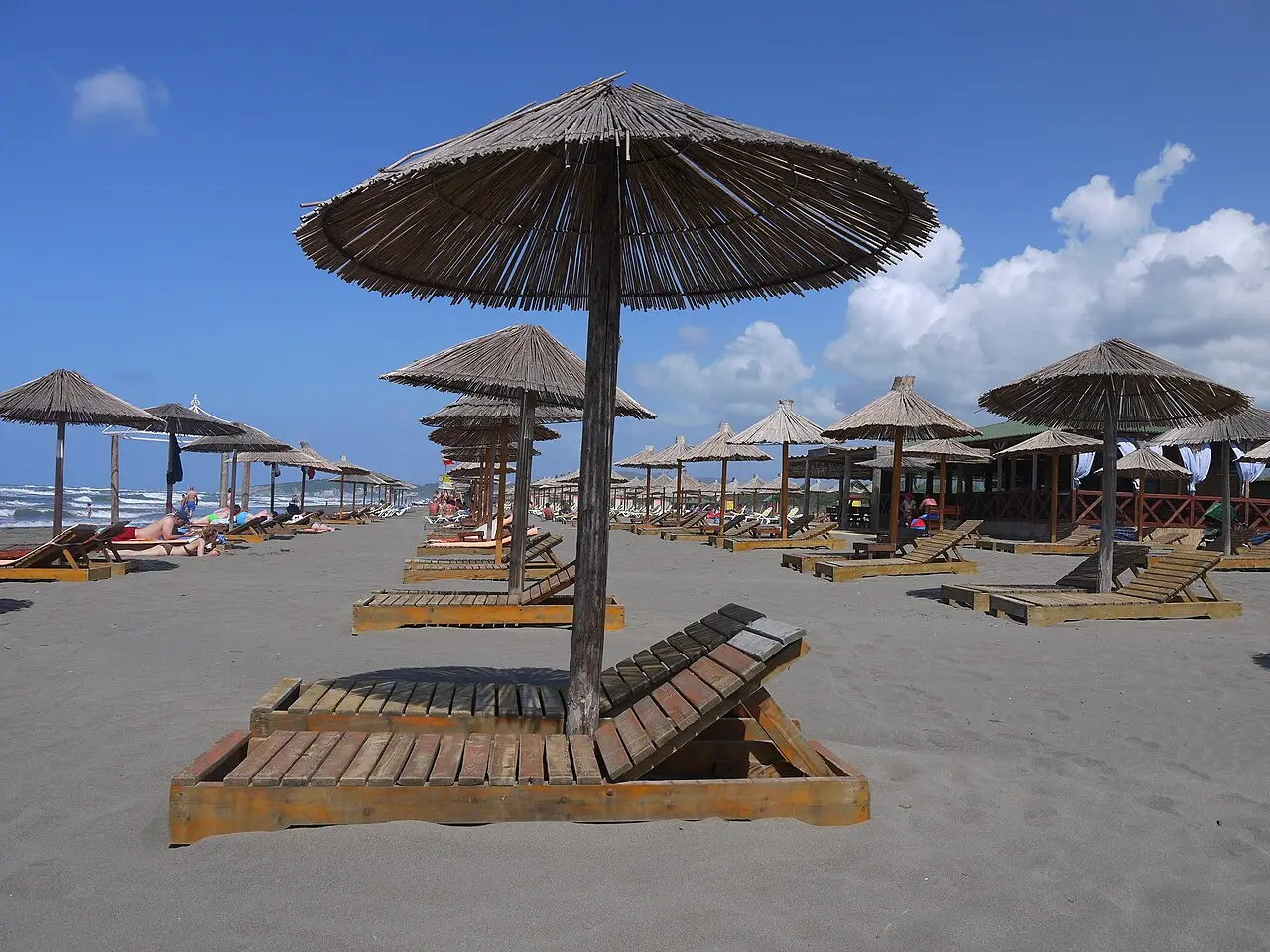
Velika Plaža (“Long Beach”) is the reason many people come to Ulcinj at all: roughly 13 km of fine, dark sand - the longest beach in Montenegro - with shallow water that warms quickly and a steady afternoon breeze that feeds a leading kitesurfing and windsurfing hub for the whole region. Kite Surf Club Dolcinium, running near the beach’s 10 km mark since 2008, is the longest-established of the schools here, and the local Maestral wind blows on something like 90 days a year - reliable enough that instructors plan the season as close to a sure thing, not a gamble. Most of the town’s hotels, apartment blocks and family resorts line the road behind this beach, from Yugoslav-era concrete to newer complexes with pools and direct beach access. It’s functional rather than picturesque, and that’s the point - you roll out onto sand, not cobbles.
This is the base for families, kitesurfers and anyone who wants a straightforward beach week without climbing hills to swim. Schools and rental shops cluster near the access roads; long empty stretches sit between the busier clusters. The trade-off is distance from the Old Town: you’ll taxi or bus in for fortress walks and harbour restaurants (fares are typically a few euros each way - check locally), or you simply treat the Old Town as a half-day visit and live on the strip. If sand and wind matter more than medieval lanes, book here - and see how Velika Plaža stacks up against Montenegro’s other beaches in the best beaches in Montenegro.
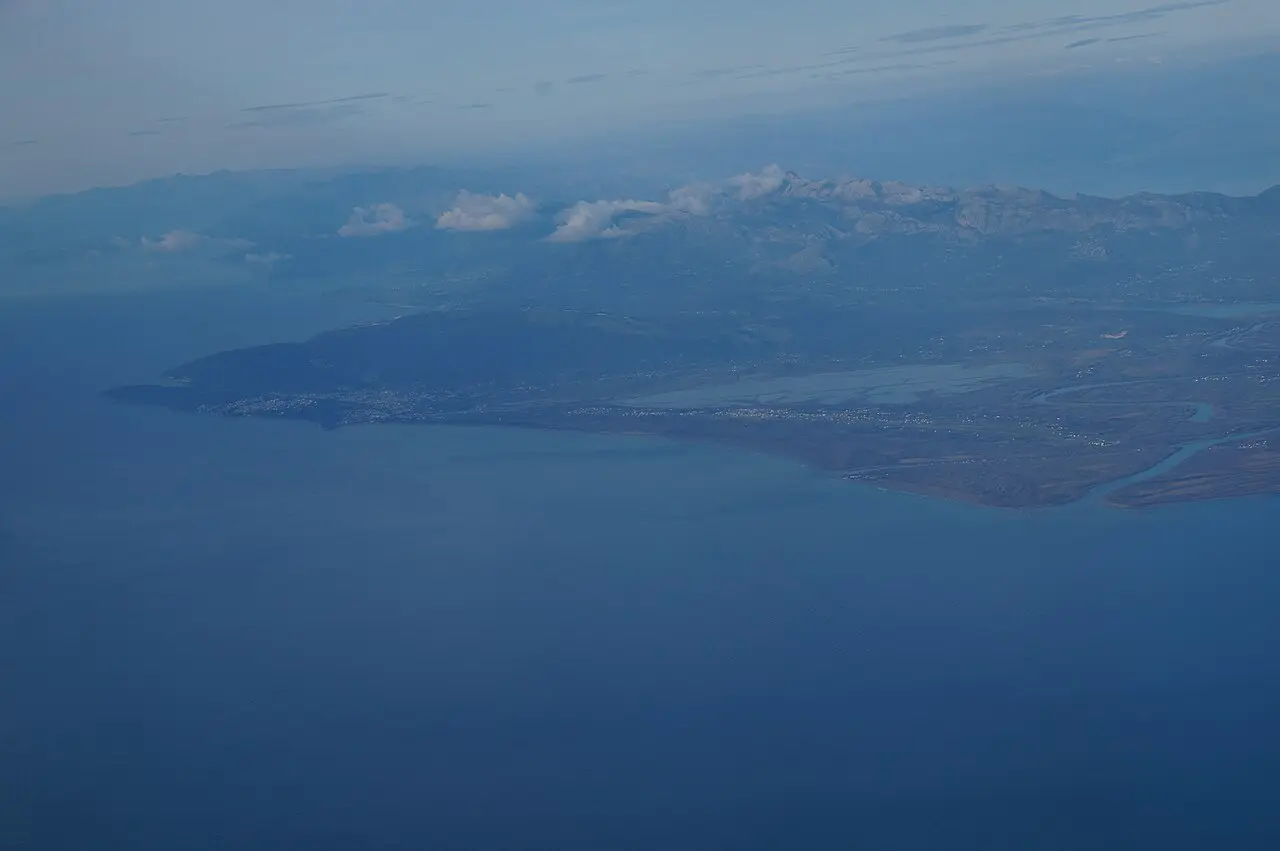
Ada Bojana: when the river island is the whole trip
At the far end of Velika Plaža, where the Bojana river meets the sea on the Albanian border, Ada Bojana is a third base entirely - a triangular island with water on two sides and open Adriatic on the third, about 15 km from Ulcinj town. Much of it is a long-established naturist resort, and the same wind that powers Velika Plaža makes it a kitesurfing spot; the river channel is lined with wooden fish restaurants on stilts, famous for Bojana eel. It’s not a neighbourhood of Ulcinj - it’s a separate destination for people who want river dinners, nude beaches or kite camps rather than Old Town lanes, and it’s worth planning as its own short trip, not a tack-on to a Velika Plaža stay. The Ulcinj city guide covers how to reach the island and what to expect on a day visit or an overnight.
How Ulcinj prices compare, and when to book
Ulcinj still runs cheaper than the Bay of Kotor and the Budva Riviera for a comparable room, which is exactly why budget-minded beach weeks drift this far south. That gap narrows fast in July and August: the Velika Plaža strip fills up, rates climb with it, and the handful of rooms inside the Old Town go first, so lock in a guesthouse on the Korzo or inside the walls well before summer if your dates are fixed. Compare live rates for your actual week when you book rather than trusting a number printed here, but the pattern holds across seasons: Old Town boutique hotels cost more per square metre, Velika Plaža apartments buy more space for the same money, and late spring or September trims both the crowds and the price while the sea still swims warm. The currency is the euro (€); cards cover most places, but carry cash for beach loungers, taxis and the smaller cafés.
Getting there and moving between bases
Ulcinj has no commercial airport - just a small grass airstrip with no scheduled flights. Most visitors arrive by car or bus along the coastal road from Bar (about 25-30 km north, roughly 30-40 minutes) or continue south toward Albania. Podgorica (TGD) is the nearest major airport, around 70 km inland. Once you’re in town, the practical split is simple: Old Town and Mala Plaža are walkable; Velika Plaža and Ada Bojana need a car, taxi or seasonal beach bus, unless you’re happy to walk only the first section of the Long Beach. A rental makes day trips to the Ulcinj Salina flamingos or the stilt restaurants easy - both are covered in the full Ulcinj guide; without one, see getting around Montenegro for buses and taxis along the south coast.
Nearby / read also
- Ulcinj travel guide - Velika Plaža, Ada Bojana, the Old Town and how to get here.
- Where to stay in Montenegro - Ulcinj against Kotor, Budva and the mountains.
- Best beaches in Montenegro - where Velika Plaža fits on the coast.
- Bar travel guide - the port and railway hub 25-30 km north.
- Getting around Montenegro - buses, taxis and the coastal road south.
Photos
Read also

What to see · 10 min read
Hiking Bobotov Kuk: Durmitor Highest Peak
Verified · September 4, 2026Bobotov Kuk hike at 2,523 m: Sedlo (~10 km RT) vs Lokvice from Black Lake, €5 park fee, cables, season and early-start tips.

What to see · 10 min read
Swimming in the Bay of Kotor: Beaches & Lidos
Updated · August 31, 2026Can you swim in Kotor? Yes - on Dobrota pontoons, Morinj and small Boka shores. Water quality, season and what to expect.

What to see · 11 min read
Rent a Boat in Kotor Bay: No Licence Needed
Updated · September 25, 2026Private boat rental in Kotor Bay 2026: skippered hire from €90/h, bareboat prices, licence rules, speed limits and where boats leave from.

What to see · 9 min read
Piva Lake & Canyon: Montenegro's Emerald North
Updated · August 27, 2026Piva Lake guide: the 45 km emerald reservoir, Mratinje Dam, boat trips from Plužine, the relocated Piva Monastery and how to pair it with Durmitor.