
Montenegro-Croatia Border: What EES Means for You
Karasovici-Debeli Brijeg: waits swung from 5h to 1h30 in August 2026. EES means four fingerprints and a face scan, no stamp - which crossing to use.
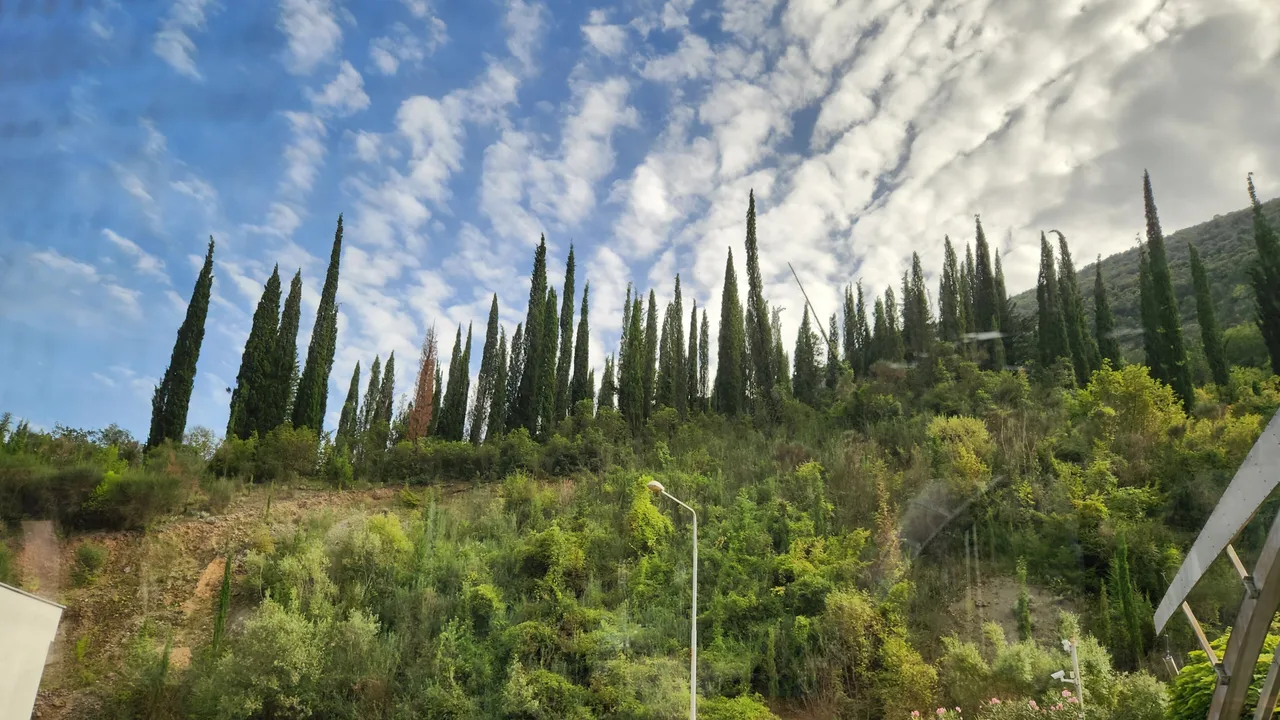
Every road crossing between Montenegro and Croatia is now an external border of the Schengen area running the EU’s Entry/Exit System. In practice: the first time you enter Croatia the border officer takes four fingerprints and a photograph of your face, and from then on the machine checks your face against that record. Your passport is no longer stamped - that stopped on 10 April 2026, when EES became fully operational across 29 countries. Montenegro isn’t in the EU and runs its own checks a couple of kilometres down the road, exactly as before.
This page is about what physically happens at the crossing. If your question is whether you need a visa for Montenegro at all, the 90-day rule and the 24-hour registration, that is our Montenegro entry requirements guide. If you want buses, fares and transfers for one specific journey, see Kotor to Dubrovnik. What follows is the border itself: the booths, the biometrics, who’s exempt, and one date in September 2026 that’s worth knowing about.
Disclaimer - verify before you travel. Last reviewed on 2 August 2026 against the European Commission’s Entry/Exit System pages, EU Regulations 2017/2226 and 2025/1534, and the Croatian Ministry of the Interior. This is general guidance, not legal advice. Border procedures can change at short notice and are applied differently to different passports, so confirm the current position for your own nationality with your foreign ministry before you travel.
Which crossings you can actually use
There are two road crossings on this short stretch of border, and they are not interchangeable.
Karasovići (Croatia) and Debeli Brijeg (Montenegro) is the main one, on the coastal E65 about 40 km south of Dubrovnik. Every scheduled bus and every truck uses it. The two national posts sit roughly 2.5 km apart, so you clear one country, drive through a short no man’s land, and then queue again for the other.
Vitaljina (Croatia) and Kobila (Montenegro) is the small one, inland behind the Konavle fields. A word on the name, because it trips people up: the Montenegrin government’s list of crossings calls its post Kobila, the Croatian police list the pair as Vitaljina-Njivice, and the sign at the barrier says Konfin - three names, one crossing. Both countries class it as a passenger-only crossing, so no lorries - freight goes through Karasovići. Buses don’t use it either: the official lists are silent on coaches, but OpenStreetMap’s tagging for both posts, which matches what drivers report, shows them barred, and no scheduled service is routed this way. That restriction is the whole point of it: on a July Saturday when the coastal queue is backed up, a car can sometimes slip round this way while the coaches sit still. Don’t plan on it blind, though - the road is narrower, the opening arrangements are thinner, and if it is closed you’ve wasted forty minutes.
One naming trap worth clearing up. Zupci and Sitnica, which people often list as Croatian crossings, face Bosnia and Herzegovina, not Croatia. Aim for Zupci expecting Dubrovnik and you’ll end up in Trebinje.
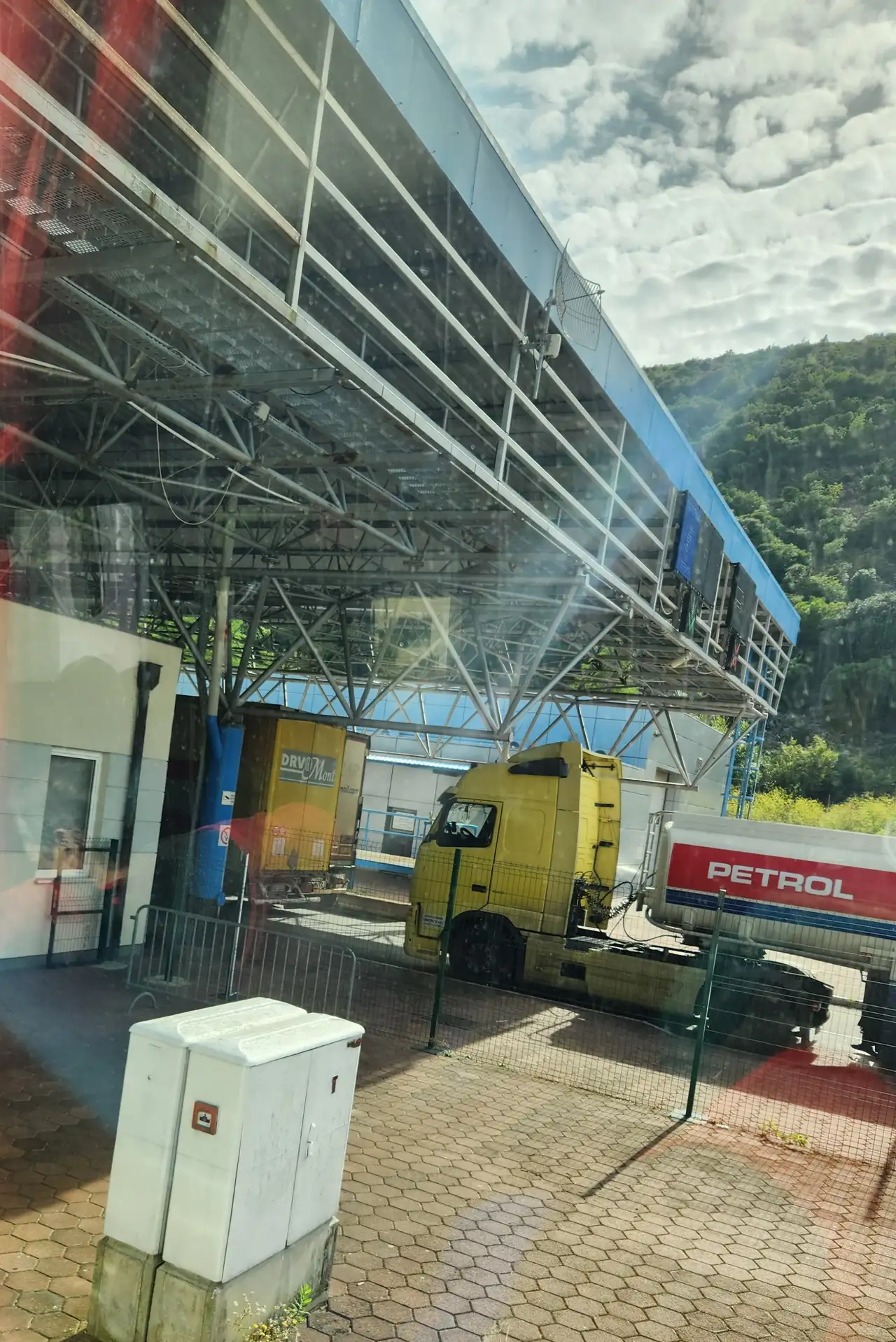
What the officer does now, step by step
The Croatian Ministry of the Interior began the EES rollout at all of its international border crossings on 12 October 2025, and the system has been running in full since 10 April 2026. Here’s the sequence at the window, in order.
On your first entry into Croatia (or anywhere in the Schengen area) after EES started:
- The officer scans your passport and creates an individual file in the EES.
- You give four fingerprints, right hand where possible.
- A camera takes a facial image.
- The date, time and place of entry go into the record. No stamp goes into the passport.
On every crossing after that, the officer or the gate compares a live image of your face with the file that already exists. That is quick, usually seconds, once you’re in the system.
What the EU says goes into the record: your name, travel document data, the biometrics, and the date and place of each entry and exit. Refusals of entry are recorded too. The point of it is the automatic overstay calculation that the old ink stamp could never do reliably.
Who doesn’t go through this at all: citizens of EU member states, whatever country they live in. The Croatian ministry is explicit that EU nationals cross on a passport or national ID card and give no biometrics. That matters for mixed groups - a car with two Irish passengers and two Australians will be handled two different ways at the same window.
Children: under Regulation 2017/2226, children under 12 are exempt from giving fingerprints. A facial image is still taken and a record still exists. If you’re travelling with small children, the biometric bit is shorter than you fear.
One thing nobody mentions: the record doesn’t vanish when you fly home. Entry and exit data are kept three years after the exit record, and five years if you left without an exit record being created - which is the machinery behind overstay enforcement.
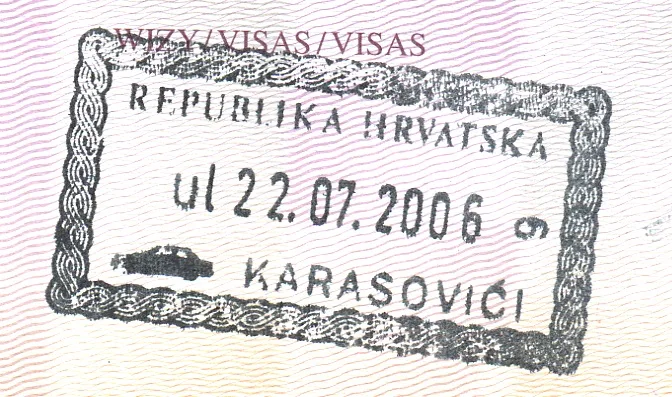
How long it adds, and what happens in September 2026
There’s no fixed “average” for this crossing, but the Croatian Auto Club (HAK) does publish per-crossing waits, and on a bad August Sunday they are ugly. On 2 August 2026, HAK logged roughly 4 hours to enter Croatia at Karasovići, 4 hours at the smaller Vitaljina crossing, and by 18:40 that evening, 5 hours to cross out of Croatia into Montenegro. The Konavle municipal head and local residents described that same exit queue running to 10 hours on the ground, with the tailback reaching about 25 km back toward Dubrovnik airport; Croatian border police blamed slower processing on the Montenegrin side at Debeli Brijeg, not the EES checks on the Croatian one. A week later, on 8 August, the same crossing logged about 3 hours in and 1.5 hours out, with Vitaljina down to 30 minutes each way - proof this swings hard from one weekend to the next (that Sunday coincided with the start of the Italian ferragosto holiday) rather than settling into one number. The mechanism behind both extremes is the same: the first registration costs a few minutes per traveller, later crossings cost seconds, and the pain concentrates in coaches, where fifty first-timers are processed one after another while everyone waits on the bus.
The date to know is in early September. When the EU legislated the phased launch, it left member states an escape hatch: under Regulation (EU) 2025/1534, in exceptional circumstances where traffic is so heavy that waiting times become excessive, a country may partially suspend the registration of biometric data at a specific crossing point for a maximum of 6 hours at a time - a short-term valve for a bad afternoon, not a summer-long opt-out. That power runs for 90 days after the end of the progressive rollout (which itself ended 9 April 2026, the day before EES went fully operational), automatically extended by 60 more days if fewer than 80% of the files created during the rollout contained biometrics. That works out to 8 July 2026, and with the extension, to early September 2026 - 6 or 7 September, depending on how the days are counted.
Read the wording carefully, because it’s widely misreported. The escape hatch only ever covered biometric capture at named crossings, for up to six hours at a stretch, and only in exceptional circumstances. EES itself does not switch off, stamping does not come back, and your entries and exits are recorded either way. What the deadline means for a traveller is more modest than the headlines suggest: from early September 2026, that emergency 6-hour valve disappears too, so a bad-queue afternoon has one less official remedy - it was never a guarantee of a shorter wait to begin with. We’ve found no evidence the mechanism has actually been used at Karasovići, so don’t plan a trip around either its presence or its absence.
We’ve not found an official Croatian statement on whether the suspension was ever used at Karasovići, so we’re not going to claim it was. What we can say: as of July 2026, nine European countries - Belgium, France, Germany, Greece, Italy, Malta, the Netherlands, Portugal and Switzerland - had publicly asked the Commission to extend this flexibility mechanism, and Croatia wasn’t among them; Croatia also doesn’t appear on any published list of countries pausing biometric checks.
What EES does not change
A surprising amount, actually. It’s a Schengen system, and Montenegro isn’t in Schengen or in the EU.
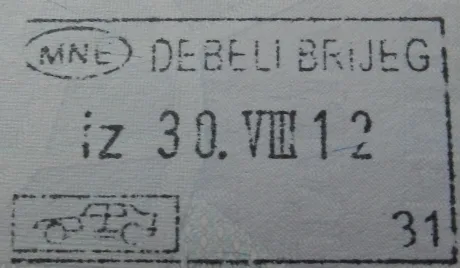
- Montenegro still checks you separately. Its own police post at Debeli Brijeg or Kobila (Konfin) works as it always has, with a passport check and a stamp. Carry the passport even if an ID card gets you into Croatia.
- Your 90 days in Montenegro are counted by Montenegro, not by the EES clock. The two allowances are separate: US, UK, Canadian, Australian and EU citizens get up to 90 days in any 180 in Montenegro, and time spent there does not eat into your Schengen allowance. For anyone doing a long Balkan summer, that is the useful bit of arithmetic.
- The 24-hour registration rule still applies on the Montenegrin side. A hotel does it for you; a private apartment may not. Details are in Montenegro entry requirements.
- ETIAS is a different thing entirely and is not in force yet. It’s a travel authorisation for the Schengen area; the European Commission no longer publishes a target quarter and says only that it’ll announce the launch date several months in advance. It’ll apply to your entry into Croatia, never to Montenegro. Check the EU’s official portal close to your travel date rather than any site offering to “apply now”.
Crossing it without losing the day
A few things that genuinely change the experience, in rough order of usefulness.
Time of day beats everything. The coastal crossing loads up mid-morning, when Dubrovnik day trips head south and Montenegrin traffic heads north, and again in the late afternoon. Early morning and late evening are a different border. If your plan involves a flight out of Dubrovnik, build in the queue rather than the schedule - you’ll want the margin.
Know your lane. Cars, coaches and freight are separated at the approach. Following the vehicle in front is how people end up in the lorry lane at Karasovići.
Passports out and awake. Everyone in the car, including children, needs to be reachable and awake for a face image. On coaches you may be asked to get off and walk through the hall.
Hire cars need paperwork. Most Montenegrin rental contracts allow Croatia but require advance notice and a Green Card for insurance, and a few exclude it altogether. Sort it when you book, not at the desk. Our guide to renting a car in Montenegro covers the deposits and the cross-border clause.
Don’t build a tight connection on the far side. This is the single most common regret, and no border system has ever fixed it.
Where to check before you leave
Live waiting times are published by the Croatian and Montenegrin traffic services rather than by us, and they are the only numbers worth trusting on the morning you travel. For the rules themselves, the primary sources are the European Commission’s Entry/Exit System pages and the Croatian Ministry of the Interior; for Montenegro’s own entry conditions, the government’s visa page. Your own foreign ministry’s travel advice is the fastest way to see anything that has changed for your nationality specifically.
If you’re travelling on to Dubrovnik itself, our sister guide to the Dubrovnik old town picks up where the border ends.
Nearby and read also
- Montenegro entry requirements - visas, the 90-day rule, the 24-hour registration and ETIAS.
- Kotor to Dubrovnik - buses, fares and transfers across this exact border.
- Renting a car in Montenegro - the cross-border clause and the Green Card.
- Herceg Novi - the last Montenegrin town before the crossing.
- Montenegro travel insurance - what to check when your trip covers two countries.
- Croatia and Montenegro in one trip - how to plan the two together.
Photos
On the map
The map loads on click - to keep the page lightweight.
The map didn’t load. Check your connection and refresh the page.
Read also

Before you go · 16 min read
Bay of Kotor Boating Rules: Licence, Speed Limits & Fines
Updated · September 5, 2026Montenegro boat rules 2026: certificate at 18 for self-drive, 6 knots within 300 m, 18-knot corridors, no motor boats in the Blue Cave, fines from €500.

Before you go · 12 min read
13 Montenegro Travel Mistakes to Avoid
Verified · August 29, 2026Concrete Montenegro travel mistakes with real numbers: toll lanes, ferry queues, ATM fees, park fees per day, and roads slower than the map admits.

Before you go · 10 min read
Kotor or Herceg Novi: Which Bay Town to Stay In
Updated · August 26, 2026Kotor or Herceg Novi as your Bay of Kotor base? Old towns, beaches, cruise crowds, Dubrovnik access and prices compared - who each town suits.

Before you go · 14 min read
All-Inclusive Montenegro: Resorts That Actually Exist
Updated · August 23, 2026Real all-inclusive hotels in Montenegro are rare - most listings are half board. The five that are genuine, and how to check before you book.