
Tara Canyon: Rafting, Zipline & Viewpoints
Tara Canyon, Montenegro: rafting the emerald river, ziplines over the gorge, the Đurđevića Tara bridge and the Ćurevac viewpoint - prices and season.
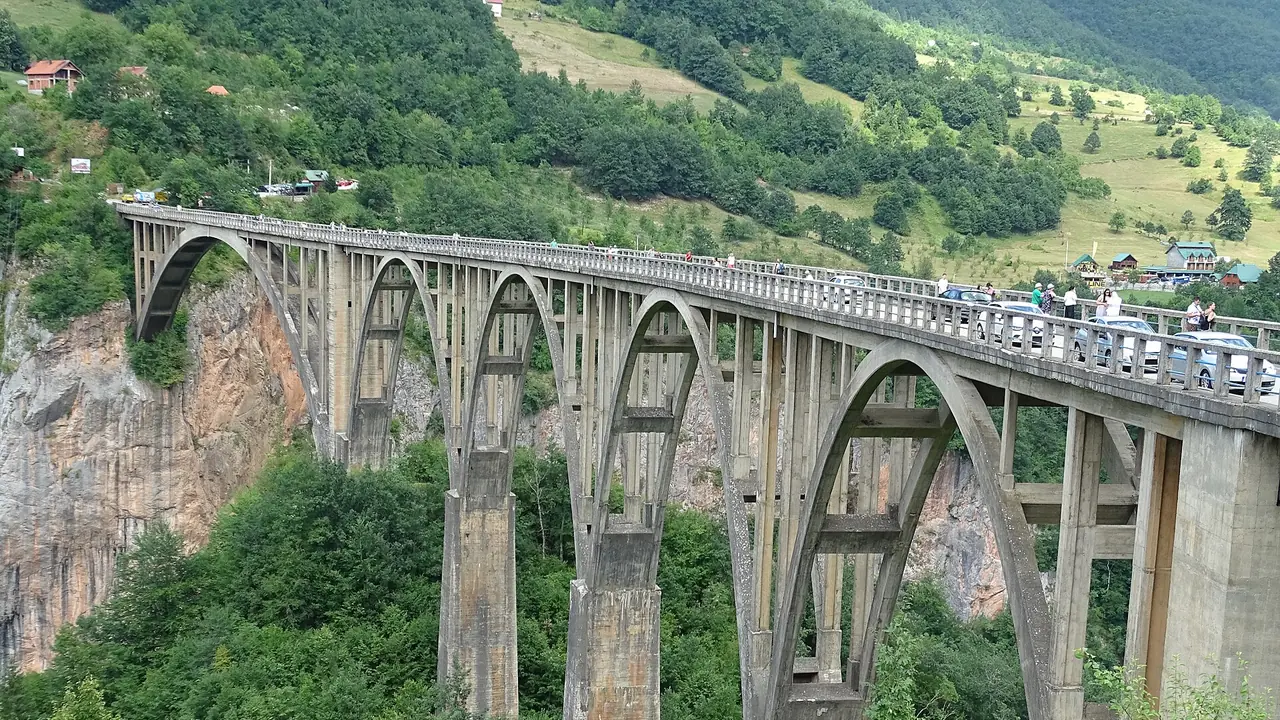
The Tara Canyon is the deepest river gorge in Europe, and the best way to feel that depth is from the water: a half-day raft down the emerald Tara costs around €70, runs from April to October, and passes under the country’s most famous bridge. If you would rather stay dry, you can zip across the canyon on a cable, walk the Đurđevića Tara bridge for free, or drive to the Ćurevac viewpoint for the single best look down into the gorge. Here’s how each one works, what it costs, and how to fit them into a day.
Why the Tara Canyon is worth the drive north
The Tara River has cut a gash roughly 1,300 m deep and 82 km long through the limestone of northern Montenegro - deep enough that guides here like to call it “the second-deepest canyon in the world after the Grand Canyon.” Treat that line as tourist-board shorthand rather than a surveyed fact; what’s solid is that it’s the deepest in Europe, and that the river and its old-growth forest are protected as part of the Durmitor UNESCO World Heritage site and a UNESCO Biosphere Reserve. The water runs an unreal green, cold and clean enough to drink in places.
Most of the action clusters around one spot: the Đurđevića Tara bridge, about 23 km and half an hour northeast of Žabljak. The bridge is the viewpoint, the zipline launch and the meeting point for a lot of rafting trips, all in one car park. For the wider mountain - the Black Lake, Bobotov Kuk and the hiking - see our Durmitor National Park guide; this page sticks to the canyon and the river.
Rafting the Tara: season, route and price
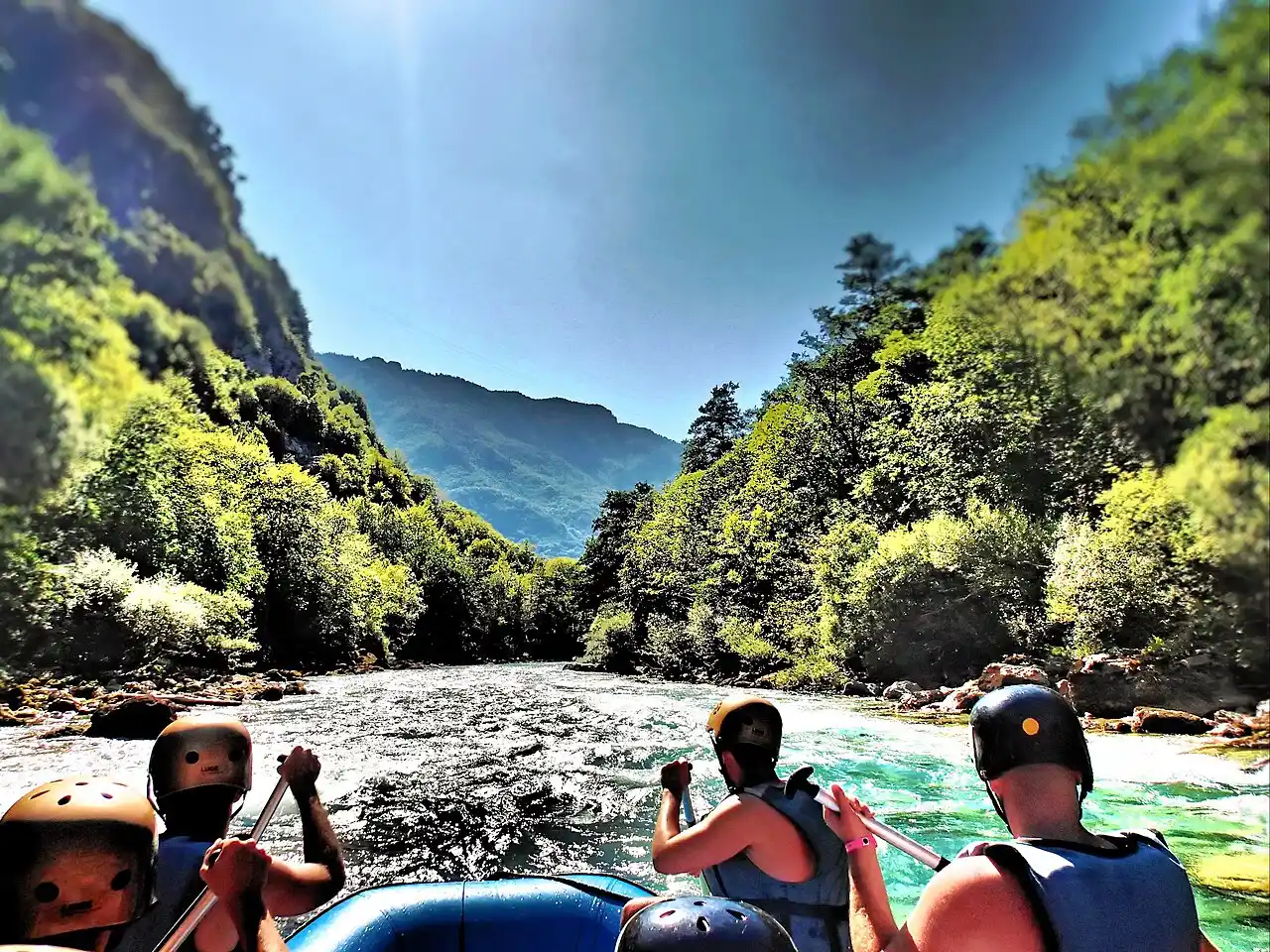
Rafting is the headline experience, and the season runs April to October. The character of the trip changes a lot across those months, and it is worth matching your dates to what you want:
- May and June are the adrenaline months. Snowmelt swells the river, the rapids come thick and fast, and runs are often a little shorter because the water is moving so quickly.
- July, August and September are calmer and warmer - the “float and swim” version, and the right pick if you’ve kids or nervous paddlers along. This is peak season on the river.
The standard tourist trip is a half-day on the lower canyon, the stretch from Brštanovica down to Šćepan Polje at the Bosnian border. It is roughly 18 km of the most scenic water, with about two hours of actual paddling inside a total outing of around four hours once you count the transfer. Two operators I checked - Durmitor Adventure and Tara Sport - both list the same 2026 prices: about €70 per person for the half-day, including round-trip transfer from Žabljak, wetsuit, neoprene boots, life vest, a splash jacket, guide and insurance. A full day runs to around €150 and adds lunch and a longer stretch of river.
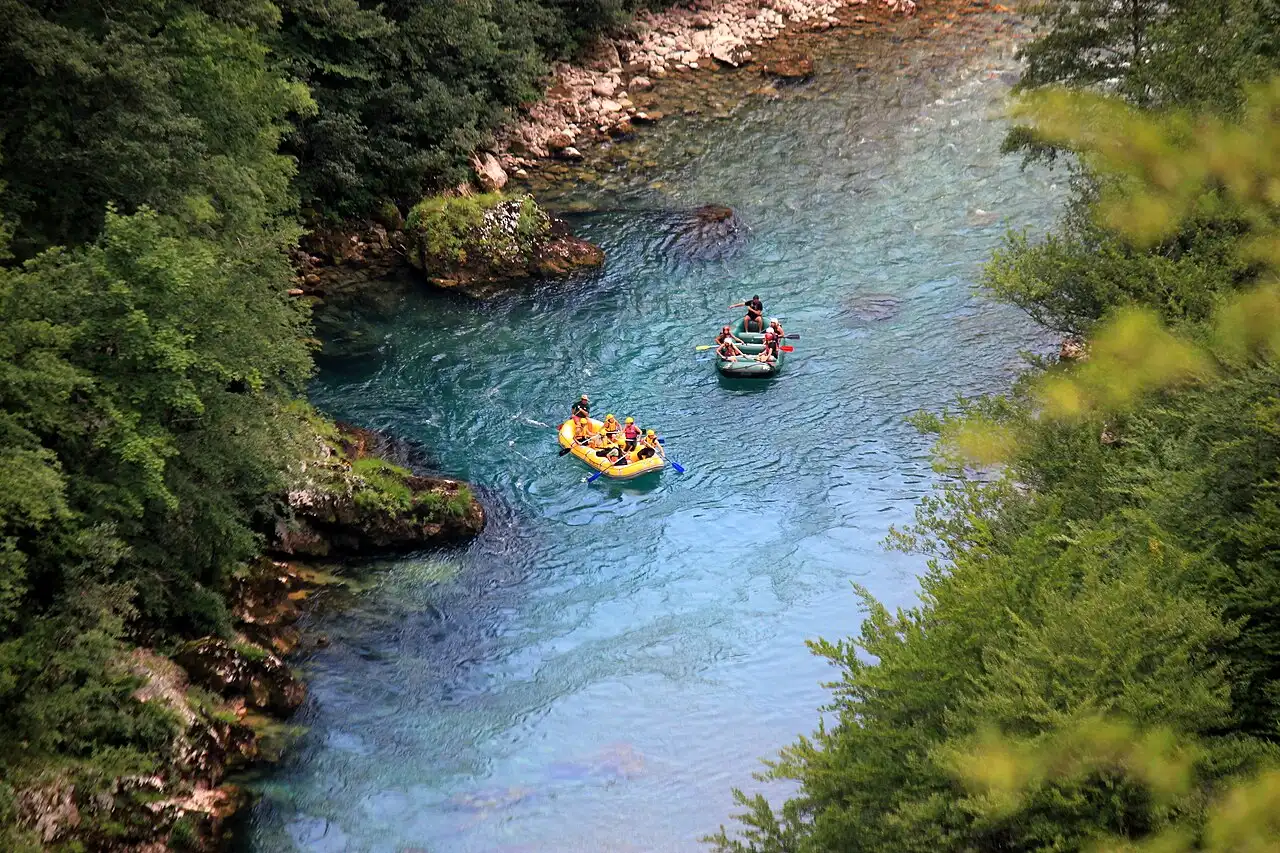
One honest caveat before you book. Plenty of operators sell “Tara rafting” as a full-day trip from the coast - Kotor, Budva, Herceg Novi. It’s doable, but you spend most of the day in a minibus on mountain roads, with the same two hours on the water at the end. If the river is why you came north, sleep in Žabljak or at a Šćepan Polje rafting camp the night before and paddle in the morning while everyone else is still driving. Prices drift year to year, so treat every figure here as a “from” and confirm what’s included before you pay.
The Đurđevića Tara bridge
Even if you never get in a raft, you’ll stop at the bridge. The Đurđevića Tara is a concrete arch bridge with five spans, about 365 m long and 172 m above the river, finished in 1940 after three years of work to a design by engineer Mijat Trojanović. When it opened it was the largest vehicular concrete arch bridge in Europe, and standing on it with the gorge dropping away below still feels improbable.
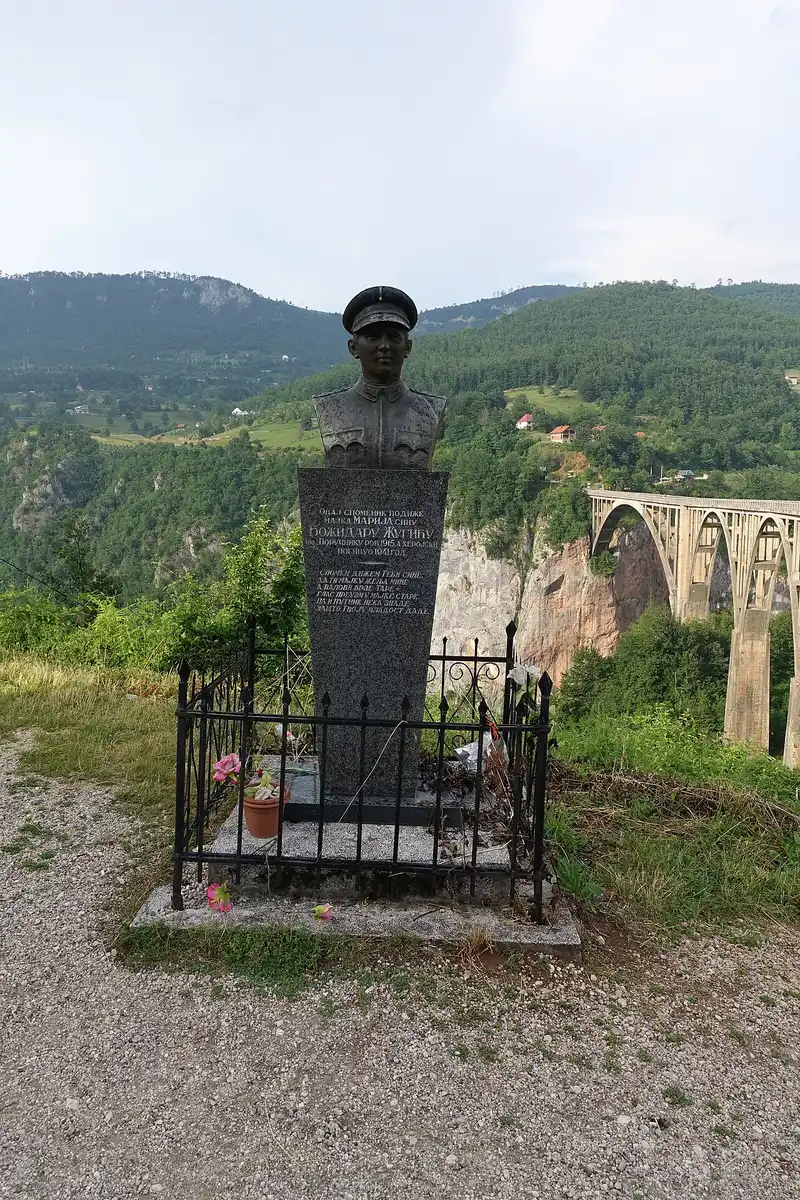
Its best story is a wartime one. In 1942, to stop Italian forces crossing, the partisans blew up the central arch - and the man who rigged the charges was Lazar Jauković, one of the engineers who had helped build it. He was later captured and executed on his own bridge; the span was rebuilt in 1946, and a small memorial by the roadside marks the spot. It’s the kind of detail that turns a photo stop into something you actually remember.
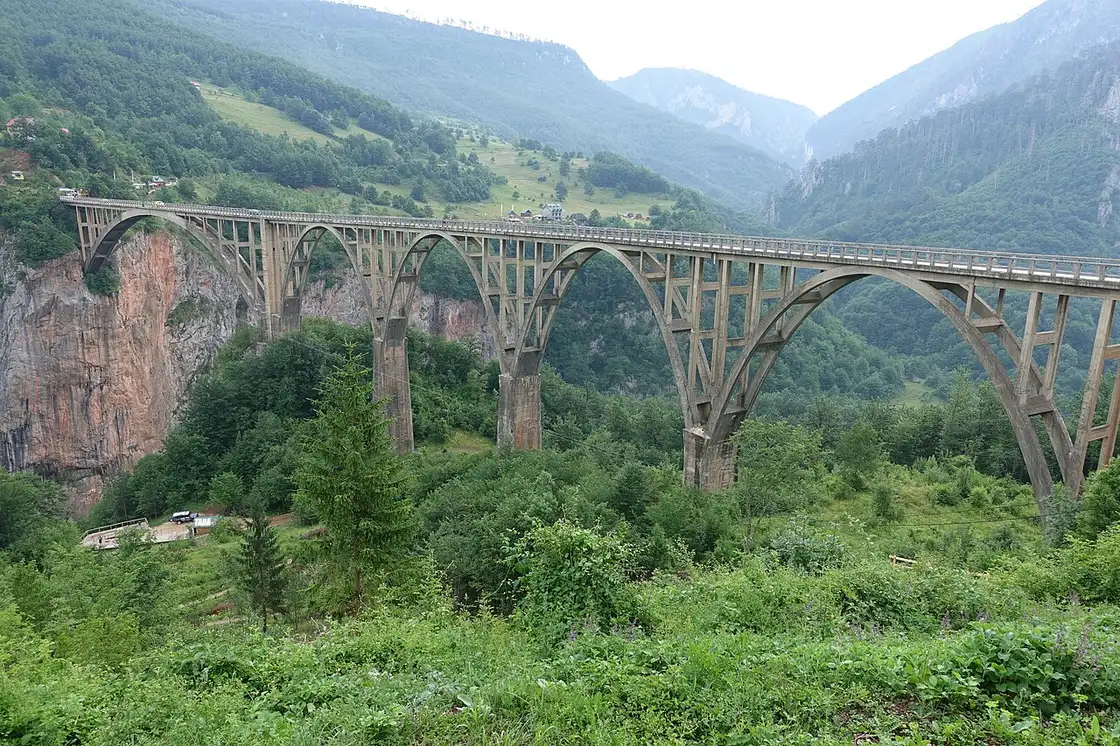
Walking across is free, and there’s a cluster of cafes and souvenir stalls at each end - touristy, but a decent place for a coffee and to steady your nerves before the zipline. Come early or late if you want the bridge without a coach party on it.
Ziplines across the canyon
There are two separate ziplines at the bridge, run by two different companies, and they suit different nerves:
- The short line (Red Rock) is about 350 m and has two parallel cables, so two of you can launch side by side and race across. It’s the gentler, quicker option and the cheapest - often quoted from around €10. Good for kids and first-timers.
- The long line stretches roughly 800 m to just over 1 km depending on the operator, hangs around 200 m above the canyon floor, and reaches speeds up to 120 km/h. The ride itself lasts only about three minutes, needs no experience, and typically costs somewhere between €25 and €45. It runs from about March to October.
Because prices and exact lengths vary between the two operators, ask at the desk which line you’re buying and what it costs before you clip in. If you only do one, the long line is the memorable one; the short line is the better choice if you are easing children (or yourself) into it.
Ćurevac and the best canyon viewpoint
The bridge shows you the canyon in cross-section, but for the view straight down into its deepest point, drive to Ćurevac. This clifftop viewpoint sits at 1,625 m, about 7.6 km (a 20-minute drive) from Žabljak, and it looks out over the stretch where the walls plunge the full 1,300 m to the river.
You can’t drive to the edge. From the signed car park - follow “Panoramic Road 2” out of Žabljak, then the fork toward Tepca, then small wooden “vidikovac” signs - it is a 30 to 45 minute walk each way on an easy, mostly wooded path that families manage fine. Bring water and proper shoes, keep well back from the unfenced edge, and go in clear weather; cloud fills the gorge and ruins the view. It’s the best free half-hour in the whole area.
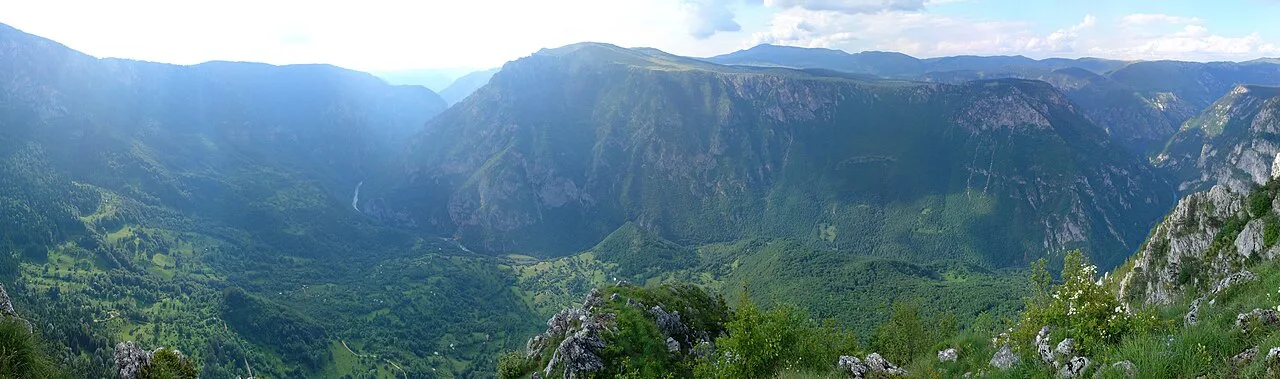
For a rougher, closer angle on the river, the rafting itself puts you at the bottom of those same walls - the two views are worth pairing across a single day.
Getting there and planning your day
The canyon is in the far north, so it takes effort to reach - which is exactly why it stays wild. The bridge is about 23 km (30 minutes) from Žabljak, or roughly 135 km and 2.5 to 3 hours from Podgorica on slow, scenic mountain roads. A car is the most flexible way to link the bridge, the zipline and Ćurevac in one loop; if you’re building a wider trip, see renting a car in Montenegro, and the Durmitor Ring road trip strings the canyon together with the Black Lake and the Sedlo pass.
No car? Organised day trips combine rafting, the bridge and the zipline and run from Žabljak and from the coast - the easiest option if you would rather not drive the passes yourself. Whatever you choose, this is a summer-to-autumn plan: rafting and ziplining wind down by late October, and the high roads can hold snow well into spring. Our best time to visit Montenegro guide has the month-by-month picture, and the Montenegro travel guide shows where the north fits in a longer route.
Nearby / read also
- Durmitor National Park - the wider park, Black Lake and Bobotov Kuk.
- Žabljak, Montenegro - the gateway town and where to stay.
- Durmitor Ring road trip
- Best time to visit Montenegro
- Renting a car in Montenegro
- Things to do in Montenegro - the country-wide highlights, north and coast.
On the map
The map loads on click - to keep the page lightweight.
The map didn’t load. Check your connection and refresh the page.
Distance ≈135 km · ≈2.5-3 h
- Podgorica ≈135 km · ≈2.5-3 h
Read also

What to see · 10 min read
Hiking Bobotov Kuk: Durmitor Highest Peak
Verified · September 4, 2026Bobotov Kuk hike at 2,523 m: Sedlo (~10 km RT) vs Lokvice from Black Lake, €5 park fee, cables, season and early-start tips.

What to see · 10 min read
Swimming in the Bay of Kotor: Beaches & Lidos
Updated · August 31, 2026Can you swim in Kotor? Yes - on Dobrota pontoons, Morinj and small Boka shores. Water quality, season and what to expect.

What to see · 11 min read
Rent a Boat in Kotor Bay: No Licence Needed
Updated · September 5, 2026Private boat rental in Kotor Bay 2026: skippered hire from €90/h, bareboat prices, licence rules, speed limits and where boats leave from.

What to see · 9 min read
Piva Lake & Canyon: Montenegro's Emerald North
Updated · August 27, 2026Piva Lake guide: the 45 km emerald reservoir, Mratinje Dam, boat trips from Plužine, the relocated Piva Monastery and how to pair it with Durmitor.